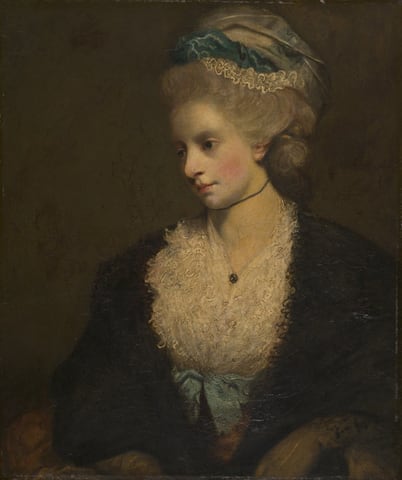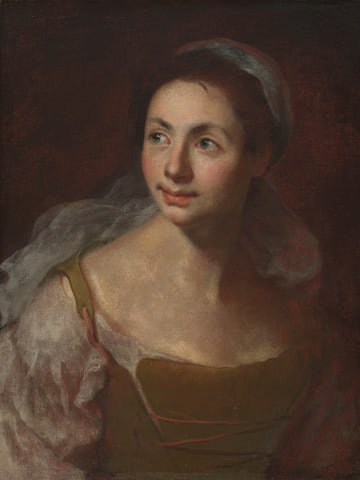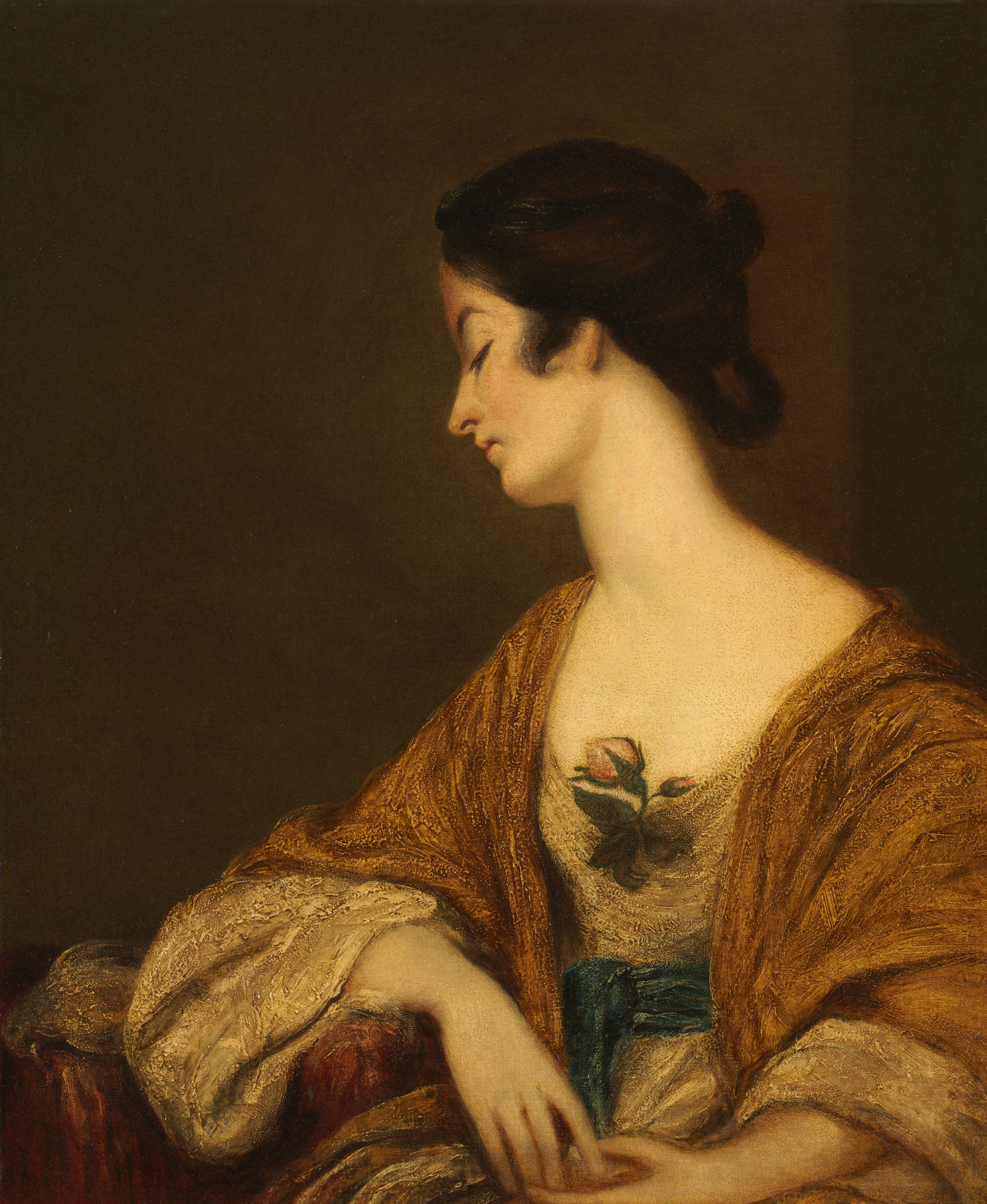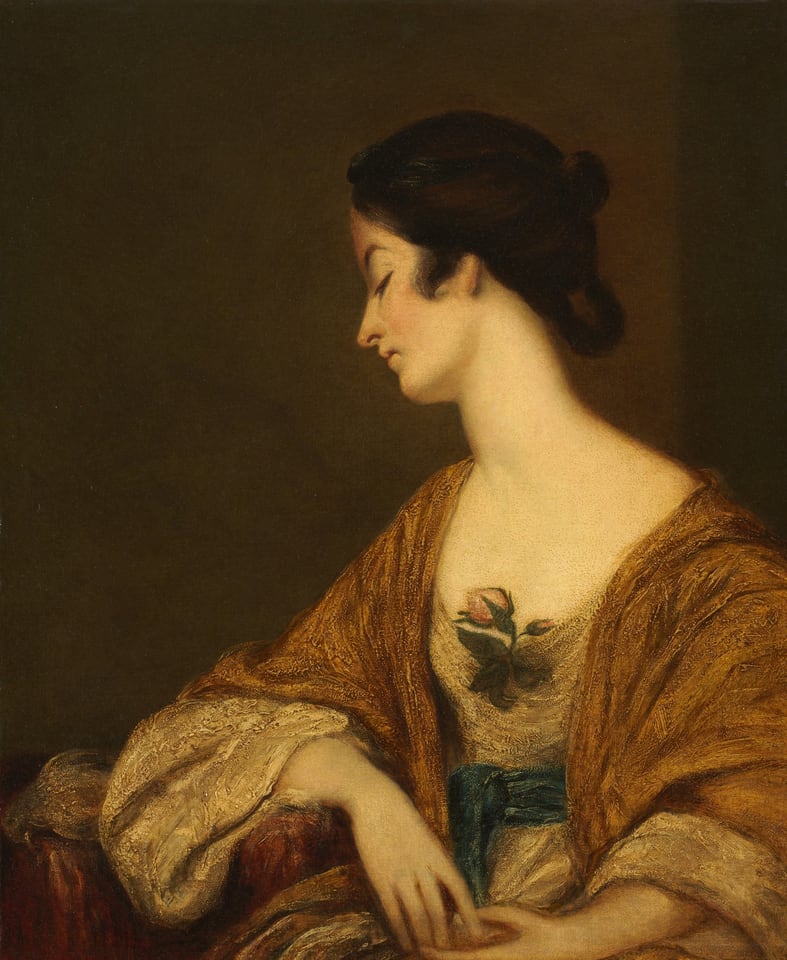
Portrait of Mrs. George Collier18th century
Given to the Cleveland Museum in 1920 by the collector Jeptha H. Wade, this painting was thought to be an authentic work by Joshua Reynolds. More about this work
About this work
Given to the Cleveland Museum in 1920 by the collector Jeptha H. Wade, this painting was thought to be an authentic work by Joshua Reynolds. However, after considerable study, the museum attributed it to a follower of Reynolds working in a similar style around the same time. This portrait depicts the wife of the captain (and later admiral) George Collier. The artist draws an analogy between this woman and Lesbia, a married woman who provided much artistic inspiration for the Roman poet Catullus (c. 84–c. 54 BC). The poet's writings document a love affair with Lesbia, and one poem in particular documents the death of the woman's beloved pet sparrow. The viewer can barely see the sparrow in this painting, since it lies on a table partially obscured by her right elbow. The muted colors evoke a sense of melancholy as the woman mourns with her head turned away from the viewer.
Text from the Cleveland Museum of Art.
How it was made
- Oil paint
- Pigment ground in a drying oil, usually linseed. It dries slowly, so painters could blend on the canvas, build up thin translucent glazes, and rework a picture over weeks. Canvas replaced wooden panels in the 1500s because it is lighter and can be rolled.
Joshua Reynolds
English, 1723–1792 · Born in Plympton; died in London.
Reynolds trained in London under Thomas Hudson, then spent two years in Italy studying the old masters, an experience that shaped his ambition to raise portraiture to the dignity of history painting. He became the leading portraitist of Georgian society and, in 1768, the first President of the Royal Academy. His Discourses to its students set out the principles of the Grand Manner and remained influential long after his death.
Written by Ochre Editions.
Rights and the museum’s record
Public domain. The Cleveland Museum of Art has dedicated this image to the public domain under CC0, so anyone may copy, adapt and use it, for any purpose, without asking. Our prints and files are reproductions made from the museum’s image; the museum doesn’t endorse them.
- Object number
- 1920.514
- Credit
- Courtesy of the Cleveland Museum of Art
- Type
- Painting
- Department
- European Painting and Sculpture
- Licence
- CC0 1.0 Universal
- Museum record
- See it on the museum’s site