Floor plan

West wing: Old MastersBaroque and Rococo

Baroque and Rococo

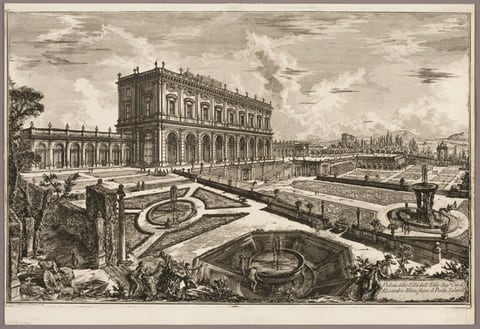
A work made of etching on ivory laid paper.
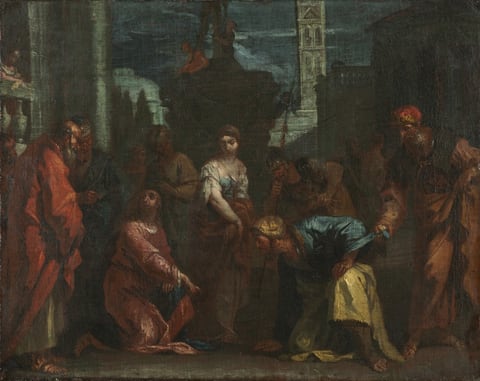
Christ and the Woman Taken in Adultery, by Sebastiano Ricci, mid-1700s
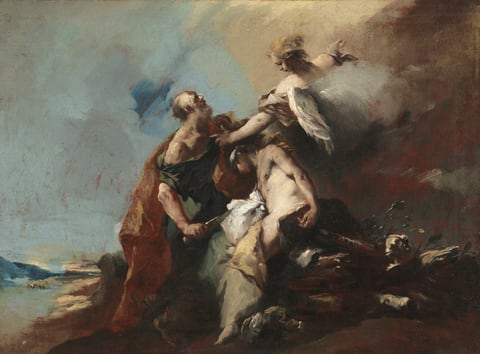
The Sacrifice of Isaac, by Francesco Guardi, 1750s
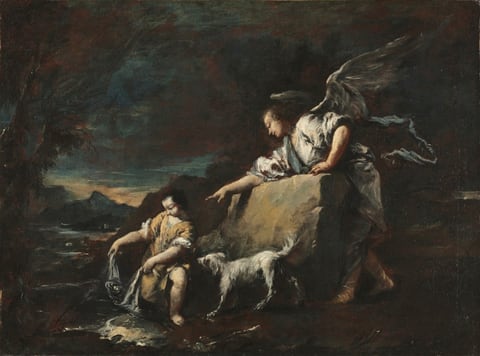
Tobias and the Angel, by Francesco Guardi, 1750s
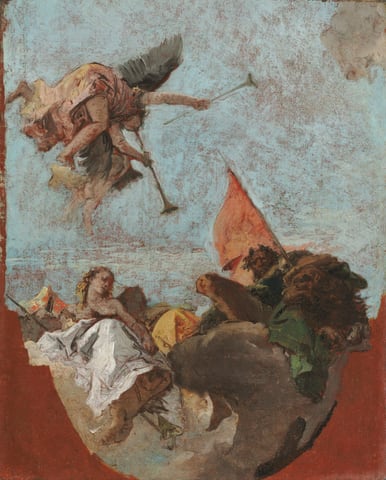
Sketch for a Ceiling, by Giovanni Battista Tiepolo, 1750s
A work made of etching in black on ivory laid paper.
A work made of etching in black ink on cream laid paper.

The works in this room are listed below.

Works in this room

Drama, movement and deep shadow in the 1600s, then the light, playful decoration of eighteenth-century Europe.

First room, north wall

  1. A work made of etching on ivory laid paper.
    View of the Villa of His Eminence Cardinal Alessandro Albani, outside Porta Salaria, from Views of RomeGiovanni Battista Piranesi, 1769, published 1800–07Courtesy of the Art Institute of Chicago
  2. Christ and the Woman Taken in Adultery, by Sebastiano Ricci, mid-1700s
    Christ and the Woman Taken in AdulterySebastiano Ricci, mid-1700sCourtesy of the Cleveland Museum of Art
  3. The Sacrifice of Isaac, by Francesco Guardi, 1750s
    The Sacrifice of IsaacFrancesco Guardi, 1750sCourtesy of the Cleveland Museum of Art

First room, south wall

  1. Tobias and the Angel, by Francesco Guardi, 1750s
    Tobias and the AngelFrancesco Guardi, 1750sCourtesy of the Cleveland Museum of Art
  2. Sketch for a Ceiling, by Giovanni Battista Tiepolo, 1750s
    Sketch for a CeilingGiovanni Battista Tiepolo, 1750sCourtesy of the Cleveland Museum of Art
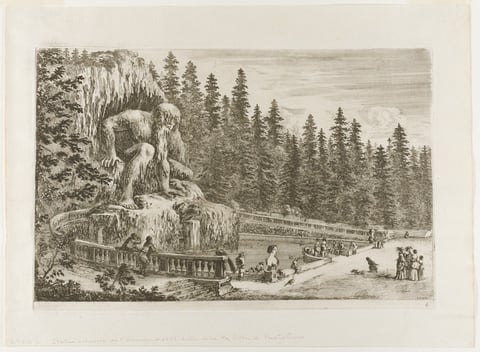
  3. A work made of etching in black on ivory laid paper.
    The Colossal Statue of the Apennines, from Views of Villa di PratolinoStefano della Bella, c. 1653Courtesy of the Art Institute of Chicago
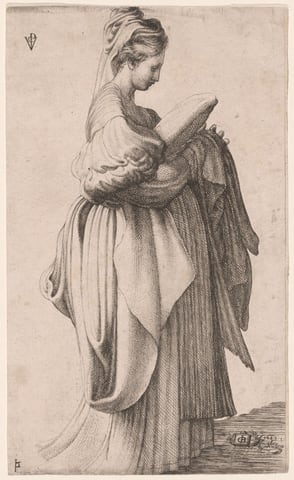
  4. A work made of etching in black ink on cream laid paper.
    A Young Woman Holding a CushionMonogrammist VCP, 1643Courtesy of the Art Institute of Chicago

Second room, south wall
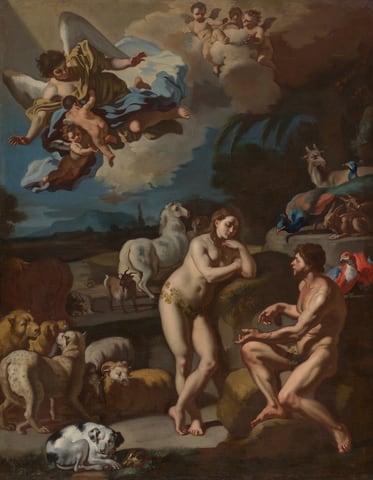
  1. A work made of oil on canvas.
    Adam and Eve in ParadiseFrancesco Solimena, c. 1700Courtesy of the Art Institute of Chicago
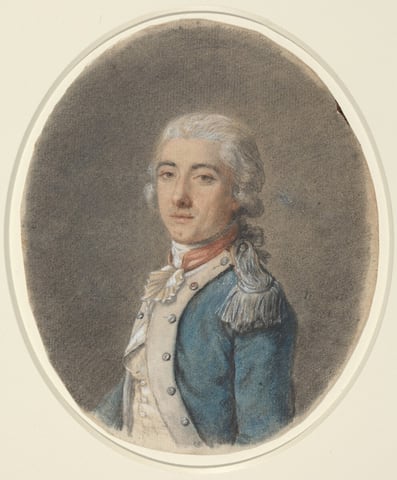
  2. The image displays an oval portrait of a man's upper torso. He is turned slightly to the right, looking directly at the viewer with a composed expression. The man has pale skin, defined facial features, softly arched eyebrows, a subtle mustache, and styled hair in an 18th-century fashion. He wears a blue coat with white lapels, silver buttons, and a silver-fringed epaulet on the shoulder, along with a cravat and waistcoat. The background is a smooth, neutral gray.
    Portrait of a Man in a Military UniformUnrecorded French maker, 18th centuryCourtesy National Gallery of Art, Washington
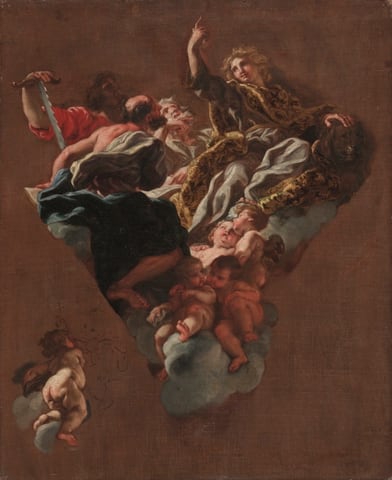
  3. Sketch for "The Four Prophets of Israel" (for Il Gesù, Rome), by Giovanni Battista Gaulli, c. 1675–1677
    Sketch for "The Four Prophets of Israel" (for Il Gesù, Rome)Giovanni Battista Gaulli, c. 1675–1677Courtesy of the Cleveland Museum of Art

Second room, north wall
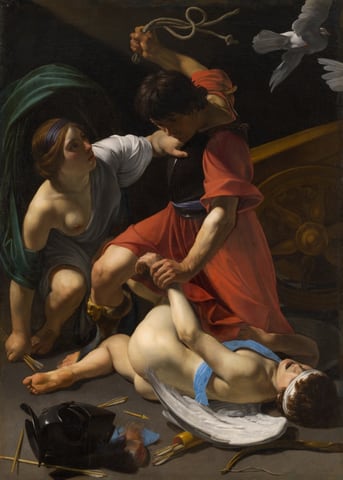
  1. Large painting of cupid being whipped, a woman tries to hold back the a man in red dress.
    Cupid ChastisedBartolomeo Manfredi, 1613Courtesy of the Art Institute of Chicago
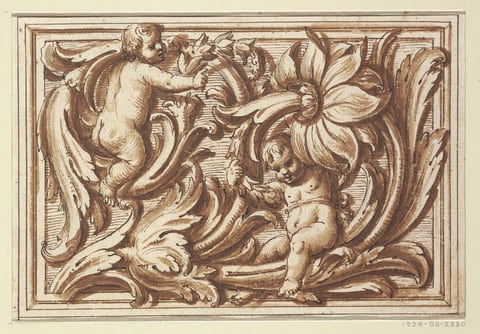
  2. ONE OF A SET OF PROJECTS FOR A TITLE PAGE AND THE DECORATION OF A HORIZONTAL PANEL
    One of a set of projects for a title page and the decoration of a horizontal panelFrancesco Bedeschini, Italian, 1675-1699Courtesy of Cooper Hewitt, Smithsonian Design Museum
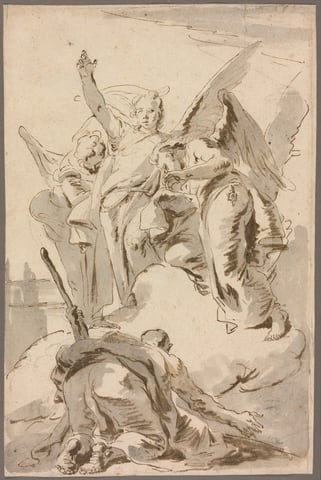
  3. A work made of pen and brown ink and brush and brown and gray wash, over black chalk, on ivory laid paper.
    Three Angels Appearing to AbrahamGiovanni Battista Tiepolo, c. 1726Courtesy of the Art Institute of Chicago

Third room, north wall
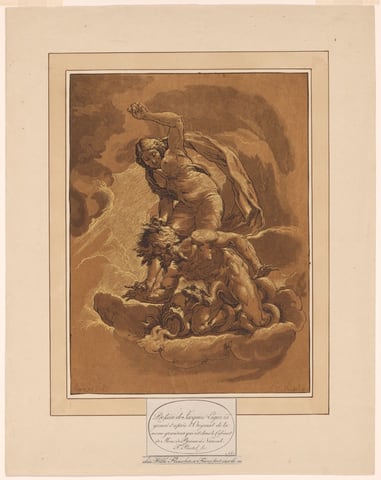
  1. A work made of etching and aquatint, from three plates, in brown and black, with metallic gold, on ivory laid paper.
    The Triumph of Truth over EnvyMaria Katharina Prestel, 1781Courtesy of the Art Institute of Chicago
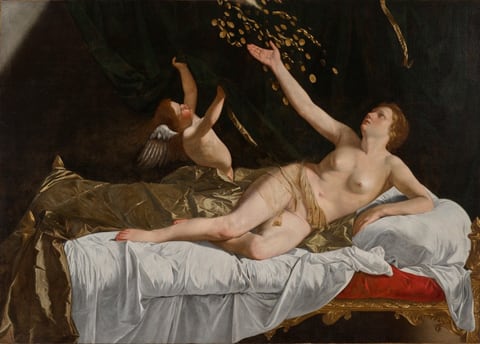
  2. Danaë, by Orazio Gentileschi, c. 1623
    DanaëOrazio Gentileschi, c. 1623Courtesy of the Cleveland Museum of Art
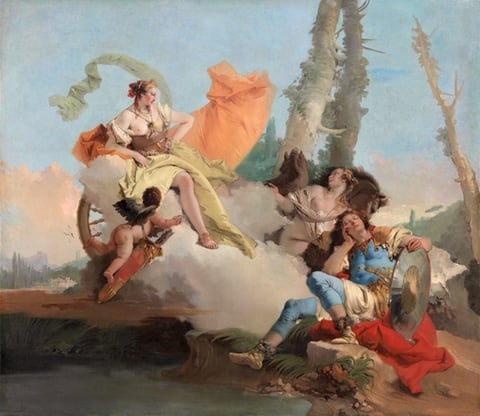
  3. Large painting of soldier asleep outdoors surrounded by two women and a cupid.
    Armida Encounters the Sleeping RinaldoGiovanni Battista Tiepolo, c. 1742–45Courtesy of the Art Institute of Chicago