Floor plan

West wing: Old MastersBaroque and Rococo

Baroque and Rococo

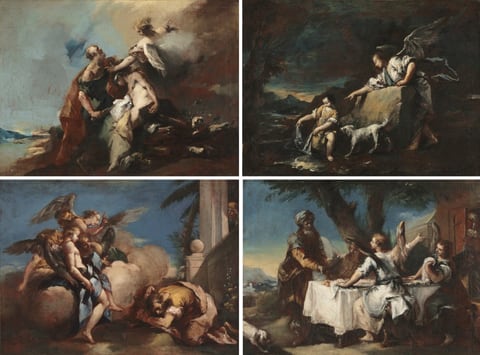
The Sacrifice of Isaac, Tobias and the Angel, The Angels Appearing to Abraham, Abraham Welcoming the Three Angels (painting series), by Francesco Guardi, 1750s
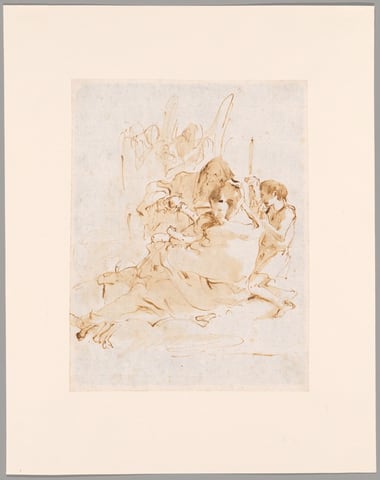
A work made of pen and brown ink and brush and brown ink wash on ivory laid paper.
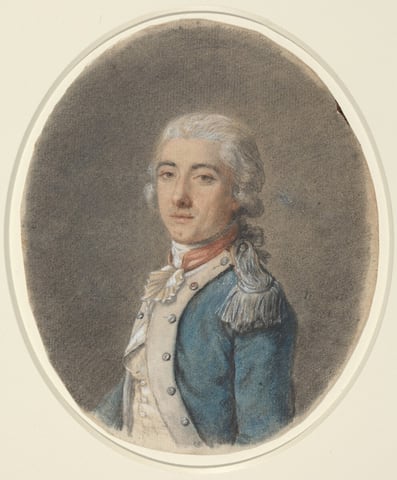
The image displays an oval portrait of a man's upper torso. He is turned slightly to the right, looking directly at the viewer with a composed expression. The man has pale skin, defined facial features, softly arched eyebrows, a subtle mustache, and styled hair in an 18th-century fashion. He wears a blue coat with white lapels, silver buttons, and a silver-fringed epaulet on the shoulder, along with a cravat and waistcoat. The background is a smooth, neutral gray.
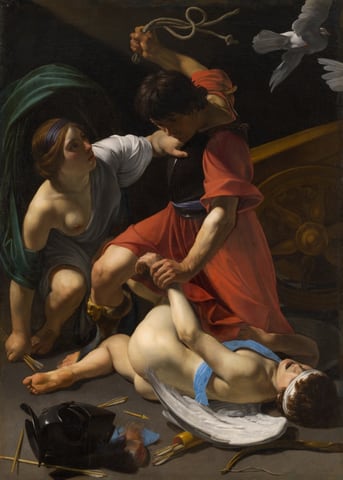
Large painting of cupid being whipped, a woman tries to hold back the a man in red dress.
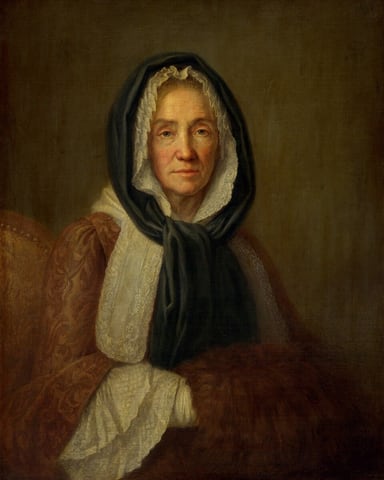
This painting shows a seated elderly woman from the waist up. She faces us with a neutral expression. She has a fair complexion with visible wrinkles, rosy cheeks, and pink lips. Her hair is mostly covered by a white lace cap and a black headscarf. She wears a patterned reddish-brown garment with lace around the collar and sleeves, and her hands rest on a brown fur muff. The background is a dark gray-brown color with visible brushstrokes.
A work made of oil on canvas.
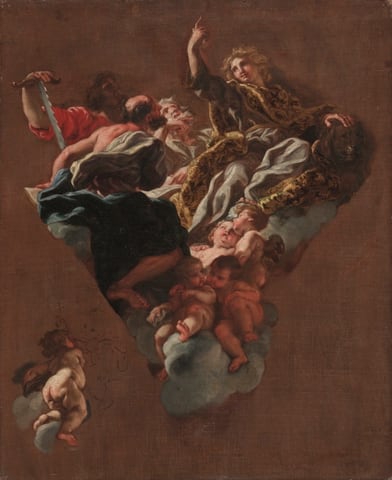
Sketch for "The Four Prophets of Israel" (for Il Gesù, Rome), by Giovanni Battista Gaulli, c. 1675–1677

The works in this room are listed below.

Works in this room

Drama, movement and deep shadow in the 1600s, then the light, playful decoration of eighteenth-century Europe.

First room, north wall

  1. The Sacrifice of Isaac, Tobias and the Angel, The Angels Appearing to Abraham, Abraham Welcoming the Three Angels (painting series), by Francesco Guardi, 1750s
    The Sacrifice of Isaac, Tobias and the Angel, The Angels Appearing to Abraham, Abraham Welcoming the Three Angels (painting series)Francesco Guardi, 1750sCourtesy of the Cleveland Museum of Art
  2. A work made of pen and brown ink and brush and brown ink wash on ivory laid paper.
    Holy Family with St. John and Two AngelsGiovanni Battista Tiepolo, n.d.Courtesy of the Art Institute of Chicago
  3. The image displays an oval portrait of a man's upper torso. He is turned slightly to the right, looking directly at the viewer with a composed expression. The man has pale skin, defined facial features, softly arched eyebrows, a subtle mustache, and styled hair in an 18th-century fashion. He wears a blue coat with white lapels, silver buttons, and a silver-fringed epaulet on the shoulder, along with a cravat and waistcoat. The background is a smooth, neutral gray.
    Portrait of a Man in a Military UniformUnrecorded French maker, 18th centuryCourtesy National Gallery of Art, Washington
  4. Large painting of cupid being whipped, a woman tries to hold back the a man in red dress.
    Cupid ChastisedBartolomeo Manfredi, 1613Courtesy of the Art Institute of Chicago

First room, south wall

  1. This painting shows a seated elderly woman from the waist up. She faces us with a neutral expression. She has a fair complexion with visible wrinkles, rosy cheeks, and pink lips. Her hair is mostly covered by a white lace cap and a black headscarf. She wears a patterned reddish-brown garment with lace around the collar and sleeves, and her hands rest on a brown fur muff. The background is a dark gray-brown color with visible brushstrokes.
    Old Woman with a MuffUnrecorded French maker, second half 18th centuryCourtesy National Gallery of Art, Washington
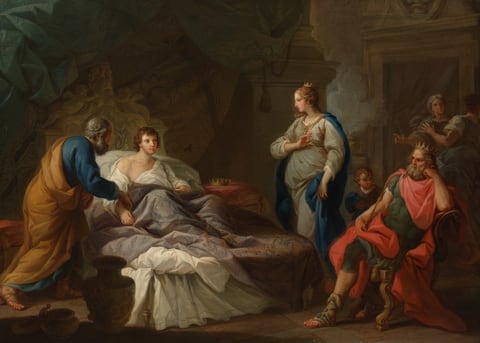
  2. A work made of oil on canvas.
    Antiochus Yearning for StratoniceStefano Pozzi, c. 1740Courtesy of the Art Institute of Chicago
  3. Sketch for "The Four Prophets of Israel" (for Il Gesù, Rome), by Giovanni Battista Gaulli, c. 1675–1677
    Sketch for "The Four Prophets of Israel" (for Il Gesù, Rome)Giovanni Battista Gaulli, c. 1675–1677Courtesy of the Cleveland Museum of Art

Second room, south wall
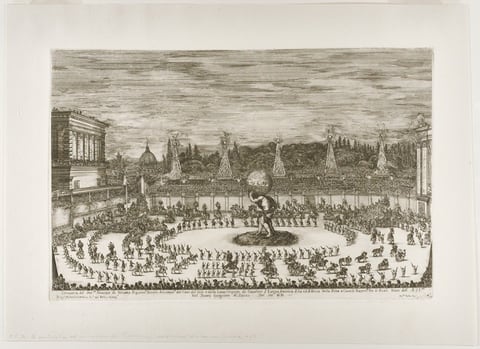
  1. A work made of etching on ivory laid paper.
    Equestrian Ballet in the Amphitheater of the Boboli GardensStefano della Bella, 1661Courtesy of the Art Institute of Chicago
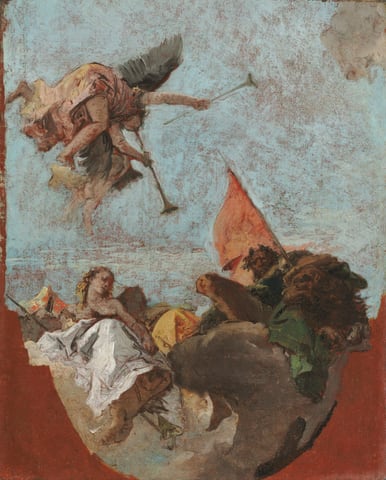
  2. Sketch for a Ceiling, by Giovanni Battista Tiepolo, 1750s
    Sketch for a CeilingGiovanni Battista Tiepolo, 1750sCourtesy of the Cleveland Museum of Art
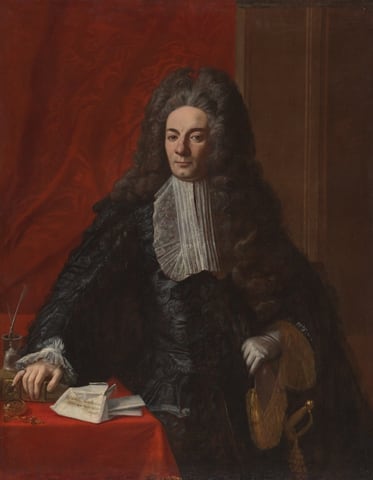
  3. A work made of oil on canvas.
    Jacopo ButeraFrancesco Solimena, c. 1695Courtesy of the Art Institute of Chicago

Second room, north wall
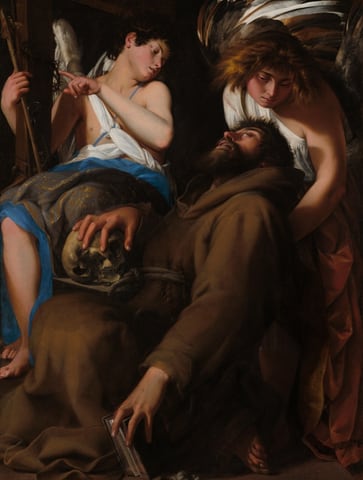
  1. A work made of oil on canvas.
    The Ecstasy of Saint FrancisGiovanni Baglione, 1601Courtesy of the Art Institute of Chicago
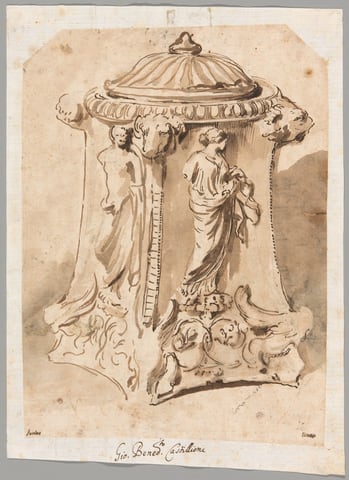
  2. A work made of pen and brown ink and brush and brown wash, over graphite, on cream laid paper laid down on off-white laid paper.
    Antique Carved Marble Candelabra BaseAndrea di Lione, 1642/44 or 1647/51Courtesy of the Art Institute of Chicago
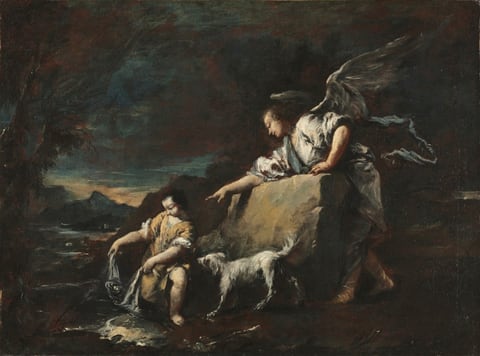
  3. Tobias and the Angel, by Francesco Guardi, 1750s
    Tobias and the AngelFrancesco Guardi, 1750sCourtesy of the Cleveland Museum of Art

Third room, north wall
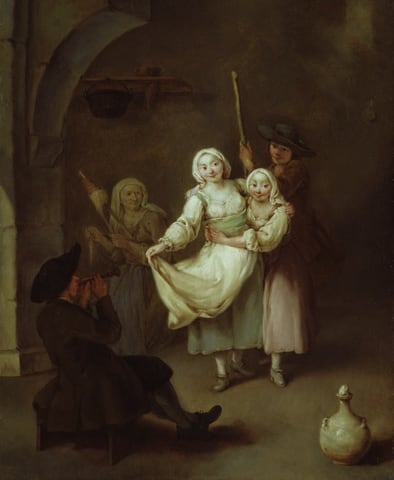
  1. A work made of oil on canvas.
    The DancePietro Longhi, c. 1750Courtesy of the Art Institute of Chicago
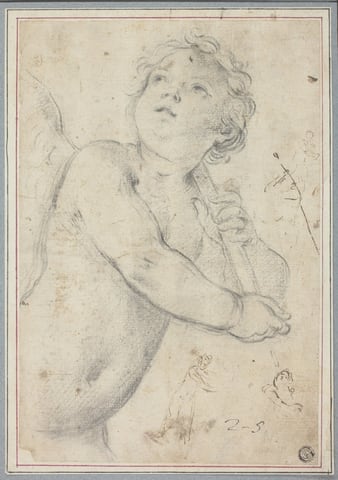
  2. A work made of black chalk with pen and brown ink on cream laid paper.
    Putto Holding StaffGuido Reni, n.d.Courtesy of the Art Institute of Chicago
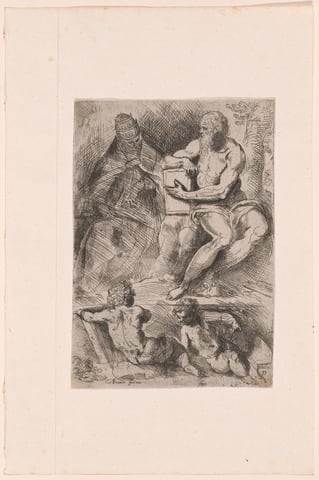
  3. A work made of etching in black on cream laid paper.
    Saint Jerome and a Pope with Two Putti (Saint Jerome and Pope Damasus)Jacopo Palma il Giovane, c. 1611Courtesy of the Art Institute of Chicago