Floor plan

West wing: Old MastersBaroque and Rococo

Baroque and Rococo

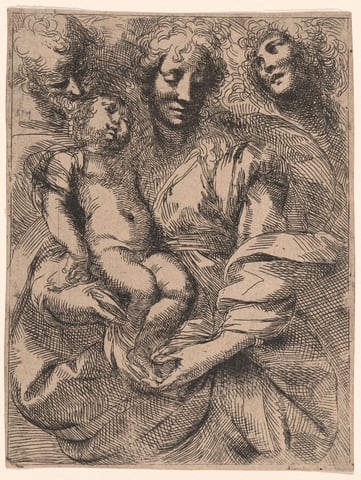
A work made of etching in black on tan laid paper.
A work made of black chalk with pen and brown ink on cream laid paper.
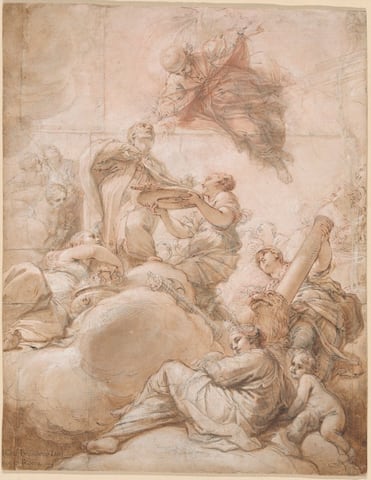
A work made of pen and brown ink and brush and brown wash, over black and red chalk, heightened with white opaque watercolor, on joined sheets of laid paper, mounted to paperboard.
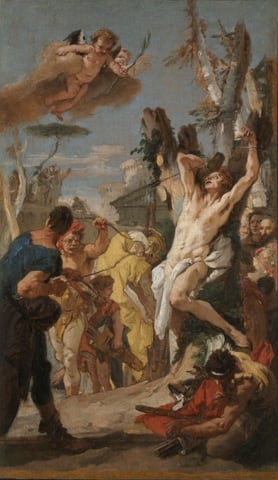
Study for "The Martyrdom of Saint Sebastian" (for the Augustinian monastery at Diessen, Germany), by Giovanni Battista Tiepolo, 1739
A work made of chiaroscuro woodcut, from three blocks in pink, dark blue, and light blue, on cream laid paper.
Christ and the Woman Taken in Adultery, by Sebastiano Ricci, mid-1700s
A work made of etching in black ink on cream laid paper.
A work made of etching and engraving on heavy ivory laid paper.

The works in this room are listed below.

Works in this room

Drama, movement and deep shadow in the 1600s, then the light, playful decoration of eighteenth-century Europe.

First room, north wall

  1. A work made of etching in black on tan laid paper.
    The Holy FamilyGiulio Cesare Procaccini, 1613/15Courtesy of the Art Institute of Chicago
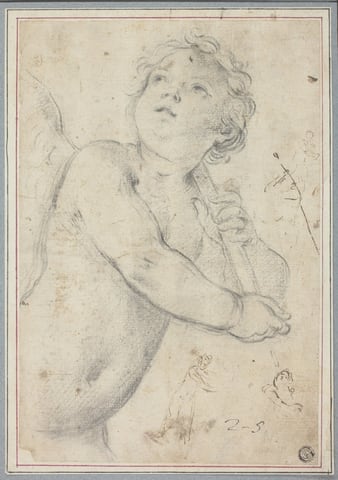
  2. A work made of black chalk with pen and brown ink on cream laid paper.
    Putto Holding StaffGuido Reni, n.d.Courtesy of the Art Institute of Chicago
  3. A work made of pen and brown ink and brush and brown wash, over black and red chalk, heightened with white opaque watercolor, on joined sheets of laid paper, mounted to paperboard.
    Allegory of the Elevation of Cardinal Deacon Oddone Colonna to the Papal Chair as Pope Martin VBenedetto Luti, 1700Courtesy of the Art Institute of Chicago
  4. Study for "The Martyrdom of Saint Sebastian" (for the Augustinian monastery at Diessen, Germany), by Giovanni Battista Tiepolo, 1739
    Study for "The Martyrdom of Saint Sebastian" (for the Augustinian monastery at Diessen, Germany)Giovanni Battista Tiepolo, 1739Courtesy of the Cleveland Museum of Art

First room, south wall

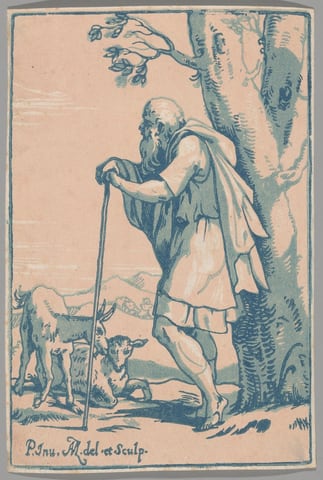
  1. A work made of chiaroscuro woodcut, from three blocks in pink, dark blue, and light blue, on cream laid paper.
    The Old ShepherdConte Antonio Maria Zanetti, the Elder, 1722Courtesy of the Art Institute of Chicago
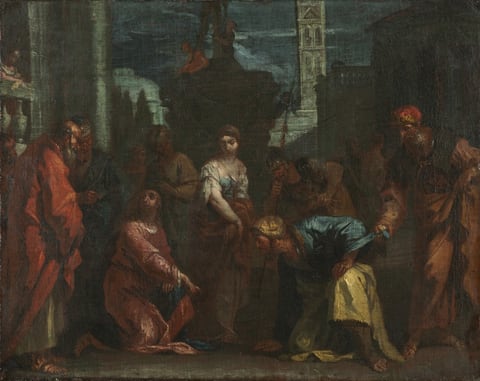
  2. Christ and the Woman Taken in Adultery, by Sebastiano Ricci, mid-1700s
    Christ and the Woman Taken in AdulterySebastiano Ricci, mid-1700sCourtesy of the Cleveland Museum of Art
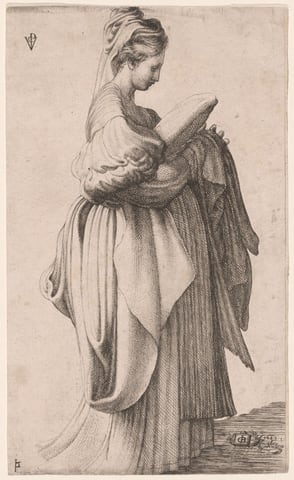
  3. A work made of etching in black ink on cream laid paper.
    A Young Woman Holding a CushionMonogrammist VCP, 1643Courtesy of the Art Institute of Chicago
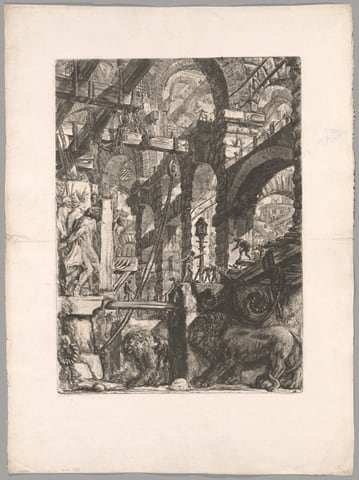
  4. A work made of etching and engraving on heavy ivory laid paper.
    The Lion Bas-Reliefs, plate 5 from Imaginary PrisonsGiovanni Battista Piranesi, 1761Courtesy of the Art Institute of Chicago

Second room, south wall
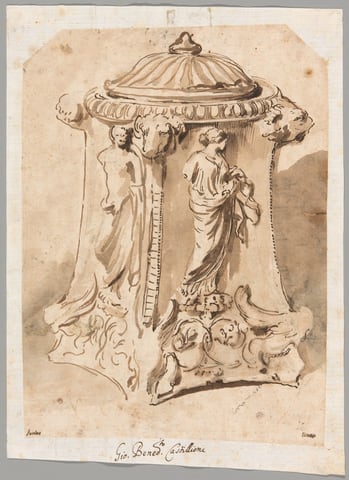
  1. A work made of pen and brown ink and brush and brown wash, over graphite, on cream laid paper laid down on off-white laid paper.
    Antique Carved Marble Candelabra BaseAndrea di Lione, 1642/44 or 1647/51Courtesy of the Art Institute of Chicago
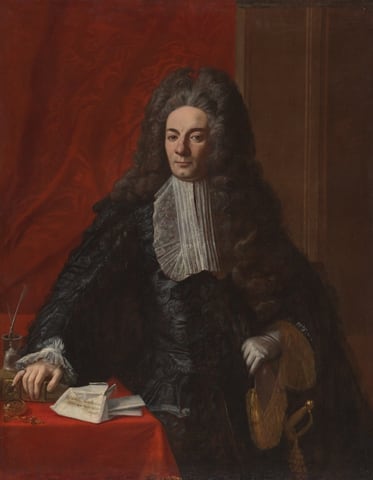
  2. A work made of oil on canvas.
    Jacopo ButeraFrancesco Solimena, c. 1695Courtesy of the Art Institute of Chicago
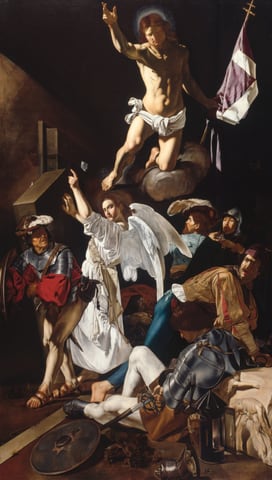
  3. A work made of oil on canvas.
    The ResurrectionCecco del Caravaggio, c. 1619-20Courtesy of the Art Institute of Chicago

Second room, north wall
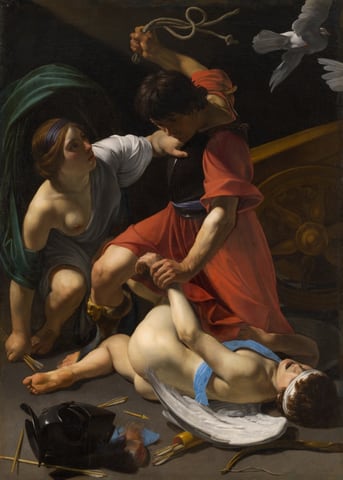
  1. Large painting of cupid being whipped, a woman tries to hold back the a man in red dress.
    Cupid ChastisedBartolomeo Manfredi, 1613Courtesy of the Art Institute of Chicago
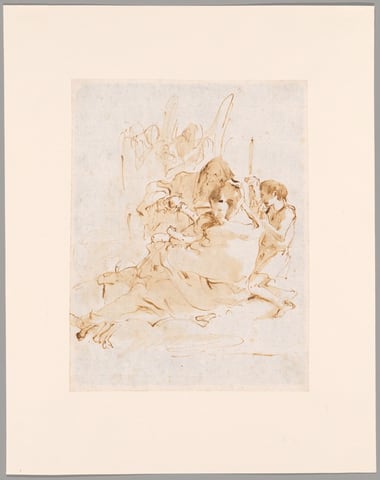
  2. A work made of pen and brown ink and brush and brown ink wash on ivory laid paper.
    Holy Family with St. John and Two AngelsGiovanni Battista Tiepolo, n.d.Courtesy of the Art Institute of Chicago

Third room, north wall
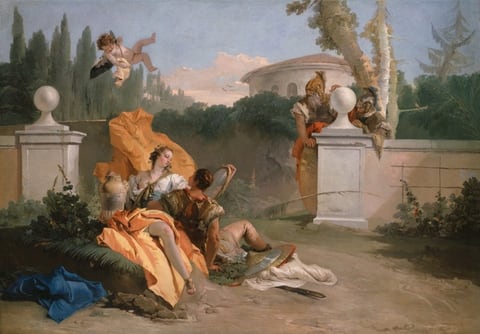
  1. A work made of oil on canvas.
    Rinaldo and Armida in Her GardenGiovanni Battista Tiepolo, c. 1742–45Courtesy of the Art Institute of Chicago
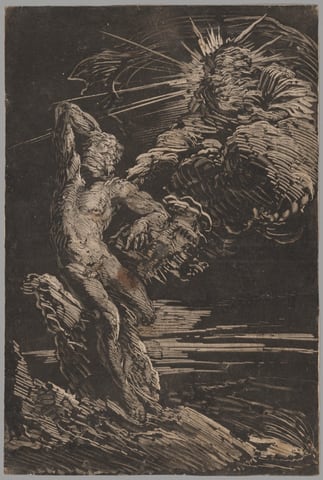
  2. Drawing of god, radiating light, reaching down from clouds, touching male figure.
    The Creation of AdamGiovanni Benedetto Castiglione, c. 1645/50Courtesy of the Art Institute of Chicago
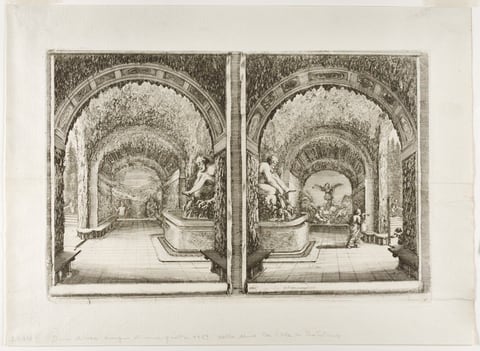
  3. A work made of etching on ivory laid paper.
    The Grotto of Pan and FameStefano della Bella, 1653/55Courtesy of the Art Institute of Chicago