Baroque and Rococo
Drama, movement and deep shadow in the 1600s, then the light, playful decoration of eighteenth-century Europe.
First room, north wall
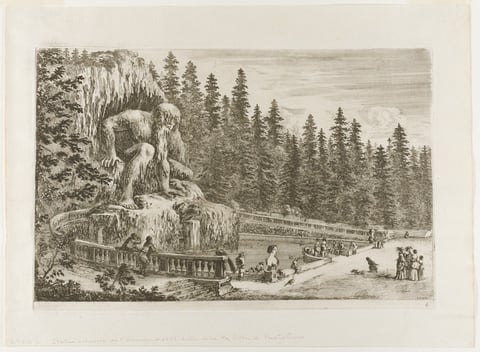
The Colossal Statue of the Apennines, from Views of Villa di PratolinoStefano della Bella, c. 1653Courtesy of the Art Institute of Chicago 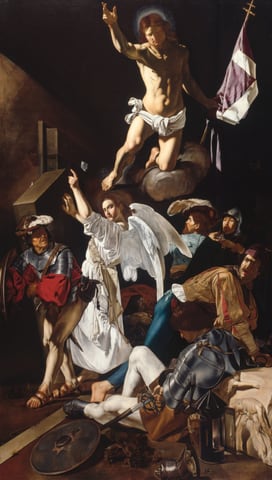
The ResurrectionCecco del Caravaggio, c. 1619-20Courtesy of the Art Institute of Chicago 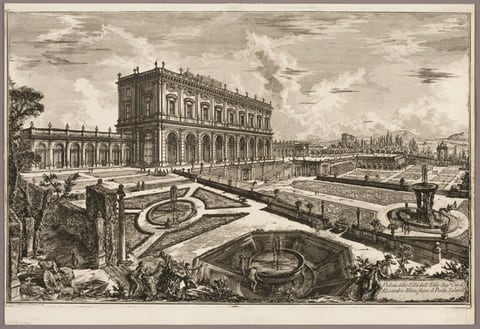
View of the Villa of His Eminence Cardinal Alessandro Albani, outside Porta Salaria, from Views of RomeGiovanni Battista Piranesi, 1769, published 1800–07Courtesy of the Art Institute of Chicago
First room, south wall
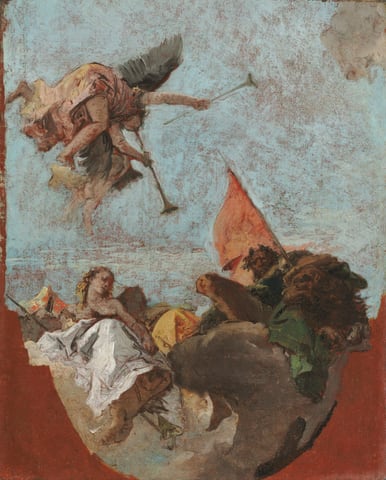
Sketch for a CeilingGiovanni Battista Tiepolo, 1750sCourtesy of the Cleveland Museum of Art 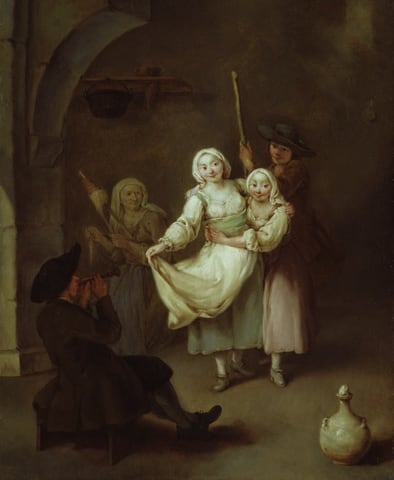
The DancePietro Longhi, c. 1750Courtesy of the Art Institute of Chicago 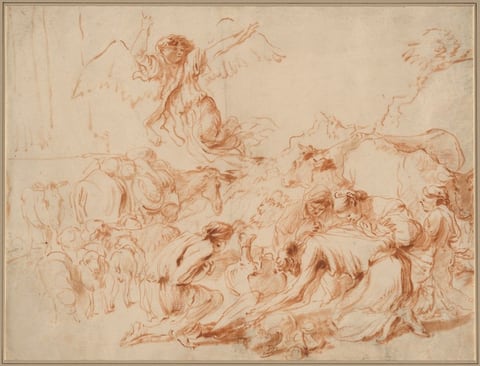
The Angel Departing from the Family of Tobit (?)Giovanni Benedetto Castiglione, c. 1655Courtesy of the Art Institute of Chicago 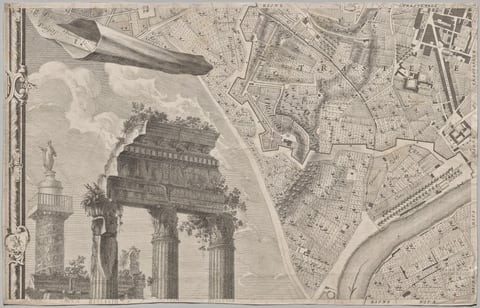
Nuova pianta di Roma data in luce da Giambattista Nolli l’anno MDCCXLVII, known as La Pianta Grande di RomaGiovanni Battista Nolli, 1748Courtesy of the Cleveland Museum of Art
Second room, south wall
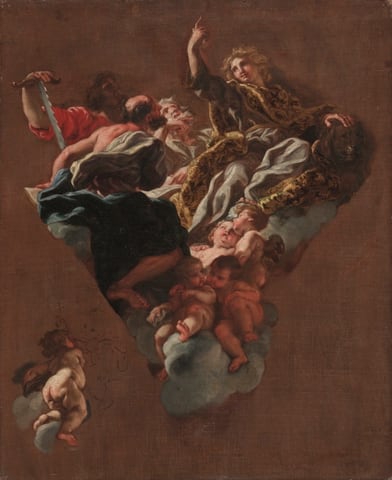
Sketch for "The Four Prophets of Israel" (for Il Gesù, Rome)Giovanni Battista Gaulli, c. 1675–1677Courtesy of the Cleveland Museum of Art 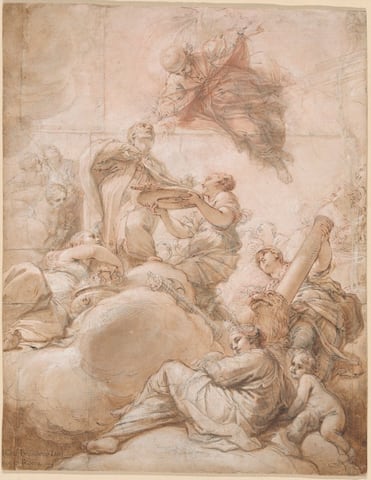
Allegory of the Elevation of Cardinal Deacon Oddone Colonna to the Papal Chair as Pope Martin VBenedetto Luti, 1700Courtesy of the Art Institute of Chicago 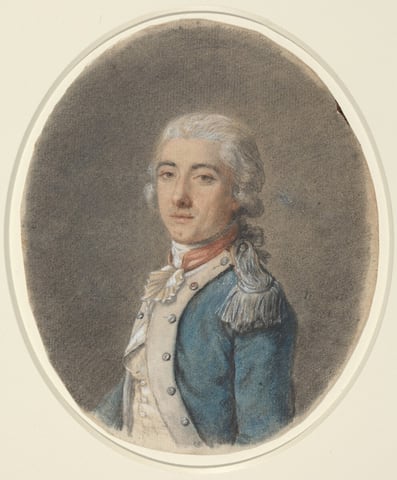
Portrait of a Man in a Military UniformUnrecorded French maker, 18th centuryCourtesy National Gallery of Art, Washington 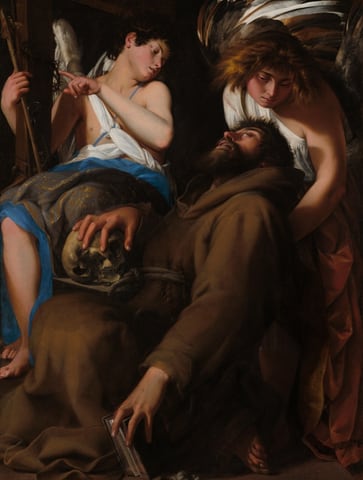
The Ecstasy of Saint FrancisGiovanni Baglione, 1601Courtesy of the Art Institute of Chicago
Second room, north wall
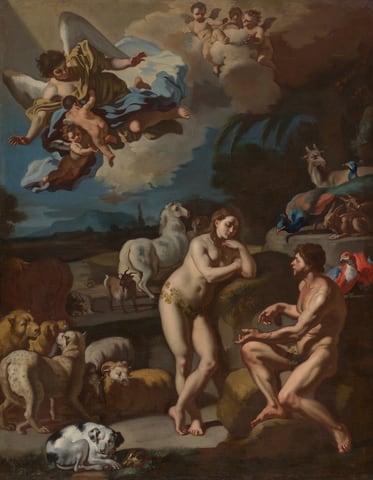
Adam and Eve in ParadiseFrancesco Solimena, c. 1700Courtesy of the Art Institute of Chicago 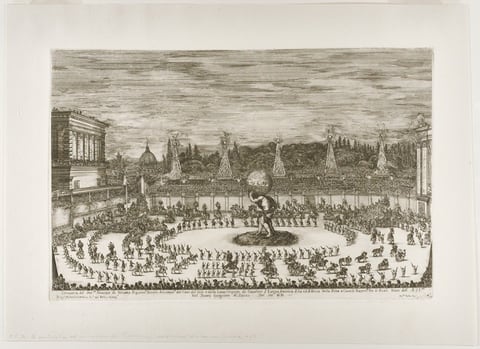
Equestrian Ballet in the Amphitheater of the Boboli GardensStefano della Bella, 1661Courtesy of the Art Institute of Chicago 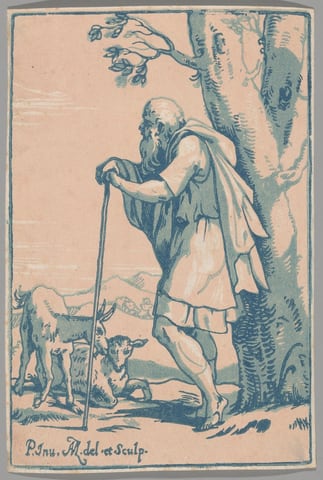
The Old ShepherdConte Antonio Maria Zanetti, the Elder, 1722Courtesy of the Art Institute of Chicago
Third room, north wall
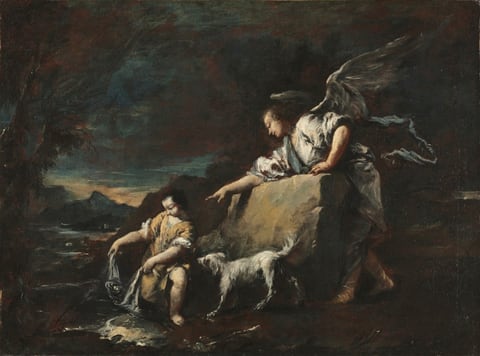
Tobias and the AngelFrancesco Guardi, 1750sCourtesy of the Cleveland Museum of Art 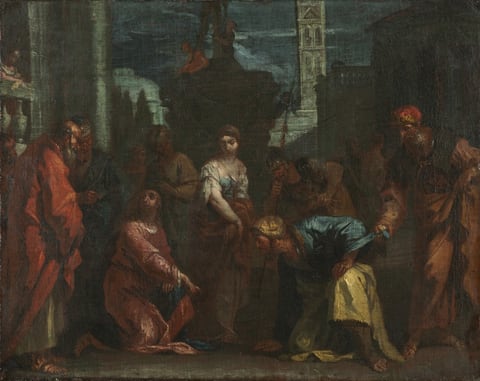
Christ and the Woman Taken in AdulterySebastiano Ricci, mid-1700sCourtesy of the Cleveland Museum of Art