Skip to content
Ochre Editions
ArtArtistsCollectionsGalleriesDrops
SearchSign inCart (0)
The galleries · Time and place

16th-century Italy

Works made in Italy in the 16th century.

66 works · hang 5037 ·

Share 16th-century Italy, in the galleries

The rooms are imagined; every work on their walls is real.

Walk this roomRehang this room

First room, north wall

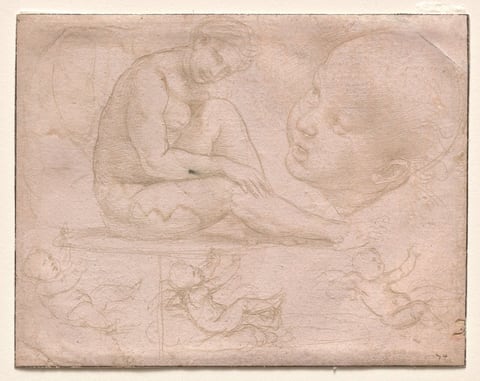
  1. Studies of a Seated Female, Child's Head, and Three Studies of a Baby, by Raphael, c. 1507–8
    Studies of a Seated Female, Child's Head, and Three Studies of a BabyRaphael, c. 1507–8Courtesy of the Cleveland Museum of Art
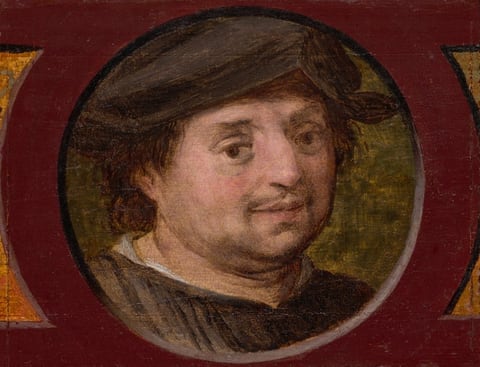
  2. A work made of oil on panel.
    Domenico da GambassiAndrea del Sarto, 1525–28Courtesy of the Art Institute of Chicago
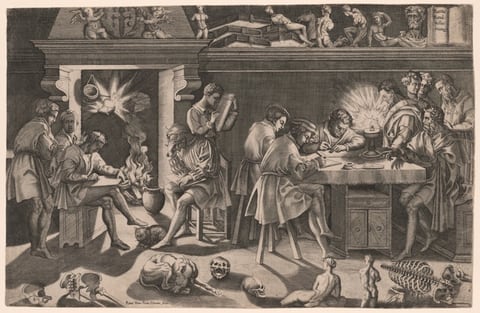
  3. A work made of engraving in black on cream laid paper.
    The Academy of Baccio BandinelliEnea Vico, 1544/50, printed c. 1560sCourtesy of the Art Institute of Chicago

First room, south wall
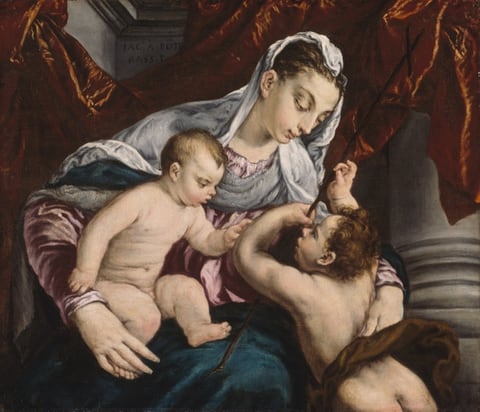
  1. A work made of oil on canvas.
    Virgin and Child with the Young Saint John the BaptistJacopo Bassano, 1560–65Courtesy of the Art Institute of Chicago
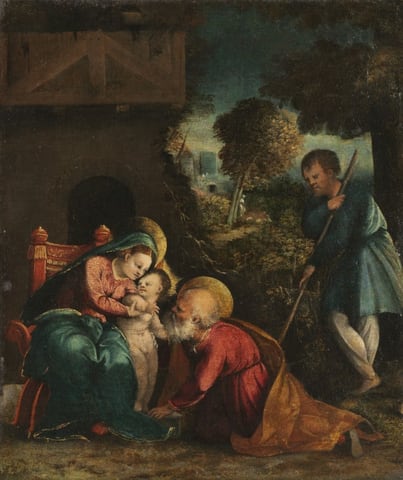
  2. Holy Family with a Shepherd, by Battista Dossi, early 1520s
    Holy Family with a ShepherdBattista Dossi, early 1520sCourtesy of the Cleveland Museum of Art
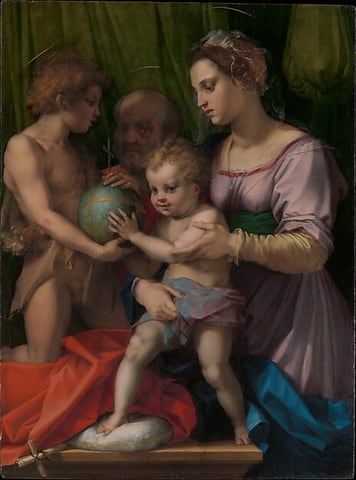
  3. The Holy Family with the Young Saint John the Baptist, by Andrea del Sarto, ca. 1528
    The Holy Family with the Young Saint John the BaptistAndrea del Sarto, ca. 1528Courtesy of The Metropolitan Museum of Art

Second room, south wall
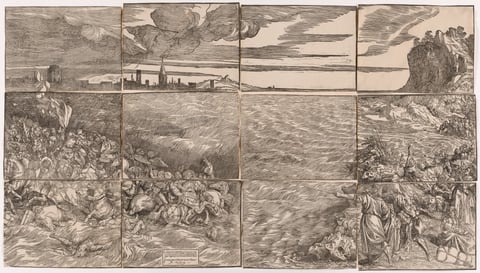
  1. The Submersion of Pharaoh's Army in the Red Sea, by Titian, 1514–15, printed 1549
    The Submersion of Pharaoh's Army in the Red SeaTitian, 1514–15, printed 1549Courtesy of the Cleveland Museum of Art
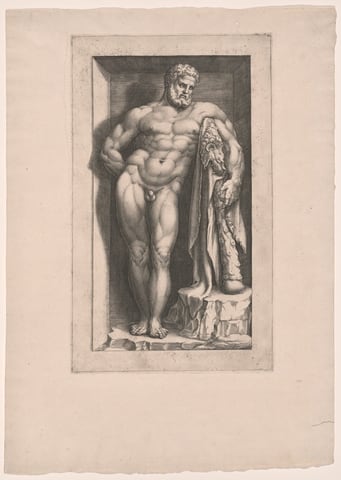
  2. A work made of engraving in black on cream laid paper.
    The Farnese HerculesGiorgio Ghisi, c. 1577Courtesy of the Art Institute of Chicago
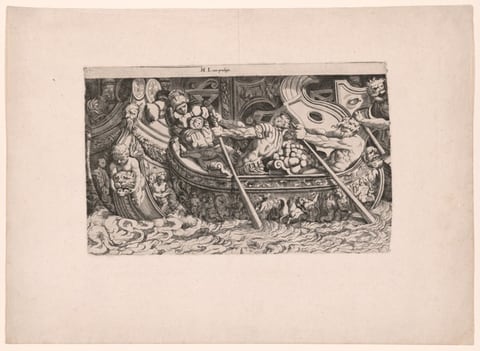
  3. A work made of engraving and etching in black on cream laid paper.
    A Naval BattleMichele Lucchese, c. 1550Courtesy of the Art Institute of Chicago
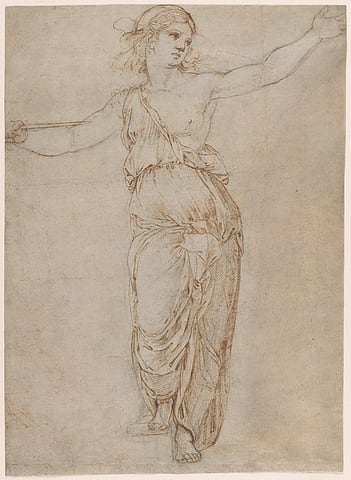
  4. Lucretia, by Raphael, 1508–10
    LucretiaRaphael, 1508–10Courtesy of The Metropolitan Museum of Art

Second room, north wall
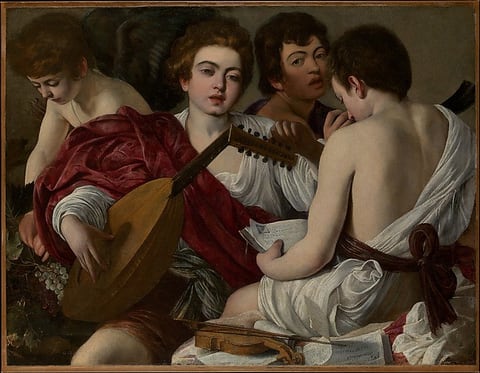
  1. The Musicians, by Caravaggio, 1597
    The MusiciansCaravaggio, 1597Courtesy of The Metropolitan Museum of Art
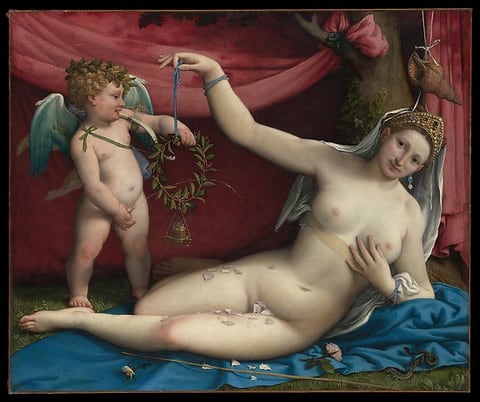
  2. Venus and Cupid, by Lorenzo Lotto, 1520s
    Venus and CupidLorenzo Lotto, 1520sCourtesy of The Metropolitan Museum of Art
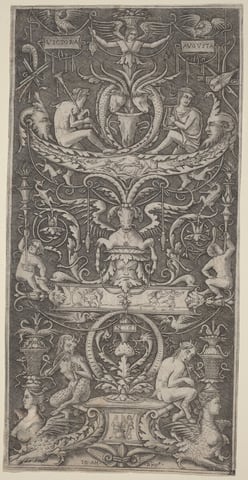
  3. This is a drawing of an ornamental design featuring mythological creatures and motifs. The artwork depicts a symmetrical arrangement with two central figures holding musical instruments, surrounded by acanthus leaves, griffins, and sphinxes. In the upper portion, there is a winged figure with a crown-like headdress carrying symbols or trophies. The design is detailed with decorative elements including floral patterns and architectural motifs. Throughout the drawing, there are various mythological creatures integrated into the composition.
    Ornamental Panel Inscribed "Victoria Augusta"Giovanni Antonio da Brescia, c. 1516Courtesy National Gallery of Art, Washington

Third room, north wall
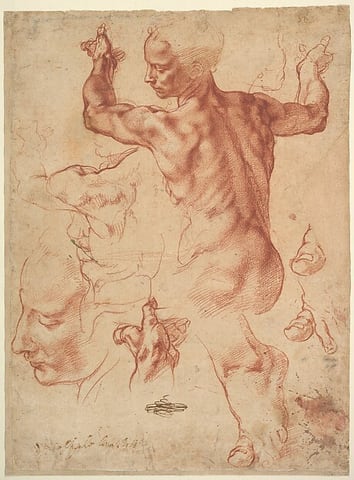
  1. Studies for the Libyan Sibyl (recto); Studies for the Libyan Sibyl and a small Sketch for a Seated Figure (verso), by Michelangelo Buonarroti, ca. 1510–11
    Studies for the Libyan Sibyl (recto); Studies for the Libyan Sibyl and a small Sketch for a Seated Figure (verso)Michelangelo Buonarroti, ca. 1510–11Courtesy of The Metropolitan Museum of Art
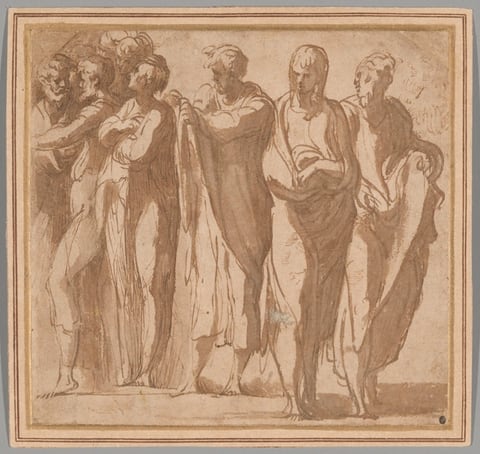
  2. A work made of pen and brown ink and brush and brown wash, on tan laid paper, laid down on tan laid card.
    Group of Nine Standing FiguresParmigianino, 1524/27Courtesy of the Art Institute of Chicago
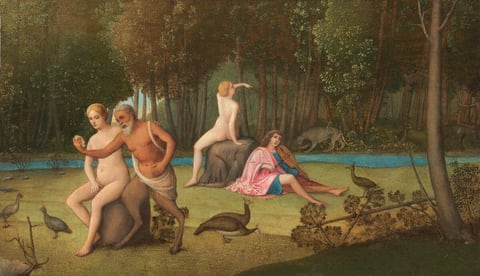
  3. Two women, a man, and a satyr, a man with goat’s legs, are in two pairs in a forested landscape in this horizontal painting. The pale-skinned women are nude, and their blond hair is tied up and back. One woman sits on a brown boulder to the left of center. One hand covers her groin, and the other hand rests on the satyr’s shoulder. The satyr has deeply tanned skin, short white hair, and a long white beard. A white cloth wraps over one shoulder and across his hips. He holds up an object, perhaps a shell, with one hand. That arm crosses over the woman’s breasts. His other hand is by his lower belly, and he looks at the shell. A bit farther back and to our right, a second nude woman also sits on a boulder. She faces away from us and holds up a long stick with her left arm, which arcs over her body. A clean-shaven, pale-skinned man sits with his back against the boulder. He has long brown hair and looks off to the distance to our right. He wears a carnation-pink robe over a sapphire-blue tunic. His legs splay in front of him, his feet bare, as he holds a bow to a violin-like instrument tucked under his chin. The two pairs sit in a grassy glade occupied also by five pheasant- or peacock-like birds. A thin river running behind the glade is lined with spindly trees that together make an impenetrable bronze-brown and laurel-green canopy. The second woman’s stick points or is directed to a gray, mountain lion-like cat on the far bank. Closer inspection reveals deer and another person, who points, tucked among the trunks. A glimpse of blue sky is visible through a break in the tree trunks.
    OrpheusUnrecorded Italian maker, c. 1515Courtesy National Gallery of Art, Washington

Walk on

  • 16th-century Italy, room 2
  • More by unrecorded makers of Italy 14 works
  • More Italian Renaissance 61 works
Ochre Editions

The world's museums, on your wall. Every work here is a reproduction of a public-domain original, credited to the museum that holds it.

Shop

All artCollectionsLimited dropsPrints and framing

Help

Find an orderShippingReturnsVerify a certificate

About

About Ochre EditionsMuseum creditsFor agentsDevelopers

Legal

Terms of UseTerms of SaleLimited Editions and CertificatesPrivacy PolicyCookie PolicyAcceptable Use PolicyAgent & API TermsCopyright and DMCA PolicyPrinting Your Own PhotoVulnerability Disclosure PolicyAccessibility StatementOpen-Access Credits
© 2026 Ochre EditionsPrices in US dollars. Prints ship within the United States.