Floor plan

Time and placeThe 16th century

The 16th century

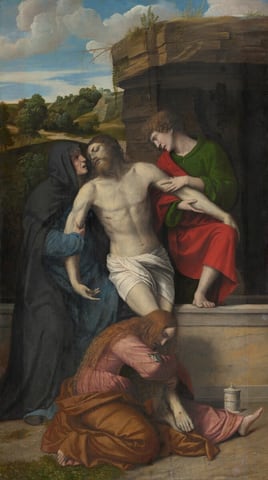
Two women and a man support the gray, lifeless body of a nearly nude man along a stone ledge in this vertical painting. The people have pale skin, except for the dead man at the center, Jesus, who has ash-white skin with dark shadows around his closed eyes. He has a long straight nose, and his lips are slightly parted. He has a brown beard, and his long, wavy hair falls away from his face. A white cloth wraps across his hips, and blood trickles from a gash over his right ribs and holes in his feet. A woman and man prop him up on either side, each holding Jesus by a limp arm, and each has a faint, gold halo encircling their heads. To our left, the woman holds her face close to his, her brows deeply furrowed and her mouth wide open, teeth showing. Her forehead, chin, and neck are covered by a white veil, worn under navy-blue cloak that covers her head and body. The cloak falls open over one arm and a bent knee to reveal her long-sleeved, lighter blue dress. On Jesus’s other side, a cleanshaven man with curly brown hair holds Jesus’s arm with both hands. The man’s eyes squint with tears as he tips his head toward Jesus. His pink lips are parted, and the corner of the mouth we can see is pulled down. He wears an emerald-green, long-sleeved tunic under a vivid red cloth that wraps around his right arm, waist, and left leg. The fourth and final person is a woman sitting on the ground, her arms wrapped tightly around Jesus’s crossed ankles. She sits with one foot tucked under her body and the other leg out straight. Waist-length, wavy, auburn-brown hair falls freely over her shoulders and across her face, but we can see her downturned, open mouth and nearly closed eyes. She wears a rose-pink dress, cinched at the waist. A brown cloth wraps around her waist and right leg. A cylindrical, lidded, white jar sits on the dirt ground nearby. The group is arranged in front a thigh-high stone ledge, except for the man in green and red, who steps into what is presumably the coffin. A rocky outcropping to our right has a cave-like opening with grasses and growth along the top. The landscape beyond has a dirt path winding between pine-green hills dotted with trees. Two slate-blue buildings perch atop one hill. White clouds float across the blue sky above.
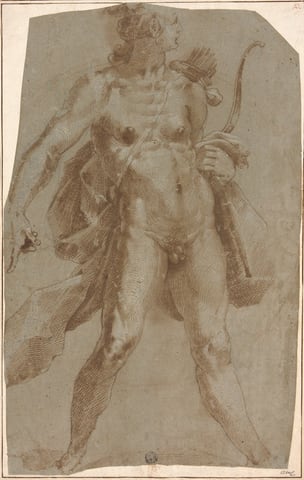
A work made of pen and brown ink, heightened with lead white (partly discolored), over black chalk, on blue laid paper, laid down on ivory laid paper.
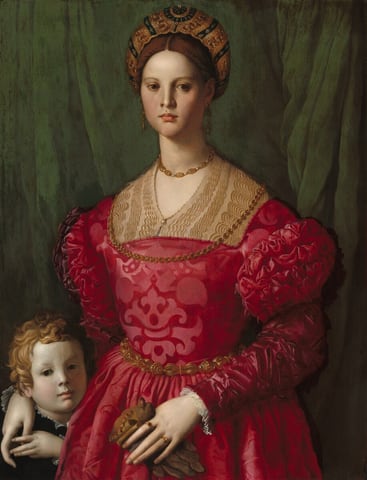
A woman wearing a crimson-red brocade dress and gold jewelry fills most of this vertical portrait, but her right hand, on our left, rests on the shoulder of a young boy tucked into the lower left corner of the panel. The woman and boy both have pale, white skin, and both face and look out at us against an emerald-green curtain that falls behind them. The woman has brown eyes, a straight nose, full pink lips, smooth cheeks, and a long neck. Her brown hair is pulled back under a turban densely embroidered with gold. The woman’s dress has puffed shoulders and decorative slashes on the sleeves. One gold chain rests on her throat and the other falls over her chest. She wears long gold earrings, a gold belt, and two gold rings. She holds a brown leather glove in her left hand. The boy’s face is even with the woman’s waist, and he raises his left hand to hold hers, which is draped over his shoulder. He has curly blond hair and dark eyes, and he wears black with a ruffled white shirt just visible at his collar.
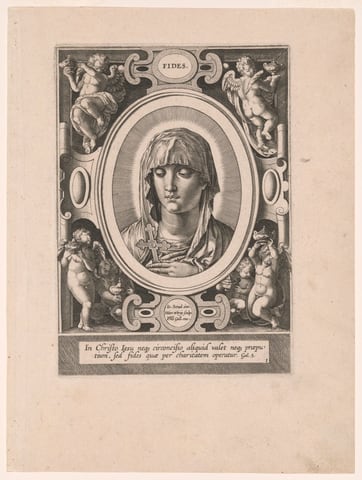
A work made of engraving on ivory laid paper.
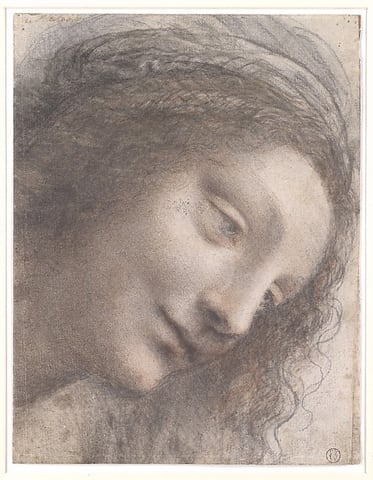
The Head of the Virgin in Three-Quarter View Facing Right, by Leonardo da Vinci, 1510–13

The works in this room are listed below.

Works in this room

Works made in the 16th century, anywhere in the world.

Section 1, north wall

  1. Two women and a man support the gray, lifeless body of a nearly nude man along a stone ledge in this vertical painting. The people have pale skin, except for the dead man at the center, Jesus, who has ash-white skin with dark shadows around his closed eyes. He has a long straight nose, and his lips are slightly parted. He has a brown beard, and his long, wavy hair falls away from his face. A white cloth wraps across his hips, and blood trickles from a gash over his right ribs and holes in his feet. A woman and man prop him up on either side, each holding Jesus by a limp arm, and each has a faint, gold halo encircling their heads. To our left, the woman holds her face close to his, her brows deeply furrowed and her mouth wide open, teeth showing. Her forehead, chin, and neck are covered by a white veil, worn under navy-blue cloak that covers her head and body. The cloak falls open over one arm and a bent knee to reveal her long-sleeved, lighter blue dress. On Jesus’s other side, a cleanshaven man with curly brown hair holds Jesus’s arm with both hands. The man’s eyes squint with tears as he tips his head toward Jesus. His pink lips are parted, and the corner of the mouth we can see is pulled down. He wears an emerald-green, long-sleeved tunic under a vivid red cloth that wraps around his right arm, waist, and left leg. The fourth and final person is a woman sitting on the ground, her arms wrapped tightly around Jesus’s crossed ankles. She sits with one foot tucked under her body and the other leg out straight. Waist-length, wavy, auburn-brown hair falls freely over her shoulders and across her face, but we can see her downturned, open mouth and nearly closed eyes. She wears a rose-pink dress, cinched at the waist. A brown cloth wraps around her waist and right leg. A cylindrical, lidded, white jar sits on the dirt ground nearby. The group is arranged in front a thigh-high stone ledge, except for the man in green and red, who steps into what is presumably the coffin. A rocky outcropping to our right has a cave-like opening with grasses and growth along the top. The landscape beyond has a dirt path winding between pine-green hills dotted with trees. Two slate-blue buildings perch atop one hill. White clouds float across the blue sky above.
    PietàMoretto da Brescia, 1520sCourtesy National Gallery of Art, Washington
  2. A work made of pen and brown ink, heightened with lead white (partly discolored), over black chalk, on blue laid paper, laid down on ivory laid paper.
    ApolloJan Harmensz. Muller, c. 1600-1620Courtesy of the Art Institute of Chicago

Section 1, south wall

  1. A woman wearing a crimson-red brocade dress and gold jewelry fills most of this vertical portrait, but her right hand, on our left, rests on the shoulder of a young boy tucked into the lower left corner of the panel. The woman and boy both have pale, white skin, and both face and look out at us against an emerald-green curtain that falls behind them. The woman has brown eyes, a straight nose, full pink lips, smooth cheeks, and a long neck. Her brown hair is pulled back under a turban densely embroidered with gold. The woman’s dress has puffed shoulders and decorative slashes on the sleeves. One gold chain rests on her throat and the other falls over her chest. She wears long gold earrings, a gold belt, and two gold rings. She holds a brown leather glove in her left hand. The boy’s face is even with the woman’s waist, and he raises his left hand to hold hers, which is draped over his shoulder. He has curly blond hair and dark eyes, and he wears black with a ruffled white shirt just visible at his collar.
    A Young Woman and Her Little BoyAgnolo Bronzino, c. 1540Courtesy National Gallery of Art, Washington
  2. A work made of engraving on ivory laid paper.
    Fides, plate 1 from The Seven VirtuesHieronymous Wierix, c. 1598Courtesy of the Art Institute of Chicago
  3. The Head of the Virgin in Three-Quarter View Facing Right, by Leonardo da Vinci, 1510–13
    The Head of the Virgin in Three-Quarter View Facing RightLeonardo da Vinci, 1510–13Courtesy of The Metropolitan Museum of Art

Section 2, south wall
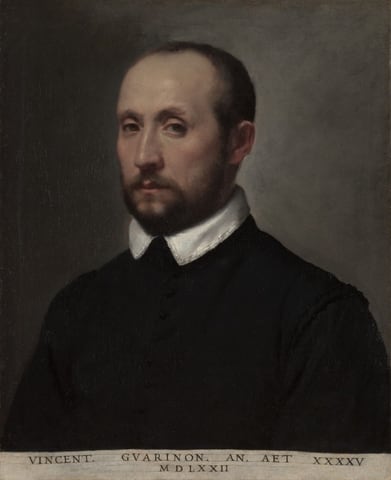
  1. Portrait of Vincenzo Guarignoni, by Giovanni Battista Moroni, c. 1572
    Portrait of Vincenzo GuarignoniGiovanni Battista Moroni, c. 1572Courtesy of the Cleveland Museum of Art
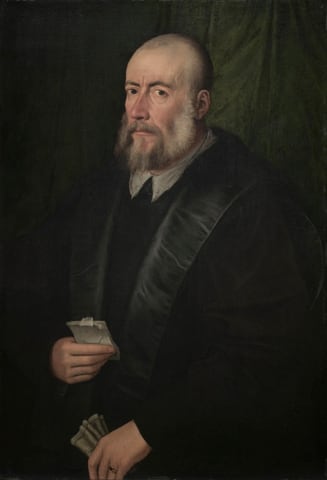
  2. Portrait of an Old Man, by Giulio Campi, mid-1500s
    Portrait of an Old ManGiulio Campi, mid-1500sCourtesy of the Cleveland Museum of Art

Section 2, north wall
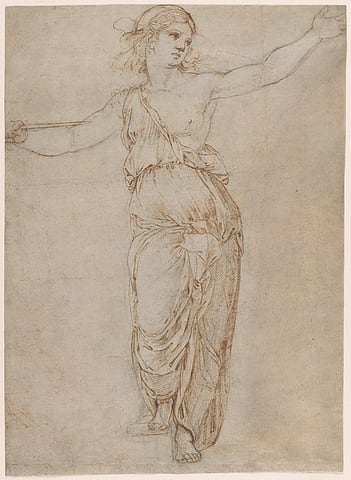
  1. Lucretia, by Raphael, 1508–10
    LucretiaRaphael, 1508–10Courtesy of The Metropolitan Museum of Art
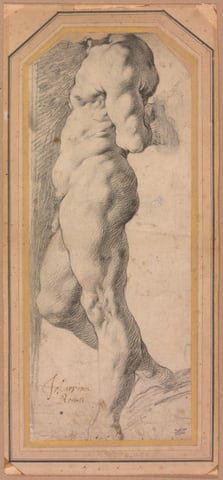
  2. A work made of black chalk on laid paper, laid down on tan laid pulp board.
    Study of a Standing Male NudeGiuseppe Cesari, called Cavaliere d'Arpino, 1595/96Courtesy of the Art Institute of Chicago
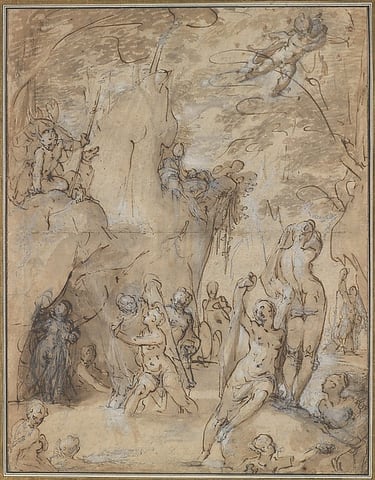
  3. Diana and Actaeon, by Bartholomeus Spranger, ca. 1580–85
    Diana and ActaeonBartholomeus Spranger, ca. 1580–85Courtesy of The Metropolitan Museum of Art

Section 3, north wall
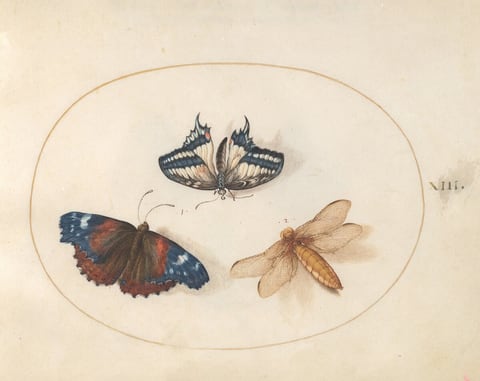
  1. Three insects are depicted in the image: a butterfly with dark blue and red wings on the bottom left, a larger butterfly with white, black, and blue patterns at the top center, and a dragonfly with brown and gold tones on the bottom right. The color palette includes rich blues, reds, browns, and golds against a neutral background. The central butterfly is positioned higher than the other two insects, with the left butterfly and right dragonfly symmetrically arranged below.
    Plate 13: Yellow Swallowtail and Red Admiral Butterflies with a Dragonfly (Broad-Bodied Chaser?)Joris Hoefnagel, c.1575/1590sCourtesy National Gallery of Art, Washington
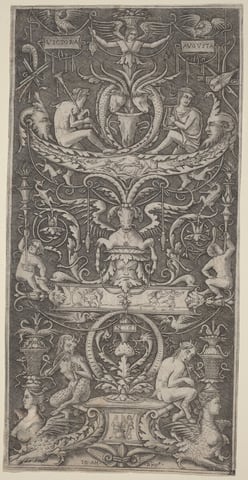
  2. This is a drawing of an ornamental design featuring mythological creatures and motifs. The artwork depicts a symmetrical arrangement with two central figures holding musical instruments, surrounded by acanthus leaves, griffins, and sphinxes. In the upper portion, there is a winged figure with a crown-like headdress carrying symbols or trophies. The design is detailed with decorative elements including floral patterns and architectural motifs. Throughout the drawing, there are various mythological creatures integrated into the composition.
    Ornamental Panel Inscribed "Victoria Augusta"Giovanni Antonio da Brescia, c. 1516Courtesy National Gallery of Art, Washington
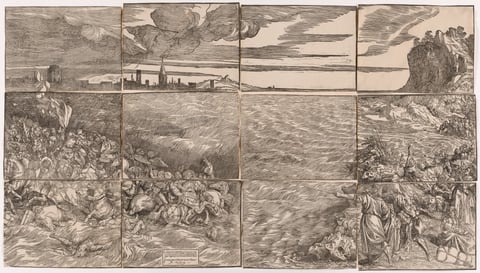
  3. The Submersion of Pharaoh's Army in the Red Sea, by Titian, 1514–15, printed 1549
    The Submersion of Pharaoh's Army in the Red SeaTitian, 1514–15, printed 1549Courtesy of the Cleveland Museum of Art

Section 3, south wall
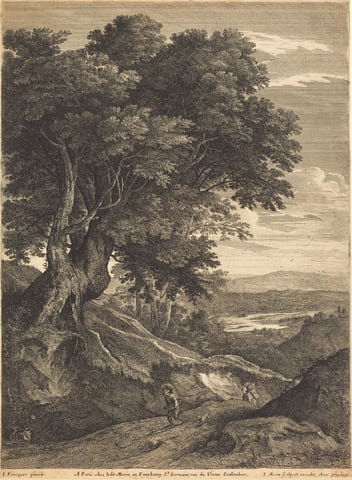
  1. The image depicts a landscape viewed from a slightly elevated angle. On the left side, there is a large tree with a twisted trunk and dense foliage. A winding path can be seen with a figure walking with a dog. In the distance, a river winds through the land, and there are rolling hills and trees in the background. The color scheme is sepia-toned.
    Hilly Landscape with Travelers on FootJean MorinCourtesy National Gallery of Art, Washington
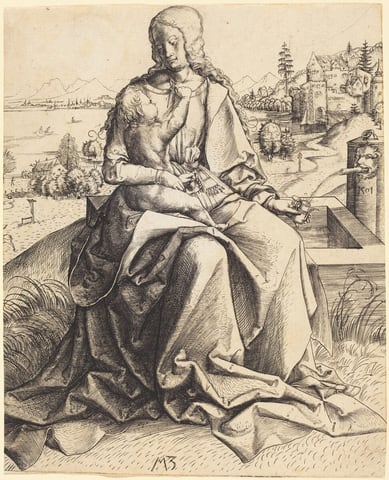
  2. The image shows a woman sitting with a child on her lap. The woman has a gentle expression and long hair, wearing a flowing robe. The child is facing her, reaching up with one hand. In the background are trees, hills, a building, and a fountain with a lion's head spouting water into a basin. The illustration is detailed, capturing textures and elements in the scene.
    Madonna and Child at a FountainMaster MZ, 1501Courtesy National Gallery of Art, Washington
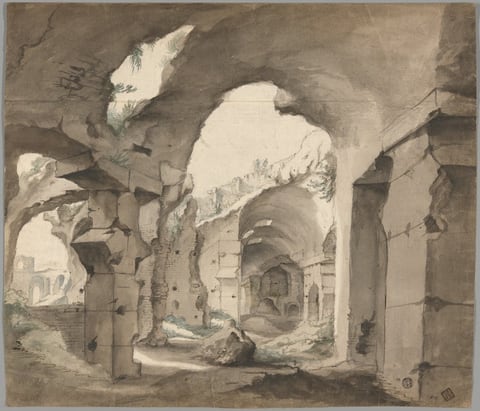
  3. A work made of pen and brown ink and brush and black and green washes, over black chalk, on cream laid paper.
    Interior View of the ColiseumLodewijk Toeput, c. 1580Courtesy of the Art Institute of Chicago