Floor plan

Time and place17th-century Italy

17th-century Italy

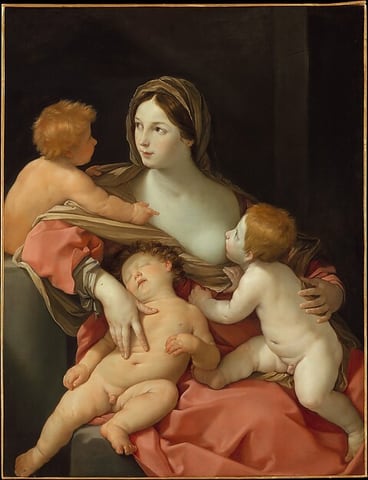
Charity, by Guido Reni, ca. 1630
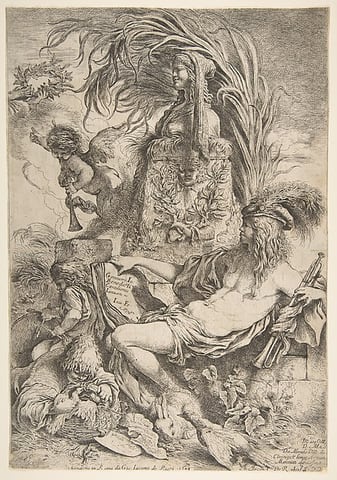
The Genius of Castiglione, by Giovanni Benedetto Castiglione, ca. 1645–47 (published 1648)
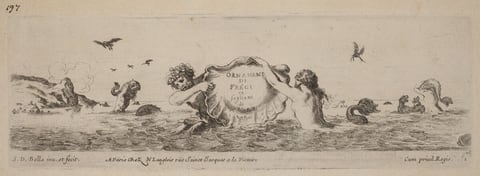
This is a drawing of mythical sea creatures in a marine landscape. The central figures are depicted as mythical beings, possibly mermen, with human torsos and fish-like tails, partially submerged in water. One figure prominently holds a large seashell with text written on it. Around them are various other marine creatures and features such as a distant rocky shore, birds flying in the sky, and waves creating a dynamic setting. The drawing is detailed in line work.
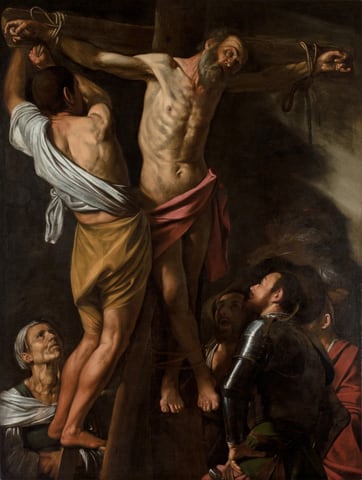
The Crucifixion of Saint Andrew, by Caravaggio, 1606–7
A work made of etching in black ink on cream laid paper.
A work made of etching in black on ivory laid paper.

The works in this room are listed below.

Works in this room

Works made in Italy in the 17th century.

Section 1, north wall

  1. Charity, by Guido Reni, ca. 1630
    CharityGuido Reni, ca. 1630Courtesy of The Metropolitan Museum of Art
  2. The Genius of Castiglione, by Giovanni Benedetto Castiglione, ca. 1645–47 (published 1648)
    The Genius of CastiglioneGiovanni Benedetto Castiglione, ca. 1645–47 (published 1648)Courtesy of The Metropolitan Museum of Art
  3. This is a drawing of mythical sea creatures in a marine landscape. The central figures are depicted as mythical beings, possibly mermen, with human torsos and fish-like tails, partially submerged in water. One figure prominently holds a large seashell with text written on it. Around them are various other marine creatures and features such as a distant rocky shore, birds flying in the sky, and waves creating a dynamic setting. The drawing is detailed in line work.
    Title Page for "Ornamenti di fregi e fogliani"Stefano della Bella, probably 1648Courtesy National Gallery of Art, Washington

Section 1, south wall

  1. The Crucifixion of Saint Andrew, by Caravaggio, 1606–7
    The Crucifixion of Saint AndrewCaravaggio, 1606–7Courtesy of the Cleveland Museum of Art
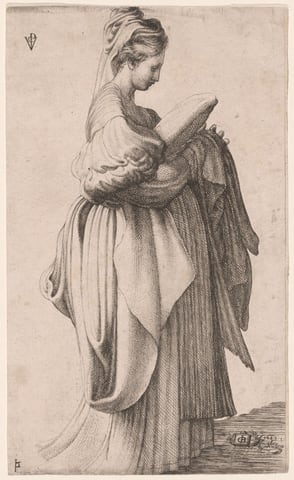
  2. A work made of etching in black ink on cream laid paper.
    A Young Woman Holding a CushionMonogrammist VCP, 1643Courtesy of the Art Institute of Chicago
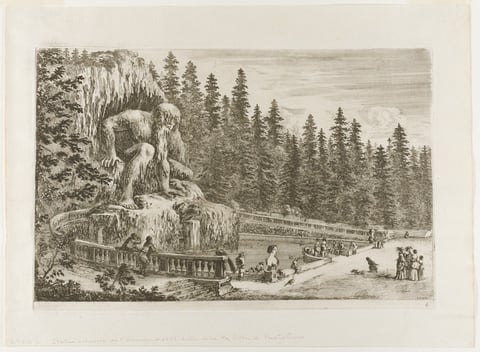
  3. A work made of etching in black on ivory laid paper.
    The Colossal Statue of the Apennines, from Views of Villa di PratolinoStefano della Bella, c. 1653Courtesy of the Art Institute of Chicago

Section 2, south wall
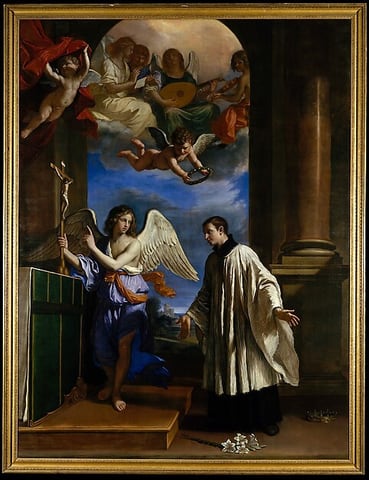
  1. The Vocation of Saint Aloysius (Luigi) Gonzaga, by Guercino (Giovanni Francesco Barbieri), ca. 1650
    The Vocation of Saint Aloysius (Luigi) GonzagaGuercino (Giovanni Francesco Barbieri), ca. 1650Courtesy of The Metropolitan Museum of Art
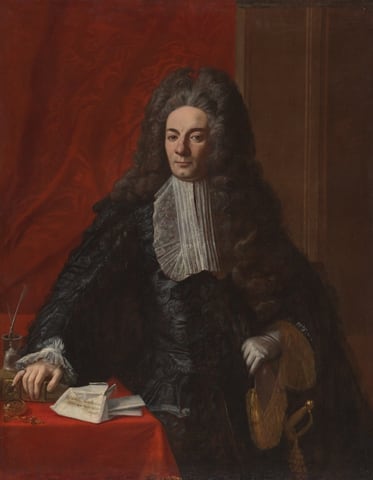
  2. A work made of oil on canvas.
    Jacopo ButeraFrancesco Solimena, c. 1695Courtesy of the Art Institute of Chicago

Section 2, north wall
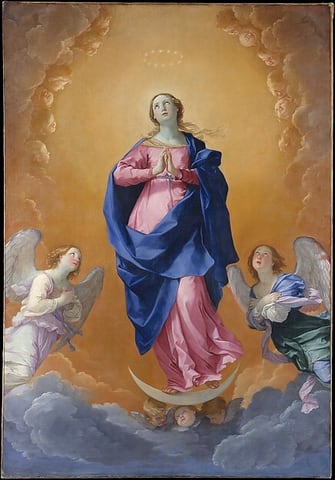
  1. The Immaculate Conception, by Guido Reni, 1627
    The Immaculate ConceptionGuido Reni, 1627Courtesy of The Metropolitan Museum of Art
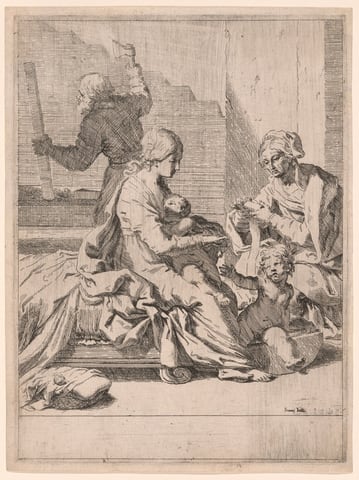
  2. A work made of etching in black on cream laid paper.
    Holy Family with Saint Elizabeth and Saint John the BaptistElisabetta Sirani, 1650/60Courtesy of the Art Institute of Chicago
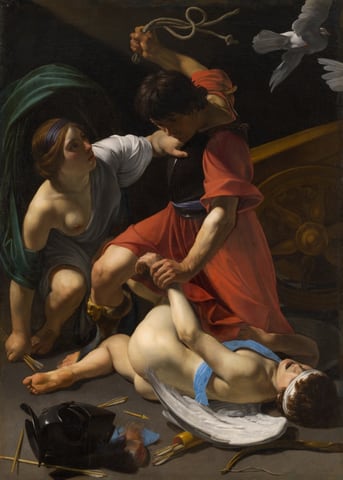
  3. Large painting of cupid being whipped, a woman tries to hold back the a man in red dress.
    Cupid ChastisedBartolomeo Manfredi, 1613Courtesy of the Art Institute of Chicago

Section 3, north wall
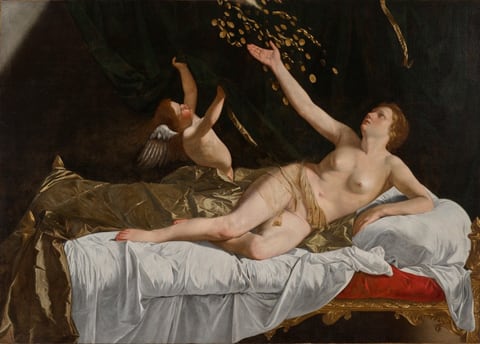
  1. Danaë, by Orazio Gentileschi, c. 1623
    DanaëOrazio Gentileschi, c. 1623Courtesy of the Cleveland Museum of Art
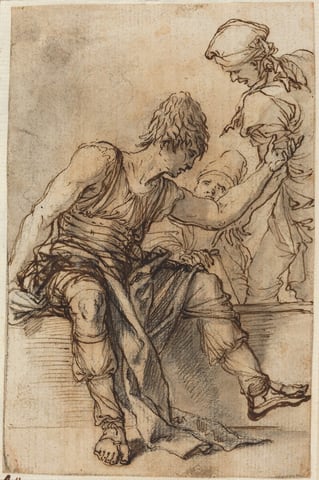
  2. The image shows a drawing of three figures. The central figure is seated, leaning slightly forward with one arm outstretched towards the standing figures. They have short, slightly messy hair, traditional clothing, and muscular limbs. The standing figures on the right are partially obscured but appear to interact with the seated figure. One of them is extending their arm towards the seated figure. The individuals wear layered clothing, with one wearing a head covering. The background is simple, emphasizing the interaction between the figures. The drawing style is classical or historical, using ink and wash for texture and depth.
    Youth Sitting on a Wall in Conversation with Two MenSalvator Rosa, c. 1656/1657Courtesy National Gallery of Art, Washington

Section 3, south wall
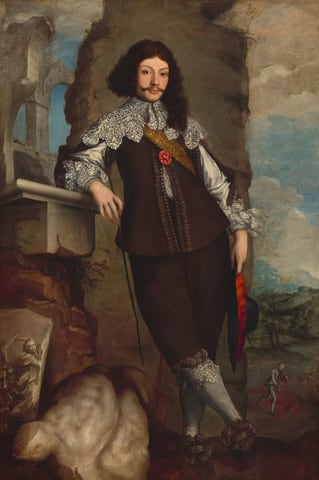
  1. Lodovico Widmann, by Tiberio Tinelli, probably 1637
    Lodovico WidmannTiberio Tinelli, probably 1637Courtesy National Gallery of Art, Washington
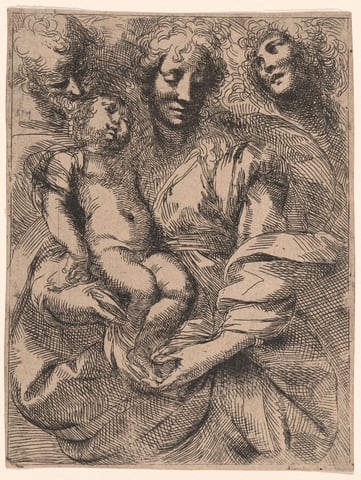
  2. A work made of etching in black on tan laid paper.
    The Holy FamilyGiulio Cesare Procaccini, 1613/15Courtesy of the Art Institute of Chicago
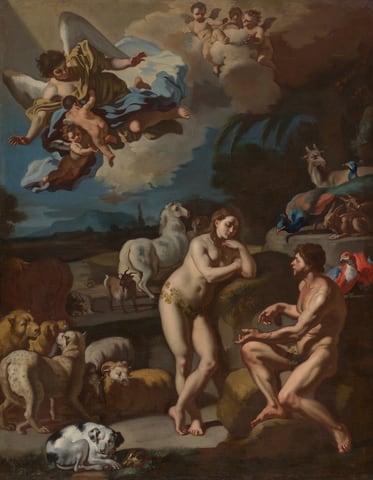
  3. A work made of oil on canvas.
    Adam and Eve in ParadiseFrancesco Solimena, c. 1700Courtesy of the Art Institute of Chicago