Floor plan

Time and placeThe 17th century

The 17th century

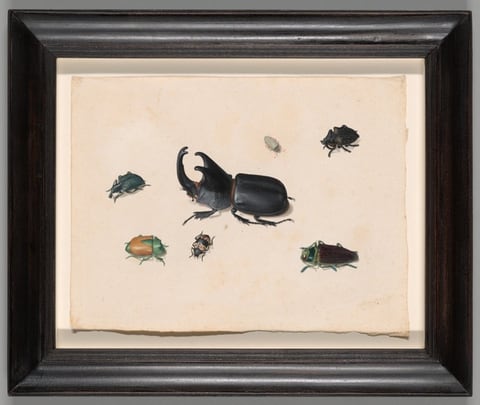
A work made of watercolor and opaque watercolor on cream laid paper.
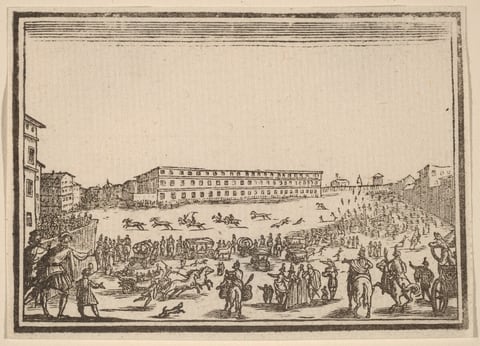
The image shows a wide aerial view of a public gathering. Buildings line the horizon overlooking the scene below. The detailed illustration features various individuals and animals in motion, including groups of people, horse riders, and carts. The monochromatic color palette contributes to a classic aesthetic.
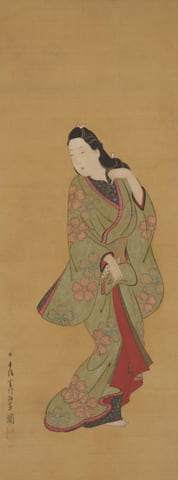
A work made of hanging scroll; ink and colors on paper.
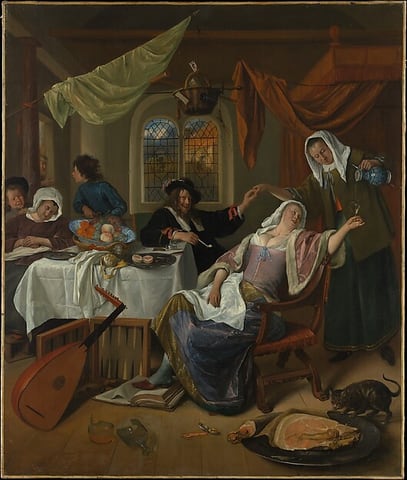
The Dissolute Household, by Jan Steen, ca. 1663–64
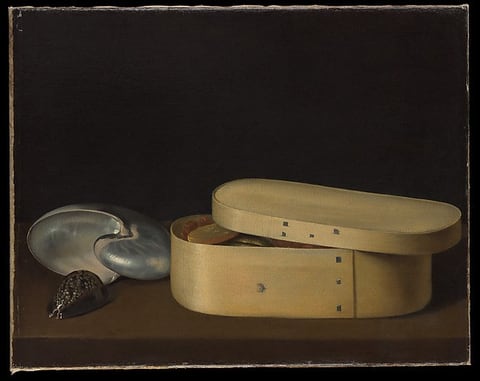
Still Life with Shells and a Chip-Wood Box, by Sebastian Stoskopff, late 1620s
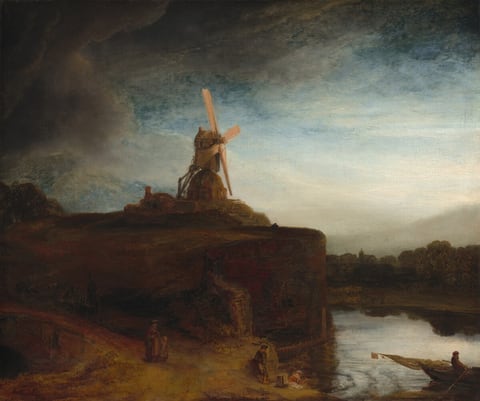
A windmill stands on a promontory cutting into a waterway under a partially stormy sky in this square landcape painting. The promontory and mill are painted in muted tones of brown and rust orange, while steel-gray and white clouds encircle a topaz-blue sky above. The promontory juts into the scene from our left, and the front of the windmill is angled to our right so its golden-tan sails catch the light. Silvery water winds around the base of the promontory and extends to a dark green, shadowy bank on the far side. A boat in the lower right corner of the composition is rowed by a man wearing a red jacket and cap. A path runs to the water’s edge from the left edge of the painting, in front of the promontory’s retaining wall, which is shored up with stones or panels. A person in dark clothing close to the windmill seems to rest their arms on the retaining wall, their back to us. Closer to us, a woman holds a child’s hand as they walk down the path to the bank. A bearded man with tattered brown clothes and bare feet stands leaning against the wall near a woman wearing burnt-orange garment. She sits or kneels at the water’s edge in front of a basket of clothes and holds up a brown cloth. The olive-green forms of the trees on the far bank are reflected in the water, and closer inspection reveals two cows near the water there. Charcoal-gray clouds pile up along the left of the painting and span the top edge. There is a brilliant blue sky beyond and a screen of white clouds near the horizon, which comes about a third of the way up the canvas.
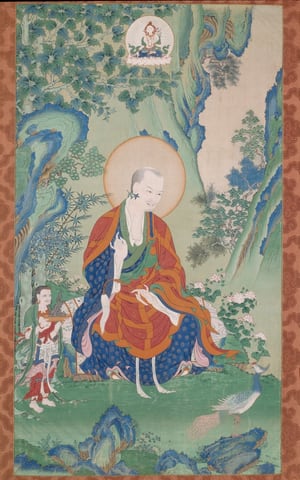
A scene in green, orange, and blue depicts a large robed figure seated prominently in the foreground, a small standing figure beside him, and a tiny, seated, floating figure above him, mountains in the background.
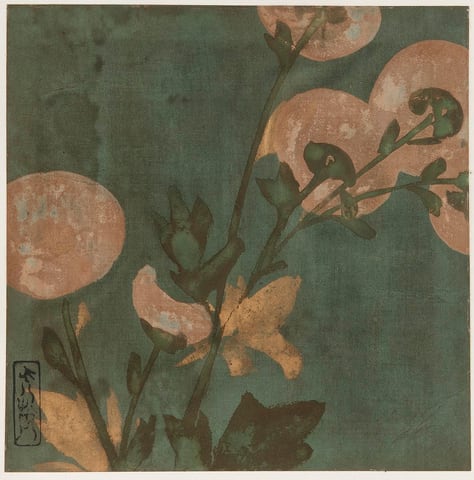
Poetry sheet (shikishi)

The works in this room are listed below.

Works in this room

Works made in the 17th century, anywhere in the world.

Section 1, north wall

  1. A work made of watercolor and opaque watercolor on cream laid paper.
    Megasoma Elephas or Megaceras Jason and Six Other InsectsPieter Holsteyn, the younger, 1640/80Courtesy of the Art Institute of Chicago
  2. The image shows a wide aerial view of a public gathering. Buildings line the horizon overlooking the scene below. The detailed illustration features various individuals and animals in motion, including groups of people, horse riders, and carts. The monochromatic color palette contributes to a classic aesthetic.
    Piazza Presso alla Porta al PratoEdouard Eckman, 1621Courtesy National Gallery of Art, Washington
  3. A work made of hanging scroll; ink and colors on paper.
    Beauty Turning Her HeadHishikawa Moronobu, c. 1685-94Courtesy of the Art Institute of Chicago
  4. The Dissolute Household, by Jan Steen, ca. 1663–64
    The Dissolute HouseholdJan Steen, ca. 1663–64Courtesy of The Metropolitan Museum of Art

Section 1, south wall

  1. Still Life with Shells and a Chip-Wood Box, by Sebastian Stoskopff, late 1620s
    Still Life with Shells and a Chip-Wood BoxSebastian Stoskopff, late 1620sCourtesy of The Metropolitan Museum of Art
  2. A windmill stands on a promontory cutting into a waterway under a partially stormy sky in this square landcape painting. The promontory and mill are painted in muted tones of brown and rust orange, while steel-gray and white clouds encircle a topaz-blue sky above. The promontory juts into the scene from our left, and the front of the windmill is angled to our right so its golden-tan sails catch the light. Silvery water winds around the base of the promontory and extends to a dark green, shadowy bank on the far side. A boat in the lower right corner of the composition is rowed by a man wearing a red jacket and cap. A path runs to the water’s edge from the left edge of the painting, in front of the promontory’s retaining wall, which is shored up with stones or panels. A person in dark clothing close to the windmill seems to rest their arms on the retaining wall, their back to us. Closer to us, a woman holds a child’s hand as they walk down the path to the bank. A bearded man with tattered brown clothes and bare feet stands leaning against the wall near a woman wearing burnt-orange garment. She sits or kneels at the water’s edge in front of a basket of clothes and holds up a brown cloth. The olive-green forms of the trees on the far bank are reflected in the water, and closer inspection reveals two cows near the water there. Charcoal-gray clouds pile up along the left of the painting and span the top edge. There is a brilliant blue sky beyond and a screen of white clouds near the horizon, which comes about a third of the way up the canvas.
    The MillRembrandt van Rijn, 1645/1648Courtesy National Gallery of Art, Washington
  3. A scene in green, orange, and blue depicts a large robed figure seated prominently in the foreground, a small standing figure beside him, and a tiny, seated, floating figure above him, mountains in the background.
    Arhat Vanavasin, One of the Sixteen Great Arhats, from a Set of Twenty-ThreeTibeto-Chinese, late 17th/early 18th centuryCourtesy of the Art Institute of Chicago
  4. Poetry sheet (shikishi)
    ChrysanthemumsHon'ami Kōetsu, 1615-1868Courtesy of the National Museum of Asian Art, Smithsonian Institution

Section 2, south wall
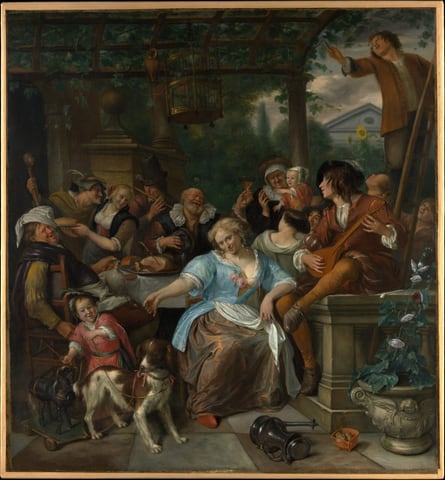
  1. Merry Company on a Terrace, by Jan Steen, ca. 1670
    Merry Company on a TerraceJan Steen, ca. 1670Courtesy of The Metropolitan Museum of Art
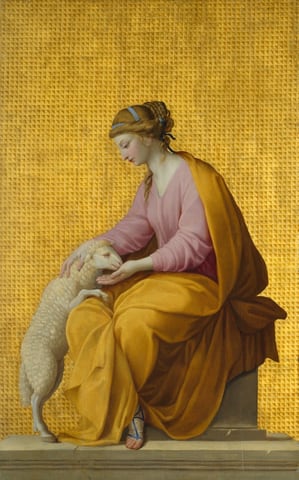
  2. A work made of oil on panel.
    MeeknessEustache Le Sueur, 1650Courtesy of the Art Institute of Chicago
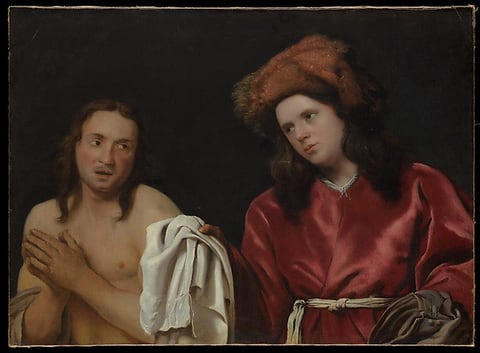
  3. Clothing the Naked, by Michiel Sweerts, ca. 1661
    Clothing the NakedMichiel Sweerts, ca. 1661Courtesy of The Metropolitan Museum of Art

Section 2, north wall
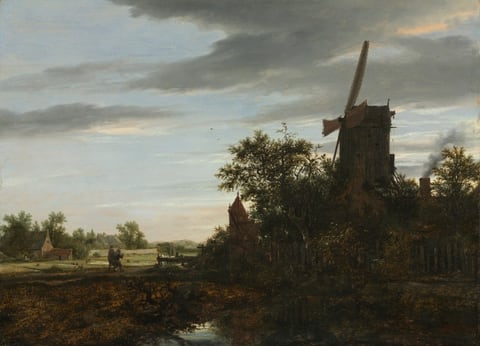
  1. Landscape with a Windmill, by Jacob van Ruisdael, 1646
    Landscape with a WindmillJacob van Ruisdael, 1646Courtesy of the Cleveland Museum of Art
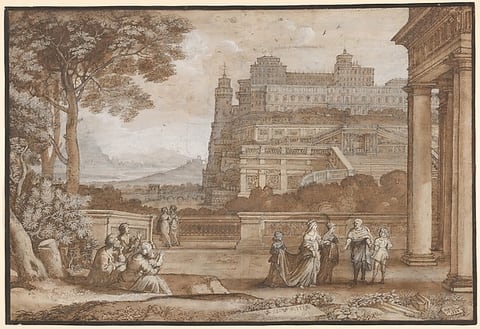
  2. Queen Esther Approaching the Palace of Ahasuerus, by Claude Lorrain (Claude Gellée), 1658
    Queen Esther Approaching the Palace of AhasuerusClaude Lorrain (Claude Gellée), 1658Courtesy of The Metropolitan Museum of Art
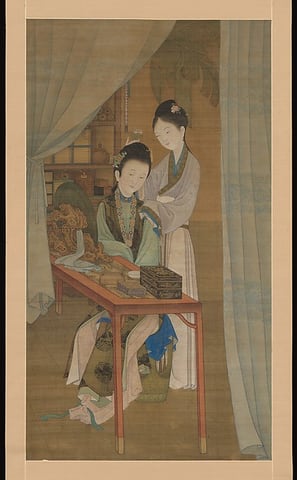
  3. Woman at her dressing table, by Leng Mei, early 18th century
    Woman at her dressing tableLeng Mei, early 18th centuryCourtesy of The Metropolitan Museum of Art

Section 3, north wall
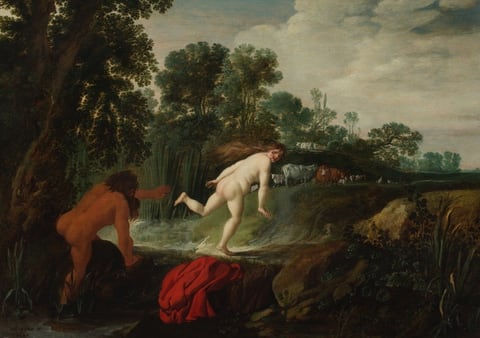
  1. A work made of oil on panel.
    Alpheus and ArethusaMoses van Uyttenbroeck, 1626Courtesy of the Art Institute of Chicago
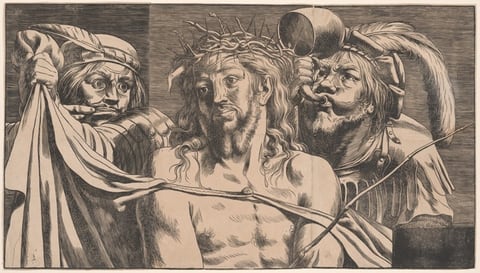
  2. A work made of woodcut on three joined sheets of ivory laid paper.
    The Mocking of ChristWerner van den Valckert, c. 1620Courtesy of the Art Institute of Chicago