Floor plan

Time and placeThe 17th century

The 17th century

A work made of oil on canvas.
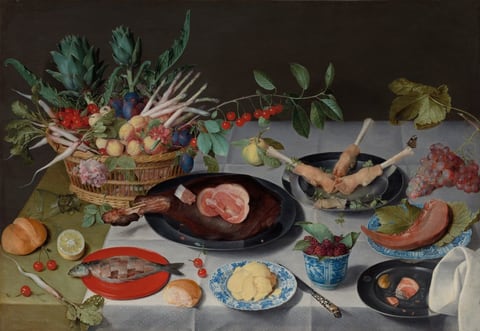
Still Life with Meat, Fish, Vegetables, and Fruit, by Jacob van Hulsdonck, c. 1615–20
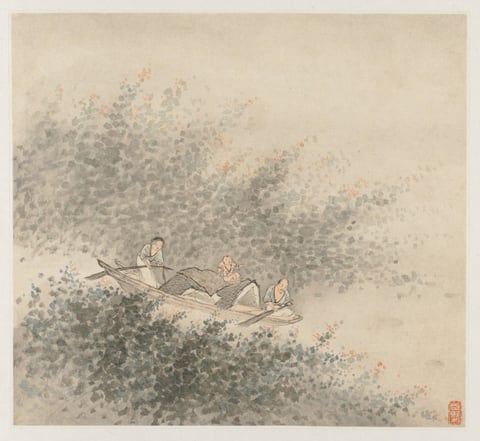
Album of Landscapes: Leaf 6, by Wang Gai, 1677
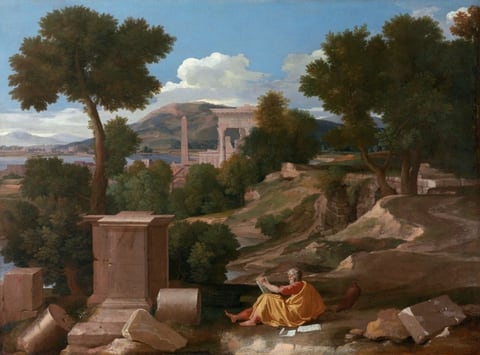
Painting of Greek landscape, classical architecture, yellow, red robed man reading.
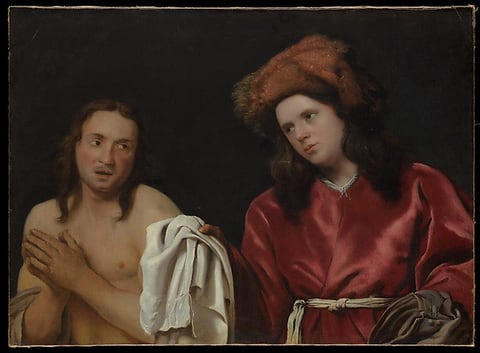
Clothing the Naked, by Michiel Sweerts, ca. 1661

The works in this room are listed below.

Works in this room

Works made in the 17th century, anywhere in the world.

Section 1, north wall

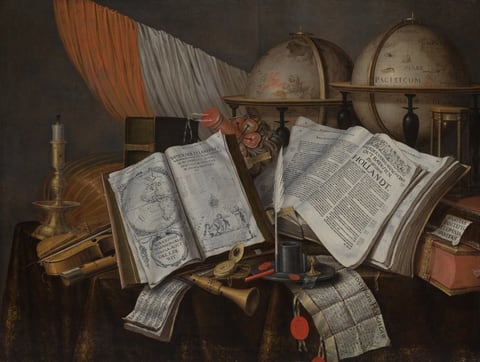
  1. A work made of oil on canvas.
    A Vanitas Still Life with a Flag, Candlestick, Musical Instruments, Books, Writing Paraphernalia, Globes, and HourglassEdwaert Collier, 1662Courtesy of the Art Institute of Chicago
  2. Still Life with Meat, Fish, Vegetables, and Fruit, by Jacob van Hulsdonck, c. 1615–20
    Still Life with Meat, Fish, Vegetables, and FruitJacob van Hulsdonck, c. 1615–20Courtesy of the Cleveland Museum of Art
  3. Album of Landscapes: Leaf 6, by Wang Gai, 1677
    Album of Landscapes: Leaf 6Wang Gai, 1677Courtesy of the Cleveland Museum of Art

Section 1, south wall

  1. Painting of Greek landscape, classical architecture, yellow, red robed man reading.
    Landscape with Saint John on PatmosNicolas Poussin, 1640Courtesy of the Art Institute of Chicago
  2. Clothing the Naked, by Michiel Sweerts, ca. 1661
    Clothing the NakedMichiel Sweerts, ca. 1661Courtesy of The Metropolitan Museum of Art

Section 2, south wall
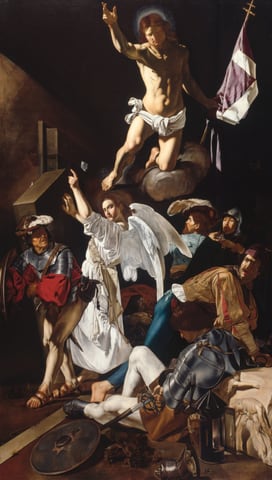
  1. A work made of oil on canvas.
    The ResurrectionCecco del Caravaggio, c. 1619-20Courtesy of the Art Institute of Chicago
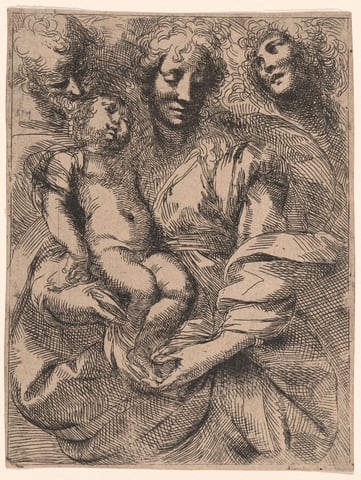
  2. A work made of etching in black on tan laid paper.
    The Holy FamilyGiulio Cesare Procaccini, 1613/15Courtesy of the Art Institute of Chicago
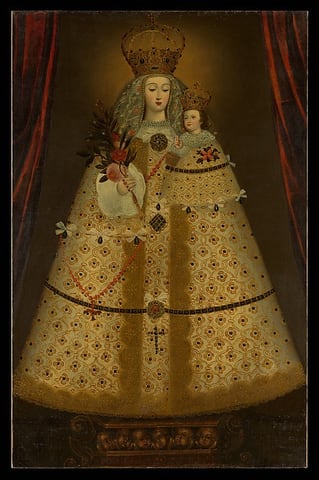
  3. Our Lady of Guápulo, by Peruvian (Cuzco) Painter, 18th century
    Our Lady of GuápuloPeruvian (Cuzco) Painter, 18th centuryCourtesy of The Metropolitan Museum of Art
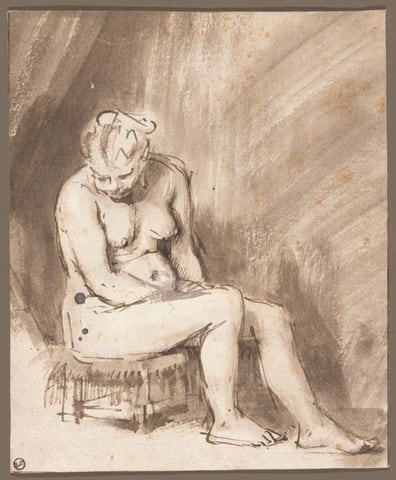
  4. Brown-tone drawing of a nude woman seated on a small stool, looking downward.
    Seated Female NudeRembrandt van Rijn, 1660/62Courtesy of the Art Institute of Chicago

Section 2, north wall
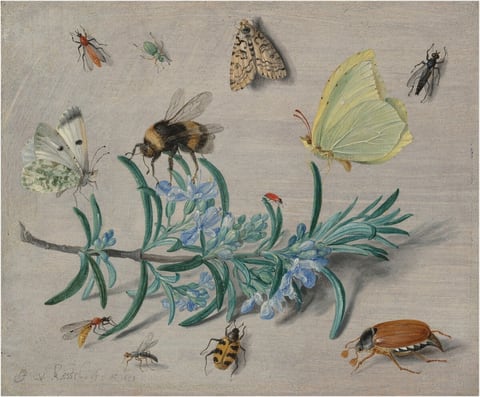
  1. A sprig of flowering rosemary lying against an ivory-white background and the twelve insects that surround it fills this horizontal painting. Stretching nearly the length of the composition with the cut end to our left, the rosemary has blunted, needle-like, gently curling teal-green leaves and small periwinkle-blue flowers along the ash-brown stem. Several insects perch on the sprig while others are seen as if looking from overhead, resting on the white background. The three largest insects perch along the top of the sprig, with an ivory-white butterfly with moss-green and black markings to the left, a black and golden, fuzzy bumblebee near the center, and a lemon-yellow butterfly with red antennae to our right. A tiny red insect, perhaps a ladybug without spots, sits on a leaf between the bee and yellow butterfly, and a small wasp-like insect rests on a leaf in at the lower left. Another mosquito-like insect alights on the surface nearby, next to a beetle with a honey-orange body with black, almost tiger-like stripes. A large cockroach sitting near the lower right corner has six spindly legs, a mahogany-colored abdomen, a black thorax, and tiny, black head. Spaced somewhat evenly across the top of the panel are a brick-red, winged insect to the left, a mint-green, beetle-like bug near a moth patterned with bone white and black, and a black, fly-like insect to our right. Lit from the upper left, the rosemary and insects cast shadows on the surface. The artist signed and dated the work with gray in the lower left corner: “J v. kessel . . f. Ao 1653.”
    Insects and a Sprig of RosemaryJan van Kessel the Elder, 1653Courtesy National Gallery of Art, Washington
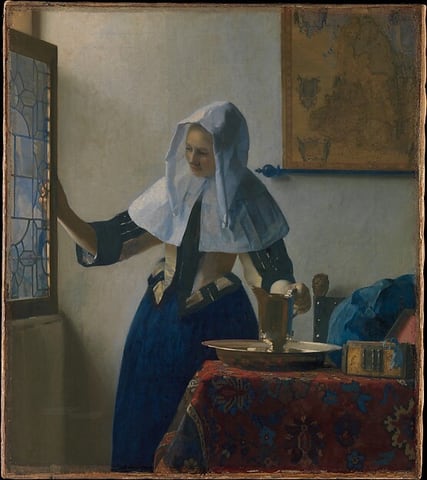
  2. Young Woman with a Water Pitcher, by Johannes Vermeer, ca. 1662
    Young Woman with a Water PitcherJohannes Vermeer, ca. 1662Courtesy of The Metropolitan Museum of Art
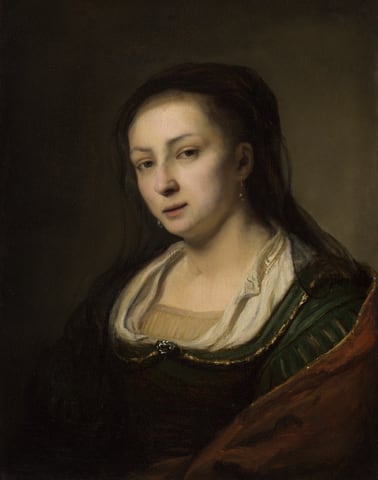
  3. A work made of oil on canvas.
    Portrait of a womanFerdinand Bol, c. 1655Courtesy of the Art Institute of Chicago
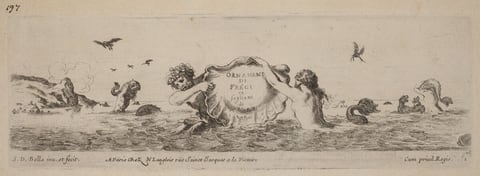
  4. This is a drawing of mythical sea creatures in a marine landscape. The central figures are depicted as mythical beings, possibly mermen, with human torsos and fish-like tails, partially submerged in water. One figure prominently holds a large seashell with text written on it. Around them are various other marine creatures and features such as a distant rocky shore, birds flying in the sky, and waves creating a dynamic setting. The drawing is detailed in line work.
    Title Page for "Ornamenti di fregi e fogliani"Stefano della Bella, probably 1648Courtesy National Gallery of Art, Washington

Section 3, north wall
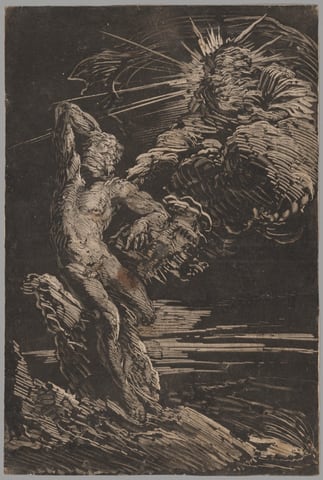
  1. Drawing of god, radiating light, reaching down from clouds, touching male figure.
    The Creation of AdamGiovanni Benedetto Castiglione, c. 1645/50Courtesy of the Art Institute of Chicago
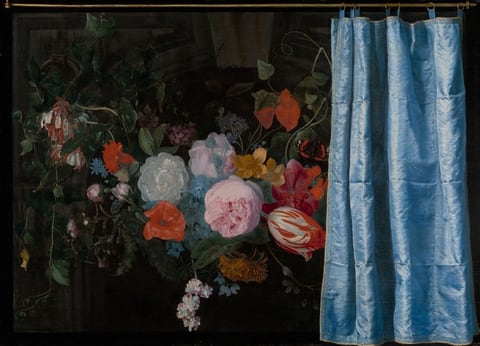
  2. A work made of oil on panel.
    Trompe-l'Oeil Still Life with a Flower Garland and a CurtainAdriaen van der Spelt, 1658Courtesy of the Art Institute of Chicago
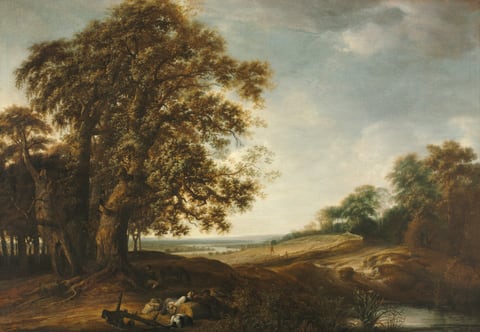
  3. Sleeping Peasants near Fields (Parable of the Weeds), by Simon de Vlieger, 1650–53
    Sleeping Peasants near Fields (Parable of the Weeds)Simon de Vlieger, 1650–53Courtesy of the Cleveland Museum of Art