Floor plan

Time and placeThe 17th century

The 17th century

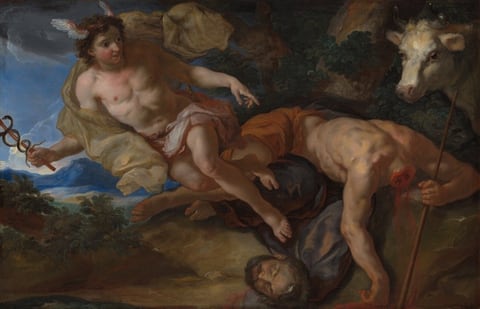
A work made of oil on canvas.
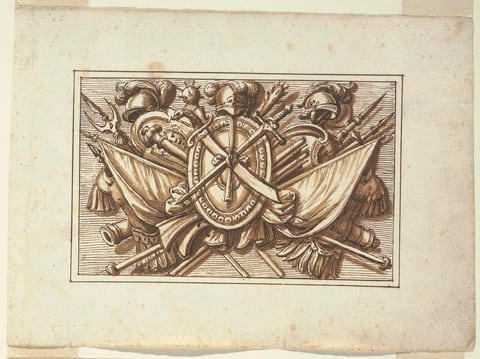
ONE SET OF TROPHIES OF WEAPONS OF WAR AS A DECORATION FOR HORIZONTAL PANELS. INTENDED TO BE ENGRAVED
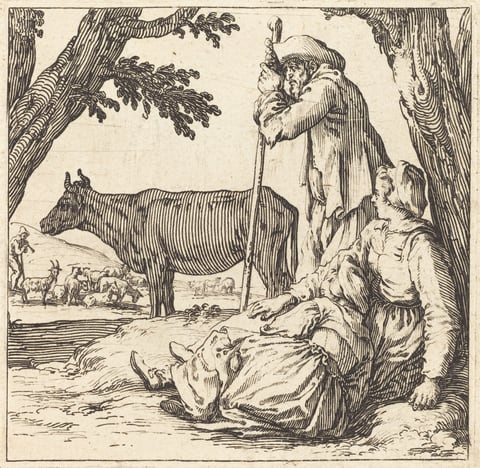
The image has an elevated perspective showing two figures with animals in the scene. One person is leaning against a tree with a stick, while the other is seated on the ground. A cow is between them and other livestock in the middle distance. A person in the distance is tending to the animals. The horizon is low in the image, hidden by rolling hills. The artwork is in monochrome with fine linework, creating texture through hatching and cross-hatching, emphasizing depth and dimensionality.
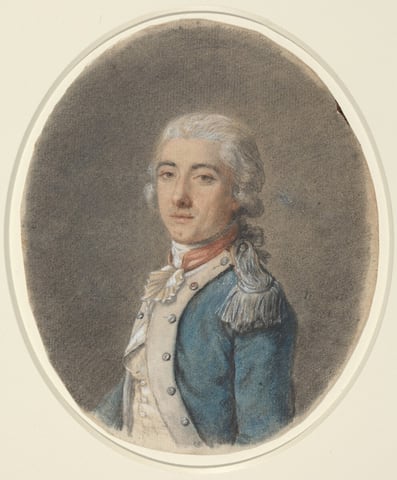
The image displays an oval portrait of a man's upper torso. He is turned slightly to the right, looking directly at the viewer with a composed expression. The man has pale skin, defined facial features, softly arched eyebrows, a subtle mustache, and styled hair in an 18th-century fashion. He wears a blue coat with white lapels, silver buttons, and a silver-fringed epaulet on the shoulder, along with a cravat and waistcoat. The background is a smooth, neutral gray.
Album of Landscapes: Leaf 5, by Wang Gai, 1677
A work made of black chalk, with touches of white chalk, on cream laid paper.
A work made of engraving in black on cream laid paper.
Painting

The works in this room are listed below.

Works in this room

Works made in the 17th century, anywhere in the world.

Section 1, north wall

  1. A work made of oil on canvas.
    Mercury Rescues the Disguised Io after Beheading ArgusJohann Michael Rottmayr, c. 1695Courtesy of the Art Institute of Chicago
  2. ONE SET OF TROPHIES OF WEAPONS OF WAR AS A DECORATION FOR HORIZONTAL PANELS. INTENDED TO BE ENGRAVED
    One set of trophies of weapons of war as a decoration for horizontal panels. Intended to be engravedFrancesco Bedeschini, Italian, 1675-1699Courtesy of Cooper Hewitt, Smithsonian Design Museum
  3. The image has an elevated perspective showing two figures with animals in the scene. One person is leaning against a tree with a stick, while the other is seated on the ground. A cow is between them and other livestock in the middle distance. A person in the distance is tending to the animals. The horizon is low in the image, hidden by rolling hills. The artwork is in monochrome with fine linework, creating texture through hatching and cross-hatching, emphasizing depth and dimensionality.
    Peasant Couple with CowJacques Callot, c. 1621Courtesy National Gallery of Art, Washington
  4. The image displays an oval portrait of a man's upper torso. He is turned slightly to the right, looking directly at the viewer with a composed expression. The man has pale skin, defined facial features, softly arched eyebrows, a subtle mustache, and styled hair in an 18th-century fashion. He wears a blue coat with white lapels, silver buttons, and a silver-fringed epaulet on the shoulder, along with a cravat and waistcoat. The background is a smooth, neutral gray.
    Portrait of a Man in a Military UniformUnrecorded French maker, 18th centuryCourtesy National Gallery of Art, Washington

Section 1, south wall

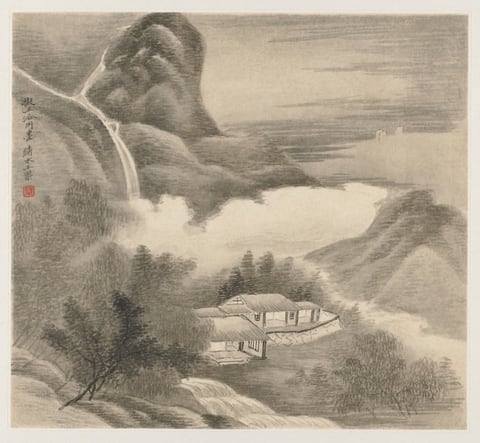
  1. Album of Landscapes: Leaf 5, by Wang Gai, 1677
    Album of Landscapes: Leaf 5Wang Gai, 1677Courtesy of the Cleveland Museum of Art
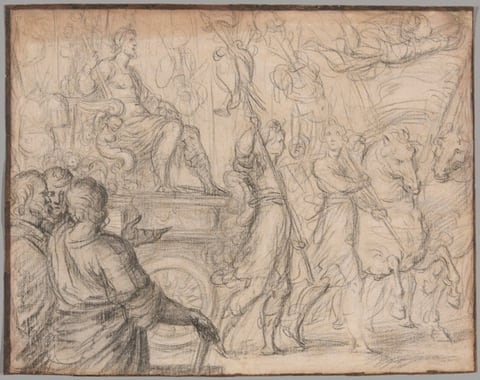
  2. A work made of black chalk, with touches of white chalk, on cream laid paper.
    A ProcessionAmbroise Dubois, c. 1610Courtesy of the Art Institute of Chicago
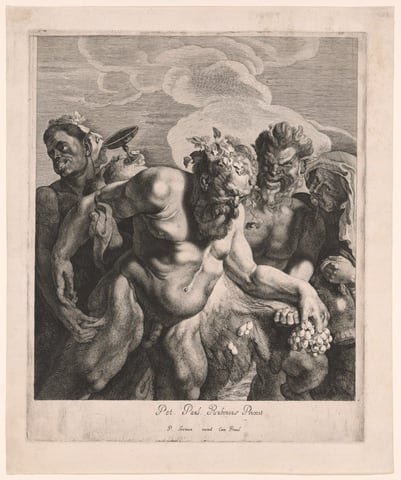
  3. A work made of engraving in black on cream laid paper.
    Drunken SilenusJonas Suyderhoef, 1642Courtesy of the Art Institute of Chicago
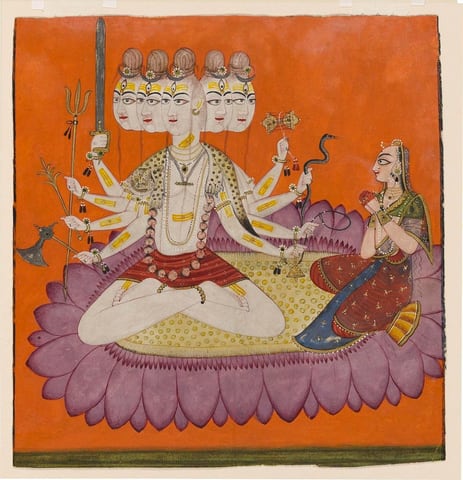
  4. Painting
    Sadashiva worshipped by ParvatiDevidasa, ca. 1690Courtesy of the National Museum of Asian Art, Smithsonian Institution

Section 2, south wall
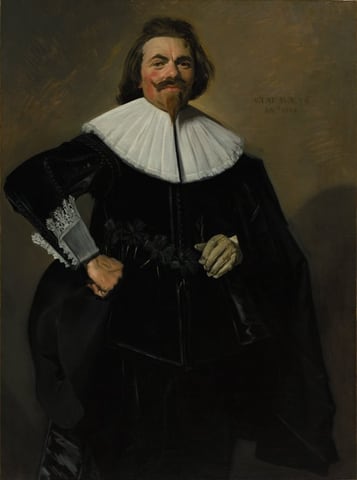
  1. Portrait of Tieleman Roosterman, by Frans Hals, 1634
    Portrait of Tieleman RoostermanFrans Hals, 1634Courtesy of the Cleveland Museum of Art
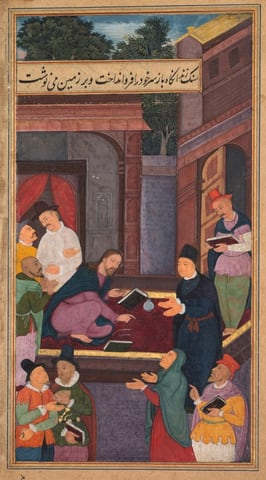
  2. Jesus writes on the ground (folio 130 verso), from a Mirror of Holiness (Mir’at al-quds) of Father Jerome Xavier, 1602–4
    Jesus writes on the ground (folio 130 verso), from a Mirror of Holiness (Mir’at al-quds) of Father Jerome XavierUnrecorded Indian maker, 1602–4Courtesy of the Cleveland Museum of Art
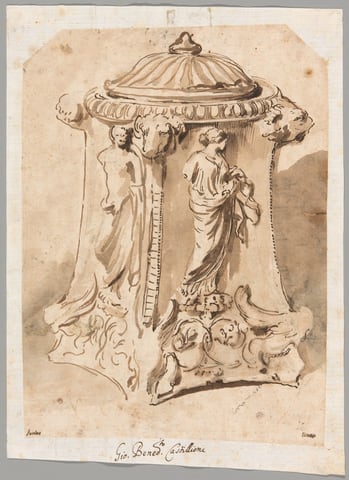
  3. A work made of pen and brown ink and brush and brown wash, over graphite, on cream laid paper laid down on off-white laid paper.
    Antique Carved Marble Candelabra BaseAndrea di Lione, 1642/44 or 1647/51Courtesy of the Art Institute of Chicago
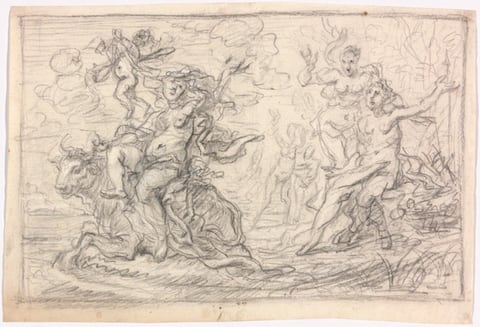
  4. A work made of black chalk, with touches of white chalk, on ivory laid paper.
    The Rape of EuropaCornelis Schut, I, 1635/40Courtesy of the Art Institute of Chicago

Section 2, north wall
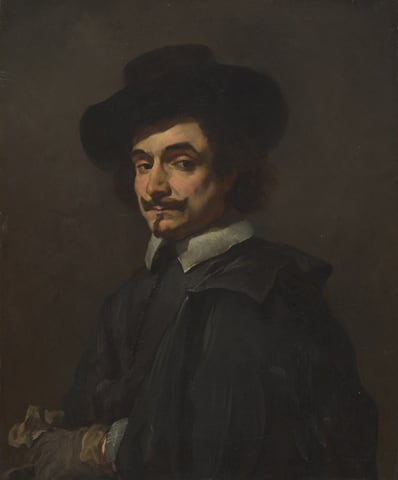
  1. A work made of oil on copper.
    Portrait of a ManJan Baptist Weenix, c. 1650Courtesy of the Art Institute of Chicago
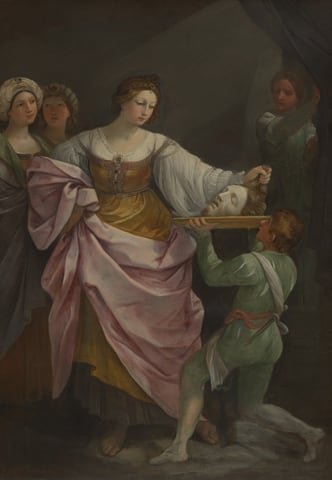
  2. Large painting of woman, in gold and pink dress, placing severed head on platter.
    Salome with the Head of Saint John the BaptistGuido Reni, c. 1639–42Courtesy of the Art Institute of Chicago

Section 3, north wall
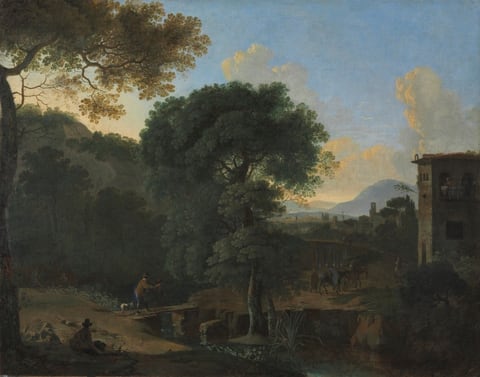
  1. Landscape with Travelers, by Herman van Swanevelt, 1630s
    Landscape with TravelersHerman van Swanevelt, 1630sCourtesy of the Cleveland Museum of Art
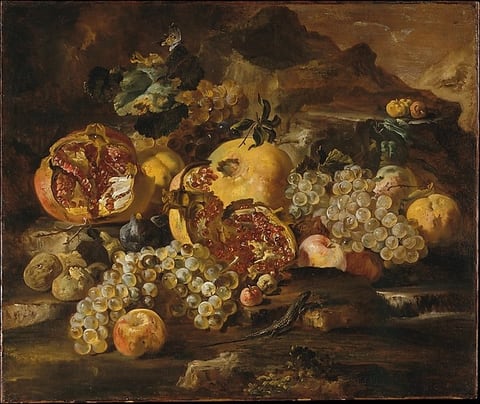
  2. Pomegranates and Other Fruit in a Landscape, by Abraham Brueghel
    Pomegranates and Other Fruit in a LandscapeAbraham BrueghelCourtesy of The Metropolitan Museum of Art