Floor plan

Time and placeThe 17th century

The 17th century

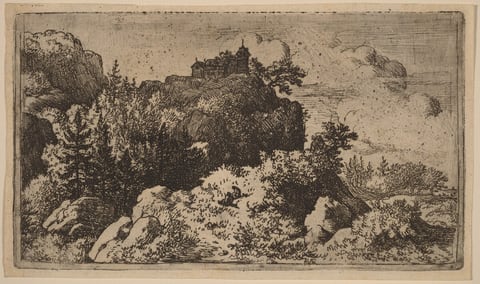
The image shows a slightly elevated perspective of a rugged landscape with dense vegetation and rock formations. The horizon is high in the upper third of the image, with a distant building or castle on a hill. The structure is silhouetted against the sky and partially obscured by foliage. Intricate line work and hatching create detailed textures and shading, especially in the trees and clouds. The color palette is monochromatic, using varying shades of brown and sepia to give the artwork an antiquated and rustic appearance.
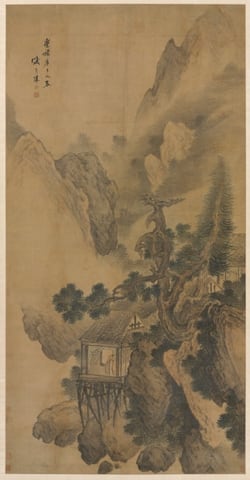
Lonely Retreat Overlooking a Misty Valley, by Sheng Maoye, 1630
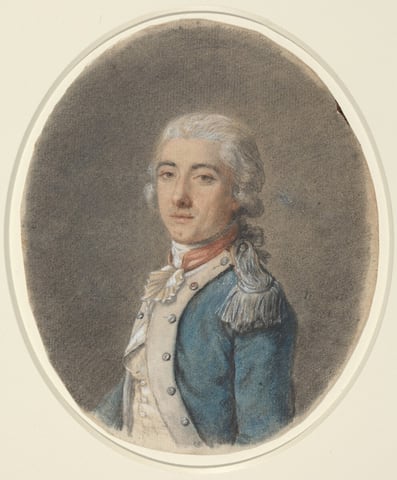
The image displays an oval portrait of a man's upper torso. He is turned slightly to the right, looking directly at the viewer with a composed expression. The man has pale skin, defined facial features, softly arched eyebrows, a subtle mustache, and styled hair in an 18th-century fashion. He wears a blue coat with white lapels, silver buttons, and a silver-fringed epaulet on the shoulder, along with a cravat and waistcoat. The background is a smooth, neutral gray.
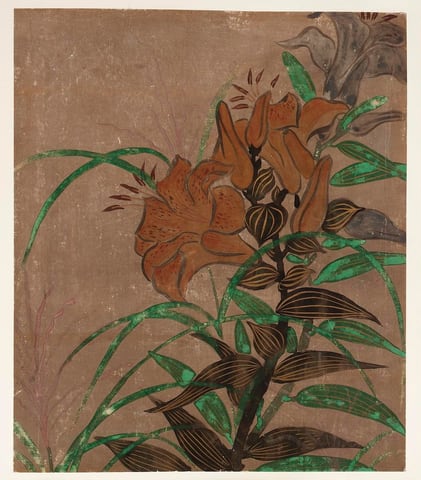
Screen or fusuma (fragment)
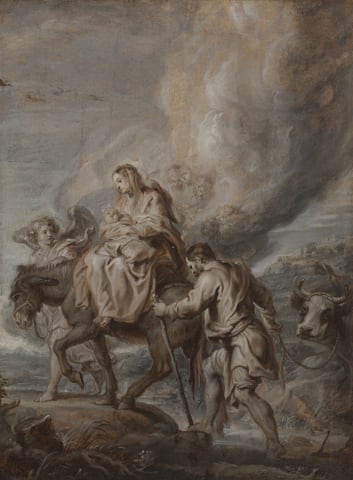
A work made of oil on panel.
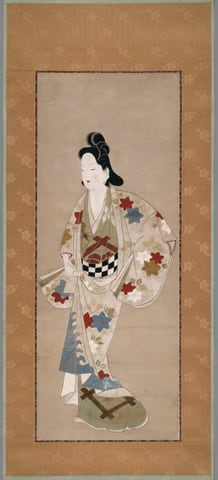
A work made of hanging scroll; ink, color, and gold on paper.
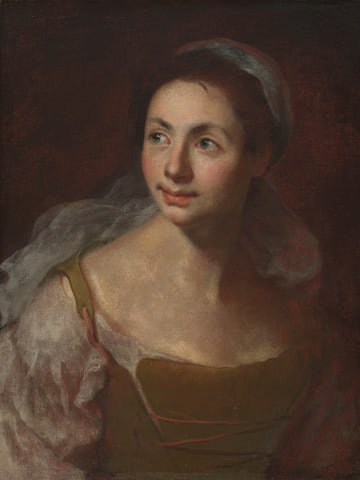
A work made of oil on canvas.
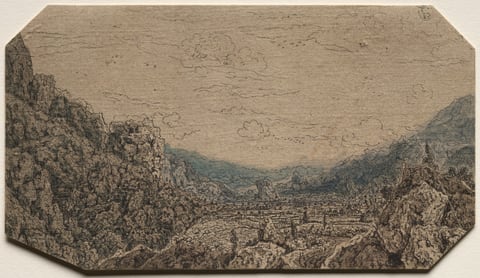
Enclosed Valley, by Hercules Seghers, c. 1623–30

The works in this room are listed below.

Works in this room

Works made in the 17th century, anywhere in the world.

Section 1, north wall

  1. The image shows a slightly elevated perspective of a rugged landscape with dense vegetation and rock formations. The horizon is high in the upper third of the image, with a distant building or castle on a hill. The structure is silhouetted against the sky and partially obscured by foliage. Intricate line work and hatching create detailed textures and shading, especially in the trees and clouds. The color palette is monochromatic, using varying shades of brown and sepia to give the artwork an antiquated and rustic appearance.
    Firs in the DefileAllart van Everdingen, probably c. 1645/1656Courtesy National Gallery of Art, Washington
  2. Lonely Retreat Overlooking a Misty Valley, by Sheng Maoye, 1630
    Lonely Retreat Overlooking a Misty ValleySheng Maoye, 1630Courtesy of the Cleveland Museum of Art
  3. The image displays an oval portrait of a man's upper torso. He is turned slightly to the right, looking directly at the viewer with a composed expression. The man has pale skin, defined facial features, softly arched eyebrows, a subtle mustache, and styled hair in an 18th-century fashion. He wears a blue coat with white lapels, silver buttons, and a silver-fringed epaulet on the shoulder, along with a cravat and waistcoat. The background is a smooth, neutral gray.
    Portrait of a Man in a Military UniformUnrecorded French maker, 18th centuryCourtesy National Gallery of Art, Washington
  4. Screen or fusuma (fragment)
    Tiger lilies and grassStyle of Ogata Kenzan, 1663-1868Courtesy of the National Museum of Asian Art, Smithsonian Institution

Section 1, south wall

  1. A work made of oil on panel.
    The Flight into EgyptAbraham Jansz. van Diepenbeeck, c. 1650Courtesy of the Art Institute of Chicago
  2. A work made of hanging scroll; ink, color, and gold on paper.
    Standing BeautyUnrecorded Japanese maker, 1661/73Courtesy of the Art Institute of Chicago
  3. A work made of oil on canvas.
    Portrait of a GirlFrancesco Solimena, c. 1700Courtesy of the Art Institute of Chicago
  4. Enclosed Valley, by Hercules Seghers, c. 1623–30
    Enclosed ValleyHercules Seghers, c. 1623–30Courtesy of the Cleveland Museum of Art

Section 2, south wall
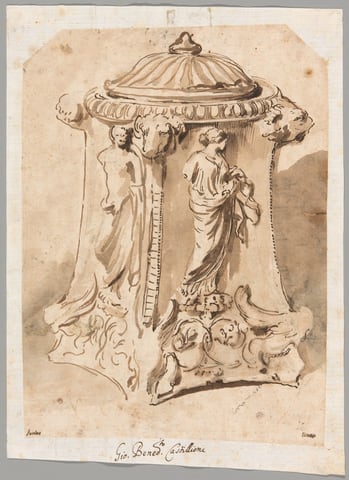
  1. A work made of pen and brown ink and brush and brown wash, over graphite, on cream laid paper laid down on off-white laid paper.
    Antique Carved Marble Candelabra BaseAndrea di Lione, 1642/44 or 1647/51Courtesy of the Art Institute of Chicago
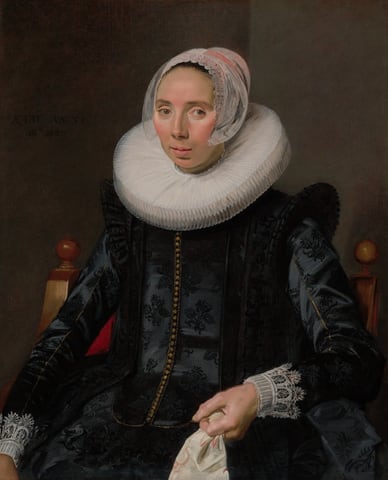
  2. A work made of oil on canvas.
    Portrait of a LadyFrans Hals, 1627Courtesy of the Art Institute of Chicago
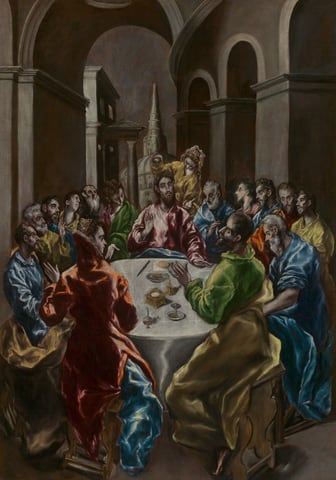
  3. Painting depicting Christ anointed by a woman in yellow, seated centrally at a crowded table of guests with long thin grayish faces in colorful robes with strong white highlights. In the background, tall grey archways, a steepled building, and city architecture.
    The Feast in the House of SimonEl Greco (Doménikos Theotokópoulos) and workshop, c. 1608–14Courtesy of the Art Institute of Chicago
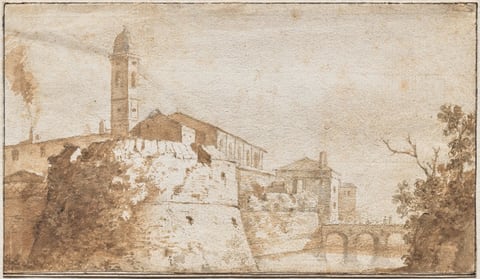
  4. A View of Bracciano with the Church of S. Maria Assunta, by Bartholomeus Breenberg, c. 1619–33
    A View of Bracciano with the Church of S. Maria AssuntaBartholomeus Breenberg, c. 1619–33Courtesy of the Cleveland Museum of Art

Section 2, north wall
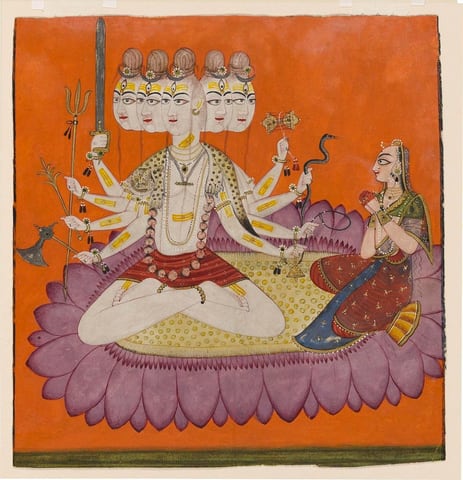
  1. Painting
    Sadashiva worshipped by ParvatiDevidasa, ca. 1690Courtesy of the National Museum of Asian Art, Smithsonian Institution
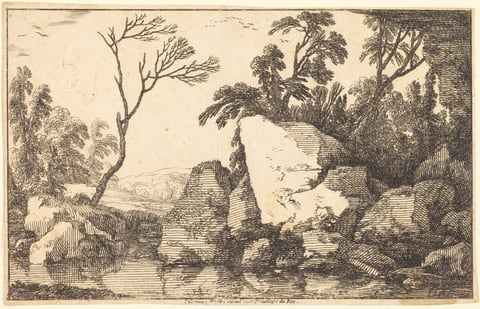
  2. The image is a landscape view with a natural scene depicted in fine etching. The horizon is situated towards the middle of the composition, where the land gently rises, and a subtle outline of distant hills is visible. Large rocks and foliage are depicted close to us, with a lone, barren tree extending upwards on the left side. The etching features intricate and well-defined brushstrokes, including thin lines and cross-hatching to create texture and depth. The color palette is monochromatic, with dark tones against a lighter background. In the distance, additional clusters of trees can be seen, rendered with similar linework to convey movement and detail.
    A Rocky PondLaurent de La Hyre, 1640Courtesy National Gallery of Art, Washington
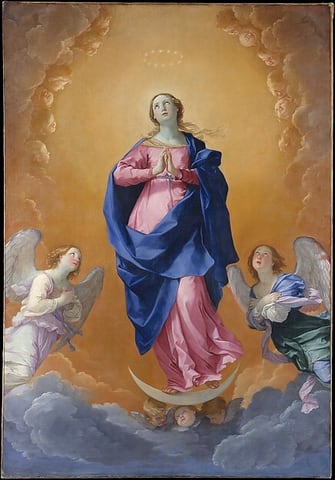
  3. The Immaculate Conception, by Guido Reni, 1627
    The Immaculate ConceptionGuido Reni, 1627Courtesy of The Metropolitan Museum of Art
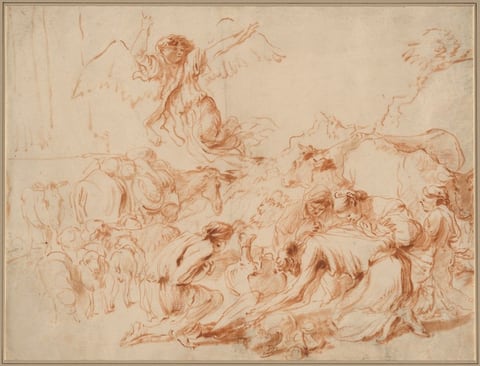
  4. A work made of red oil paint on ivory laid paper.
    The Angel Departing from the Family of Tobit (?)Giovanni Benedetto Castiglione, c. 1655Courtesy of the Art Institute of Chicago