Floor plan

Time and placeThe 17th century

The 17th century

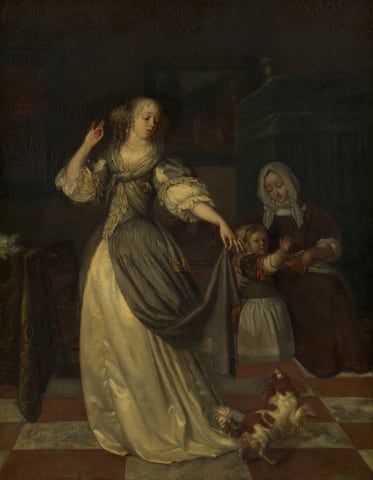
A work made of oil on canvas.
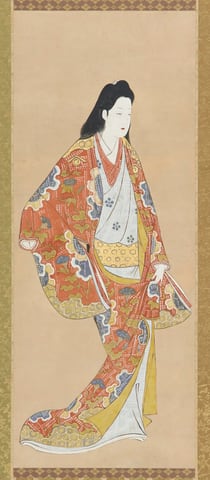
Hanging scroll (mounted on panel)
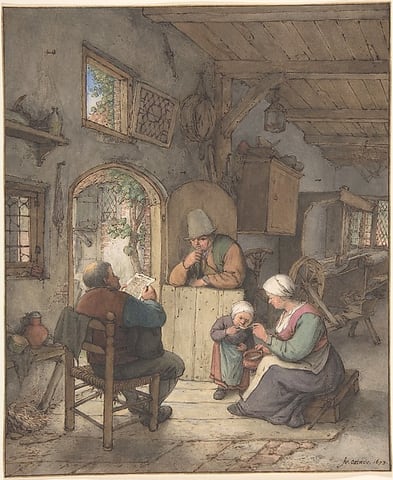
Reading the News at the Weavers' Cottage, by Adriaen van Ostade, 1673
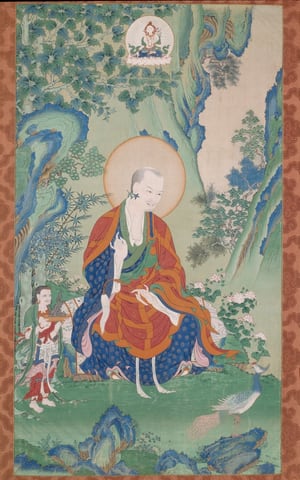
A scene in green, orange, and blue depicts a large robed figure seated prominently in the foreground, a small standing figure beside him, and a tiny, seated, floating figure above him, mountains in the background.
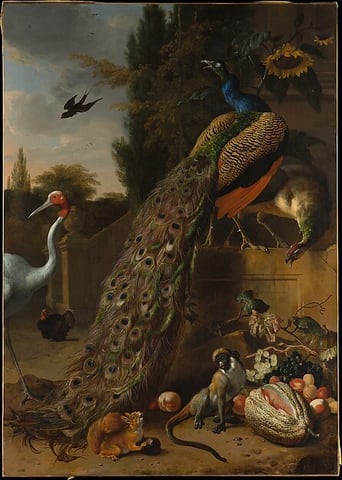
Peacocks, by Melchior d' Hondecoeter, 1683
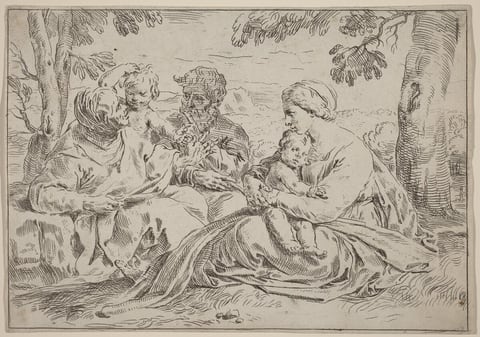
The artwork depicts four human figures, two males and two females, seated. One woman holds a baby, while one man holds a young child. The figures have different hairstyles and clothing, sitting in a natural setting with trees and hills in the background. The scene is drawn in a sketch-like style, focusing on lines and expressions.
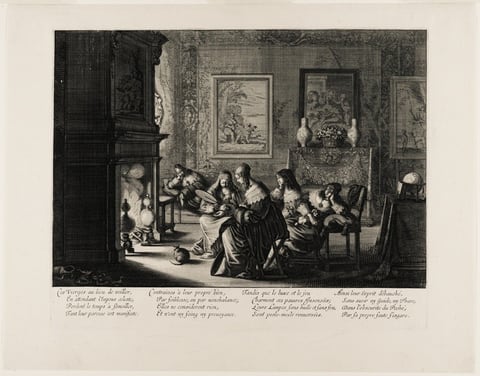
A work made of engraving and etching on ivory laid paper.

The works in this room are listed below.

Works in this room

Works made in the 17th century, anywhere in the world.

Section 1, north wall

  1. A work made of oil on canvas.
    Lady Playing with a DogEglon van der Neer, c. 1670Courtesy of the Art Institute of Chicago
  2. Hanging scroll (mounted on panel)
    Girl in an orange vermillion dressUnrecorded Japanese maker, 1661-1673Courtesy of the National Museum of Asian Art, Smithsonian Institution
  3. Reading the News at the Weavers' Cottage, by Adriaen van Ostade, 1673
    Reading the News at the Weavers' CottageAdriaen van Ostade, 1673Courtesy of The Metropolitan Museum of Art
  4. A scene in green, orange, and blue depicts a large robed figure seated prominently in the foreground, a small standing figure beside him, and a tiny, seated, floating figure above him, mountains in the background.
    Arhat Vanavasin, One of the Sixteen Great Arhats, from a Set of Twenty-ThreeTibeto-Chinese, late 17th/early 18th centuryCourtesy of the Art Institute of Chicago

Section 1, south wall

  1. Peacocks, by Melchior d' Hondecoeter, 1683
    PeacocksMelchior d' Hondecoeter, 1683Courtesy of The Metropolitan Museum of Art
  2. The artwork depicts four human figures, two males and two females, seated. One woman holds a baby, while one man holds a young child. The figures have different hairstyles and clothing, sitting in a natural setting with trees and hills in the background. The scene is drawn in a sketch-like style, focusing on lines and expressions.
    The Holy FamilySimone CantariniCourtesy National Gallery of Art, Washington
  3. A work made of engraving and etching on ivory laid paper.
    The Wise and Foolish Virgins, plate fiveAbraham Bosse, 1635Courtesy of the Art Institute of Chicago

Section 2, south wall
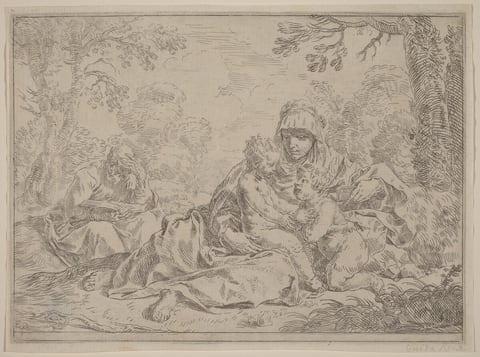
  1. The image shows an etching of four individuals, two adults, and two children. The main adult is sitting with a child on each knee. This person is wearing a hooded cloak with soft facial features. The children have curly hair and are reaching towards each other. The second adult is seated behind them, wearing a loose robe and appears to be holding something, possibly a book. The background features trees, bushes, foliage, and a calm sky.
    The Holy FamilySimone CantariniCourtesy National Gallery of Art, Washington
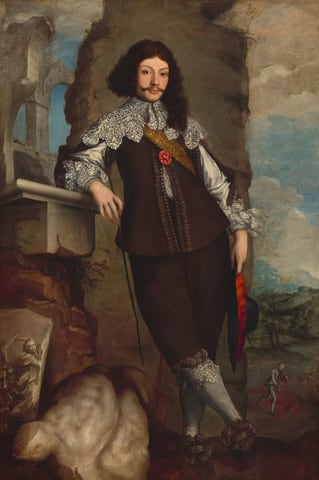
  2. Lodovico Widmann, by Tiberio Tinelli, probably 1637
    Lodovico WidmannTiberio Tinelli, probably 1637Courtesy National Gallery of Art, Washington
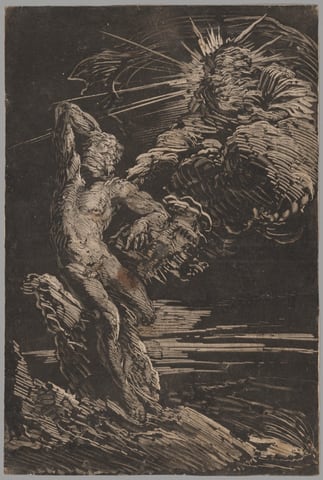
  3. Drawing of god, radiating light, reaching down from clouds, touching male figure.
    The Creation of AdamGiovanni Benedetto Castiglione, c. 1645/50Courtesy of the Art Institute of Chicago
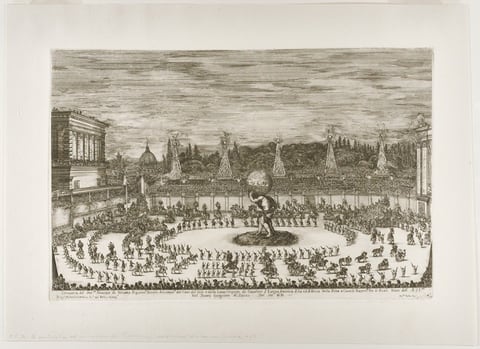
  4. A work made of etching on ivory laid paper.
    Equestrian Ballet in the Amphitheater of the Boboli GardensStefano della Bella, 1661Courtesy of the Art Institute of Chicago

Section 2, north wall
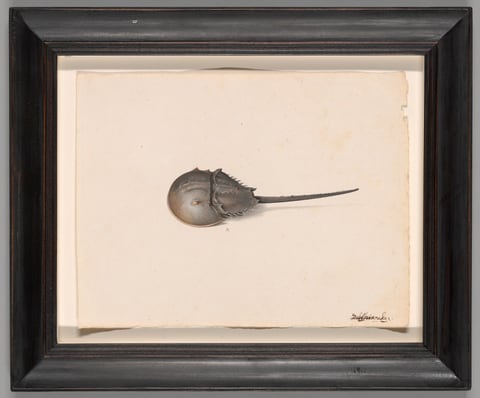
  1. A work made of watercolor and opaque watercolor on cream laid paper.
    A Horseshoe CrabPieter Holsteyn, the younger, 1640/80Courtesy of the Art Institute of Chicago
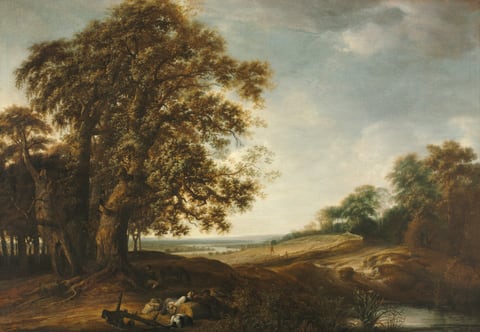
  2. Sleeping Peasants near Fields (Parable of the Weeds), by Simon de Vlieger, 1650–53
    Sleeping Peasants near Fields (Parable of the Weeds)Simon de Vlieger, 1650–53Courtesy of the Cleveland Museum of Art
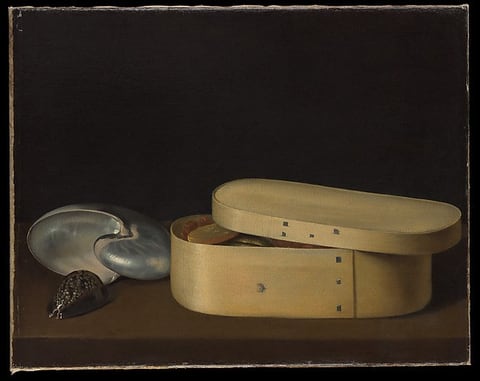
  3. Still Life with Shells and a Chip-Wood Box, by Sebastian Stoskopff, late 1620s
    Still Life with Shells and a Chip-Wood BoxSebastian Stoskopff, late 1620sCourtesy of The Metropolitan Museum of Art

Section 3, north wall
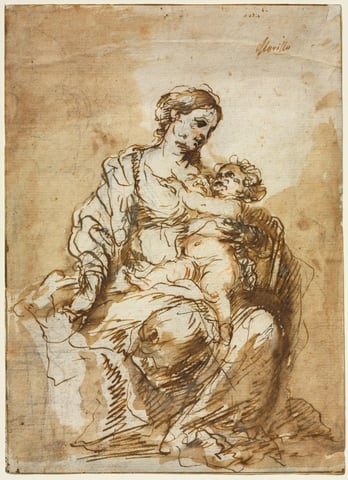
  1. Madonna Nursing the Christ Child, by Bartolomé Esteban Murillo, c. 1670–72
    Madonna Nursing the Christ ChildBartolomé Esteban Murillo, c. 1670–72Courtesy of the Cleveland Museum of Art
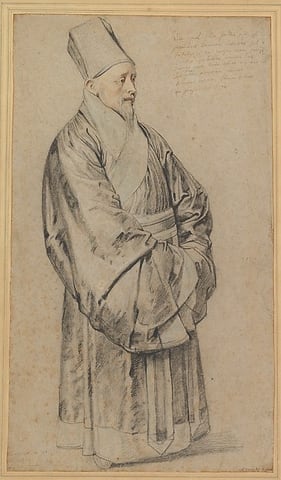
  2. Portrait of Nicolas Trigault in Chinese Costume, by Peter Paul Rubens, 1617
    Portrait of Nicolas Trigault in Chinese CostumePeter Paul Rubens, 1617Courtesy of The Metropolitan Museum of Art