Skip to content
Ochre Editions
ArtArtistsCollectionsGalleriesDrops
SearchSign inCart (0)
The galleries · Time and place

18th-century Britain

Works made in Britain in the 18th century.

42 works · hang 4115 ·

Share 18th-century Britain, in the galleries

The rooms are imagined; every work on their walls is real.

Walk this roomRehang this room

First room, north wall

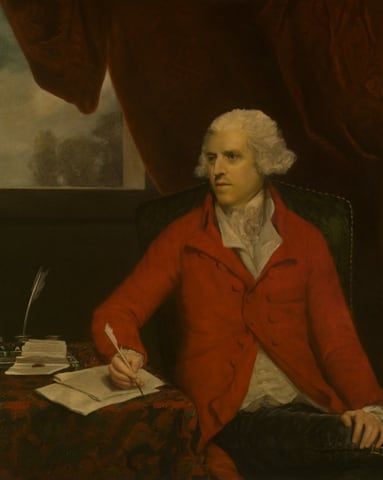
  1. A work made of oil on canvas.
    Sir Thomas Rumbold, Bt.Joshua Reynolds, 1788Courtesy of the Art Institute of Chicago
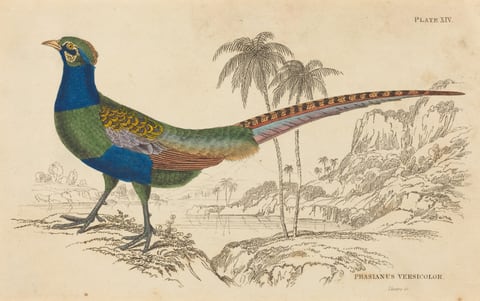
  2. The image shows a pheasant with vivid green and blue plumage and intricate golden patterns on its wings. The bird has long, patterned tail feathers extended to the right. The background includes palm trees, rocky outcrops, and distant hills.
    Phasianus VersicolorWilliam Home LizarsCourtesy National Gallery of Art, Washington
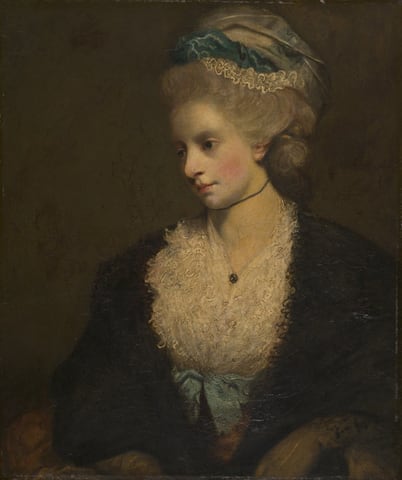
  3. A work made of oil on canvas.
    Theophilia GwatkinJoshua Reynolds, 1776–81Courtesy of the Art Institute of Chicago
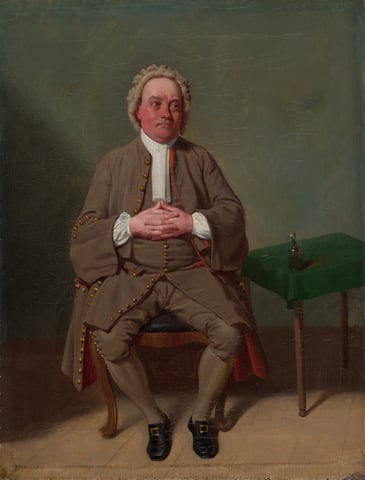
  4. A work made of oil on canvas.
    Mr. Quick as Vellum in Addison's DrummerSamuel De Wilde, 1792Courtesy of the Art Institute of Chicago

First room, south wall
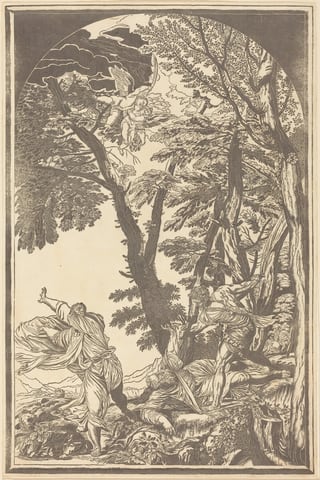
  1. This drawing depicts multiple figures in a forest setting. An angelic figure hovers at the top with wings outstretched. The forest below is filled with intricately detailed trees. Figures on the ground are in dynamic poses, one showing surprise or fear, and another reaching upwards. The composition is detailed with flowing garments and textured foliage, evoking tension and animation.
    The Death of Saint Peter MartyrJohn Baptist Jackson, 1739Courtesy National Gallery of Art, Washington
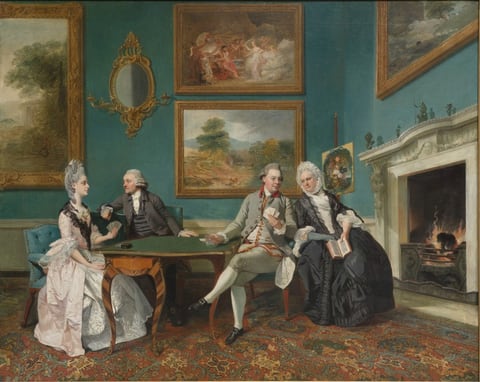
  2. The Dutton Family in the Drawing Room of Sherborne Park, Gloucestershire, by Johann Zoffany, c. 1772
    The Dutton Family in the Drawing Room of Sherborne Park, GloucestershireJohann Zoffany, c. 1772Courtesy of the Cleveland Museum of Art
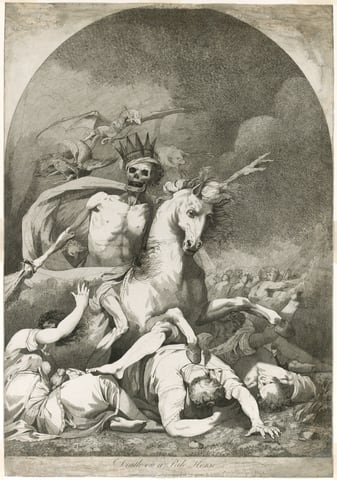
  3. A work made of etching on ivory laid paper.
    Death on a Pale HorseJoseph Haynes, 1784, after the drawing of 1775Courtesy of the Art Institute of Chicago

Second room, south wall
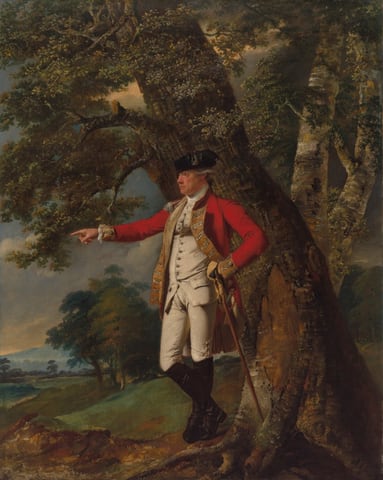
  1. Portrait of Colonel Charles Heathcote, by Joseph Wright of Derby, c. 1771–72
    Portrait of Colonel Charles HeathcoteJoseph Wright of Derby, c. 1771–72Courtesy of the Cleveland Museum of Art
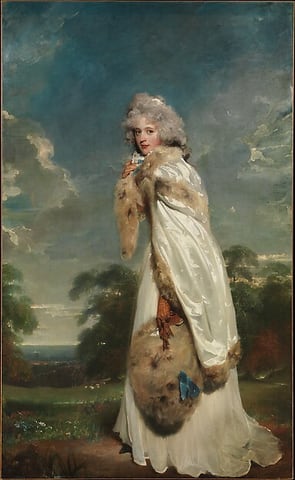
  2. Elizabeth Farren (born about 1759, died 1829), Later Countess of Derby, by Thomas Lawrence, 1790
    Elizabeth Farren (born about 1759, died 1829), Later Countess of DerbyThomas Lawrence, 1790Courtesy of The Metropolitan Museum of Art
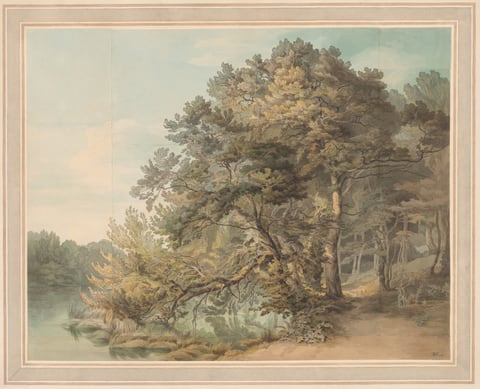
  3. The image shows a forest by a serene, tree-lined body of water. The horizon is high with tall trees extending close to it, creating a sense of depth. The brushstrokes and watercolor application are delicate, capturing textures of leaves and water gently. The color palette includes muted greens, soft browns, and hints of blue and cream. Closest to us is a dense cluster of trees on the right, curving over the water. Across the water, other tree clusters and shrubs recede into the misty background towards the left.
    Peamore, DevonJohn White Abbott, 1799Courtesy National Gallery of Art, Washington

Second room, north wall
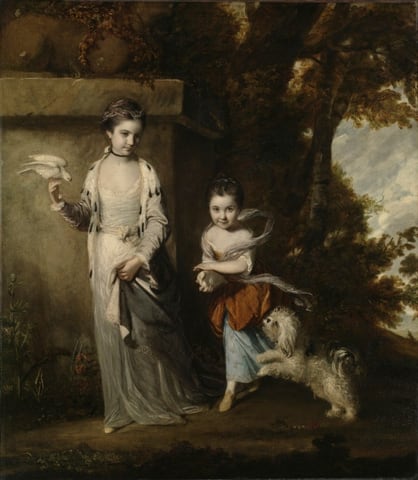
  1. Portrait of the Ladies Amabel and Mary Jemima Yorke, by Joshua Reynolds, c. 1761
    Portrait of the Ladies Amabel and Mary Jemima YorkeJoshua Reynolds, c. 1761Courtesy of the Cleveland Museum of Art
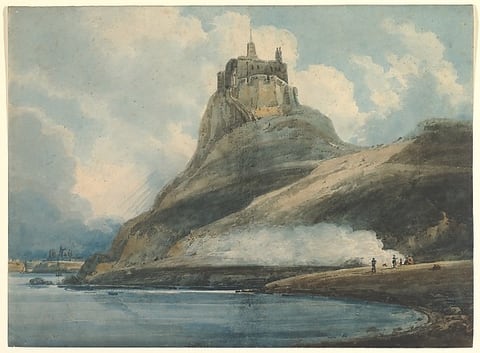
  2. Lindisfarne Castle, Holy Island, Northumberland, by Thomas Girtin, 1796–97
    Lindisfarne Castle, Holy Island, NorthumberlandThomas Girtin, 1796–97Courtesy of The Metropolitan Museum of Art
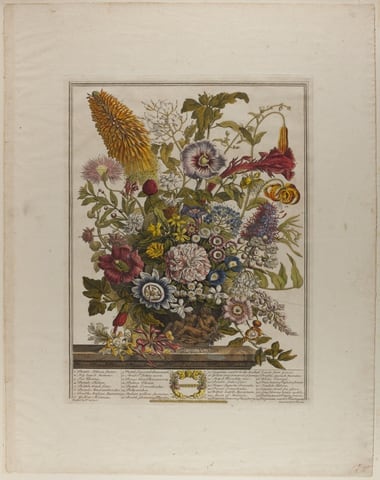
  3. A work made of engraving in black ink with opaque and translucent watercolor on cream laid paper.
    August, from Twelve Months of FlowersHenry Fletcher, n.d.Courtesy of the Art Institute of Chicago

Third room, north wall
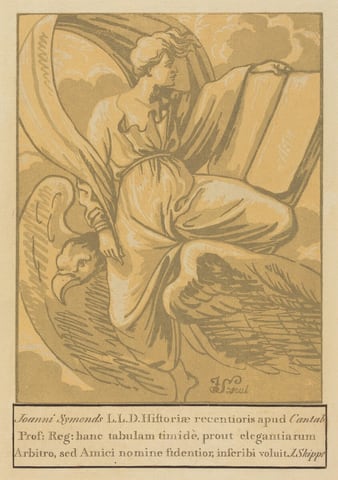
  1. This is a drawing of a winged figure seated on a bird. The image depicts a figure with flowing robes, wings outstretched, holding an open book in one hand. The figure appears to be looking off to the side, with a serene expression. The lower part of the image includes a bird upon which the figure is seated. The bird's head is turned slightly upwards, following the direction in which the figure is gazing. The image is rendered in a warm, monochromatic palette. In the lower section of the image, there is some text, likely Latin.
    Saint John the EvangelistJohn Skippe, 1771Courtesy National Gallery of Art, Washington
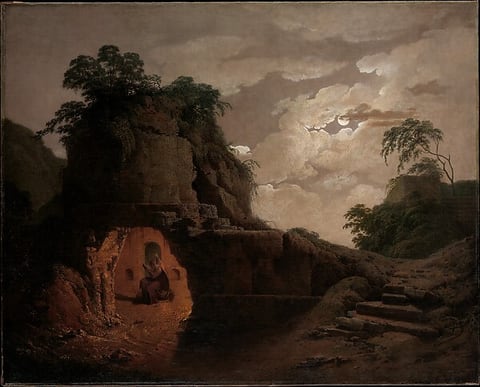
  2. Virgil's Tomb by Moonlight, with Silius Italicus Declaiming, by Joseph Wright of Derby, 1779
    Virgil's Tomb by Moonlight, with Silius Italicus DeclaimingJoseph Wright of Derby, 1779Courtesy of The Metropolitan Museum of Art
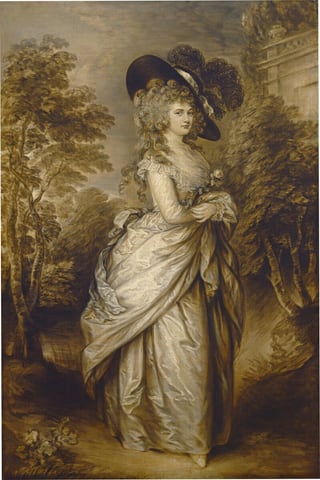
  3. This painting is a full-length portrait of a woman with her body facing the right and her head turned toward us. She has light skin, curly gray hair, arched eyebrows, and a small mouth in a neutral expression. She wears an elegant light-colored dress with a large bow on the back and a large, dark, feathered hat, and she has a flower tucked in her arms, which also gather up some of her skirts. The background shows tall trees, with the edge of a wall visible in the upper-right corner. The color scheme of the painting is mostly olive-green, and everything has a green tint.
    Georgiana, Duchess of DevonshireGainsborough Dupont, c. 1787/1796Courtesy National Gallery of Art, Washington

Walk on

  • 18th-century Britain, room 2
  • More by Gainsborough Dupont 3 works
  • More Georgian Britain 63 works
Ochre Editions

The world's museums, on your wall. Every work here is a reproduction of a public-domain original, credited to the museum that holds it.

Shop

All artCollectionsLimited dropsPrints and framing

Help

Find an orderShippingReturnsVerify a certificate

About

About Ochre EditionsMuseum creditsFor agentsDevelopers

Legal

Terms of UseTerms of SaleLimited Editions and CertificatesPrivacy PolicyCookie PolicyAcceptable Use PolicyAgent & API TermsCopyright and DMCA PolicyPrinting Your Own PhotoVulnerability Disclosure PolicyAccessibility StatementOpen-Access Credits
© 2026 Ochre EditionsPrices in US dollars. Prints ship within the United States.