Floor plan

Time and place18th-century Britain
18th-century Britain
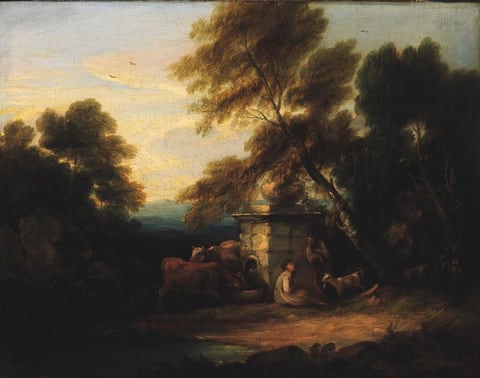
Small Landscape, ca. 1750-1800
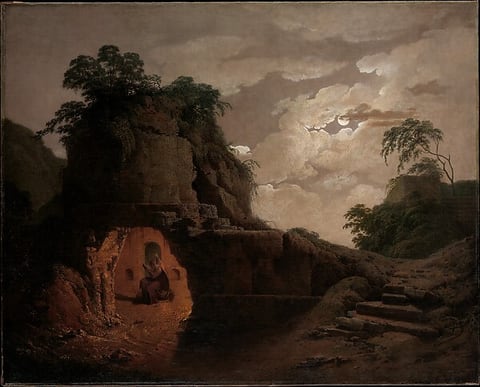
Virgil's Tomb by Moonlight, with Silius Italicus Declaiming, by Joseph Wright of Derby, 1779
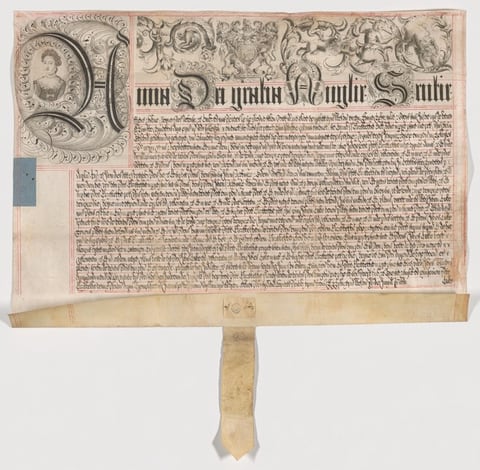
A work made of engraved letterhead, pen and ink calligraphy, and graphite ruling on parchment, folded with strap and (missing) seal.
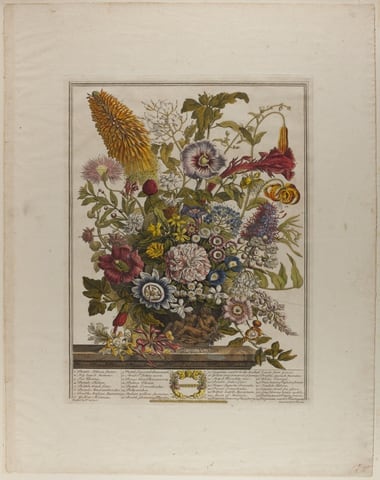
A work made of engraving in black ink with opaque and translucent watercolor on cream laid paper.
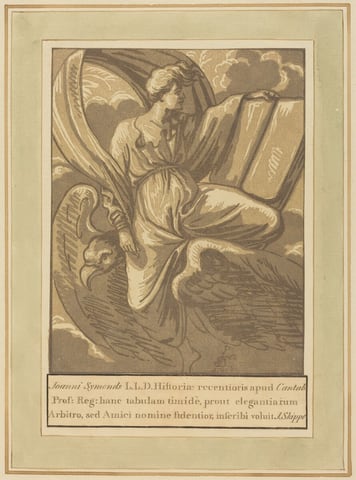
This is a drawing of a seated figure on a large bird. The image depicts a classically draped figure seated on a stylized bird. The figure holds an open book and gazes into the distance. The bird has sharp features and spread wings. The background contains swirling clouds. The scene is framed with a border, and there is text at the bottom. The lines are bold and the shades are muted.
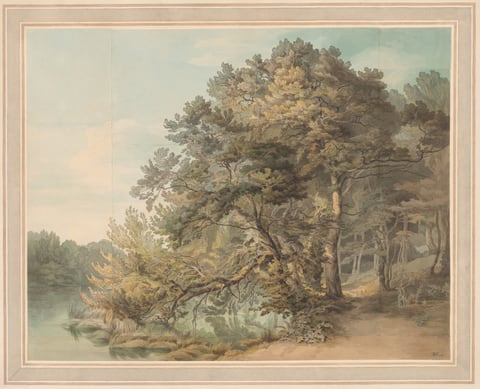
The image shows a forest by a serene, tree-lined body of water. The horizon is high with tall trees extending close to it, creating a sense of depth. The brushstrokes and watercolor application are delicate, capturing textures of leaves and water gently. The color palette includes muted greens, soft browns, and hints of blue and cream. Closest to us is a dense cluster of trees on the right, curving over the water. Across the water, other tree clusters and shrubs recede into the misty background towards the left.
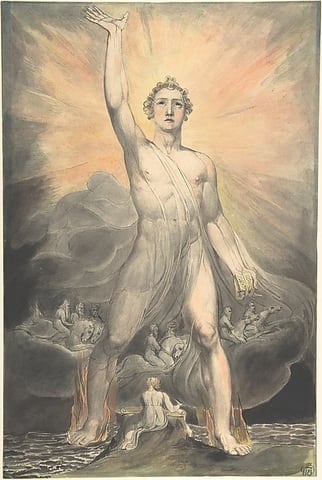
Angel of the Revelation (Book of Revelation, chapter 10), by William Blake, ca. 1803–5

The works in this room are listed below.

Works in this room

Works made in Britain in the 18th century.

First room, north wall

  1. Small Landscape, ca. 1750-1800
    Small LandscapeUnrecorded British maker, ca. 1750-1800Courtesy of the Smithsonian American Art Museum
  2. Virgil's Tomb by Moonlight, with Silius Italicus Declaiming, by Joseph Wright of Derby, 1779
    Virgil's Tomb by Moonlight, with Silius Italicus DeclaimingJoseph Wright of Derby, 1779Courtesy of The Metropolitan Museum of Art
  3. A work made of engraved letterhead, pen and ink calligraphy, and graphite ruling on parchment, folded with strap and (missing) seal.
    Recovery Document (Land Title Grant)Unrecorded British maker, 1702/14 (Queen Anne period)Courtesy of the Art Institute of Chicago
  4. A work made of engraving in black ink with opaque and translucent watercolor on cream laid paper.
    August, from Twelve Months of FlowersHenry Fletcher, n.d.Courtesy of the Art Institute of Chicago

First room, south wall

  1. This is a drawing of a seated figure on a large bird. The image depicts a classically draped figure seated on a stylized bird. The figure holds an open book and gazes into the distance. The bird has sharp features and spread wings. The background contains swirling clouds. The scene is framed with a border, and there is text at the bottom. The lines are bold and the shades are muted.
    Saint John the EvangelistJohn Skippe, 1771Courtesy National Gallery of Art, Washington
  2. The image shows a forest by a serene, tree-lined body of water. The horizon is high with tall trees extending close to it, creating a sense of depth. The brushstrokes and watercolor application are delicate, capturing textures of leaves and water gently. The color palette includes muted greens, soft browns, and hints of blue and cream. Closest to us is a dense cluster of trees on the right, curving over the water. Across the water, other tree clusters and shrubs recede into the misty background towards the left.
    Peamore, DevonJohn White Abbott, 1799Courtesy National Gallery of Art, Washington
  3. Angel of the Revelation (Book of Revelation, chapter 10), by William Blake, ca. 1803–5
    Angel of the Revelation (Book of Revelation, chapter 10)William Blake, ca. 1803–5Courtesy of The Metropolitan Museum of Art

Second room, south wall
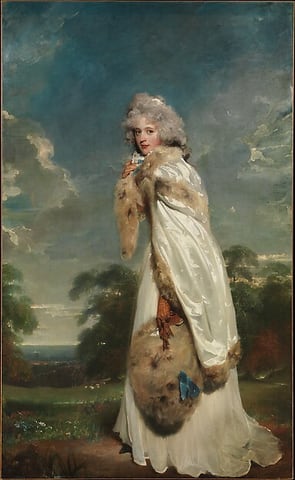
  1. Elizabeth Farren (born about 1759, died 1829), Later Countess of Derby, by Thomas Lawrence, 1790
    Elizabeth Farren (born about 1759, died 1829), Later Countess of DerbyThomas Lawrence, 1790Courtesy of The Metropolitan Museum of Art
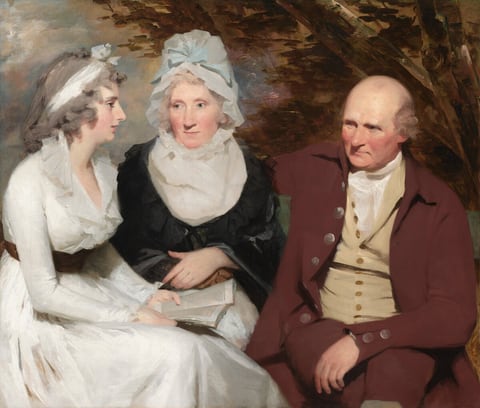
  2. John Johnstone, Betty Johnstone, and Miss Wedderburn, by Sir Henry Raeburn, c. 1790/1795
    John Johnstone, Betty Johnstone, and Miss WedderburnSir Henry Raeburn, c. 1790/1795Courtesy National Gallery of Art, Washington
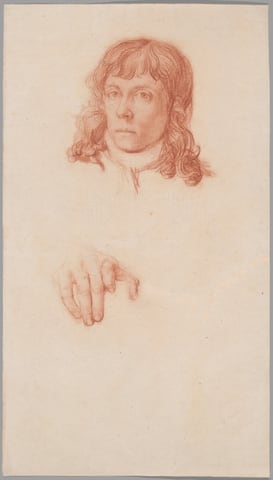
  3. A work made of red chalk on cream laid paper.
    Self-PortraitJohn Flaxman, c. 1779Courtesy of the Art Institute of Chicago

Second room, north wall
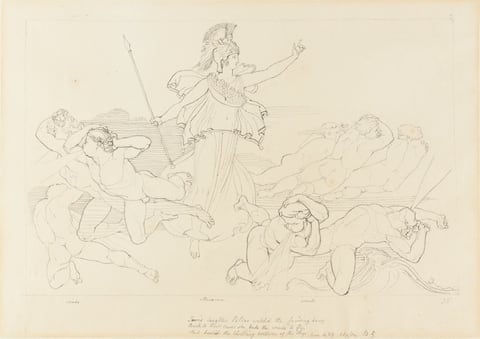
  1. A work made of pen and black ink, over traces of graphite, on tan wove paper, laid down on cream wove paper.
    Athena and the WindsJohn Flaxman, n.d.Courtesy of the Art Institute of Chicago
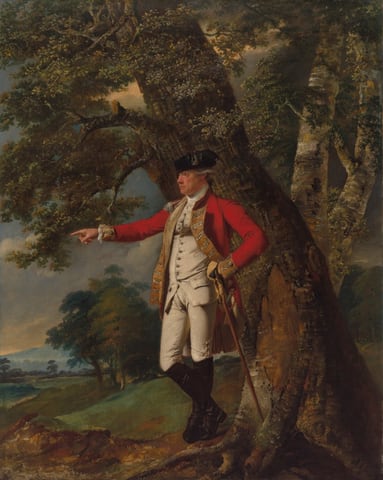
  2. Portrait of Colonel Charles Heathcote, by Joseph Wright of Derby, c. 1771–72
    Portrait of Colonel Charles HeathcoteJoseph Wright of Derby, c. 1771–72Courtesy of the Cleveland Museum of Art
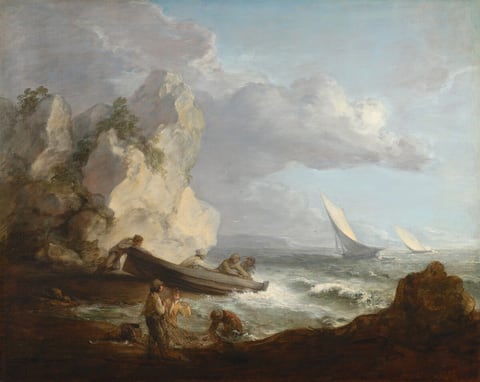
  3. From a rocky shoreline, we look on several light-skinned people working by the sea with a boat and a net in this freely painted, almost square seascape. The scene is framed by a silhouette of low boulders along the lower right corner, and a towering cream-white rock rising two-thirds of the way up the composition to our left. Scrubby, celery-green vegetation grows on the rocky outcropping. Near the center, close to the towering white rocks, three people sit, reaching for something near one end of a boat while a fourth person braces against the rock, presumably to push the boat out to the sea. Closer to us, three people on the shore work with a net. Two stand with the net hooked over their shoulders, and a third person crouches in the water with head down. The people all wear simple shirts and pants in shades of tan, mustard yellow, burnt orange, and pale blue. All but two wear hats. The sea meets the shore with frothy white foam and cresting, low waves. The sea beyond fades from pale sage green to arctic blue along the horizon, which comes about a third of the way up the composition. Two sail boats tilt against the wind in the distance. Pale, smoky lavender-purple clouds drift across the ice-blue sky.
    Seashore with FishermenThomas Gainsborough, c. 1781/1782Courtesy National Gallery of Art, Washington

Third room, north wall
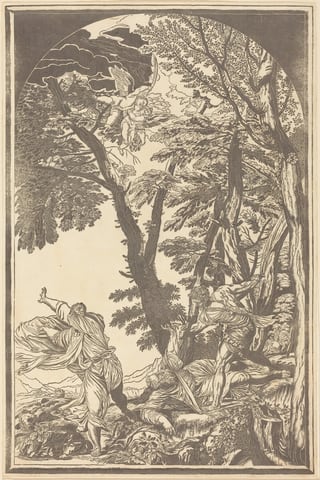
  1. This drawing depicts multiple figures in a forest setting. An angelic figure hovers at the top with wings outstretched. The forest below is filled with intricately detailed trees. Figures on the ground are in dynamic poses, one showing surprise or fear, and another reaching upwards. The composition is detailed with flowing garments and textured foliage, evoking tension and animation.
    The Death of Saint Peter MartyrJohn Baptist Jackson, 1739Courtesy National Gallery of Art, Washington
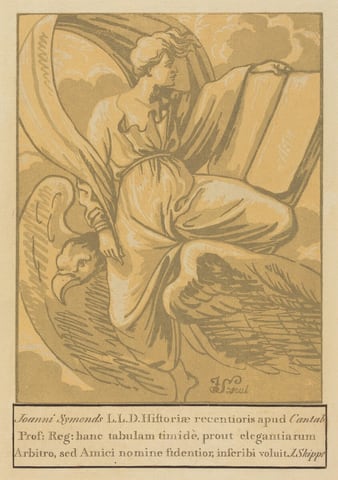
  2. This is a drawing of a winged figure seated on a bird. The image depicts a figure with flowing robes, wings outstretched, holding an open book in one hand. The figure appears to be looking off to the side, with a serene expression. The lower part of the image includes a bird upon which the figure is seated. The bird's head is turned slightly upwards, following the direction in which the figure is gazing. The image is rendered in a warm, monochromatic palette. In the lower section of the image, there is some text, likely Latin.
    Saint John the EvangelistJohn Skippe, 1771Courtesy National Gallery of Art, Washington
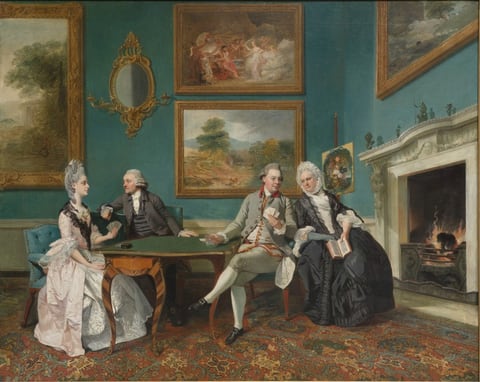
  3. The Dutton Family in the Drawing Room of Sherborne Park, Gloucestershire, by Johann Zoffany, c. 1772
    The Dutton Family in the Drawing Room of Sherborne Park, GloucestershireJohann Zoffany, c. 1772Courtesy of the Cleveland Museum of Art