Floor plan

Time and place18th-century Britain
18th-century Britain
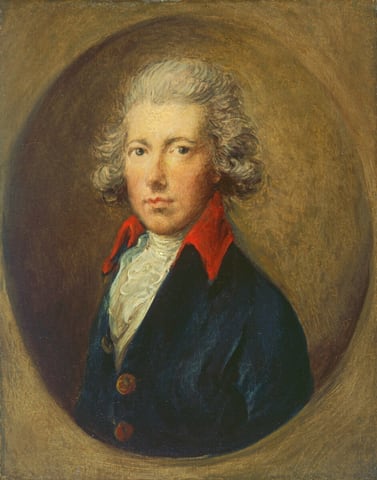
The image depicts a portrait of an individual with the upper half of their body visible. The person is facing forward with their head slightly turned to the side, looking directly at the viewer. They have a fair complexion, with distinct facial features, including a rounded face and closed lips. The hair is styled in an 18th-century manner, with curls around the ears. They are wearing a dark coat with red lapels and brass buttons, over a white shirt with ruffled details. There are no visible jewelry or objects in their hands. The background is a textured, earth-toned surface.
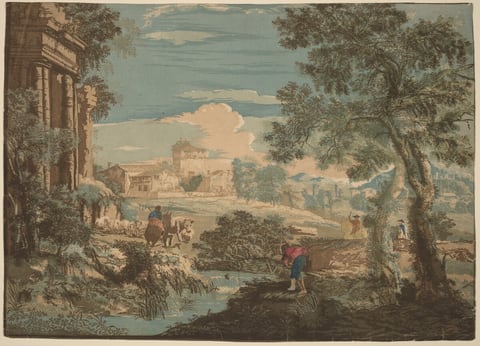
The image shows a landscape scene from an elevated viewpoint. There are large columns of a classical ruin and a leafy tree on the left. On the right, there is a spreading tree with intricate leaves. In the background, there is a pastoral landscape with figures and animals. A shepherd and a cow are guiding a flock of sheep, and buildings can be seen in the distance. The horizon divides the image into sky and earth. The brushstrokes are detailed, capturing textures effectively. The color palette consists of earthy tones with touches of brighter colors on the figures' clothing.
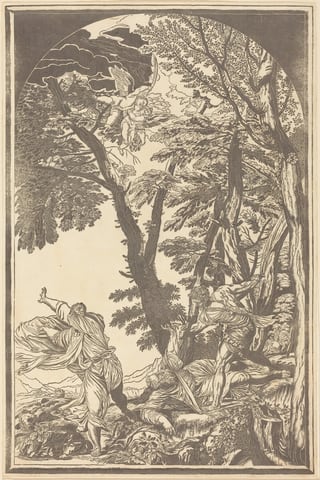
This drawing depicts multiple figures in a forest setting. An angelic figure hovers at the top with wings outstretched. The forest below is filled with intricately detailed trees. Figures on the ground are in dynamic poses, one showing surprise or fear, and another reaching upwards. The composition is detailed with flowing garments and textured foliage, evoking tension and animation.
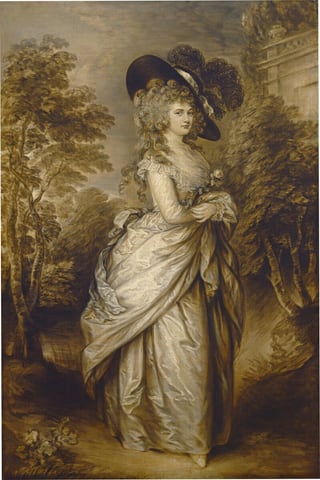
This painting is a full-length portrait of a woman with her body facing the right and her head turned toward us. She has light skin, curly gray hair, arched eyebrows, and a small mouth in a neutral expression. She wears an elegant light-colored dress with a large bow on the back and a large, dark, feathered hat, and she has a flower tucked in her arms, which also gather up some of her skirts. The background shows tall trees, with the edge of a wall visible in the upper-right corner. The color scheme of the painting is mostly olive-green, and everything has a green tint.
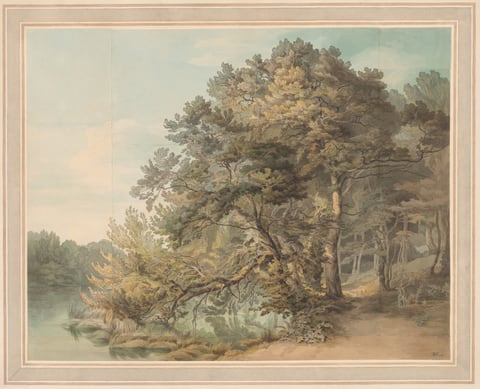
The image shows a forest by a serene, tree-lined body of water. The horizon is high with tall trees extending close to it, creating a sense of depth. The brushstrokes and watercolor application are delicate, capturing textures of leaves and water gently. The color palette includes muted greens, soft browns, and hints of blue and cream. Closest to us is a dense cluster of trees on the right, curving over the water. Across the water, other tree clusters and shrubs recede into the misty background towards the left.
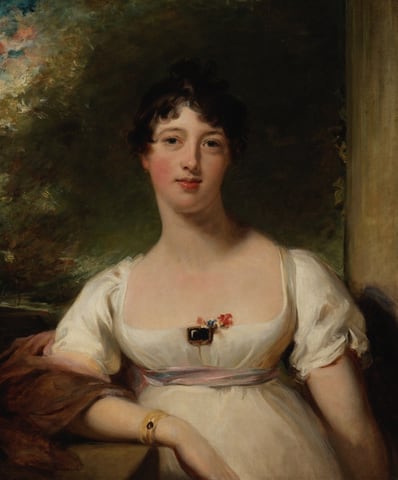
A work made of oil on canvas.
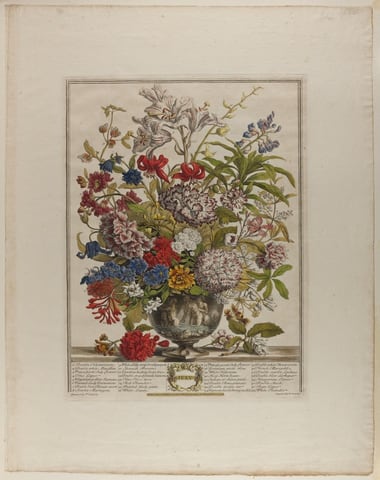
A work made of engraving in black ink with opaque and translucent watercolor on cream laid paper.
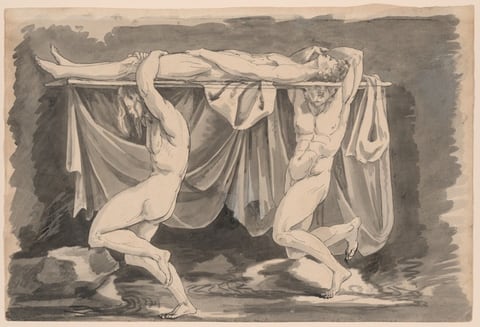
A work made of brush and black ink wash, with pen and black ink and opaque white and gray watercolor, on cream laid paper.

The works in this room are listed below.

Works in this room

Works made in Britain in the 18th century.

First room, north wall

  1. The image depicts a portrait of an individual with the upper half of their body visible. The person is facing forward with their head slightly turned to the side, looking directly at the viewer. They have a fair complexion, with distinct facial features, including a rounded face and closed lips. The hair is styled in an 18th-century manner, with curls around the ears. They are wearing a dark coat with red lapels and brass buttons, over a white shirt with ruffled details. There are no visible jewelry or objects in their hands. The background is a textured, earth-toned surface.
    William PittGainsborough Dupont, 1787/1796Courtesy National Gallery of Art, Washington
  2. The image shows a landscape scene from an elevated viewpoint. There are large columns of a classical ruin and a leafy tree on the left. On the right, there is a spreading tree with intricate leaves. In the background, there is a pastoral landscape with figures and animals. A shepherd and a cow are guiding a flock of sheep, and buildings can be seen in the distance. The horizon divides the image into sky and earth. The brushstrokes are detailed, capturing textures effectively. The color palette consists of earthy tones with touches of brighter colors on the figures' clothing.
    Heroic Landscape with Fisherman, Cows, and HorsemenJohn Baptist Jackson, 1744Courtesy National Gallery of Art, Washington
  3. This drawing depicts multiple figures in a forest setting. An angelic figure hovers at the top with wings outstretched. The forest below is filled with intricately detailed trees. Figures on the ground are in dynamic poses, one showing surprise or fear, and another reaching upwards. The composition is detailed with flowing garments and textured foliage, evoking tension and animation.
    The Death of Saint Peter MartyrJohn Baptist Jackson, 1739Courtesy National Gallery of Art, Washington
  4. This painting is a full-length portrait of a woman with her body facing the right and her head turned toward us. She has light skin, curly gray hair, arched eyebrows, and a small mouth in a neutral expression. She wears an elegant light-colored dress with a large bow on the back and a large, dark, feathered hat, and she has a flower tucked in her arms, which also gather up some of her skirts. The background shows tall trees, with the edge of a wall visible in the upper-right corner. The color scheme of the painting is mostly olive-green, and everything has a green tint.
    Georgiana, Duchess of DevonshireGainsborough Dupont, c. 1787/1796Courtesy National Gallery of Art, Washington

First room, south wall

  1. The image shows a forest by a serene, tree-lined body of water. The horizon is high with tall trees extending close to it, creating a sense of depth. The brushstrokes and watercolor application are delicate, capturing textures of leaves and water gently. The color palette includes muted greens, soft browns, and hints of blue and cream. Closest to us is a dense cluster of trees on the right, curving over the water. Across the water, other tree clusters and shrubs recede into the misty background towards the left.
    Peamore, DevonJohn White Abbott, 1799Courtesy National Gallery of Art, Washington
  2. A work made of oil on canvas.
    Anna Maria Dashwood, later Marchioness of ElyThomas Lawrence, c. 1805Courtesy of the Art Institute of Chicago
  3. A work made of engraving in black ink with opaque and translucent watercolor on cream laid paper.
    July, from Twelve Months of FlowersHenry Fletcher, n.d.Courtesy of the Art Institute of Chicago
  4. A work made of brush and black ink wash, with pen and black ink and opaque white and gray watercolor, on cream laid paper.
    A Hero Born on a Bier, from The Master of Giants PortfolioPrince Hoare, 1779Courtesy of the Art Institute of Chicago

Second room, south wall
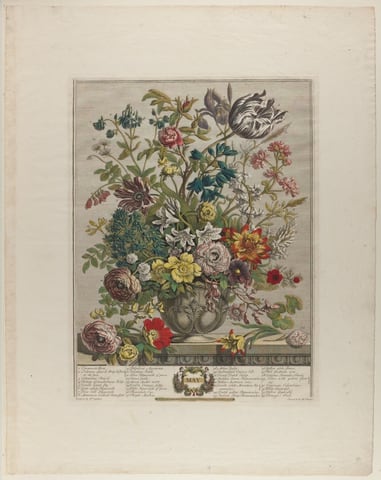
  1. A work made of engraving in black ink with opaque and translucent watercolor on cream laid paper.
    May, from Twelve Months of FlowersHenry Fletcher, n.d.Courtesy of the Art Institute of Chicago
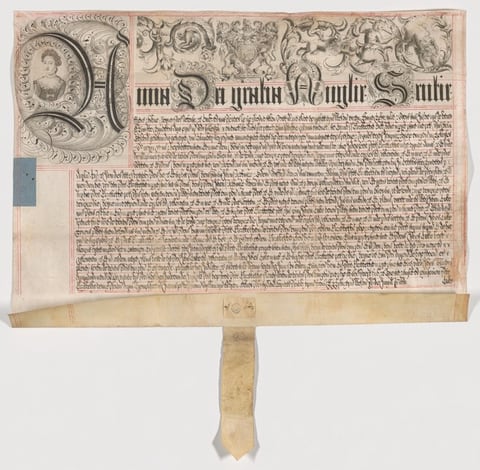
  2. A work made of engraved letterhead, pen and ink calligraphy, and graphite ruling on parchment, folded with strap and (missing) seal.
    Recovery Document (Land Title Grant)Unrecorded British maker, 1702/14 (Queen Anne period)Courtesy of the Art Institute of Chicago
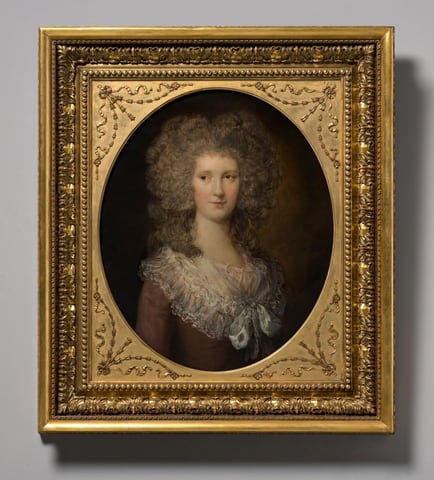
  3. Portrait of Mary Anne Jolliffe, by Gainsborough Dupont, after 1788
    Portrait of Mary Anne JolliffeGainsborough Dupont, after 1788Courtesy of the Cleveland Museum of Art
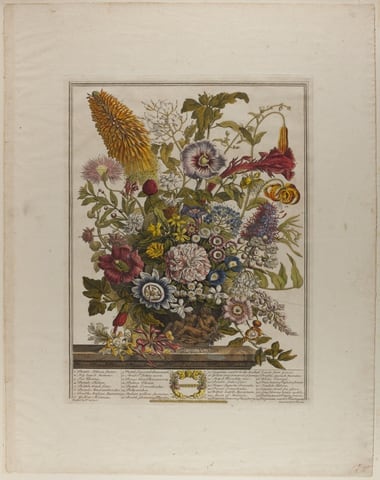
  4. A work made of engraving in black ink with opaque and translucent watercolor on cream laid paper.
    August, from Twelve Months of FlowersHenry Fletcher, n.d.Courtesy of the Art Institute of Chicago

Second room, north wall
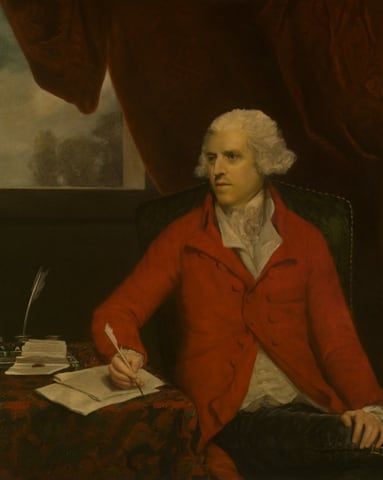
  1. A work made of oil on canvas.
    Sir Thomas Rumbold, Bt.Joshua Reynolds, 1788Courtesy of the Art Institute of Chicago
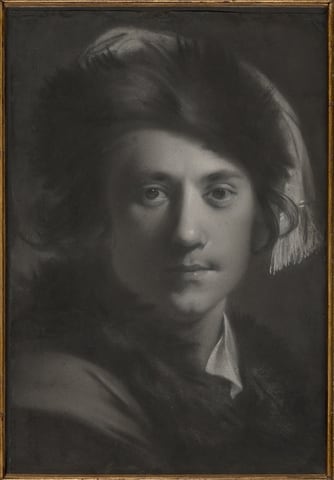
  2. Black, gray pastel portrait of man in a fur hat.
    Self-Portrait in a Fur CapJoseph Wright of Derby, 1765/68Courtesy of the Art Institute of Chicago

Third room, north wall
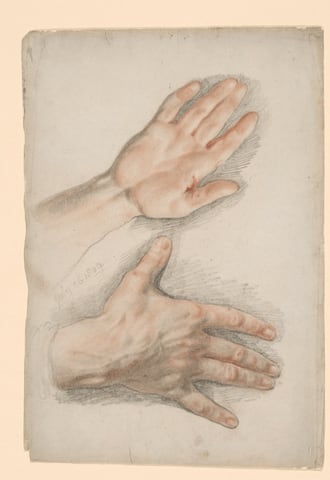
  1. A work made of red and black chalk on gray wove paper.
    Two Studies of a Right HandThomas Lawrence, July 26, 1800Courtesy of the Art Institute of Chicago
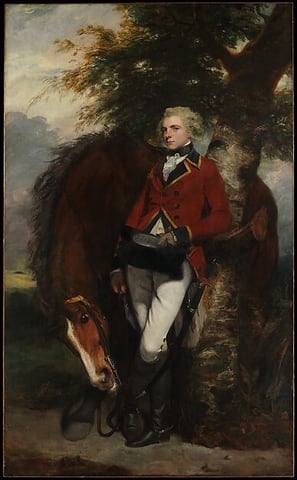
  2. Captain George K. H. Coussmaker (1759–1801), by Joshua Reynolds, 1782
    Captain George K. H. Coussmaker (1759–1801)Joshua Reynolds, 1782Courtesy of The Metropolitan Museum of Art