Floor plan

Time and place19th-century Britain
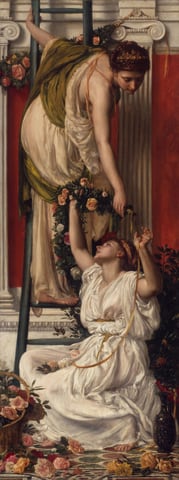
19th-century Britain
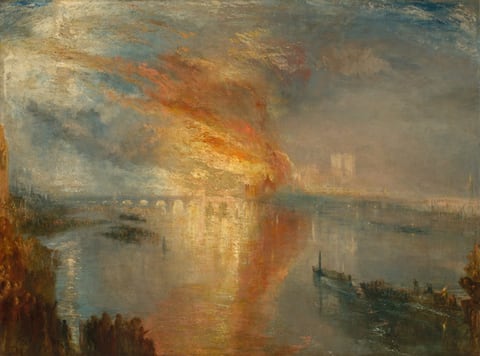
The Burning of the Houses of Lords and Commons, 16 October 1834, by Joseph Mallord William Turner, 1835
A work made of oil on canvas.
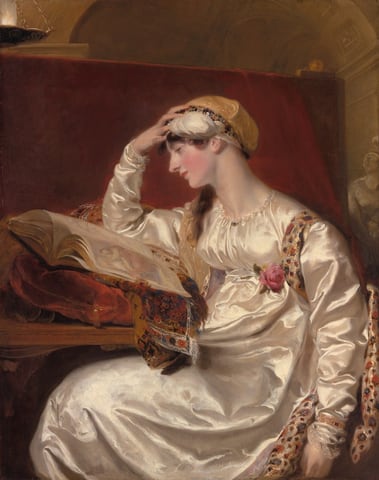
A light-skinned woman in a long, shiny white dress sits at a desk reading a book. The book is propped on a large red pillow. Her head is propped in her hand.
Large English country landscape painting, farmers with horses, green trees.
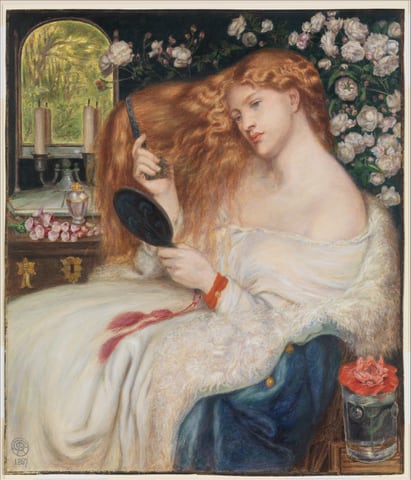
Lady Lilith, by Dante Gabriel Rossetti, 1867
A work made of oil on canvas.

The works in this room are listed below.

Works in this room

Works made in Britain in the 19th century.

Section 1, north wall

  1. The Burning of the Houses of Lords and Commons, 16 October 1834, by Joseph Mallord William Turner, 1835
    The Burning of the Houses of Lords and Commons, 16 October 1834Joseph Mallord William Turner, 1835Courtesy of the Cleveland Museum of Art
  2. A work made of oil on canvas.
    The FestivalSir John Edward Poynter, 1875Courtesy of the Art Institute of Chicago
  3. A light-skinned woman in a long, shiny white dress sits at a desk reading a book. The book is propped on a large red pillow. Her head is propped in her hand.
    Isabella WolffThomas Lawrence, 1803–15Courtesy of the Art Institute of Chicago

Section 1, south wall

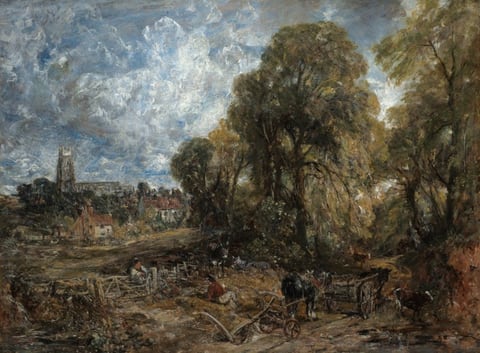
  1. Large English country landscape painting, farmers with horses, green trees.
    Stoke-by-NaylandJohn Constable, 1836Courtesy of the Art Institute of Chicago
  2. Lady Lilith, by Dante Gabriel Rossetti, 1867
    Lady LilithDante Gabriel Rossetti, 1867Courtesy of The Metropolitan Museum of Art
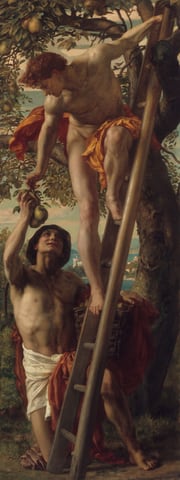
  3. A work made of oil on canvas.
    The Golden AgeSir John Edward Poynter, 1875Courtesy of the Art Institute of Chicago

Section 2, south wall
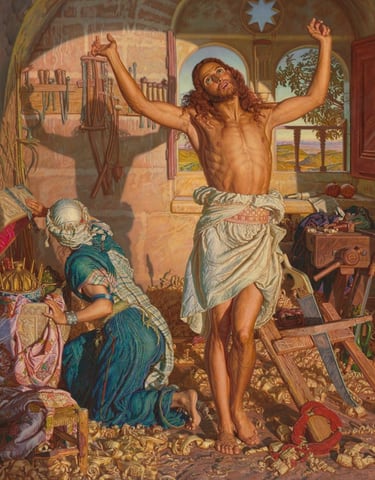
  1. A work made of oil on panel.
    The Shadow of DeathWilliam Holman Hunt, 1873-74Courtesy of the Art Institute of Chicago
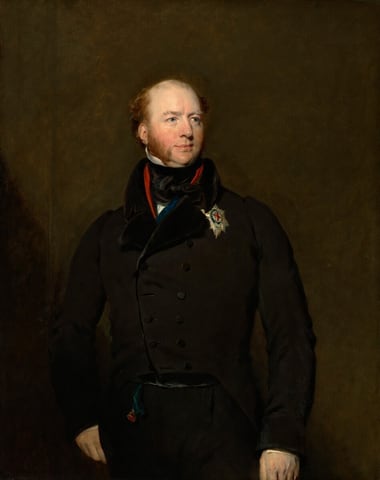
  2. The image displays a man in a portrait from the waist up, in a three-quarter view. He is facing slightly to the right and looking into the distance with a calm expression. The man has fair skin, light reddish-brown hair, sideburns, a defined nose, and a slightly upturned chin. He is wearing a black double-breasted coat with a high collar, a dark waistcoat, a white shirt, and a medal on his chest with an insignia and ribbon. The background is plain and deep brown.
    Francis Charles Seymour-Conway, 3rd Marquess of HertfordThomas Lawrence, c. 1822/1823Courtesy National Gallery of Art, Washington
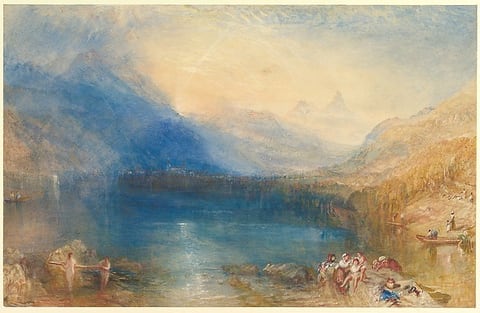
  3. The Lake of Zug, by Joseph Mallord William Turner, 1843
    The Lake of ZugJoseph Mallord William Turner, 1843Courtesy of The Metropolitan Museum of Art
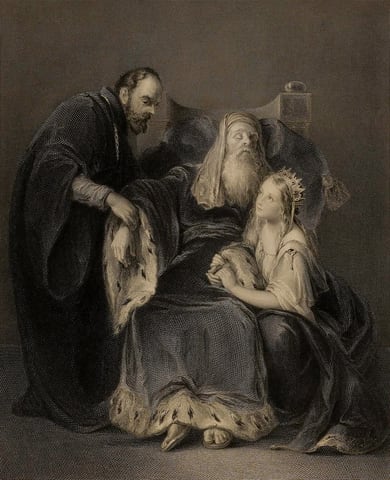
  4. Lear and Cordelia, by Richard Hatfield, 1845
    Lear and CordeliaRichard Hatfield, 1845Courtesy of the Smithsonian American Art Museum

Section 2, north wall
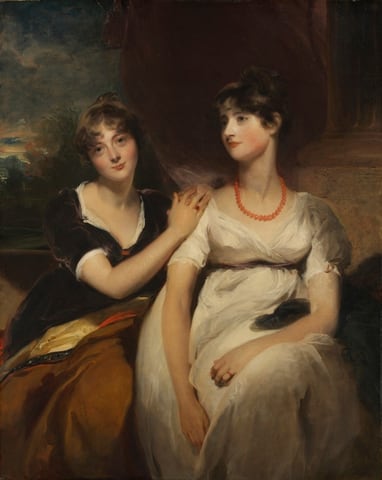
  1. Portrait of Charlotte and Sarah Carteret-Hardy, by Thomas Lawrence, 1801
    Portrait of Charlotte and Sarah Carteret-HardyThomas Lawrence, 1801Courtesy of the Cleveland Museum of Art
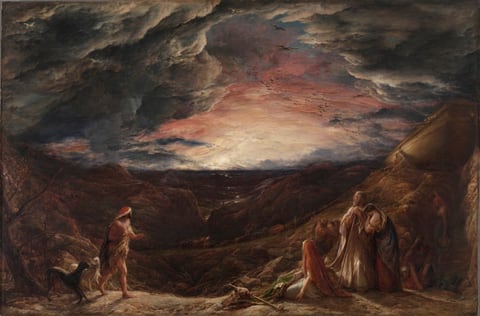
  2. Noah: The Eve of the Deluge, by John Linnell, 1848
    Noah: The Eve of the DelugeJohn Linnell, 1848Courtesy of the Cleveland Museum of Art

Section 3, north wall
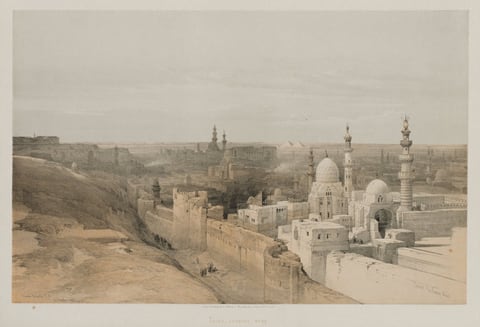
  1. Egypt and Nubia, Volume III, No. 26, Cairo, Looking West, by Louis Haghe, 1848
    Egypt and Nubia, Volume III, No. 26, Cairo, Looking WestLouis Haghe, 1848Courtesy of the Cleveland Museum of Art
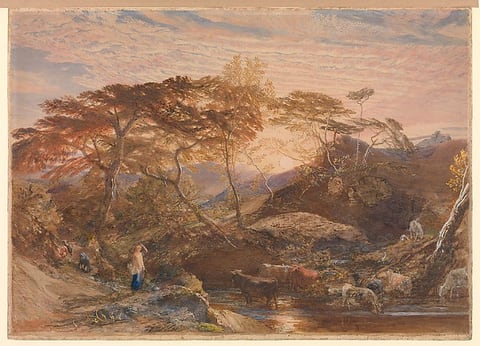
  2. Sabrina, by Samuel Palmer, 1856
    SabrinaSamuel Palmer, 1856Courtesy of The Metropolitan Museum of Art

Section 3, south wall
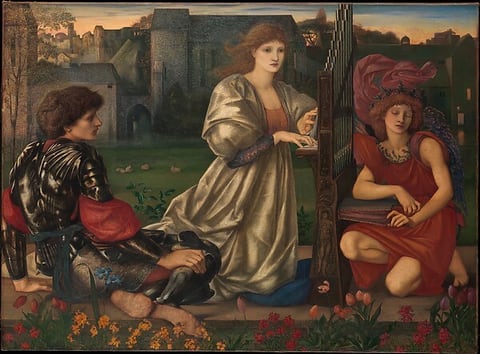
  1. The Love Song, by Sir Edward Burne-Jones, 1868–77
    The Love SongSir Edward Burne-Jones, 1868–77Courtesy of The Metropolitan Museum of Art
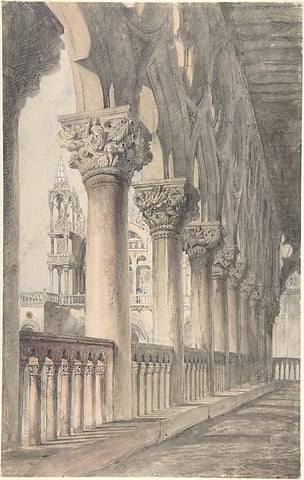
  2. Loggia of the Ducal Palace, Venice, by John Ruskin, 1849–50
    Loggia of the Ducal Palace, VeniceJohn Ruskin, 1849–50Courtesy of The Metropolitan Museum of Art