Skip to content
Ochre Editions
ArtArtistsCollectionsGalleriesDrops
SearchSign inCart (0)
The galleries · Time and place

The 20th century

Works made in the 20th century, anywhere in the world.

189 works · hang 9794 ·

Share The 20th century, in the galleries

The rooms are imagined; every work on their walls is real.

Walk this roomRehang this room

Section 1, north wall

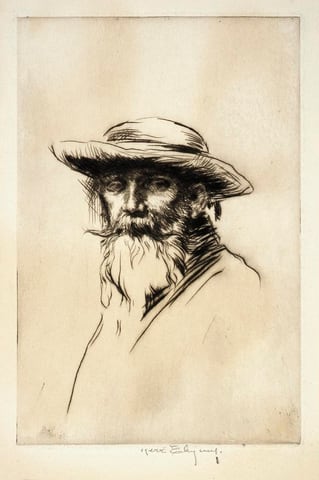
  1. Head of an Old Man, by Kerr Eby, ca. 1918
    Head of an Old ManKerr Eby, ca. 1918Courtesy of the Smithsonian American Art Museum
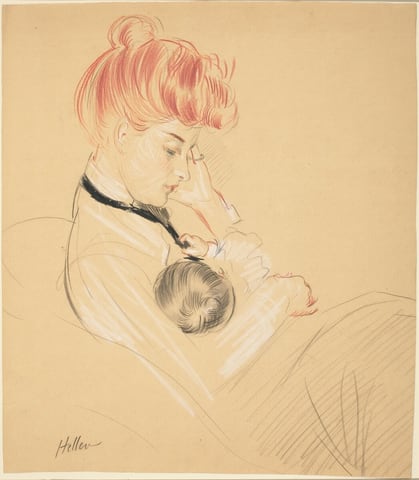
  2. Madame Helleu Cradling Paulette in Her Arms, by Paul-César Helleu, 1904/1905
    Madame Helleu Cradling Paulette in Her ArmsPaul-César Helleu, 1904/1905Courtesy National Gallery of Art, Washington
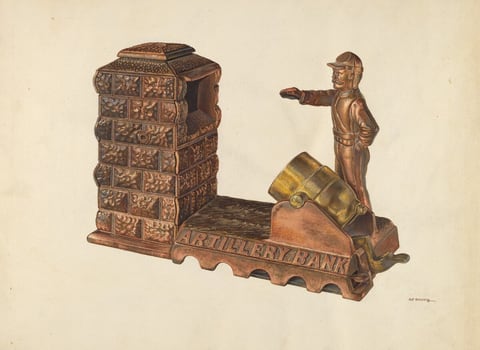
  3. The image displays a vintage mechanical bank with a brick-patterned tower on the left and a soldier figure on the right, prepared to operate a cannon. The color scheme is mainly earthy tones including brown, bronze, and hints of gold, creating a retro metallic appearance. The label "ARTILLERY BANK" is engraved on the base in front of the cannon.
    Mechanical Artillery BankAlf Bruseth, c. 1940Courtesy National Gallery of Art, Washington
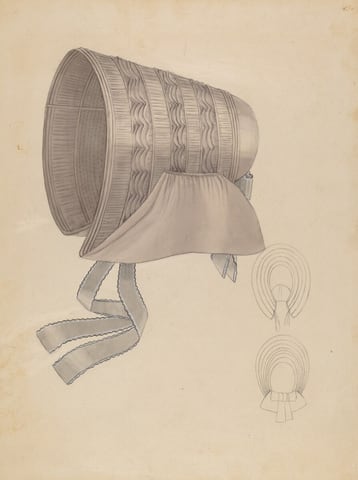
  4. This is an image of a bonnet and its details. The drawing showcases a bonnet with intricate design and texture. The bonnet is viewed from the side, revealing its woven structure with patterns representing fabric pleats or folds. It has a long ribbon hanging from the back, depicted with flowing lines. There are also two smaller sketches showing the bonnet from the back, emphasizing its shape and construction. The background is plain.
    BonnetBessie Forman, c. 1936Courtesy National Gallery of Art, Washington

Section 1, south wall
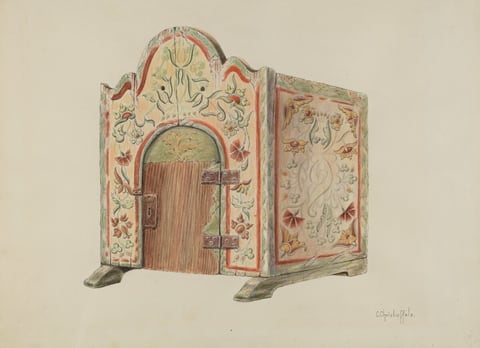
  1. The image shows a small intricately decorated wooden structure with an arched top and a central door flanked by two metal hinges. The structure is painted with a floral and vine motif in colors such as red, green, and yellow on a light background. The wooden door has a textured appearance. The object is positioned centrally with the door facing forward, placed on a slightly elevated base with two footings extending forward. The overall look is ornate and symmetrical, showcasing detailed design work.
    Tabernacle (Ecclesiastical Furniture)Cornelius Christoffels, c. 1938Courtesy National Gallery of Art, Washington
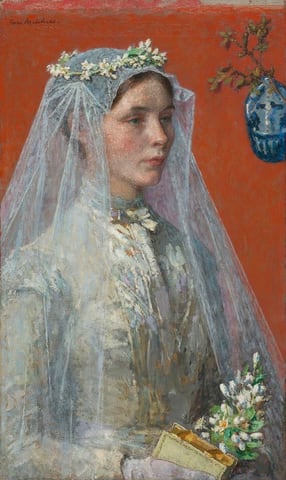
  2. The Bride, by Gari Melchers, ca. 1907
    The BrideGari Melchers, ca. 1907Courtesy of the Smithsonian American Art Museum
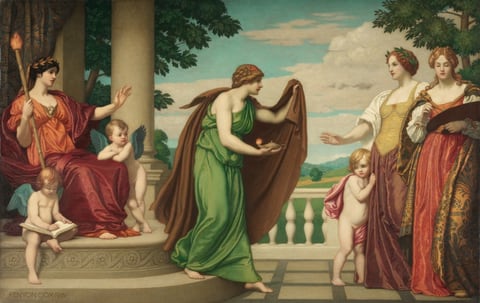
  3. Tradition, by Kenyon Cox, 1916
    TraditionKenyon Cox, 1916Courtesy of the Cleveland Museum of Art

Section 2, south wall
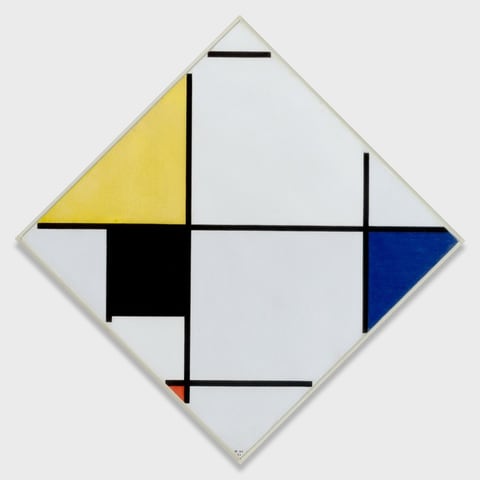
  1. A square white tile, rotated 90 degrees, crossed by black lines intersecting at 90-degree angles. A few of the shapes thus formed—some partial squares, some rectangles—are colored in a single shade of yellow, blue, black, or red.
    Lozenge Composition with Yellow, Black, Blue, Red, and GrayPiet Mondrian, 1921Courtesy of the Art Institute of Chicago
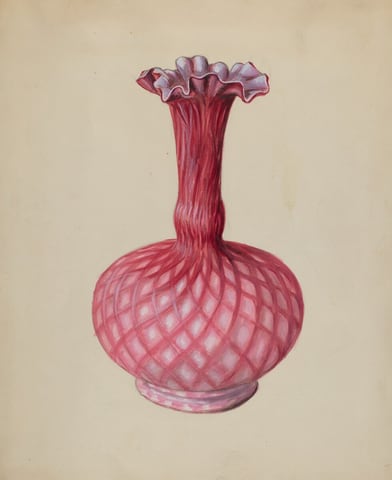
  2. The image displays a single ornate vase with a bulbous base and a ruffled top, taking up most of the frame. The vase is predominantly pink with red accents, the ruffled top is highlighted with white on the inner edges, and there's a crisscross pattern visible on the body. Against a plain beige background, the vase is centrally positioned.
    Ornamental Ruby VaseRobert Stewart, c. 1936Courtesy National Gallery of Art, Washington
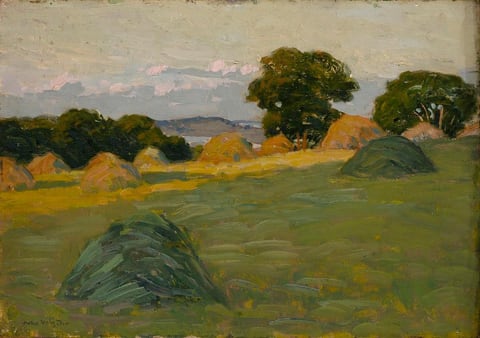
  3. The Hill Field, by Arthur Wesley Dow, 1908-1910
    The Hill FieldArthur Wesley Dow, 1908-1910Courtesy of the Smithsonian American Art Museum
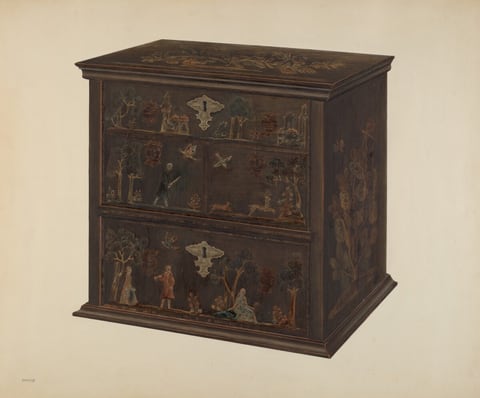
  4. This is a painting of a decorative wooden chest. The chest has intricate designs, such as painted figures, trees, and animals, creating a narrative scene on its front side, and floral motifs on its sides. The craftsmanship suggests it is an ornate object, potentially used for storage or as an ornamental piece. The painting focuses on the texture and details of the wood and decoration with precision, in a traditional arts and crafts or folk art style, emphasizing fine detail and storytelling through imagery on functional furniture.
    Jewel CabinetCharles Henning, c. 1939Courtesy National Gallery of Art, Washington

Section 2, north wall
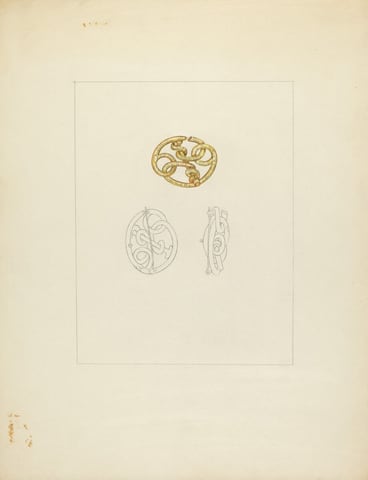
  1. This is a drawing of decorative motifs. The image shows three distinct designs with ornate, swirling patterns. The uppermost design is in gold color. Two additional designs are sketched below in a lighter tone, likely pencil. The use of line and form emphasizes intricate looping patterns that suggest inspiration from natural forms such as vines or waves. The composition is against a plain background, drawing attention to the details and shapes of the motifs, presenting a sense of simplicity and artistry.
    Gold BroochIsidore Steinberg, c. 1940Courtesy National Gallery of Art, Washington
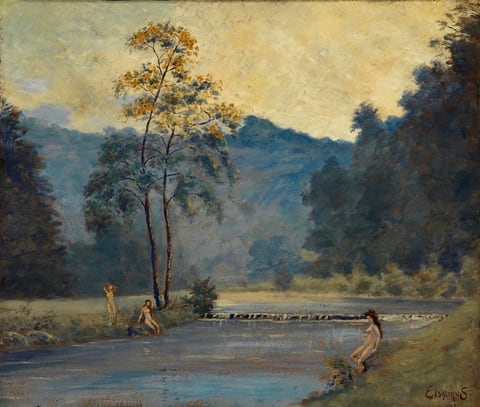
  2. Three Girls and River, by Louis M. Eilshemius, 1907
    Three Girls and RiverLouis M. Eilshemius, 1907Courtesy of the Smithsonian American Art Museum
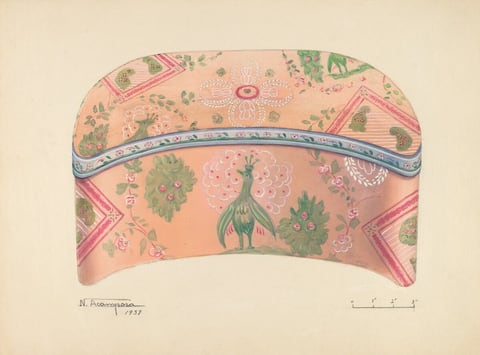
  3. The image shows a decorative curved object with intricate patterns. There is a large green peacock motif in the center, surrounded by floral and geometric patterns. The color palette includes soft pinks, greens, and blue accents outlining the curve of the object. The object is placed on a plain light background.
    BandboxNicholas Acampora, 1937Courtesy National Gallery of Art, Washington

Section 3, north wall
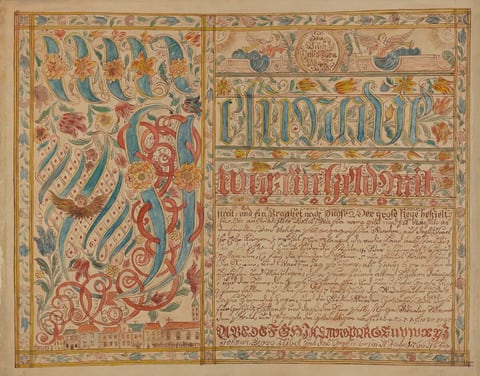
  1. This is a painting of an intricate and colorful illuminated manuscript page. The full-description includes a richly decorated page featuring elaborate calligraphy and floral motifs. The left side showcases swirling ornamental patterns with vibrant colors - blues, reds, and golds - interwoven with blooming flowers and a small figure with wings. In the lower portion, there is a depiction of small buildings. The right side contains text in different styles, with the top section written in large decorative letters and the lower section in a more detailed script. The overall design is bordered with floral elements and intertwining vines. This is in the style of illuminated manuscripts found in historical European documents and books.
    FrakturAlbert Levone, 1935/1942Courtesy National Gallery of Art, Washington
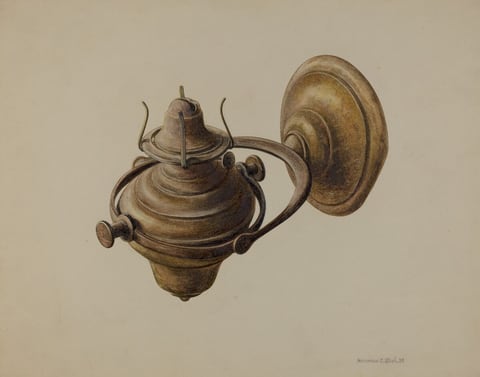
  2. The image displays a detailed drawing of a vintage wall-mounted lamp. The color palette consists of primarily browns and earthy tones, with hints of a metallic sheen. The lamp is centered in the image, with its base attached to the right side and extending to the left. A subtle shadow and highlights give the lamp a three-dimensional appearance against a plain, light beige background.
    Binnacle LampHerman O. Stroh, 1938Courtesy National Gallery of Art, Washington

Walk on

  • The 20th century, room 2
  • Herman O. Stroh's contemporaries 8 works
  • More American folk and design 90 works
Ochre Editions

The world's museums, on your wall. Every work here is a reproduction of a public-domain original, credited to the museum that holds it.

Shop

All artCollectionsLimited dropsPrints and framing

Help

Find an orderShippingReturnsVerify a certificate

About

About Ochre EditionsMuseum creditsFor agentsDevelopers

Legal

Terms of UseTerms of SaleLimited Editions and CertificatesPrivacy PolicyCookie PolicyAcceptable Use PolicyAgent & API TermsCopyright and DMCA PolicyPrinting Your Own PhotoVulnerability Disclosure PolicyAccessibility StatementOpen-Access Credits
© 2026 Ochre EditionsPrices in US dollars. Prints ship within the United States.