Floor plan

East wing: The Nineteenth CenturyImpressionism

Impressionism

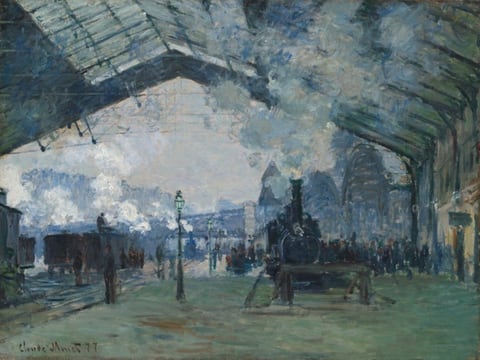
Loosely painted image of an open-air train station. On the right, a parked train gives off an enormous plumb of white smoke, making the scene look as though it were full of clouds. A huddled mass of barely discernible people crowd around the train on both sides of the tracks. Blue, green, and gray tones dominate.
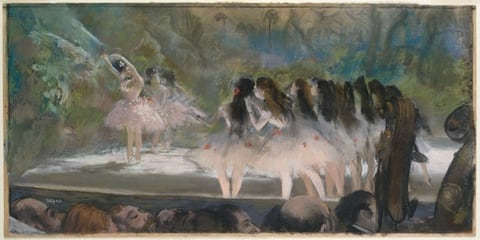
Color pastel drawing of ballerinas in tutus on stage, watched by audience.
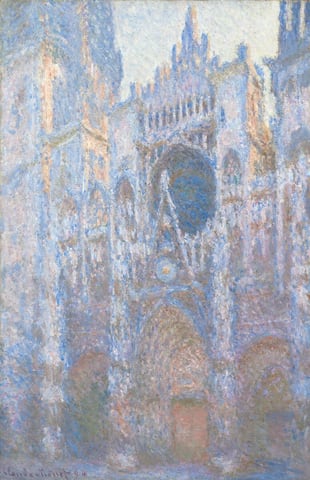
We look up at the exterior of a church that soars the height of this vertical painting. The church is painted with visible dabs and strokes of azure blue, peach, lavender purple, and camel brown to create a blurred look, as if seeing a reflection in the rippling surface of a puddle. The church façade is angled to our left, away from us. The main door and its surround takes up the center of the composition, where a rectangular door is set within nested, pointed arches that lead up to a narrow, tall, triangular gable. The point of that gable overlaps the round, dark rose window, which is the same width as the portal surround below. Spires flank the central section and rise precipitously off the top edge of the painting. The sky above is painted with daubs of white and pale blue. The artist signed and dated the lower left, “Claude Monet 94.”
A work made of oil on canvas.
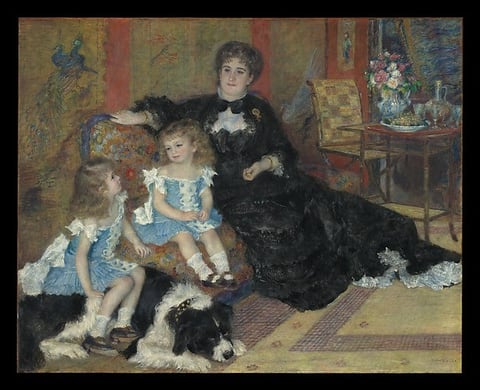
Madame Georges Charpentier (Marguerite-Louise Lemonnier, 1848–1904) and Her Children, Georgette-Berthe (1872–1945) and Paul-Emile-Charles (1875–1895), by Pierre-Auguste Renoir, 1878

The works in this room are listed below.

Works in this room

Painters in 1870s Paris who worked quickly, often outdoors, to catch light as it changed.

First room, north wall

  1. Loosely painted image of an open-air train station. On the right, a parked train gives off an enormous plumb of white smoke, making the scene look as though it were full of clouds. A huddled mass of barely discernible people crowd around the train on both sides of the tracks. Blue, green, and gray tones dominate.
    Arrival of the Normandy Train, Gare Saint-LazareClaude Monet, 1877Courtesy of the Art Institute of Chicago
  2. Color pastel drawing of ballerinas in tutus on stage, watched by audience.
    Ballet at the Paris OpéraEdgar Degas, 1877Courtesy of the Art Institute of Chicago
  3. We look up at the exterior of a church that soars the height of this vertical painting. The church is painted with visible dabs and strokes of azure blue, peach, lavender purple, and camel brown to create a blurred look, as if seeing a reflection in the rippling surface of a puddle. The church façade is angled to our left, away from us. The main door and its surround takes up the center of the composition, where a rectangular door is set within nested, pointed arches that lead up to a narrow, tall, triangular gable. The point of that gable overlaps the round, dark rose window, which is the same width as the portal surround below. Spires flank the central section and rise precipitously off the top edge of the painting. The sky above is painted with daubs of white and pale blue. The artist signed and dated the lower left, “Claude Monet 94.”
    Rouen Cathedral, West FaçadeClaude Monet, 1894Courtesy National Gallery of Art, Washington

First room, south wall

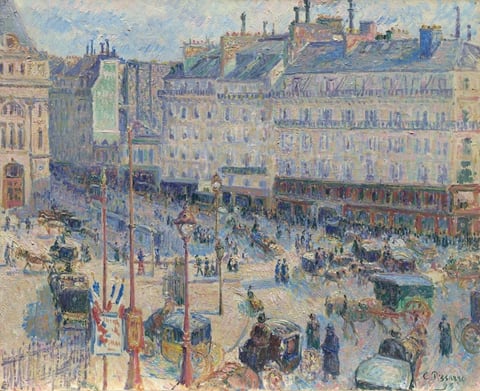
  1. A work made of oil on canvas.
    The Place du Havre, ParisCamille Pissarro, 1893Courtesy of the Art Institute of Chicago
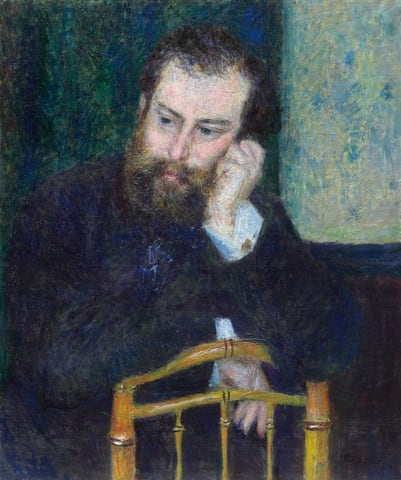
  2. A work made of oil on canvas.
    Alfred SisleyPierre-Auguste Renoir, 1876Courtesy of the Art Institute of Chicago
  3. Madame Georges Charpentier (Marguerite-Louise Lemonnier, 1848–1904) and Her Children, Georgette-Berthe (1872–1945) and Paul-Emile-Charles (1875–1895), by Pierre-Auguste Renoir, 1878
    Madame Georges Charpentier (Marguerite-Louise Lemonnier, 1848–1904) and Her Children, Georgette-Berthe (1872–1945) and Paul-Emile-Charles (1875–1895)Pierre-Auguste Renoir, 1878Courtesy of The Metropolitan Museum of Art

Second room, south wall
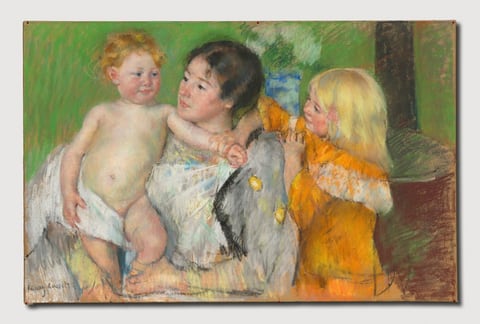
  1. After the Bath, by Mary Cassatt, 1901
    After the BathMary Cassatt, 1901Courtesy of the Cleveland Museum of Art
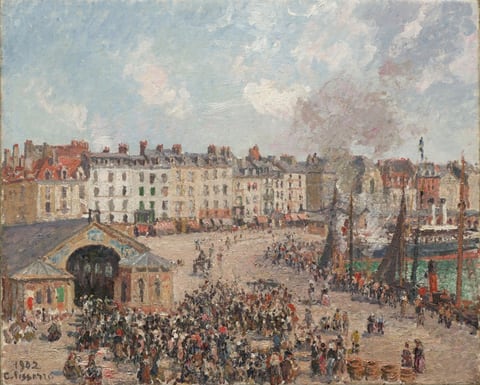
  2. Fishmarket, by Camille Pissarro, 1902
    FishmarketCamille Pissarro, 1902Courtesy of the Cleveland Museum of Art
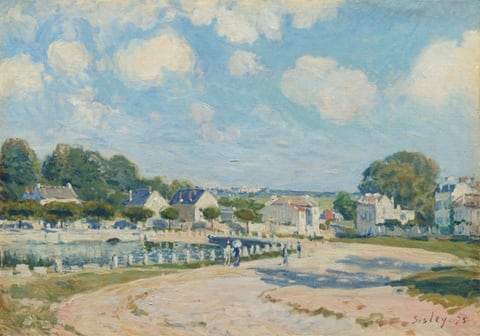
  3. A work made of oil on canvas.
    Watering Place at MarlyAlfred Sisley, 1875Courtesy of the Art Institute of Chicago

Second room, north wall
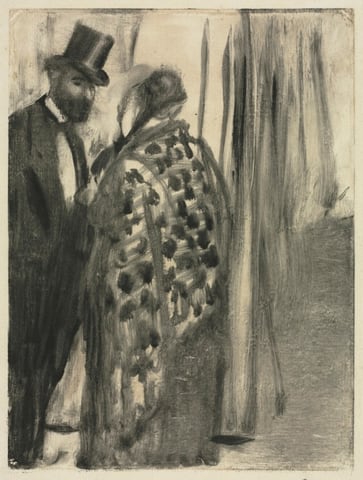
  1. Conversation: Ludovic Halévy and Madame Cardinal (The Conversation) for "La Famille Cardinal" by Ludovic Halévy, by Edgar Degas, c. 1880–83
    Conversation: Ludovic Halévy and Madame Cardinal (The Conversation) for "La Famille Cardinal" by Ludovic HalévyEdgar Degas, c. 1880–83Courtesy of the Cleveland Museum of Art
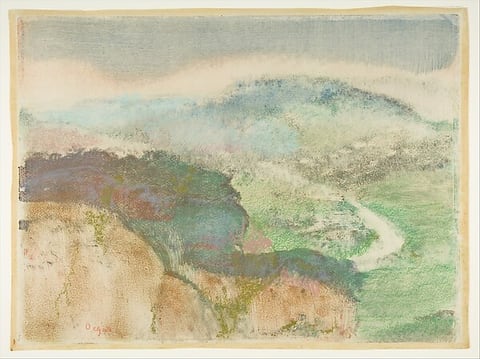
  2. Landscape, by Edgar Degas, 1892
    LandscapeEdgar Degas, 1892Courtesy of The Metropolitan Museum of Art
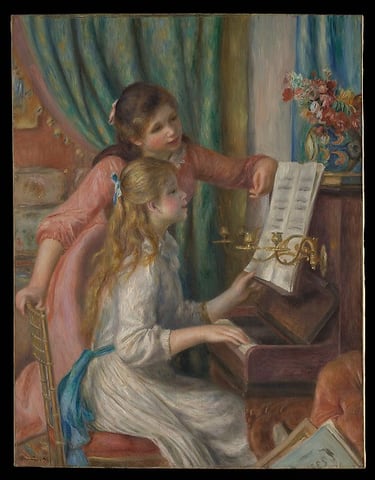
  3. Two Young Girls at the Piano, by Pierre-Auguste Renoir, 1892
    Two Young Girls at the PianoPierre-Auguste Renoir, 1892Courtesy of The Metropolitan Museum of Art

Third room, north wall
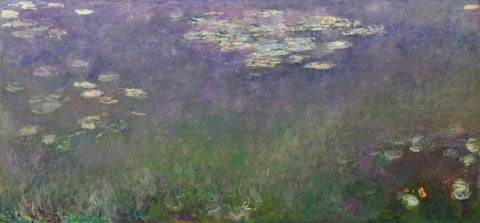
  1. Water Lilies (Agapanthus), by Claude Monet, c. 1915–26
    Water Lilies (Agapanthus)Claude Monet, c. 1915–26Courtesy of the Cleveland Museum of Art
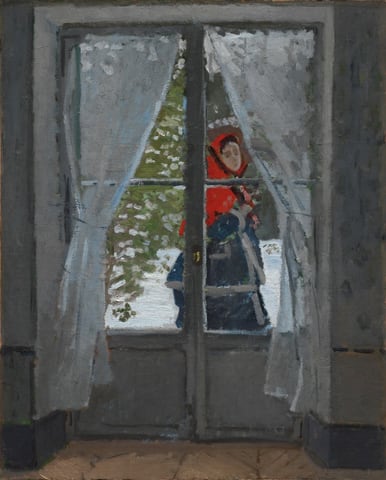
  2. The Red Kerchief, by Claude Monet, c. 1868–73
    The Red KerchiefClaude Monet, c. 1868–73Courtesy of the Cleveland Museum of Art

Third room, south wall
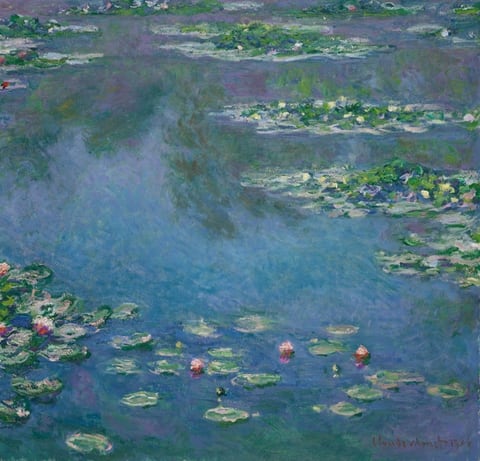
  1. Painting of a pond seen up close spotted with thickly painted pink and white water lilies and a shadow across the top third of the picture.
    Water LiliesClaude Monet, 1906Courtesy of the Art Institute of Chicago
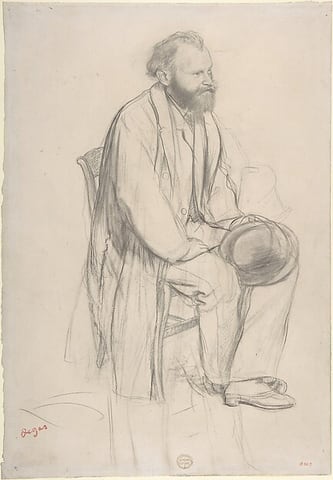
  2. Édouard Manet, Seated, Holding His Hat, by Edgar Degas, ca. 1868
    Édouard Manet, Seated, Holding His HatEdgar Degas, ca. 1868Courtesy of The Metropolitan Museum of Art