Floor plan

East wing: The Nineteenth CenturyImpressionism

Impressionism

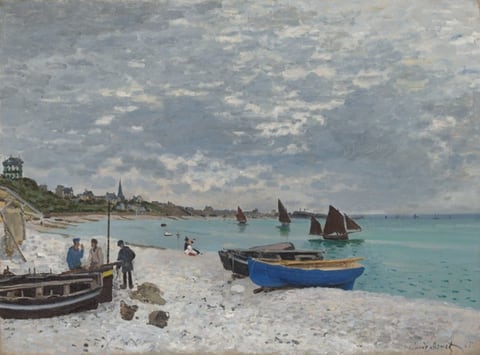
Painting of a beach on a cloudy day with several sailboats on the water, a few rowboats on the shore, and two groupings of people on the sand.
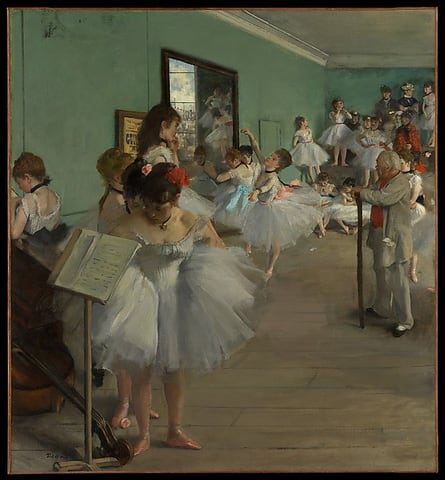
The Dance Class, by Edgar Degas, 1874
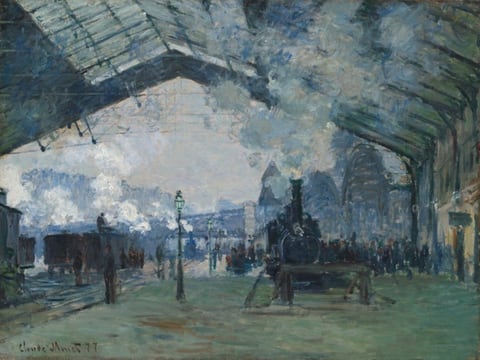
Loosely painted image of an open-air train station. On the right, a parked train gives off an enormous plumb of white smoke, making the scene look as though it were full of clouds. A huddled mass of barely discernible people crowd around the train on both sides of the tracks. Blue, green, and gray tones dominate.
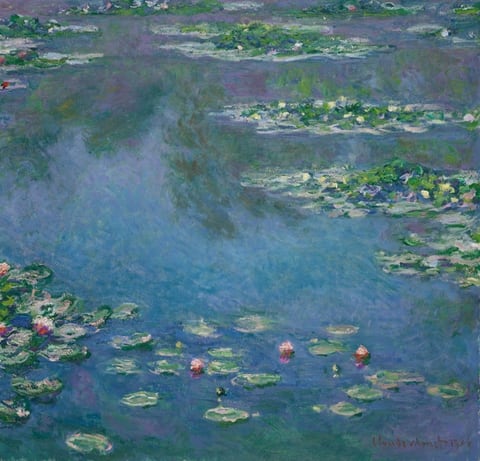
Painting of a pond seen up close spotted with thickly painted pink and white water lilies and a shadow across the top third of the picture.
A work made of oil on canvas.
Self-Portrait, by Edgar Degas, 1857

The works in this room are listed below.

Works in this room

Painters in 1870s Paris who worked quickly, often outdoors, to catch light as it changed.

First room, north wall

  1. Painting of a beach on a cloudy day with several sailboats on the water, a few rowboats on the shore, and two groupings of people on the sand.
    The Beach at Sainte-AdresseClaude Monet, 1867Courtesy of the Art Institute of Chicago
  2. The Dance Class, by Edgar Degas, 1874
    The Dance ClassEdgar Degas, 1874Courtesy of The Metropolitan Museum of Art
  3. Loosely painted image of an open-air train station. On the right, a parked train gives off an enormous plumb of white smoke, making the scene look as though it were full of clouds. A huddled mass of barely discernible people crowd around the train on both sides of the tracks. Blue, green, and gray tones dominate.
    Arrival of the Normandy Train, Gare Saint-LazareClaude Monet, 1877Courtesy of the Art Institute of Chicago

First room, south wall

  1. Painting of a pond seen up close spotted with thickly painted pink and white water lilies and a shadow across the top third of the picture.
    Water LiliesClaude Monet, 1906Courtesy of the Art Institute of Chicago
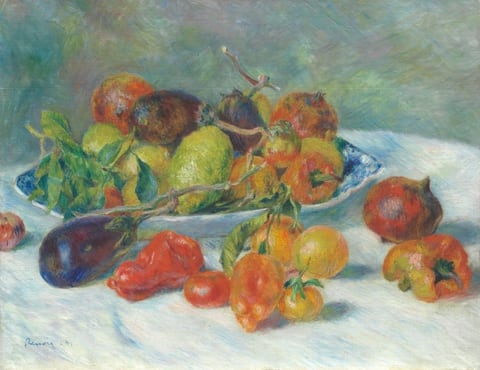
  2. A work made of oil on canvas.
    Fruits of the MidiPierre-Auguste Renoir, 1881Courtesy of the Art Institute of Chicago
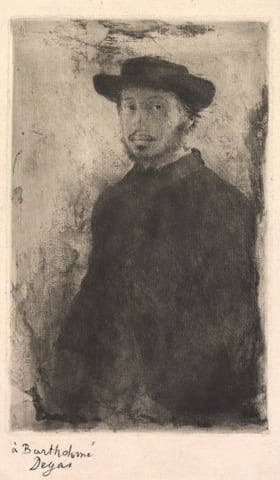
  3. Self-Portrait, by Edgar Degas, 1857
    Self-PortraitEdgar Degas, 1857Courtesy of the Cleveland Museum of Art

Second room, south wall
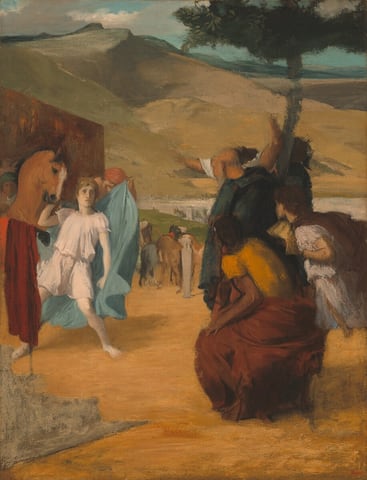
  1. Two groups of people face off in front of a hilly landscape in this loosely painted, vertical scene. On our left, a pale young man in a white tunic looks with eyes wide and lips parted at a group of three people on our right. The young man's right hand, on our left, is raised to stroke the head of a reddish-brown horse at his right shoulder. He stands with feet planted wide, knees bent, and he curls his left hand into a fist. Behind him, a man holds up a fluttering, light blue cape. A mottled red wall forms a backdrop to this scene on our left. The tight group gathered under a tree on our right stares back at the young man. The trio is made up of a balding, older man, a light-skinned boy also wearing a white tunic, and, closest to us, a brown-skinned woman wearing a marigold-orange shirt and a maroon-red skirt. Behind this group, a pair of pale raised arms suggests a fourth person, but the head is missing or has been painted over. The ground under the people is saffron orange. In the center of the picture, beyond the people, a group of horses stands near a green bank by a river, its surface reflecting white. The far bank is lined with white buildings. Tan and olive-green slopes rise from the opposite riverbank under a pale blue sky with cream-white clouds sweeping along the top edge of the composition. The artist signed his name in red paint in the lower right corner: “Degas.”
    Alexander and BucephalusEdgar Degas, 1861/1862Courtesy National Gallery of Art, Washington
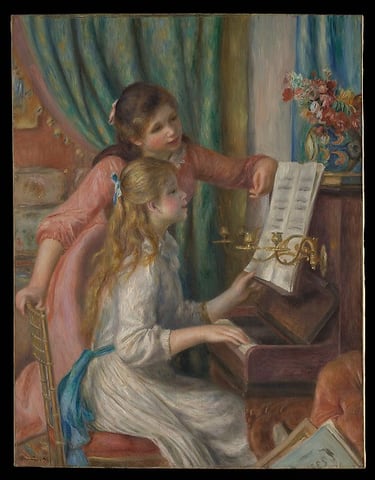
  2. Two Young Girls at the Piano, by Pierre-Auguste Renoir, 1892
    Two Young Girls at the PianoPierre-Auguste Renoir, 1892Courtesy of The Metropolitan Museum of Art
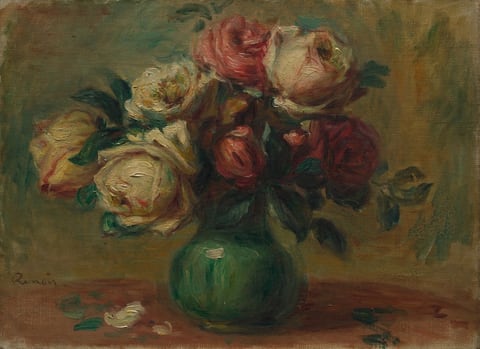
  3. Roses in a Vase, by Pierre-Auguste Renoir, c. 1890
    Roses in a VasePierre-Auguste Renoir, c. 1890Courtesy of the Cleveland Museum of Art

Second room, north wall
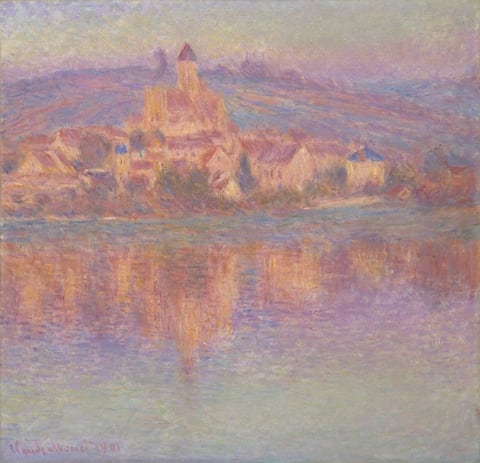
  1. A work made of oil on canvas.
    VétheuilClaude Monet, 1901Courtesy of the Art Institute of Chicago
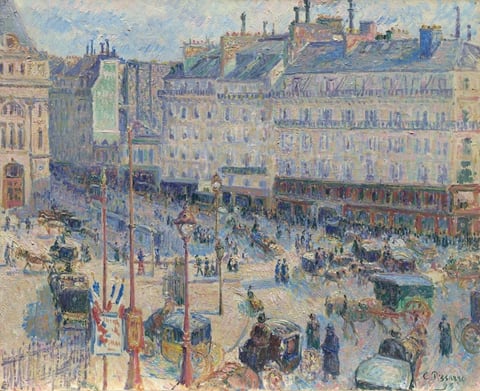
  2. A work made of oil on canvas.
    The Place du Havre, ParisCamille Pissarro, 1893Courtesy of the Art Institute of Chicago
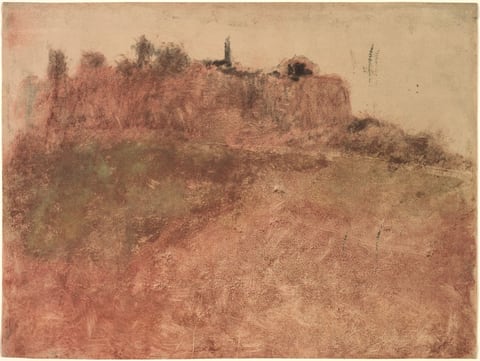
  3. Estérel Village, by Edgar Degas, c. 1890
    Estérel VillageEdgar Degas, c. 1890Courtesy of the Cleveland Museum of Art

Third room, north wall
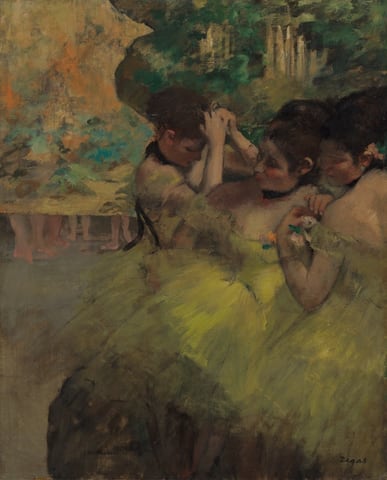
  1. Three light-skinned, dark-haired ballerinas, painted in muted tones, wear off-the-shoulder yellow leotards and tutus as they huddle near each other. One adjusts her costume, while one holds her hands clasped above her head. At left is a painted screen with four pairs of feet visible underneath.
    Yellow Dancers (In the Wings)Edgar Degas, 1874–76Courtesy of the Art Institute of Chicago
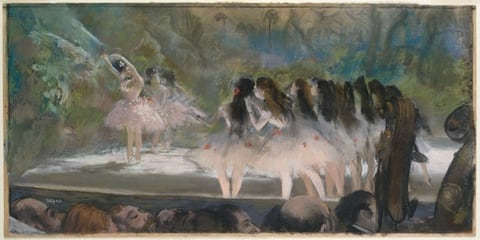
  2. Color pastel drawing of ballerinas in tutus on stage, watched by audience.
    Ballet at the Paris OpéraEdgar Degas, 1877Courtesy of the Art Institute of Chicago

Third room, south wall
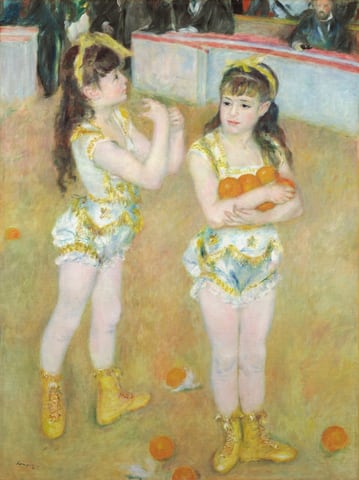
  1. Two girls in acrobatic uniforms stand in an arena, one holds oranges.
    Acrobats at the Cirque Fernando (Francisca and Angelina Wartenberg)Pierre-Auguste Renoir, 1879Courtesy of the Art Institute of Chicago
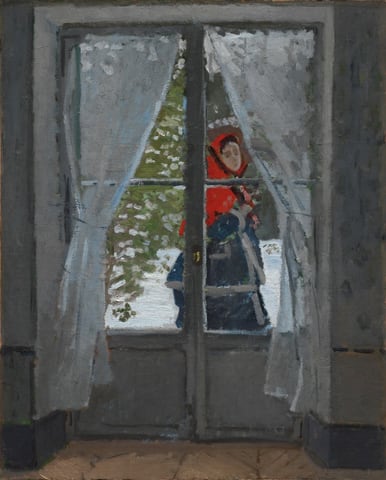
  2. The Red Kerchief, by Claude Monet, c. 1868–73
    The Red KerchiefClaude Monet, c. 1868–73Courtesy of the Cleveland Museum of Art