Floor plan

East wing: The Nineteenth CenturyImpressionism

Impressionism

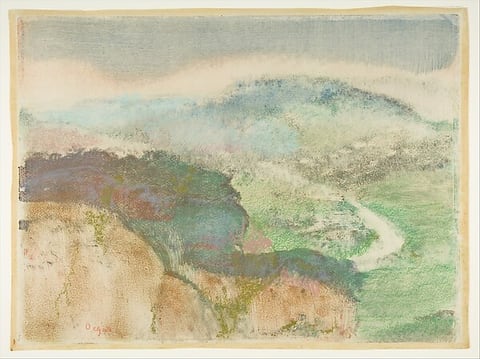
Landscape, by Edgar Degas, 1892
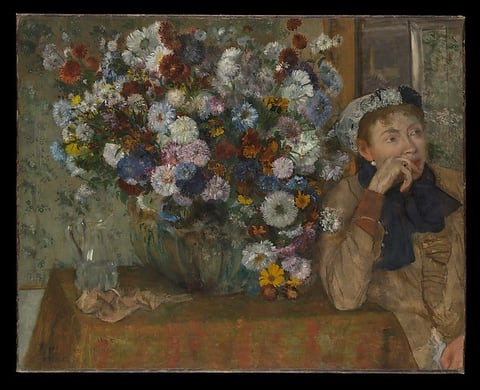
A Woman Seated beside a Vase of Flowers (Madame Paul Valpinçon?), by Edgar Degas, 1865
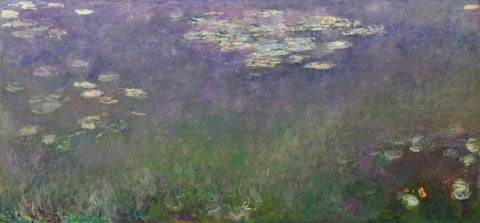
Water Lilies (Agapanthus), by Claude Monet, c. 1915–26
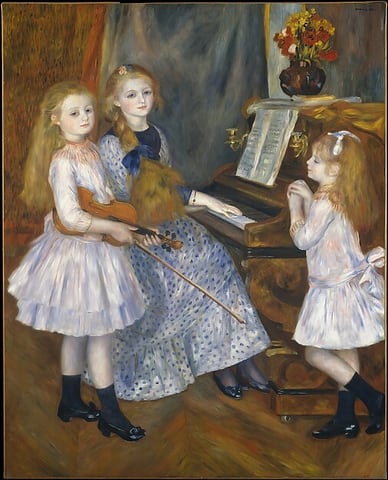
The Daughters of Catulle Mendès, Huguette (1871–1964), Claudine (1876–1937), and Helyonne (1879–1955), by Pierre-Auguste Renoir, 1888

The works in this room are listed below.

Works in this room

Painters in 1870s Paris who worked quickly, often outdoors, to catch light as it changed.

First room, north wall

  1. Landscape, by Edgar Degas, 1892
    LandscapeEdgar Degas, 1892Courtesy of The Metropolitan Museum of Art
  2. A Woman Seated beside a Vase of Flowers (Madame Paul Valpinçon?), by Edgar Degas, 1865
    A Woman Seated beside a Vase of Flowers (Madame Paul Valpinçon?)Edgar Degas, 1865Courtesy of The Metropolitan Museum of Art

First room, south wall

  1. Water Lilies (Agapanthus), by Claude Monet, c. 1915–26
    Water Lilies (Agapanthus)Claude Monet, c. 1915–26Courtesy of the Cleveland Museum of Art
  2. The Daughters of Catulle Mendès, Huguette (1871–1964), Claudine (1876–1937), and Helyonne (1879–1955), by Pierre-Auguste Renoir, 1888
    The Daughters of Catulle Mendès, Huguette (1871–1964), Claudine (1876–1937), and Helyonne (1879–1955)Pierre-Auguste Renoir, 1888Courtesy of The Metropolitan Museum of Art

Second room, south wall
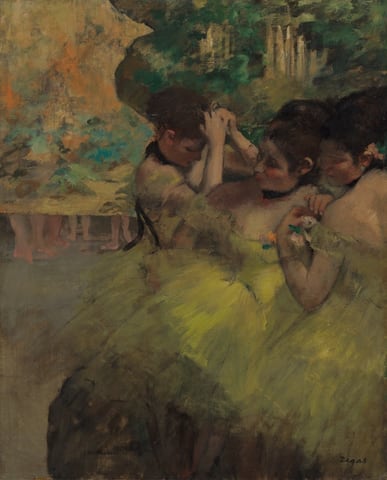
  1. Three light-skinned, dark-haired ballerinas, painted in muted tones, wear off-the-shoulder yellow leotards and tutus as they huddle near each other. One adjusts her costume, while one holds her hands clasped above her head. At left is a painted screen with four pairs of feet visible underneath.
    Yellow Dancers (In the Wings)Edgar Degas, 1874–76Courtesy of the Art Institute of Chicago
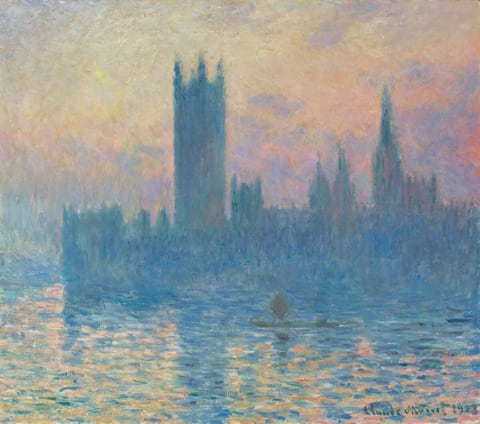
  2. A row of spire-like structures of different heights is silhouetted in azure blue against a soft pink, yellow, peach, and lavender-purple sunset and reflected in a rippling river in this nearly square landscape painting. Along the horizon, the buildings stretch from our right, almost fully across the canvas, and are painted with vertical brushstrokes in cool shades of blue. The sky behind the towers seems hazy with intermingling, pastel-colored clouds. The buildings are reflected in the river, which fills the bottom third of the painting. The surface of the water is painted with short, horizontal brushstrokes in azure blue for the buildings, and apricot, rose, and marigold orange for the sky’s reflection. A streak and smudge of olive-green paint on the water represents a person in a boat near the center of the painting. The artist signed and dated the work in the same olive color at the lower right: “Claude Monet 1903.”
    The Houses of Parliament, SunsetClaude Monet, 1903Courtesy National Gallery of Art, Washington
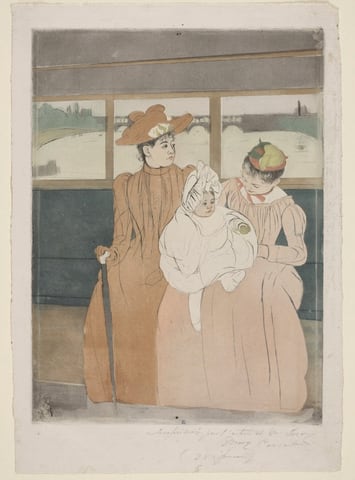
  3. In the Omnibus, by Mary Cassatt, 1890–91
    In the OmnibusMary Cassatt, 1890–91Courtesy of the Cleveland Museum of Art
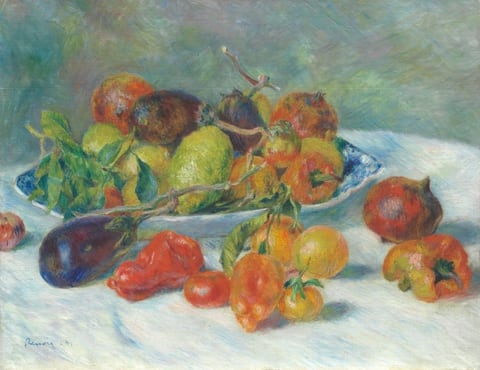
  4. A work made of oil on canvas.
    Fruits of the MidiPierre-Auguste Renoir, 1881Courtesy of the Art Institute of Chicago

Second room, north wall
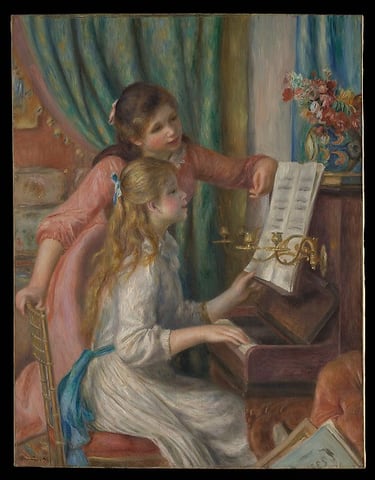
  1. Two Young Girls at the Piano, by Pierre-Auguste Renoir, 1892
    Two Young Girls at the PianoPierre-Auguste Renoir, 1892Courtesy of The Metropolitan Museum of Art
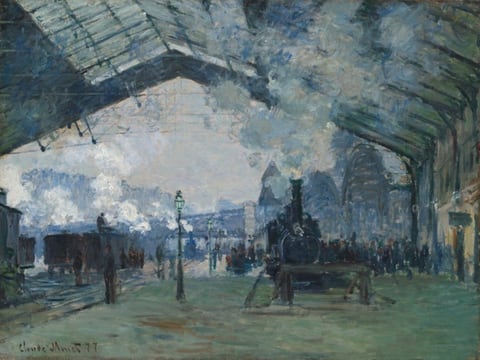
  2. Loosely painted image of an open-air train station. On the right, a parked train gives off an enormous plumb of white smoke, making the scene look as though it were full of clouds. A huddled mass of barely discernible people crowd around the train on both sides of the tracks. Blue, green, and gray tones dominate.
    Arrival of the Normandy Train, Gare Saint-LazareClaude Monet, 1877Courtesy of the Art Institute of Chicago
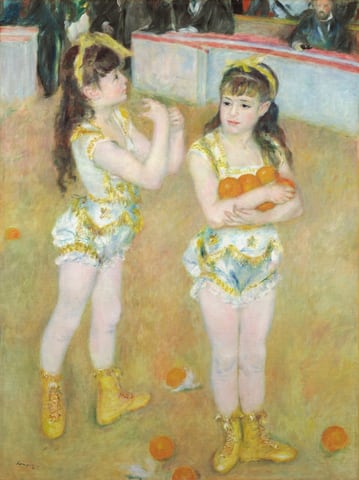
  3. Two girls in acrobatic uniforms stand in an arena, one holds oranges.
    Acrobats at the Cirque Fernando (Francisca and Angelina Wartenberg)Pierre-Auguste Renoir, 1879Courtesy of the Art Institute of Chicago

Third room, north wall
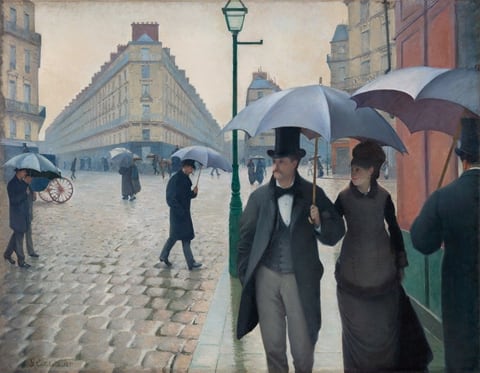
  1. Life-size painting of an urban scene in Paris. A man in a top hat holding an umbrella and a woman in a long fashionable dark dress walk arm in arm toward the viewer as other city dwellers with umbrellas walk in various directions across cobblestone roads and sidewalks.
    Paris Street; Rainy DayGustave Caillebotte, 1877Courtesy of the Art Institute of Chicago
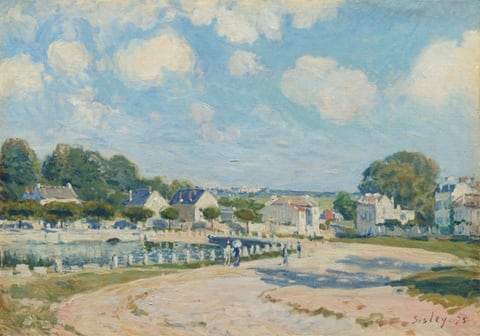
  2. A work made of oil on canvas.
    Watering Place at MarlyAlfred Sisley, 1875Courtesy of the Art Institute of Chicago
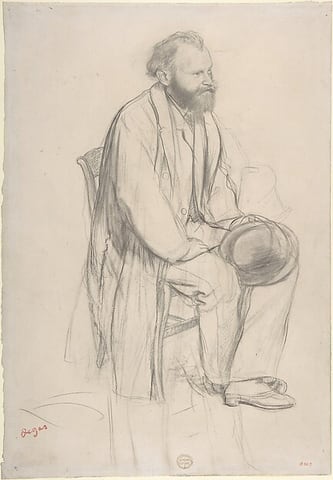
  3. Édouard Manet, Seated, Holding His Hat, by Edgar Degas, ca. 1868
    Édouard Manet, Seated, Holding His HatEdgar Degas, ca. 1868Courtesy of The Metropolitan Museum of Art

Third room, south wall
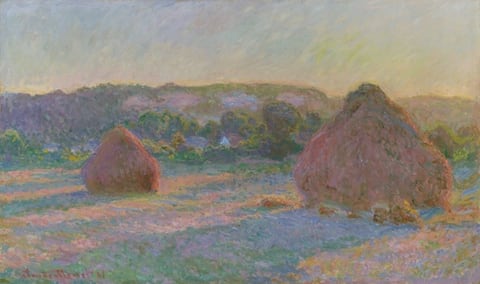
  1. Painting composed of short, dense brushstrokes depicts two domed stacks of wheat that cast long shadows on a field. The angled light indicates either a rising or setting sun.
    Stacks of Wheat (End of Summer)Claude Monet, 1890–91Courtesy of the Art Institute of Chicago
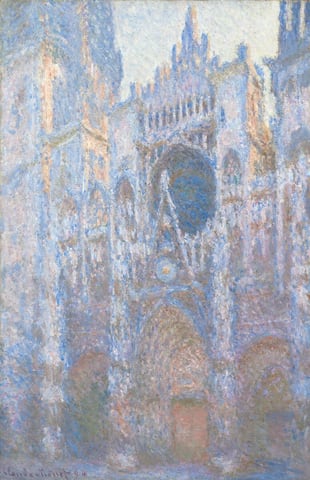
  2. We look up at the exterior of a church that soars the height of this vertical painting. The church is painted with visible dabs and strokes of azure blue, peach, lavender purple, and camel brown to create a blurred look, as if seeing a reflection in the rippling surface of a puddle. The church façade is angled to our left, away from us. The main door and its surround takes up the center of the composition, where a rectangular door is set within nested, pointed arches that lead up to a narrow, tall, triangular gable. The point of that gable overlaps the round, dark rose window, which is the same width as the portal surround below. Spires flank the central section and rise precipitously off the top edge of the painting. The sky above is painted with daubs of white and pale blue. The artist signed and dated the lower left, “Claude Monet 94.”
    Rouen Cathedral, West FaçadeClaude Monet, 1894Courtesy National Gallery of Art, Washington