Floor plan

East wing: The Nineteenth CenturyPost-Impressionism

Post-Impressionism

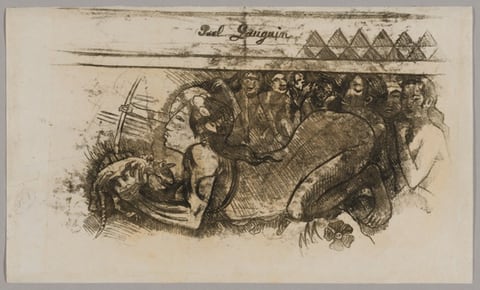
A work made of transfer drawing in brownish-black ink (recto); graphite and blue crayon pencil with brush and solvent washes in ocher on cream wove paper.
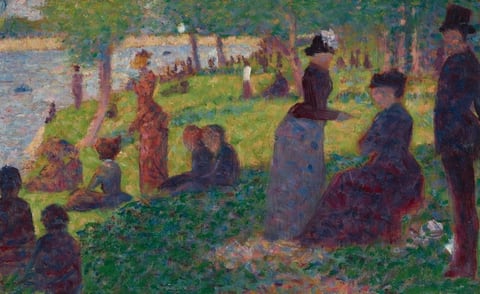
Heavy daubs of pigment form a crowded scene of roughly defined, finely dressed individuals in a brightly color park along a riverbank.
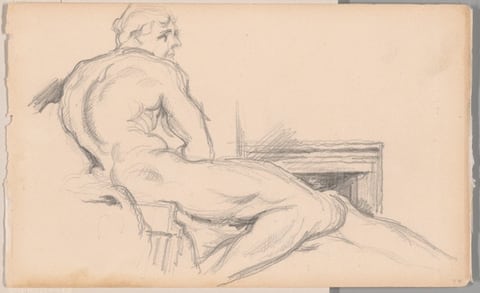
A work made of graphite on ivory wove paper.
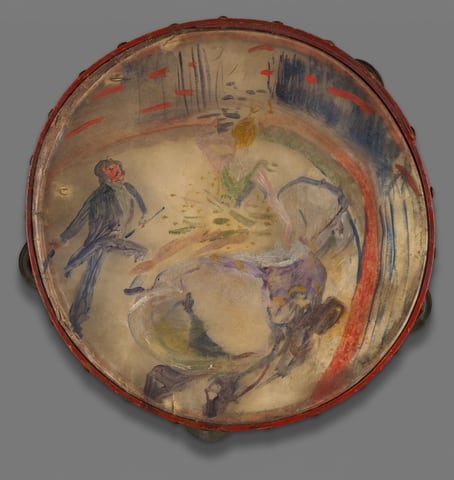
A work made of oil on vellum.
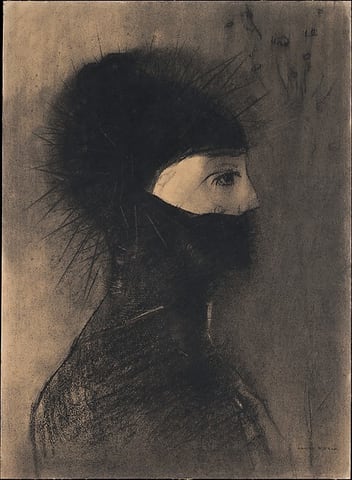
Armor, by Odilon Redon, 1891
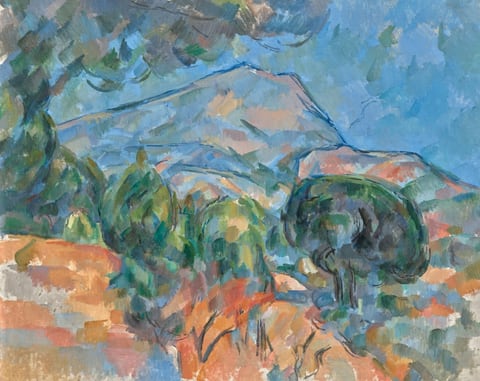
Mount Sainte-Victoire, by Paul Cézanne, c. 1904
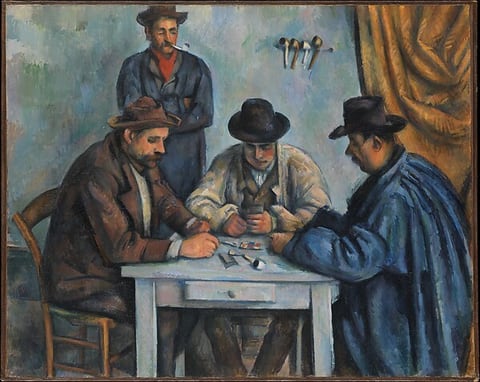
The Card Players, by Paul Cézanne, 1890–92
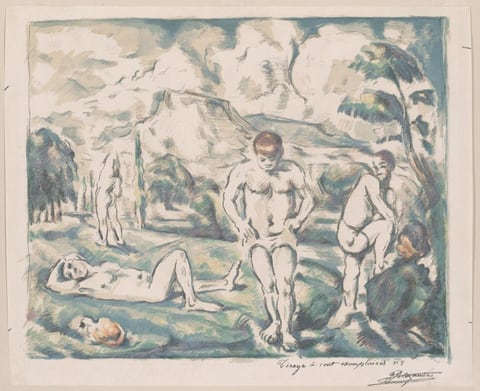
A work made of color lithograph on ivory laid paper.

The works in this room are listed below.

Works in this room

Artists who kept Impressionism's colour but pushed towards structure, symbol and feeling.

Section 1, north wall

  1. A work made of transfer drawing in brownish-black ink (recto); graphite and blue crayon pencil with brush and solvent washes in ocher on cream wove paper.
    Woman with a CatPaul Gauguin, c. 1900Courtesy of the Art Institute of Chicago
  2. Heavy daubs of pigment form a crowded scene of roughly defined, finely dressed individuals in a brightly color park along a riverbank.
    Oil Sketch for "A Sunday on La Grande Jatte — 1884"Georges Seurat, 1884Courtesy of the Art Institute of Chicago
  3. A work made of graphite on ivory wove paper.
    Hercules RestingPaul Cézanne, 1897Courtesy of the Art Institute of Chicago
  4. A work made of oil on vellum.
    At the Circus: The Bareback Rider (Au Cirque: Écuyère)Henri de Toulouse-Lautrec, 1888Courtesy of the Art Institute of Chicago

Section 1, south wall

  1. Armor, by Odilon Redon, 1891
    ArmorOdilon Redon, 1891Courtesy of The Metropolitan Museum of Art
  2. Mount Sainte-Victoire, by Paul Cézanne, c. 1904
    Mount Sainte-VictoirePaul Cézanne, c. 1904Courtesy of the Cleveland Museum of Art
  3. The Card Players, by Paul Cézanne, 1890–92
    The Card PlayersPaul Cézanne, 1890–92Courtesy of The Metropolitan Museum of Art
  4. A work made of color lithograph on ivory laid paper.
    BathersPaul Cézanne, 1890–1900Courtesy of the Art Institute of Chicago

Section 2, south wall
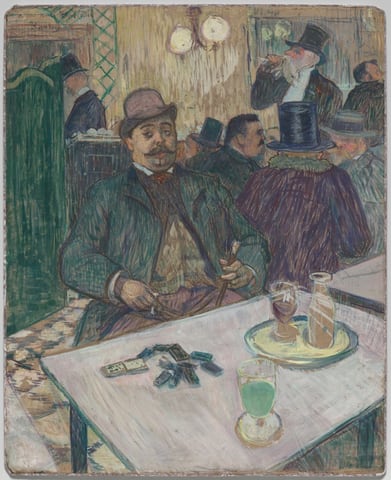
  1. Monsieur Boileau at the Café, by Henri de Toulouse-Lautrec, 1893
    Monsieur Boileau at the CaféHenri de Toulouse-Lautrec, 1893Courtesy of the Cleveland Museum of Art
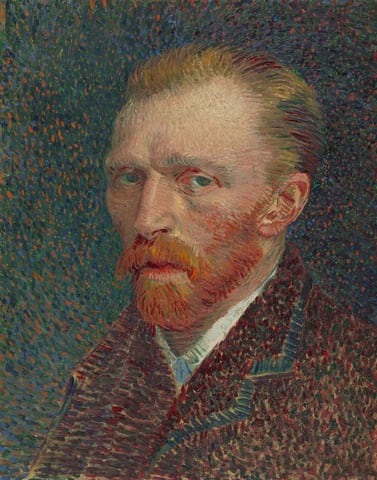
  2. Painting of a red-haired, bearded man with light skin, painted in short brushstrokes and multicolored dots. The background is likewise a mass of small, closely spaced colored dots, these in green, blue, and red-orange.
    Self-PortraitVincent van Gogh, 1887Courtesy of the Art Institute of Chicago
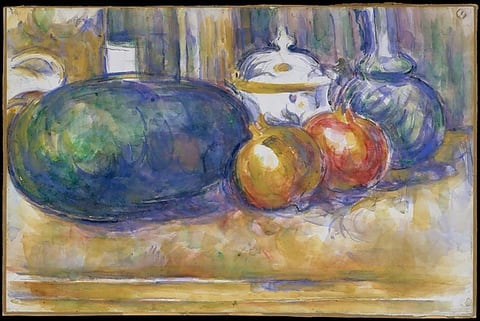
  3. Still-Life with a Watermelon and Pomegranates, by Paul Cézanne, 1900–1906
    Still-Life with a Watermelon and PomegranatesPaul Cézanne, 1900–1906Courtesy of The Metropolitan Museum of Art
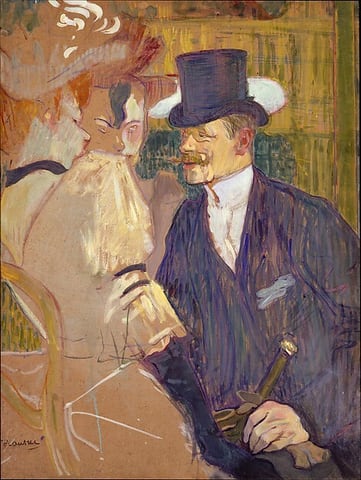
  4. The Englishman (William Tom Warrener, 1861–1934) at the Moulin Rouge, by Henri de Toulouse-Lautrec, 1892
    The Englishman (William Tom Warrener, 1861–1934) at the Moulin RougeHenri de Toulouse-Lautrec, 1892Courtesy of The Metropolitan Museum of Art

Section 2, north wall
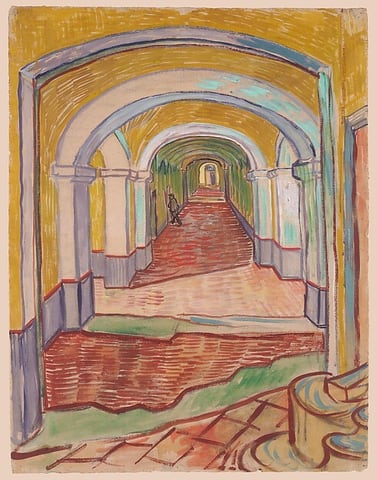
  1. Corridor in the Asylum, by Vincent van Gogh, September 1889
    Corridor in the AsylumVincent van Gogh, September 1889Courtesy of The Metropolitan Museum of Art
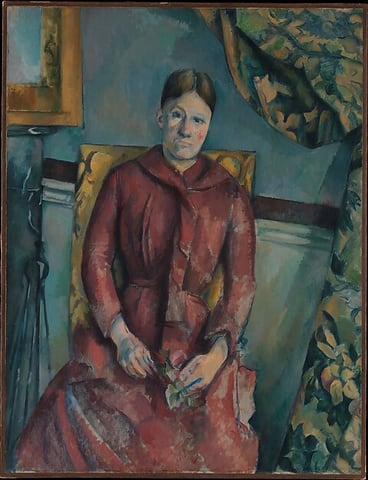
  2. Madame Cézanne (Hortense Fiquet, 1850–1922) in a Red Dress, by Paul Cézanne, 1888–90
    Madame Cézanne (Hortense Fiquet, 1850–1922) in a Red DressPaul Cézanne, 1888–90Courtesy of The Metropolitan Museum of Art
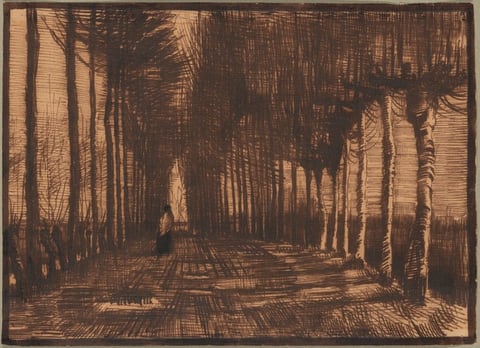
  3. A work made of reed pen and iron-gall ink on tan laid paper.
    Avenue of Pollard Birches and PoplarsVincent van Gogh, March 1884Courtesy of the Art Institute of Chicago
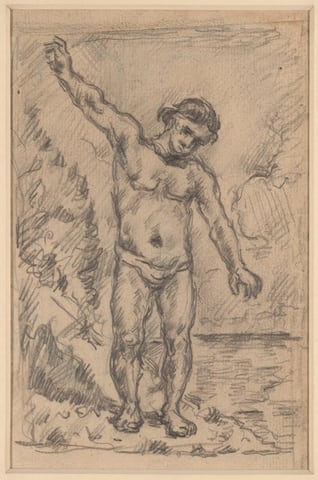
  4. A work made of graphite on cream laid paper (pieced).
    Bather With Outstretched Arms (recto); Study of a Tree (verso)Paul Cézanne, 1874/77Courtesy of the Art Institute of Chicago