Floor plan

East wing: The Nineteenth CenturyPost-Impressionism

Post-Impressionism

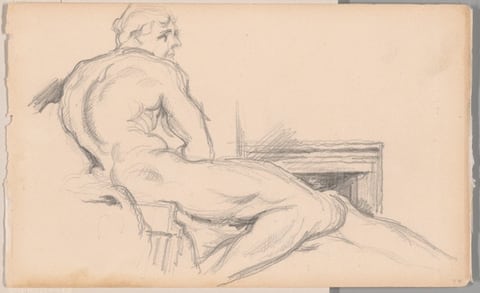
A work made of graphite on ivory wove paper.
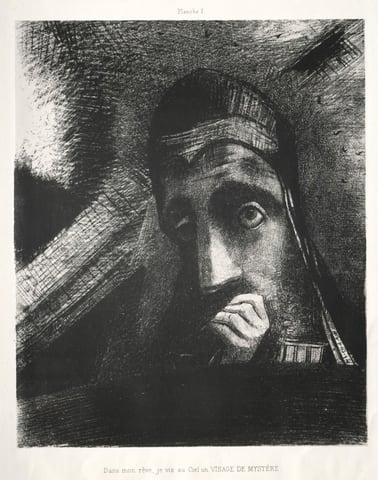
In My Dream I Saw in the Sky a Face of Mystery, by Odilon Redon, 1885
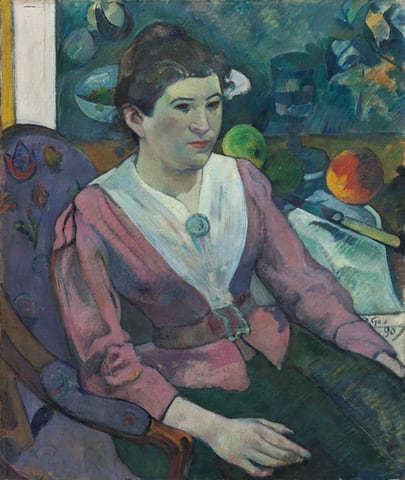
A work made of oil on linen canvas.
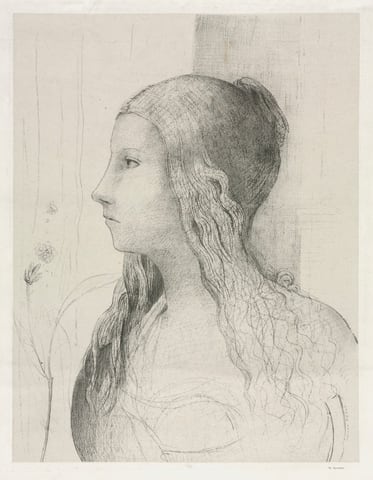
Brünnhilde in Twilight of the Gods, by Odilon Redon, 1894
A work made of color lithograph on ivory laid paper.
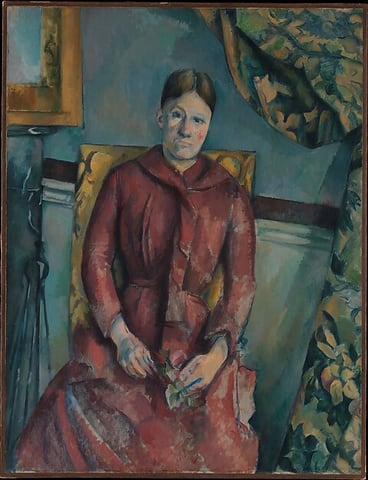
Madame Cézanne (Hortense Fiquet, 1850–1922) in a Red Dress, by Paul Cézanne, 1888–90
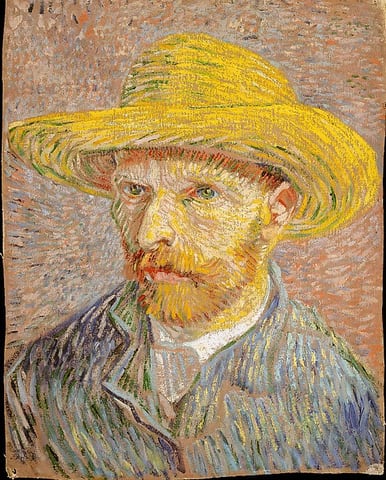
Self-Portrait with a Straw Hat (obverse: The Potato Peeler), by Vincent van Gogh, 1887
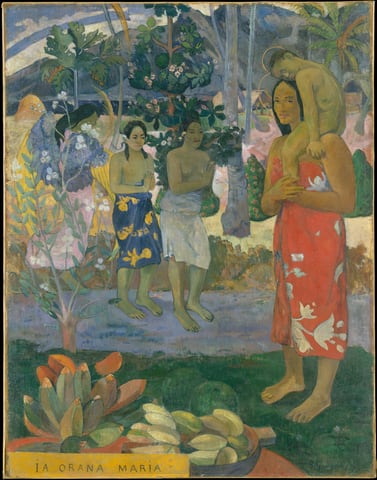
Ia Orana Maria (Hail Mary), by Paul Gauguin, 1891

The works in this room are listed below.

Works in this room

Artists who kept Impressionism's colour but pushed towards structure, symbol and feeling.

Section 1, north wall

  1. A work made of graphite on ivory wove paper.
    Hercules RestingPaul Cézanne, 1897Courtesy of the Art Institute of Chicago
  2. In My Dream I Saw in the Sky a Face of Mystery, by Odilon Redon, 1885
    In My Dream I Saw in the Sky a Face of MysteryOdilon Redon, 1885Courtesy of the Cleveland Museum of Art
  3. A work made of oil on linen canvas.
    Woman in Front of a Still Life by CezannePaul Gauguin, 1890Courtesy of the Art Institute of Chicago
  4. Brünnhilde in Twilight of the Gods, by Odilon Redon, 1894
    Brünnhilde in Twilight of the GodsOdilon Redon, 1894Courtesy of the Cleveland Museum of Art

Section 1, south wall

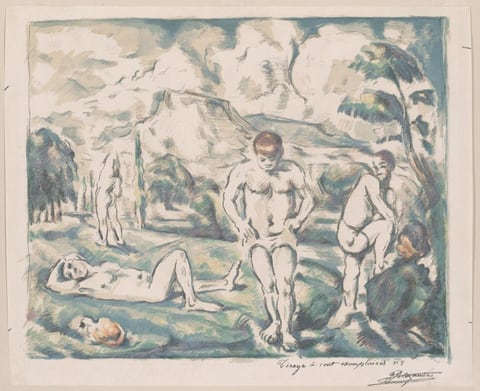
  1. A work made of color lithograph on ivory laid paper.
    BathersPaul Cézanne, 1890–1900Courtesy of the Art Institute of Chicago
  2. Madame Cézanne (Hortense Fiquet, 1850–1922) in a Red Dress, by Paul Cézanne, 1888–90
    Madame Cézanne (Hortense Fiquet, 1850–1922) in a Red DressPaul Cézanne, 1888–90Courtesy of The Metropolitan Museum of Art
  3. Self-Portrait with a Straw Hat (obverse: The Potato Peeler), by Vincent van Gogh, 1887
    Self-Portrait with a Straw Hat (obverse: The Potato Peeler)Vincent van Gogh, 1887Courtesy of The Metropolitan Museum of Art
  4. Ia Orana Maria (Hail Mary), by Paul Gauguin, 1891
    Ia Orana Maria (Hail Mary)Paul Gauguin, 1891Courtesy of The Metropolitan Museum of Art

Section 2, south wall
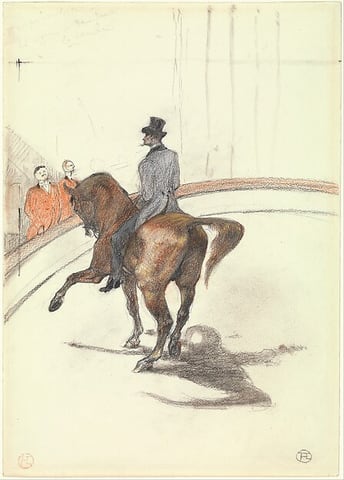
  1. At the Circus: The Spanish Walk (Au Cirque: Le Pas espagnol), by Henri de Toulouse-Lautrec, 1899
    At the Circus: The Spanish Walk (Au Cirque: Le Pas espagnol)Henri de Toulouse-Lautrec, 1899Courtesy of The Metropolitan Museum of Art
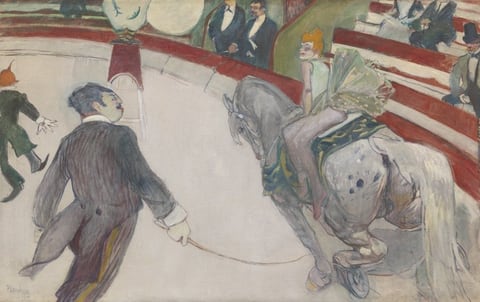
  2. Painting of a performance inside a circus ring. A man wearing a suit holds a whip in his hand and looks towards a woman with red hair riding a gray horse and wearing a green dress. Audience members wearing suits and top hats watch from red and white benches on the side.
    Equestrienne (At the Cirque Fernando)Henri de Toulouse-Lautrec, 1887–88Courtesy of the Art Institute of Chicago
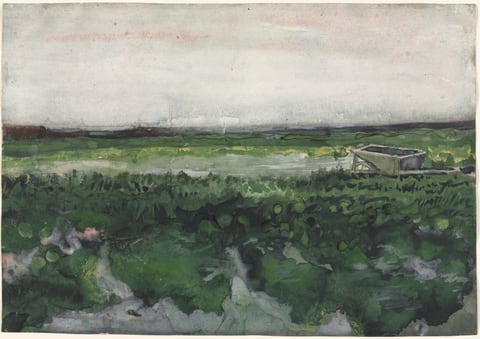
  3. Landscape with Wheelbarrow, by Vincent van Gogh, 1883
    Landscape with WheelbarrowVincent van Gogh, 1883Courtesy of the Cleveland Museum of Art

Section 2, north wall
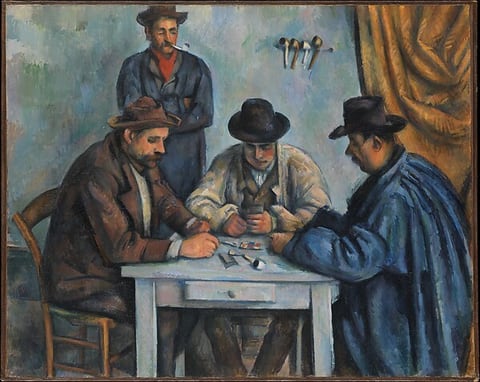
  1. The Card Players, by Paul Cézanne, 1890–92
    The Card PlayersPaul Cézanne, 1890–92Courtesy of The Metropolitan Museum of Art
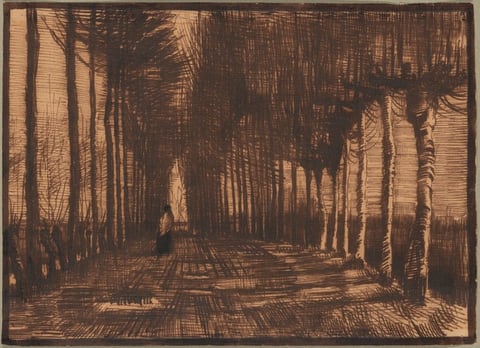
  2. A work made of reed pen and iron-gall ink on tan laid paper.
    Avenue of Pollard Birches and PoplarsVincent van Gogh, March 1884Courtesy of the Art Institute of Chicago
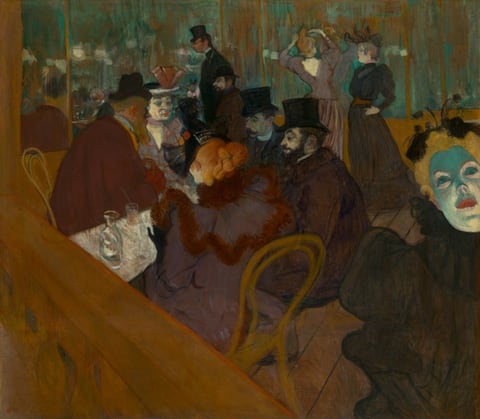
  3. Painting, heavy in tones of blue-green and burnt orange, depicting a bar scene at night. The men wear top hats and many are bearded; the women are dressed in voluminous gowns and decorative hats. Five people converse in the center of the composition and a woman with a green face dominates the right foreground.
    At the Moulin RougeHenri de Toulouse-Lautrec, 1892–95Courtesy of the Art Institute of Chicago

Section 3, north wall
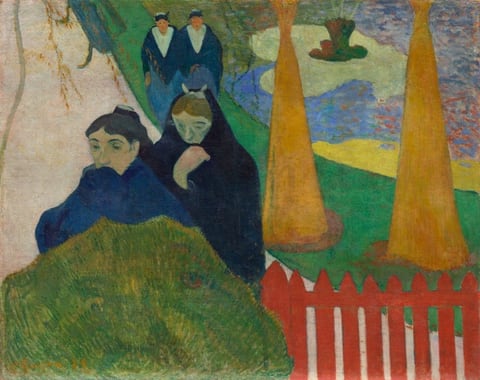
  1. Painting of four women with blue shawls walking near red fence.
    Arlésiennes (Mistral)Paul Gauguin, 1888Courtesy of the Art Institute of Chicago
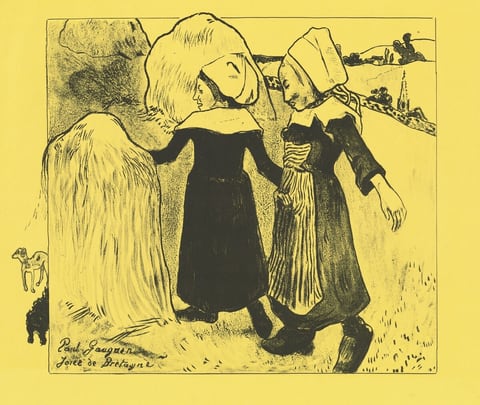
  2. The image shows two women walking arm in arm, both in traditional attire. One woman is facing away with a slight profile, while the other is seen from the side. Their faces are stylized and simplistic with covered hair. They wear long dresses with aprons and collars, and one has a striped apron. Haystacks and greenery surround them. Faint figures are in the background, as well as a spire-like structure. A dog is seen near the haystack, with simple lines suggesting a landscape.
    Pleasures of Brittany (Joies de Bretagne)Paul Gauguin, 1889Courtesy National Gallery of Art, Washington