Floor plan

East wing: The Nineteenth CenturyPost-Impressionism

Post-Impressionism

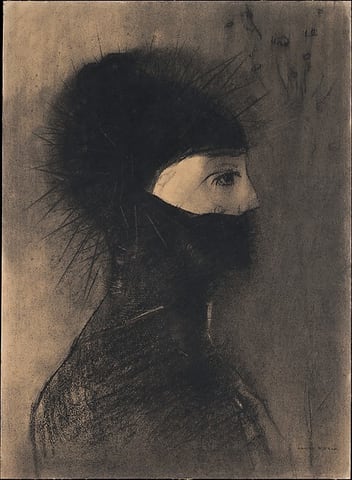
Armor, by Odilon Redon, 1891
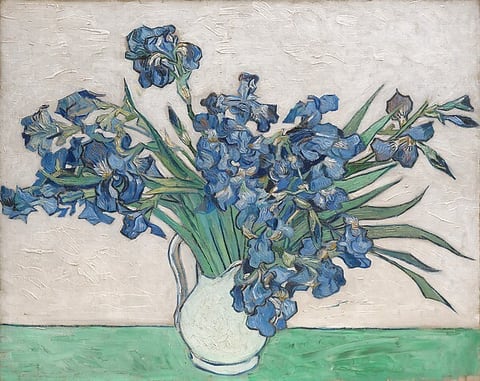
Irises, by Vincent van Gogh, 1890
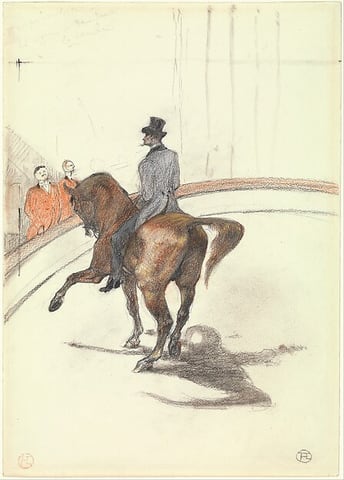
At the Circus: The Spanish Walk (Au Cirque: Le Pas espagnol), by Henri de Toulouse-Lautrec, 1899
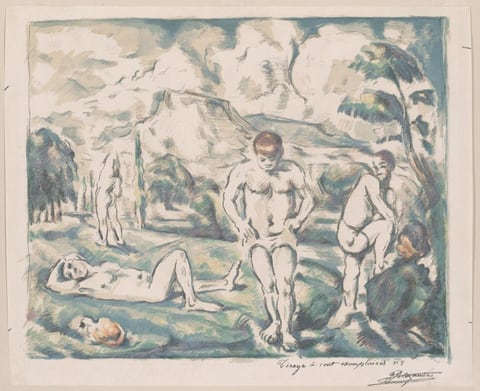
A work made of color lithograph on ivory laid paper.
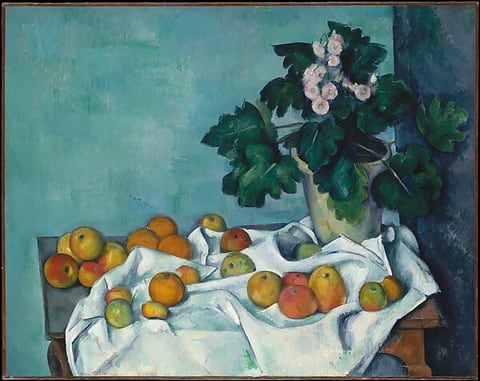
Still Life with Apples and a Pot of Primroses, by Paul Cézanne, ca. 1890
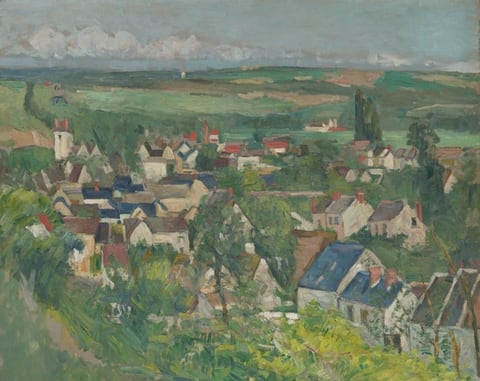
View of a village surrounded by hills, fields, and trees, shown from a vantage point above the scene. Subtly rolling hills recede into a bluish gray-ish sky punctuated by white clouds. Thick brushstrokes built up atop each other are visible throughout.
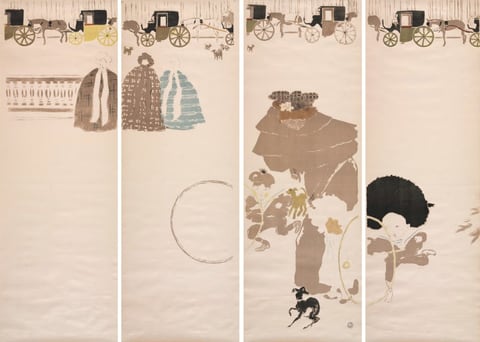
Nursemaids’ Promenade, Frieze of Carriages, by Pierre Bonnard, 1895

The works in this room are listed below.

Works in this room

Artists who kept Impressionism's colour but pushed towards structure, symbol and feeling.

Section 1, north wall

  1. Armor, by Odilon Redon, 1891
    ArmorOdilon Redon, 1891Courtesy of The Metropolitan Museum of Art
  2. Irises, by Vincent van Gogh, 1890
    IrisesVincent van Gogh, 1890Courtesy of The Metropolitan Museum of Art
  3. At the Circus: The Spanish Walk (Au Cirque: Le Pas espagnol), by Henri de Toulouse-Lautrec, 1899
    At the Circus: The Spanish Walk (Au Cirque: Le Pas espagnol)Henri de Toulouse-Lautrec, 1899Courtesy of The Metropolitan Museum of Art
  4. A work made of color lithograph on ivory laid paper.
    BathersPaul Cézanne, 1890–1900Courtesy of the Art Institute of Chicago

Section 1, south wall

  1. Still Life with Apples and a Pot of Primroses, by Paul Cézanne, ca. 1890
    Still Life with Apples and a Pot of PrimrosesPaul Cézanne, ca. 1890Courtesy of The Metropolitan Museum of Art
  2. View of a village surrounded by hills, fields, and trees, shown from a vantage point above the scene. Subtly rolling hills recede into a bluish gray-ish sky punctuated by white clouds. Thick brushstrokes built up atop each other are visible throughout.
    Auvers, Panoramic ViewPaul Cézanne, 1873–75Courtesy of the Art Institute of Chicago
  3. Nursemaids’ Promenade, Frieze of Carriages, by Pierre Bonnard, 1895
    Nursemaids’ Promenade, Frieze of CarriagesPierre Bonnard, 1895Courtesy of the Cleveland Museum of Art

Section 2, south wall
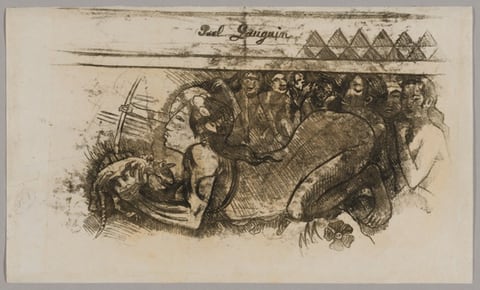
  1. A work made of transfer drawing in brownish-black ink (recto); graphite and blue crayon pencil with brush and solvent washes in ocher on cream wove paper.
    Woman with a CatPaul Gauguin, c. 1900Courtesy of the Art Institute of Chicago
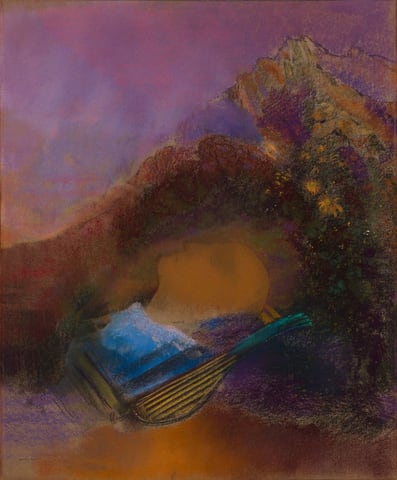
  2. Orpheus, by Odilon Redon, c. 1903–10
    OrpheusOdilon Redon, c. 1903–10Courtesy of the Cleveland Museum of Art
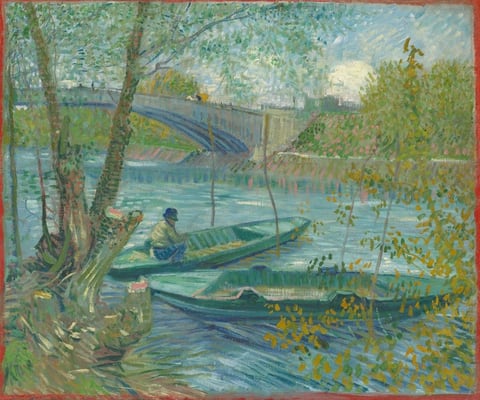
  3. Painting in short strokes of pale blue, green, white, yellow, and pink, of a fisherman in one of two small boats on a river, a tree-lined bank and a bridge in the background.
    Fishing in Spring, the Pont de Clichy (Asnières)Vincent van Gogh, 1887Courtesy of the Art Institute of Chicago
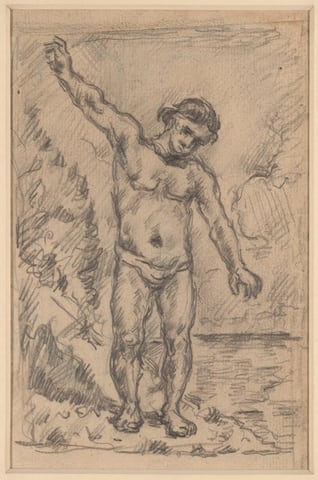
  4. A work made of graphite on cream laid paper (pieced).
    Bather With Outstretched Arms (recto); Study of a Tree (verso)Paul Cézanne, 1874/77Courtesy of the Art Institute of Chicago

Section 2, north wall
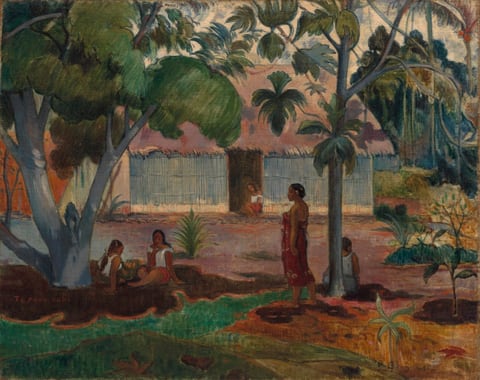
  1. The Large Tree, by Paul Gauguin, 1891
    The Large TreePaul Gauguin, 1891Courtesy of the Cleveland Museum of Art
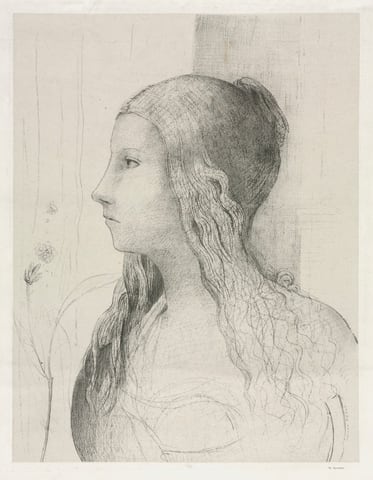
  2. Brünnhilde in Twilight of the Gods, by Odilon Redon, 1894
    Brünnhilde in Twilight of the GodsOdilon Redon, 1894Courtesy of the Cleveland Museum of Art
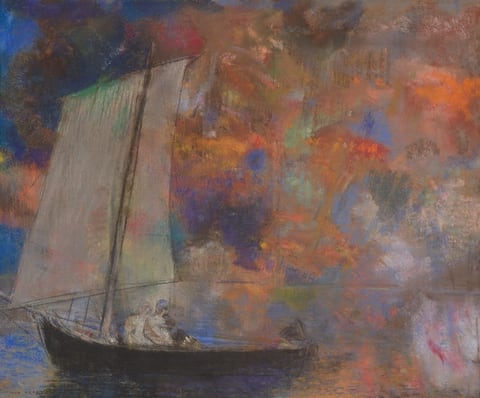
  3. Pastel drawing of two figures in a sailboat, bright multi-colored clouds.
    Flower CloudsOdilon Redon, c. 1903Courtesy of the Art Institute of Chicago

Section 3, north wall
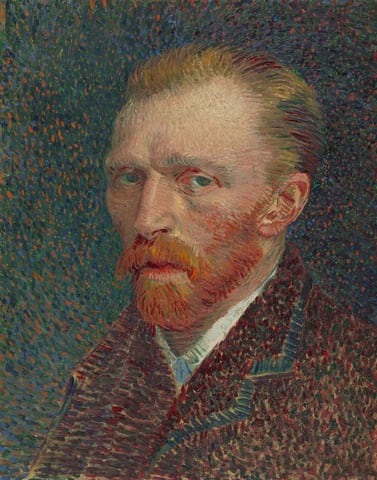
  1. Painting of a red-haired, bearded man with light skin, painted in short brushstrokes and multicolored dots. The background is likewise a mass of small, closely spaced colored dots, these in green, blue, and red-orange.
    Self-PortraitVincent van Gogh, 1887Courtesy of the Art Institute of Chicago
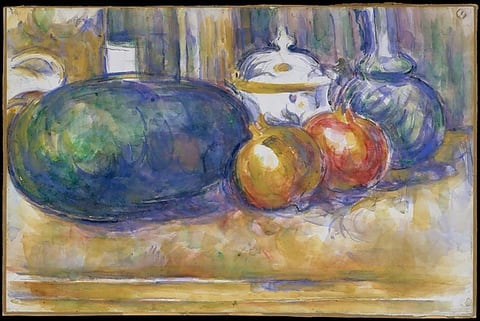
  2. Still-Life with a Watermelon and Pomegranates, by Paul Cézanne, 1900–1906
    Still-Life with a Watermelon and PomegranatesPaul Cézanne, 1900–1906Courtesy of The Metropolitan Museum of Art