Floor plan

East wing: The Nineteenth CenturyPost-Impressionism

Post-Impressionism

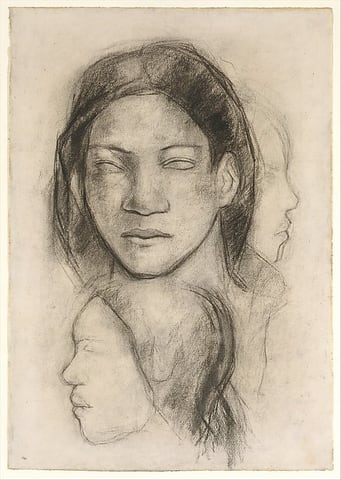
Tahitian Faces (Frontal View and Profiles), by Paul Gauguin, ca. 1899
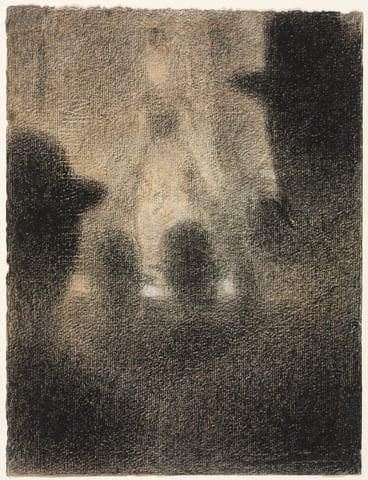
At the Concert Parisien, by Georges Seurat, 1887–88
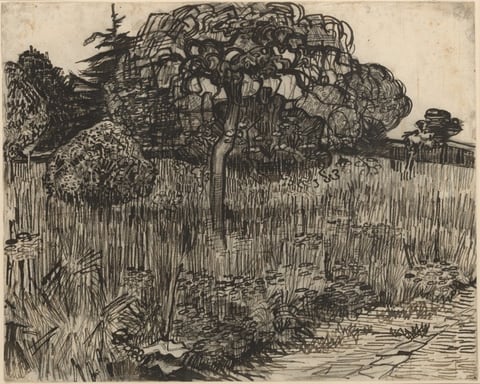
A work made of reed pen and black-brown ink, with black chalk on off-white wove paper.
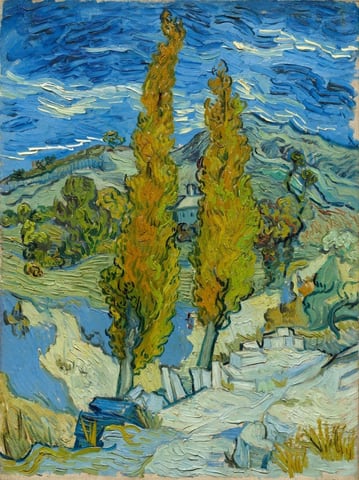
Two Poplars in the Alpilles near Saint-Rémy, by Vincent van Gogh, 1889
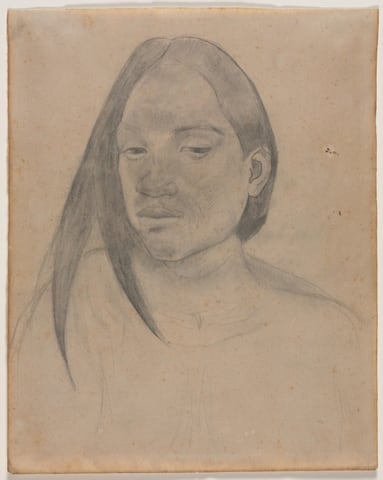
Head of a Tahitian Woman, by Paul Gauguin, 1891
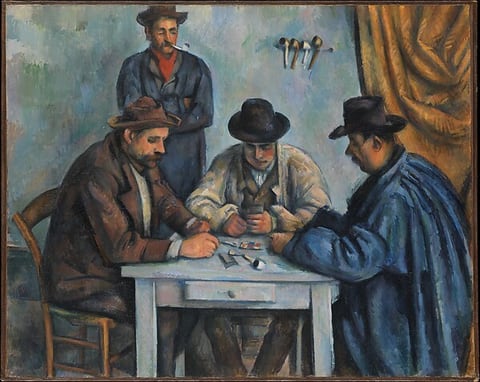
The Card Players, by Paul Cézanne, 1890–92
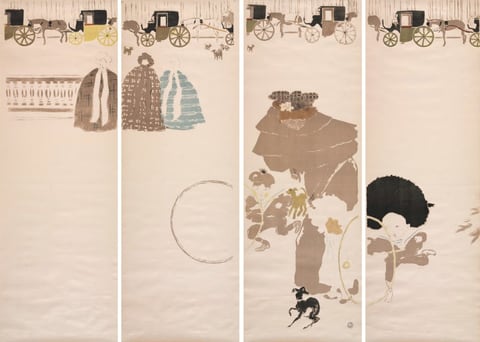
Nursemaids’ Promenade, Frieze of Carriages, by Pierre Bonnard, 1895

The works in this room are listed below.

Works in this room

Artists who kept Impressionism's colour but pushed towards structure, symbol and feeling.

Section 1, north wall

  1. Tahitian Faces (Frontal View and Profiles), by Paul Gauguin, ca. 1899
    Tahitian Faces (Frontal View and Profiles)Paul Gauguin, ca. 1899Courtesy of The Metropolitan Museum of Art
  2. At the Concert Parisien, by Georges Seurat, 1887–88
    At the Concert ParisienGeorges Seurat, 1887–88Courtesy of the Cleveland Museum of Art
  3. A work made of reed pen and black-brown ink, with black chalk on off-white wove paper.
    Weeping TreeVincent van Gogh, 1889Courtesy of the Art Institute of Chicago
  4. Two Poplars in the Alpilles near Saint-Rémy, by Vincent van Gogh, 1889
    Two Poplars in the Alpilles near Saint-RémyVincent van Gogh, 1889Courtesy of the Cleveland Museum of Art

Section 1, south wall

  1. Head of a Tahitian Woman, by Paul Gauguin, 1891
    Head of a Tahitian WomanPaul Gauguin, 1891Courtesy of the Cleveland Museum of Art
  2. The Card Players, by Paul Cézanne, 1890–92
    The Card PlayersPaul Cézanne, 1890–92Courtesy of The Metropolitan Museum of Art
  3. Nursemaids’ Promenade, Frieze of Carriages, by Pierre Bonnard, 1895
    Nursemaids’ Promenade, Frieze of CarriagesPierre Bonnard, 1895Courtesy of the Cleveland Museum of Art

Section 2, south wall
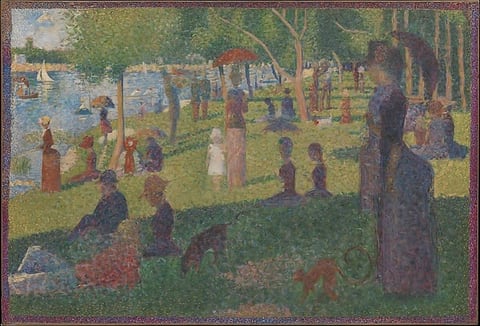
  1. Study for "A Sunday on La Grande Jatte", by Georges Seurat, 1884
    Study for "A Sunday on La Grande Jatte"Georges Seurat, 1884Courtesy of The Metropolitan Museum of Art
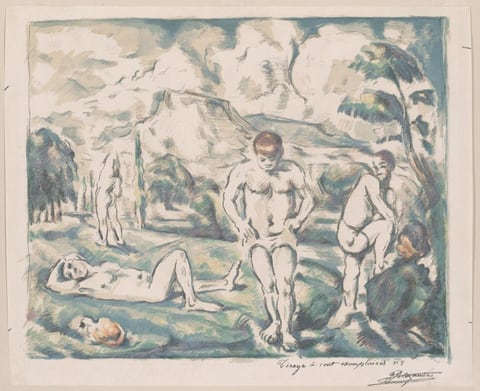
  2. A work made of color lithograph on ivory laid paper.
    BathersPaul Cézanne, 1890–1900Courtesy of the Art Institute of Chicago
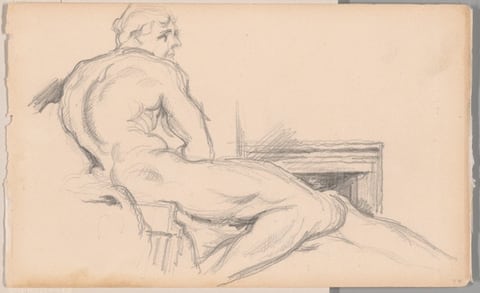
  3. A work made of graphite on ivory wove paper.
    Hercules RestingPaul Cézanne, 1897Courtesy of the Art Institute of Chicago
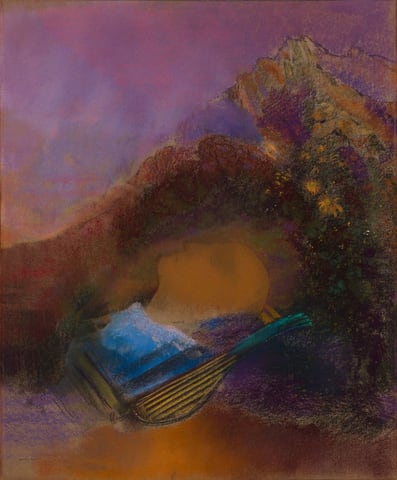
  4. Orpheus, by Odilon Redon, c. 1903–10
    OrpheusOdilon Redon, c. 1903–10Courtesy of the Cleveland Museum of Art

Section 2, north wall
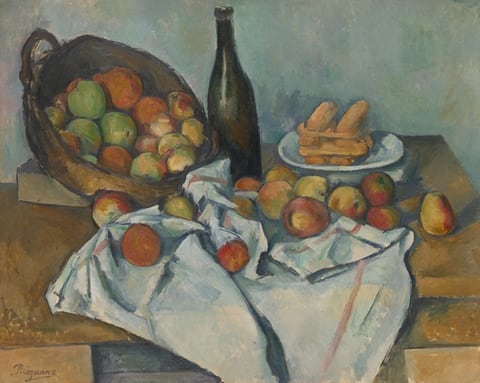
  1. Painting of a basket of green and red-yellow apples spilling over into a white cloth placed on a wooden table, with a dark green bottle and a plate of pale biscuits behind.
    The Basket of ApplesPaul Cézanne, c. 1893Courtesy of the Art Institute of Chicago
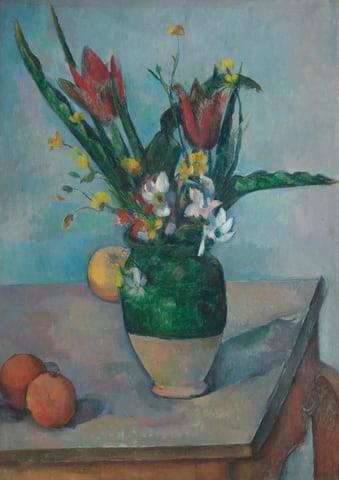
  2. A work made of oil on canvas.
    The Vase of TulipsPaul Cézanne, c. 1890Courtesy of the Art Institute of Chicago
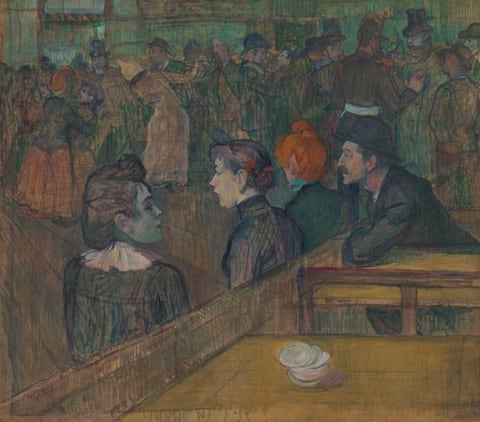
  3. A scene in brown and green tones of people dancing indoors. In the foreground, three women stand near boothed tables while a man sits.
    Moulin de la GaletteHenri de Toulouse-Lautrec, 1889Courtesy of the Art Institute of Chicago

Section 3, north wall
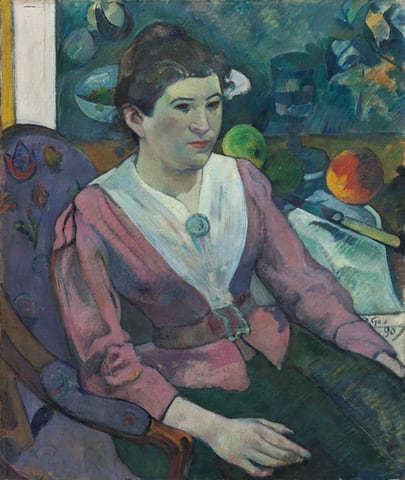
  1. A work made of oil on linen canvas.
    Woman in Front of a Still Life by CezannePaul Gauguin, 1890Courtesy of the Art Institute of Chicago
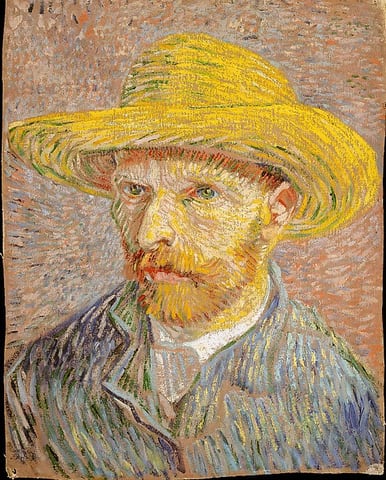
  2. Self-Portrait with a Straw Hat (obverse: The Potato Peeler), by Vincent van Gogh, 1887
    Self-Portrait with a Straw Hat (obverse: The Potato Peeler)Vincent van Gogh, 1887Courtesy of The Metropolitan Museum of Art