Floor plan

East wing: The Nineteenth CenturyPost-Impressionism

Post-Impressionism

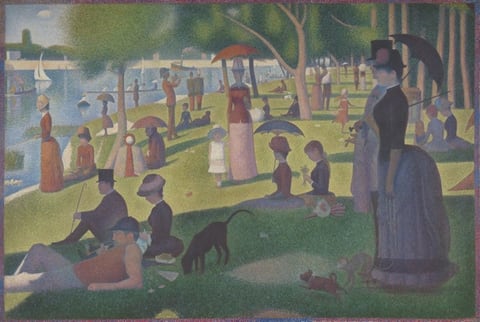
Large painting of people in a crowded park, brushstrokes are dots.
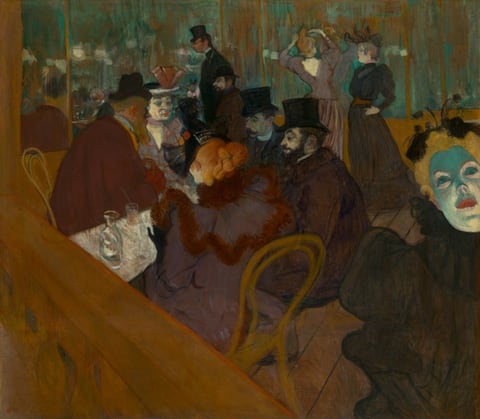
Painting, heavy in tones of blue-green and burnt orange, depicting a bar scene at night. The men wear top hats and many are bearded; the women are dressed in voluminous gowns and decorative hats. Five people converse in the center of the composition and a woman with a green face dominates the right foreground.
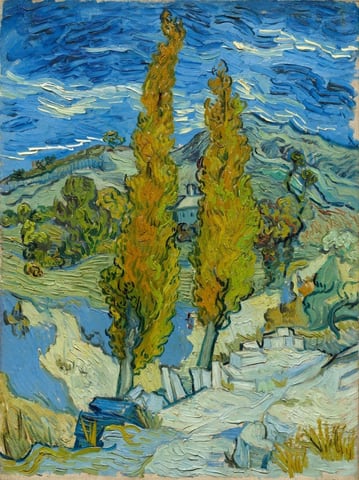
Two Poplars in the Alpilles near Saint-Rémy, by Vincent van Gogh, 1889
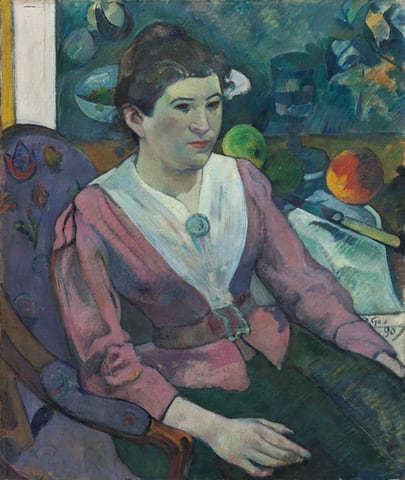
A work made of oil on linen canvas.
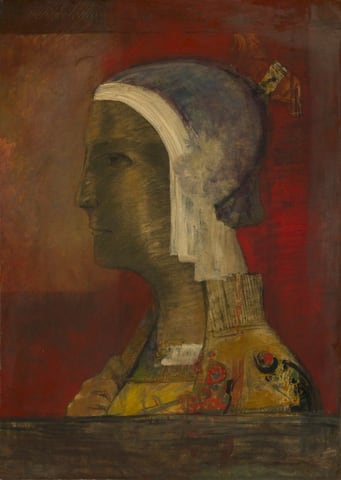
Symbolic Head, by Odilon Redon, c. 1890
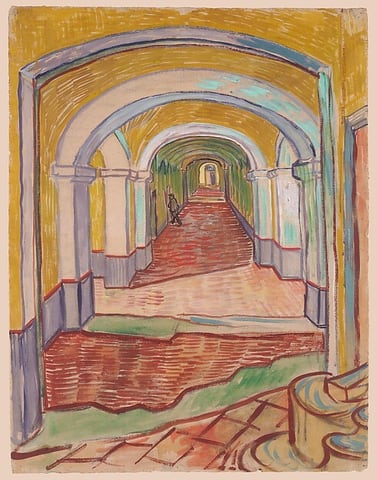
Corridor in the Asylum, by Vincent van Gogh, September 1889

The works in this room are listed below.

Works in this room

Artists who kept Impressionism's colour but pushed towards structure, symbol and feeling.

Section 1, north wall

  1. Large painting of people in a crowded park, brushstrokes are dots.
    A Sunday on La Grande Jatte — 1884Georges Seurat, 1884–86, border added 1888–89Courtesy of the Art Institute of Chicago
  2. Painting, heavy in tones of blue-green and burnt orange, depicting a bar scene at night. The men wear top hats and many are bearded; the women are dressed in voluminous gowns and decorative hats. Five people converse in the center of the composition and a woman with a green face dominates the right foreground.
    At the Moulin RougeHenri de Toulouse-Lautrec, 1892–95Courtesy of the Art Institute of Chicago

Section 1, south wall

  1. Two Poplars in the Alpilles near Saint-Rémy, by Vincent van Gogh, 1889
    Two Poplars in the Alpilles near Saint-RémyVincent van Gogh, 1889Courtesy of the Cleveland Museum of Art
  2. A work made of oil on linen canvas.
    Woman in Front of a Still Life by CezannePaul Gauguin, 1890Courtesy of the Art Institute of Chicago
  3. Symbolic Head, by Odilon Redon, c. 1890
    Symbolic HeadOdilon Redon, c. 1890Courtesy of the Cleveland Museum of Art
  4. Corridor in the Asylum, by Vincent van Gogh, September 1889
    Corridor in the AsylumVincent van Gogh, September 1889Courtesy of The Metropolitan Museum of Art

Section 2, south wall
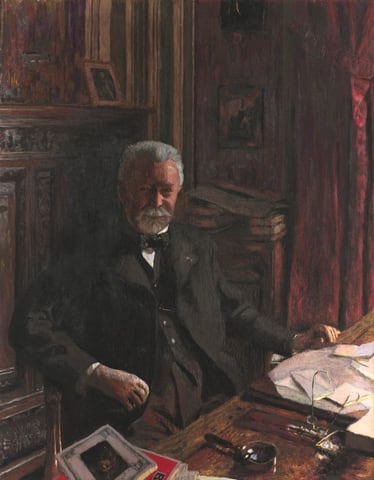
  1. André Bénac, by Édouard Vuillard, 1936
    André BénacÉdouard Vuillard, 1936Courtesy of the Cleveland Museum of Art
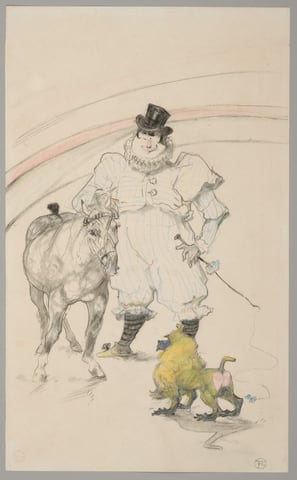
  2. A work made of pastel and graphite on cream wove paper.
    At the Circus: Trained Pony and BaboonHenri de Toulouse-Lautrec, 1899Courtesy of the Art Institute of Chicago
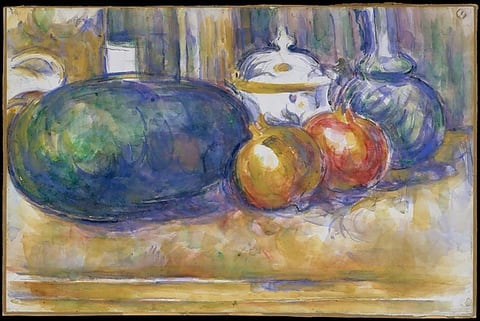
  3. Still-Life with a Watermelon and Pomegranates, by Paul Cézanne, 1900–1906
    Still-Life with a Watermelon and PomegranatesPaul Cézanne, 1900–1906Courtesy of The Metropolitan Museum of Art
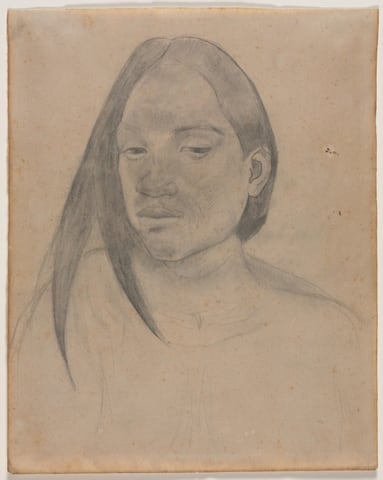
  4. Head of a Tahitian Woman, by Paul Gauguin, 1891
    Head of a Tahitian WomanPaul Gauguin, 1891Courtesy of the Cleveland Museum of Art

Section 2, north wall
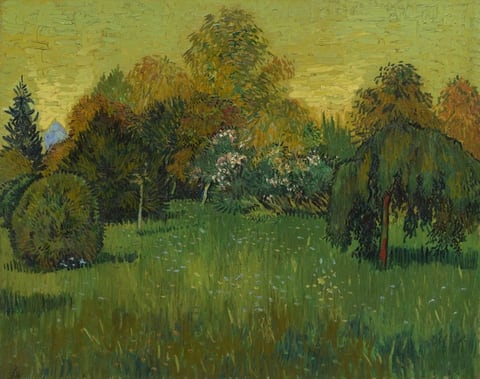
  1. Lush tall grasses with small white flowers foreground a grove of bushy trees of varying types and heights, their leaves ranging from deep green to golden. Beneath a dense and heavy yellow sky, a small blue triangle suggesting a mountain peak crests above the treeline at far left.
    The Poet's GardenVincent van Gogh, 1888Courtesy of the Art Institute of Chicago
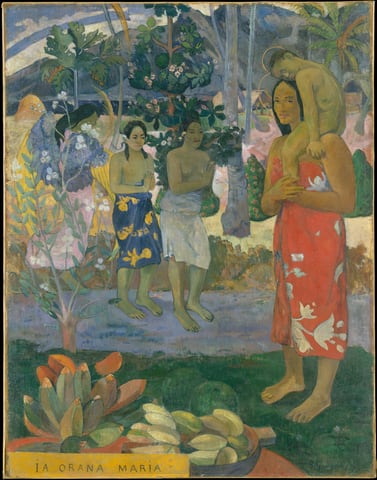
  2. Ia Orana Maria (Hail Mary), by Paul Gauguin, 1891
    Ia Orana Maria (Hail Mary)Paul Gauguin, 1891Courtesy of The Metropolitan Museum of Art
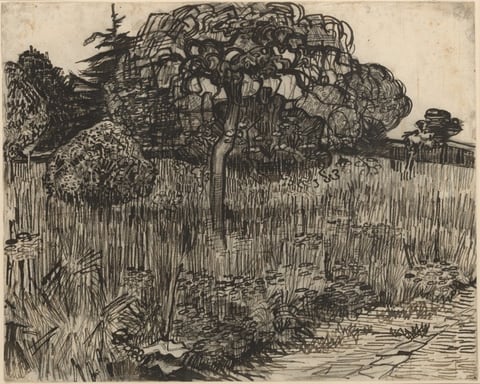
  3. A work made of reed pen and black-brown ink, with black chalk on off-white wove paper.
    Weeping TreeVincent van Gogh, 1889Courtesy of the Art Institute of Chicago
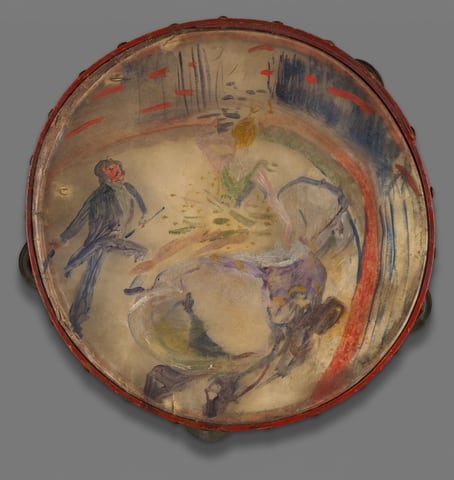
  4. A work made of oil on vellum.
    At the Circus: The Bareback Rider (Au Cirque: Écuyère)Henri de Toulouse-Lautrec, 1888Courtesy of the Art Institute of Chicago

Section 3, north wall
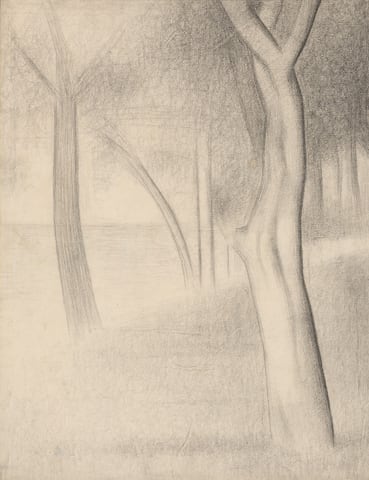
  1. A work made of black conté crayon, on white laid paper, laid down on cream board.
    Trees (study for La Grande Jatte)Georges Seurat, 1884Courtesy of the Art Institute of Chicago
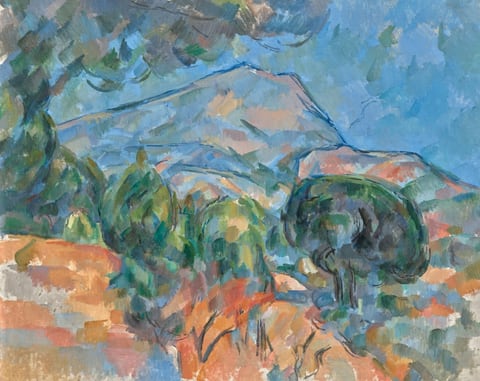
  2. Mount Sainte-Victoire, by Paul Cézanne, c. 1904
    Mount Sainte-VictoirePaul Cézanne, c. 1904Courtesy of the Cleveland Museum of Art