Floor plan

East wing: The Nineteenth CenturyPost-Impressionism

Post-Impressionism

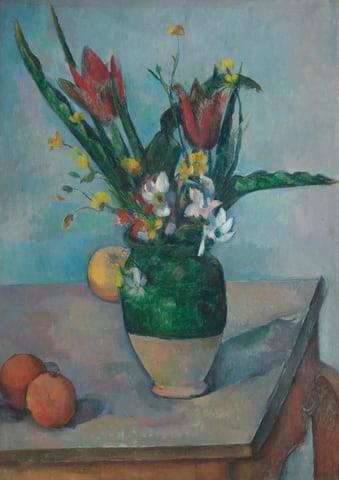
A work made of oil on canvas.
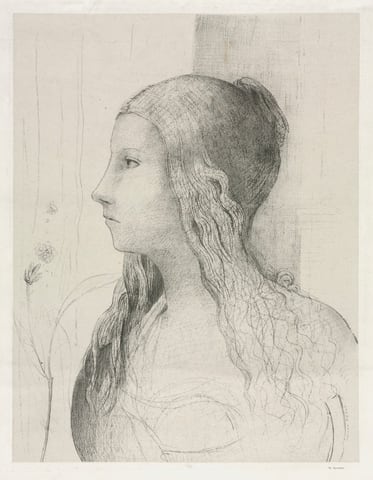
Brünnhilde in Twilight of the Gods, by Odilon Redon, 1894
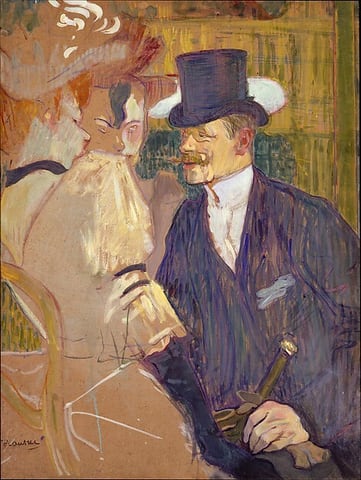
The Englishman (William Tom Warrener, 1861–1934) at the Moulin Rouge, by Henri de Toulouse-Lautrec, 1892
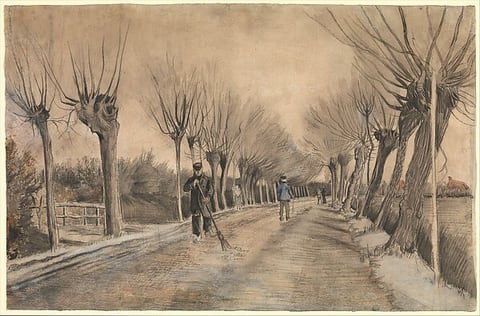
Road in Etten, by Vincent van Gogh, 1881
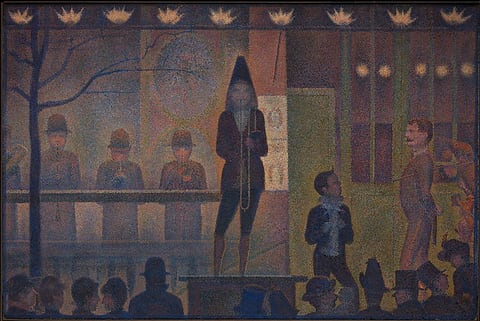
Circus Sideshow (Parade de cirque), by Georges Seurat, 1887–88
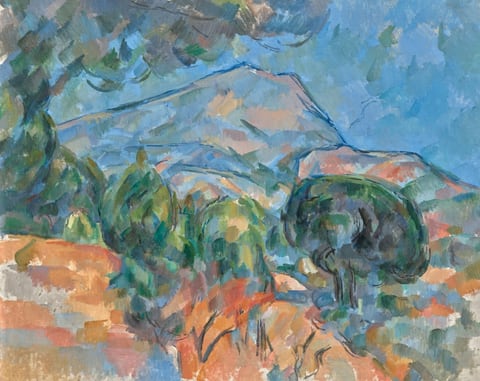
Mount Sainte-Victoire, by Paul Cézanne, c. 1904

The works in this room are listed below.

Works in this room

Artists who kept Impressionism's colour but pushed towards structure, symbol and feeling.

Section 1, north wall

  1. A work made of oil on canvas.
    The Vase of TulipsPaul Cézanne, c. 1890Courtesy of the Art Institute of Chicago
  2. Brünnhilde in Twilight of the Gods, by Odilon Redon, 1894
    Brünnhilde in Twilight of the GodsOdilon Redon, 1894Courtesy of the Cleveland Museum of Art
  3. The Englishman (William Tom Warrener, 1861–1934) at the Moulin Rouge, by Henri de Toulouse-Lautrec, 1892
    The Englishman (William Tom Warrener, 1861–1934) at the Moulin RougeHenri de Toulouse-Lautrec, 1892Courtesy of The Metropolitan Museum of Art
  4. Road in Etten, by Vincent van Gogh, 1881
    Road in EttenVincent van Gogh, 1881Courtesy of The Metropolitan Museum of Art

Section 1, south wall

  1. Circus Sideshow (Parade de cirque), by Georges Seurat, 1887–88
    Circus Sideshow (Parade de cirque)Georges Seurat, 1887–88Courtesy of The Metropolitan Museum of Art
  2. Mount Sainte-Victoire, by Paul Cézanne, c. 1904
    Mount Sainte-VictoirePaul Cézanne, c. 1904Courtesy of the Cleveland Museum of Art

Section 2, south wall
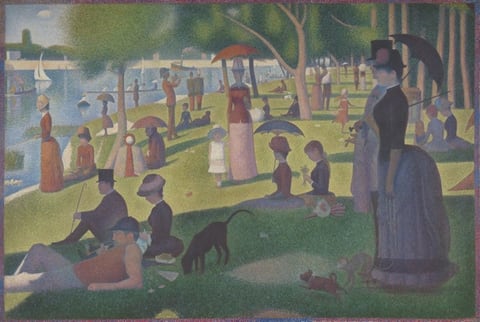
  1. Large painting of people in a crowded park, brushstrokes are dots.
    A Sunday on La Grande Jatte — 1884Georges Seurat, 1884–86, border added 1888–89Courtesy of the Art Institute of Chicago
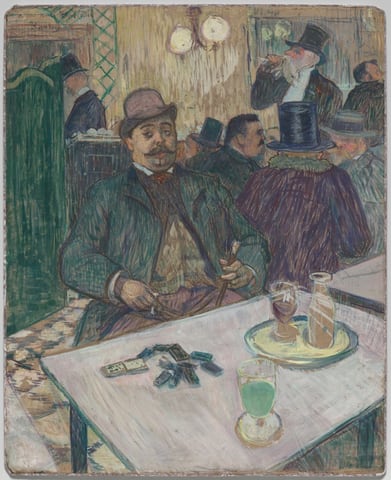
  2. Monsieur Boileau at the Café, by Henri de Toulouse-Lautrec, 1893
    Monsieur Boileau at the CaféHenri de Toulouse-Lautrec, 1893Courtesy of the Cleveland Museum of Art

Section 2, north wall
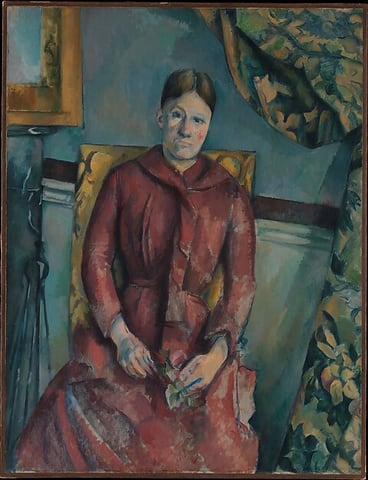
  1. Madame Cézanne (Hortense Fiquet, 1850–1922) in a Red Dress, by Paul Cézanne, 1888–90
    Madame Cézanne (Hortense Fiquet, 1850–1922) in a Red DressPaul Cézanne, 1888–90Courtesy of The Metropolitan Museum of Art
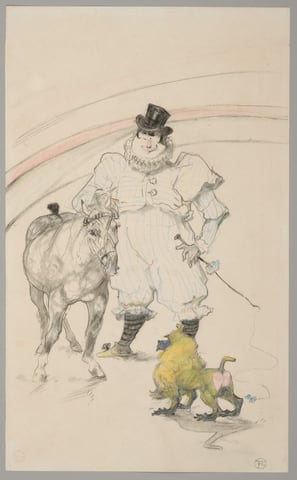
  2. A work made of pastel and graphite on cream wove paper.
    At the Circus: Trained Pony and BaboonHenri de Toulouse-Lautrec, 1899Courtesy of the Art Institute of Chicago
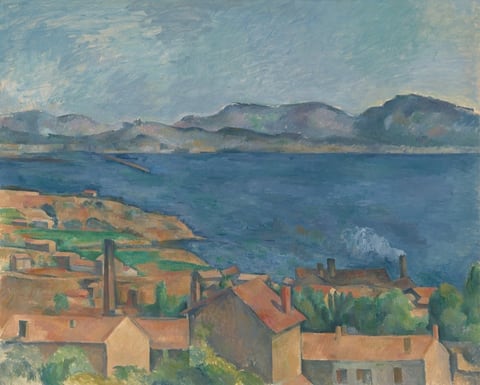
  3. Impressionist sea landscape, tan houses, blue ocean, distant mountains.
    The Bay of Marseille, Seen from L'EstaquePaul Cézanne, c. 1885Courtesy of the Art Institute of Chicago
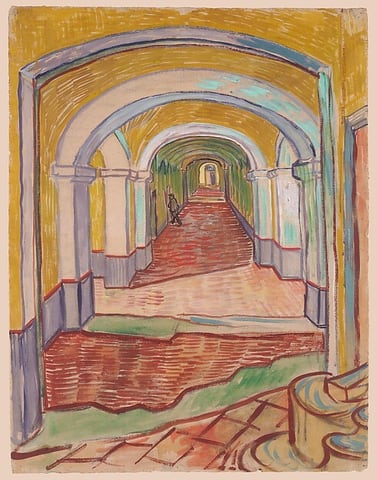
  4. Corridor in the Asylum, by Vincent van Gogh, September 1889
    Corridor in the AsylumVincent van Gogh, September 1889Courtesy of The Metropolitan Museum of Art

Section 3, north wall
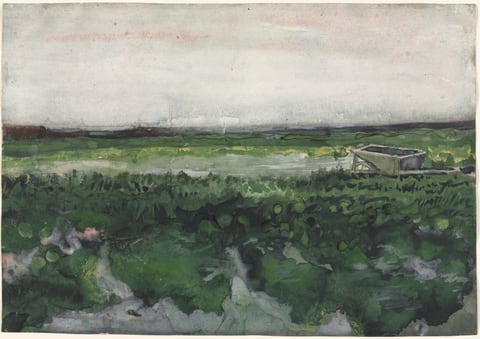
  1. Landscape with Wheelbarrow, by Vincent van Gogh, 1883
    Landscape with WheelbarrowVincent van Gogh, 1883Courtesy of the Cleveland Museum of Art
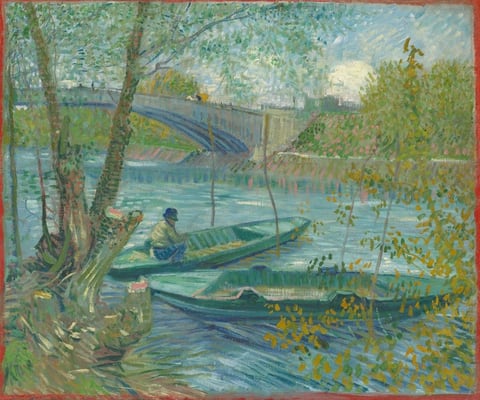
  2. Painting in short strokes of pale blue, green, white, yellow, and pink, of a fisherman in one of two small boats on a river, a tree-lined bank and a bridge in the background.
    Fishing in Spring, the Pont de Clichy (Asnières)Vincent van Gogh, 1887Courtesy of the Art Institute of Chicago
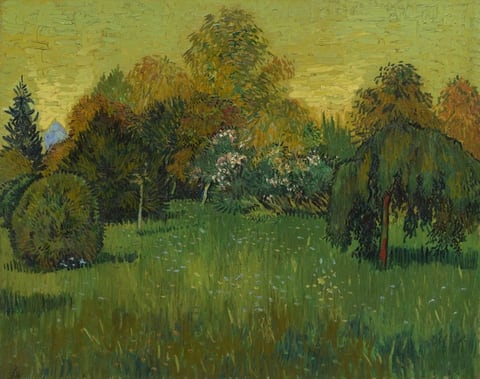
  3. Lush tall grasses with small white flowers foreground a grove of bushy trees of varying types and heights, their leaves ranging from deep green to golden. Beneath a dense and heavy yellow sky, a small blue triangle suggesting a mountain peak crests above the treeline at far left.
    The Poet's GardenVincent van Gogh, 1888Courtesy of the Art Institute of Chicago
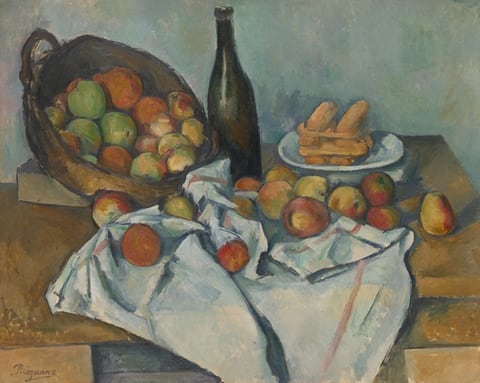
  4. Painting of a basket of green and red-yellow apples spilling over into a white cloth placed on a wooden table, with a dark green bottle and a plate of pale biscuits behind.
    The Basket of ApplesPaul Cézanne, c. 1893Courtesy of the Art Institute of Chicago