Floor plan

East wing: The Nineteenth CenturyPost-Impressionism

Post-Impressionism

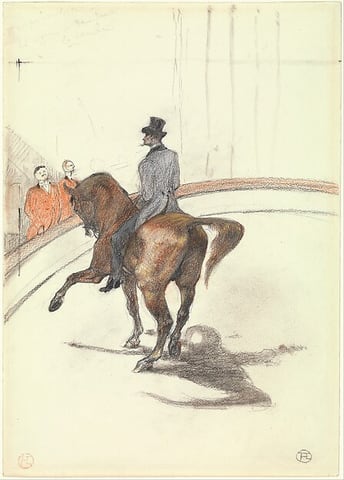
At the Circus: The Spanish Walk (Au Cirque: Le Pas espagnol), by Henri de Toulouse-Lautrec, 1899
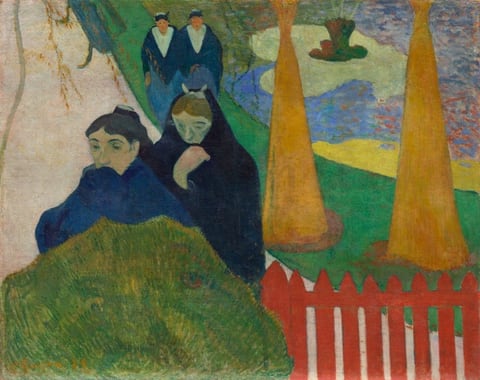
Painting of four women with blue shawls walking near red fence.
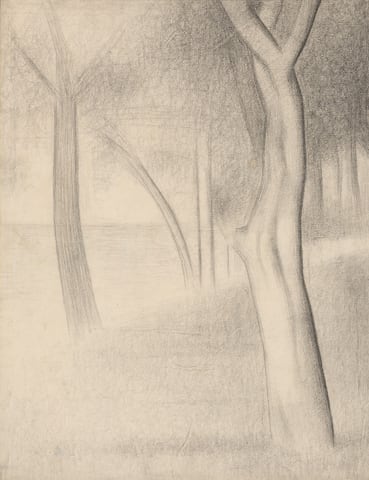
A work made of black conté crayon, on white laid paper, laid down on cream board.
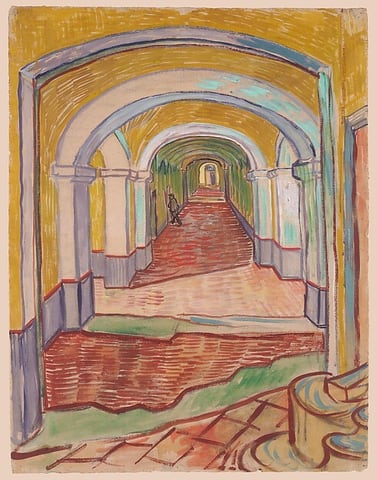
Corridor in the Asylum, by Vincent van Gogh, September 1889
A work made of transfer drawing in brownish-black ink (recto); graphite and blue crayon pencil with brush and solvent washes in ocher on cream wove paper.
A work made of oil on canvas.
Large painting of people in a crowded park, brushstrokes are dots.

The works in this room are listed below.

Works in this room

Artists who kept Impressionism's colour but pushed towards structure, symbol and feeling.

Section 1, north wall

  1. At the Circus: The Spanish Walk (Au Cirque: Le Pas espagnol), by Henri de Toulouse-Lautrec, 1899
    At the Circus: The Spanish Walk (Au Cirque: Le Pas espagnol)Henri de Toulouse-Lautrec, 1899Courtesy of The Metropolitan Museum of Art
  2. Painting of four women with blue shawls walking near red fence.
    Arlésiennes (Mistral)Paul Gauguin, 1888Courtesy of the Art Institute of Chicago
  3. A work made of black conté crayon, on white laid paper, laid down on cream board.
    Trees (study for La Grande Jatte)Georges Seurat, 1884Courtesy of the Art Institute of Chicago
  4. Corridor in the Asylum, by Vincent van Gogh, September 1889
    Corridor in the AsylumVincent van Gogh, September 1889Courtesy of The Metropolitan Museum of Art

Section 1, south wall

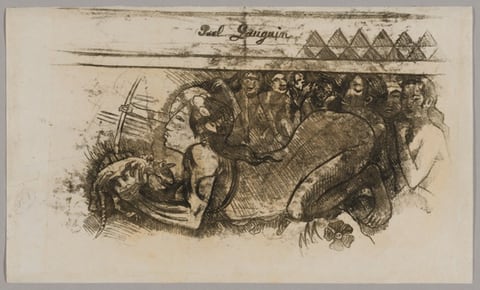
  1. A work made of transfer drawing in brownish-black ink (recto); graphite and blue crayon pencil with brush and solvent washes in ocher on cream wove paper.
    Woman with a CatPaul Gauguin, c. 1900Courtesy of the Art Institute of Chicago
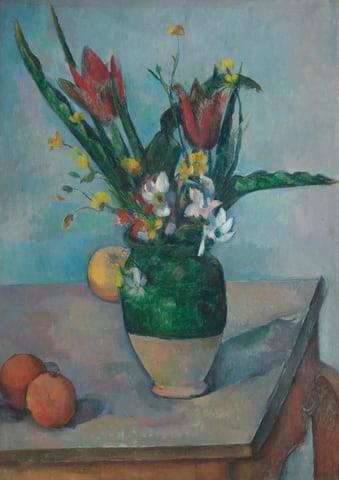
  2. A work made of oil on canvas.
    The Vase of TulipsPaul Cézanne, c. 1890Courtesy of the Art Institute of Chicago
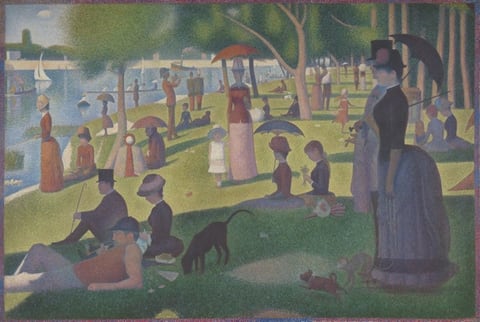
  3. Large painting of people in a crowded park, brushstrokes are dots.
    A Sunday on La Grande Jatte — 1884Georges Seurat, 1884–86, border added 1888–89Courtesy of the Art Institute of Chicago

Section 2, south wall
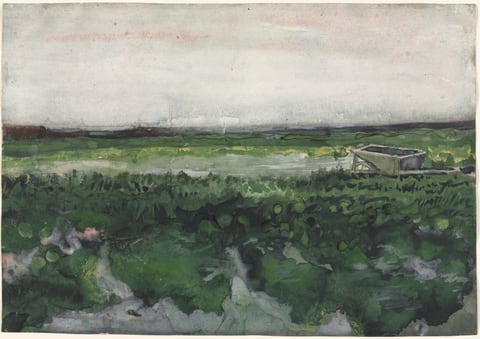
  1. Landscape with Wheelbarrow, by Vincent van Gogh, 1883
    Landscape with WheelbarrowVincent van Gogh, 1883Courtesy of the Cleveland Museum of Art
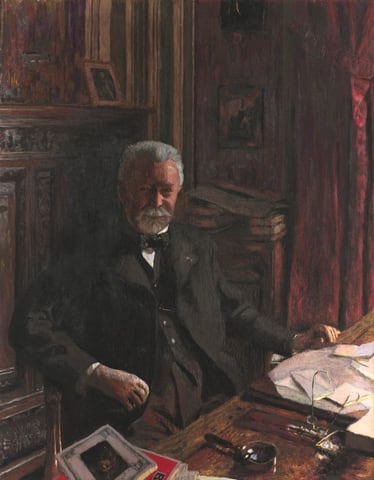
  2. André Bénac, by Édouard Vuillard, 1936
    André BénacÉdouard Vuillard, 1936Courtesy of the Cleveland Museum of Art
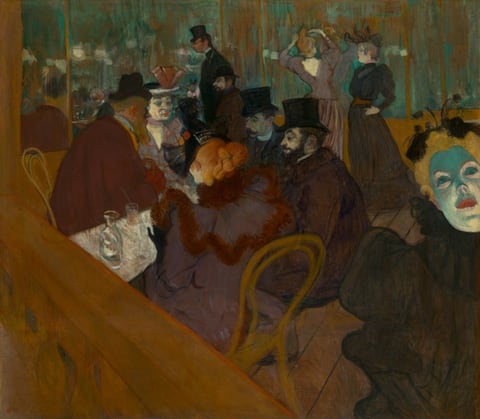
  3. Painting, heavy in tones of blue-green and burnt orange, depicting a bar scene at night. The men wear top hats and many are bearded; the women are dressed in voluminous gowns and decorative hats. Five people converse in the center of the composition and a woman with a green face dominates the right foreground.
    At the Moulin RougeHenri de Toulouse-Lautrec, 1892–95Courtesy of the Art Institute of Chicago

Section 2, north wall
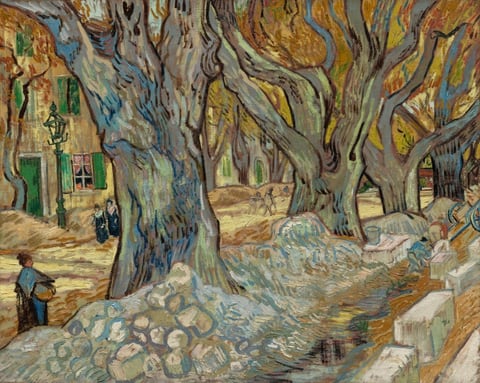
  1. The Large Plane Trees (Road Menders at Saint-Rémy), by Vincent van Gogh, 1889
    The Large Plane Trees (Road Menders at Saint-Rémy)Vincent van Gogh, 1889Courtesy of the Cleveland Museum of Art
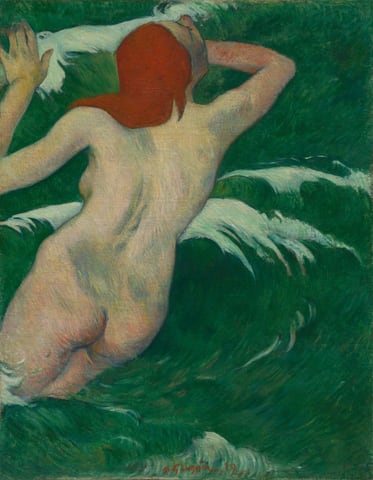
  2. In the Waves (Dans les Vagues), by Paul Gauguin, 1889
    In the Waves (Dans les Vagues)Paul Gauguin, 1889Courtesy of the Cleveland Museum of Art
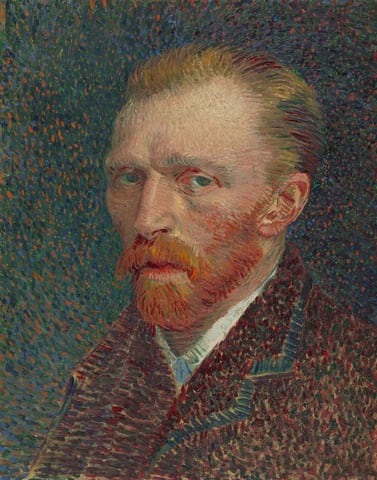
  3. Painting of a red-haired, bearded man with light skin, painted in short brushstrokes and multicolored dots. The background is likewise a mass of small, closely spaced colored dots, these in green, blue, and red-orange.
    Self-PortraitVincent van Gogh, 1887Courtesy of the Art Institute of Chicago
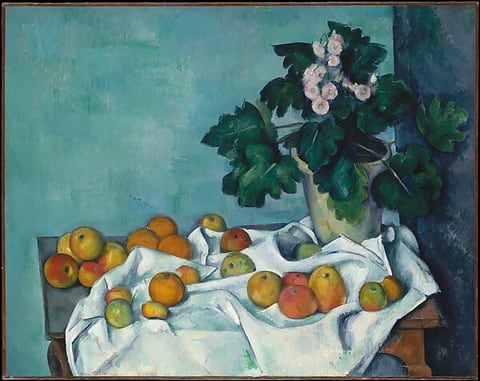
  4. Still Life with Apples and a Pot of Primroses, by Paul Cézanne, ca. 1890
    Still Life with Apples and a Pot of PrimrosesPaul Cézanne, ca. 1890Courtesy of The Metropolitan Museum of Art

Section 3, north wall
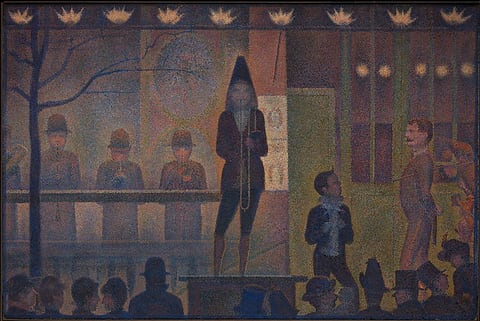
  1. Circus Sideshow (Parade de cirque), by Georges Seurat, 1887–88
    Circus Sideshow (Parade de cirque)Georges Seurat, 1887–88Courtesy of The Metropolitan Museum of Art
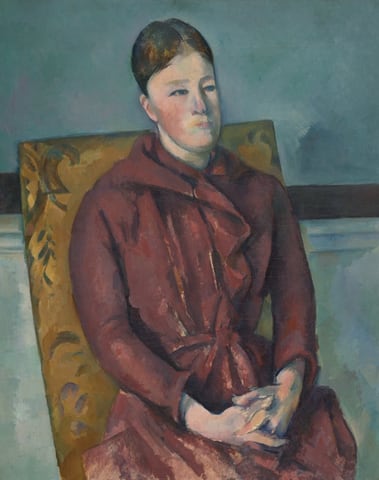
  2. Painting of a placid-looking, light-skinned woman in a maroon dress, seated in a chair with yellow upholstery, hands folded.
    Madame Cezanne in a Yellow ChairPaul Cézanne, 1888–90Courtesy of the Art Institute of Chicago