Floor plan

West wing: Old MastersRenaissance

Renaissance

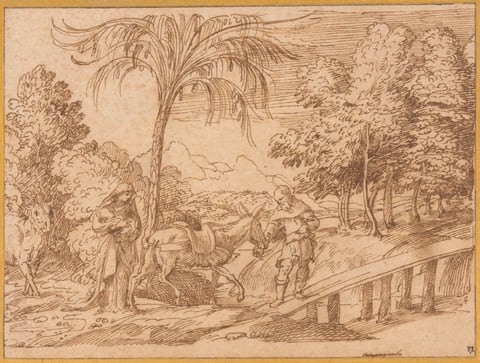
A work made of pen and brown ink on dark cream laid paper, laid down on laid paper, with pen and ink and gold ruled lines.
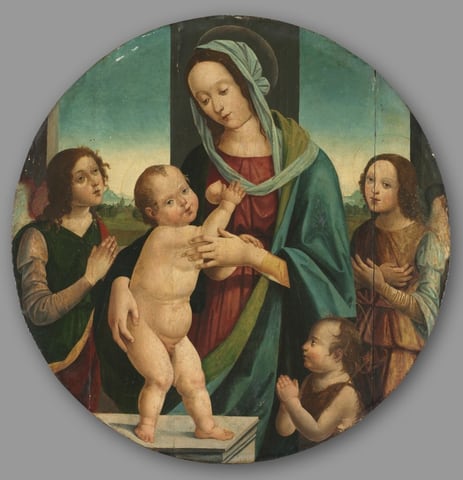
Virgin and Child with John the Baptist and Angels, by Pietro del Donzello, c. 1500
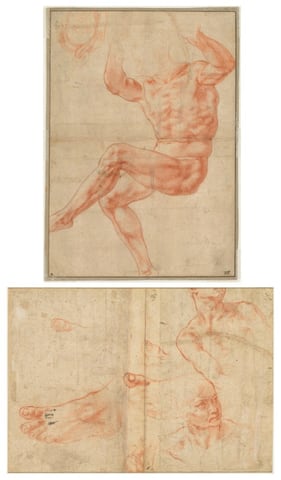
Study for the Nude Youth over the Prophet Daniel (recto); Figure Studies for the Sistine Ceiling (verso), by Michelangelo Buonarroti, 1510–11
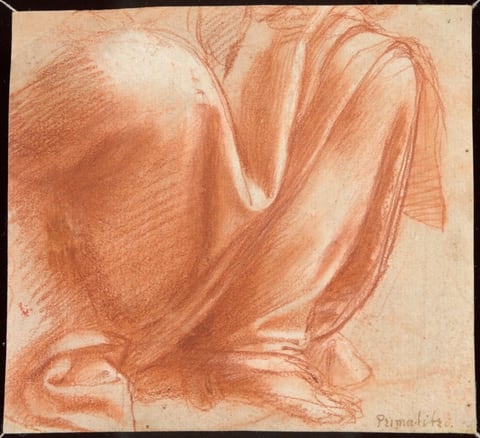
A work made of red chalk and brush and red chalk wash (recto) and black chalk, with black chalk grid lines, (verso) on cream laid paper.
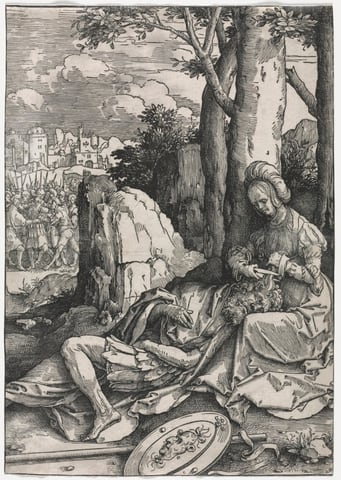
The Power of Women: Samson and Delilah, by Lucas van Leyden, c. 1512
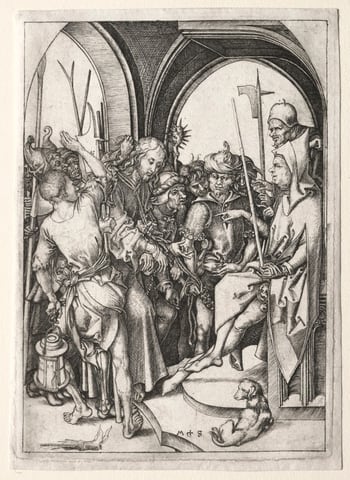
The Passion: Christ Before Annas, by Martin Schongauer, c. 1480
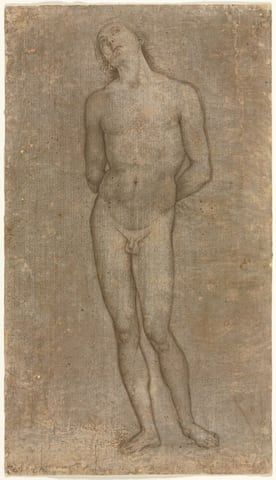
Saint Sebastian, by Perugino, c. 1493
A work made of pen and brown ink and brush and brown wash, on tan laid paper, laid down on tan laid card.

The works in this room are listed below.

Works in this room

European art from about 1400 to 1600, when painters rediscovered perspective and the classical past.

Section 1, north wall

  1. A work made of pen and brown ink on dark cream laid paper, laid down on laid paper, with pen and ink and gold ruled lines.
    The Flight into EgyptDomenico Campagnola, c. 1540Courtesy of the Art Institute of Chicago
  2. Virgin and Child with John the Baptist and Angels, by Pietro del Donzello, c. 1500
    Virgin and Child with John the Baptist and AngelsPietro del Donzello, c. 1500Courtesy of the Cleveland Museum of Art
  3. Study for the Nude Youth over the Prophet Daniel (recto); Figure Studies for the Sistine Ceiling (verso), by Michelangelo Buonarroti, 1510–11
    Study for the Nude Youth over the Prophet Daniel (recto); Figure Studies for the Sistine Ceiling (verso)Michelangelo Buonarroti, 1510–11Courtesy of the Cleveland Museum of Art
  4. A work made of red chalk and brush and red chalk wash (recto) and black chalk, with black chalk grid lines, (verso) on cream laid paper.
    A Drapery Study for the Knees of a Seated Allegorical Figure of Charity (recto); Bust of a Naked Allegorical Figure of Charity with Two Putti (verso)Giovanni Antonio di Francesco Sogliani, 1520/30Courtesy of the Art Institute of Chicago

Section 1, south wall

  1. The Power of Women: Samson and Delilah, by Lucas van Leyden, c. 1512
    The Power of Women: Samson and DelilahLucas van Leyden, c. 1512Courtesy of the Cleveland Museum of Art
  2. The Passion: Christ Before Annas, by Martin Schongauer, c. 1480
    The Passion: Christ Before AnnasMartin Schongauer, c. 1480Courtesy of the Cleveland Museum of Art
  3. Saint Sebastian, by Perugino, c. 1493
    Saint SebastianPerugino, c. 1493Courtesy of the Cleveland Museum of Art
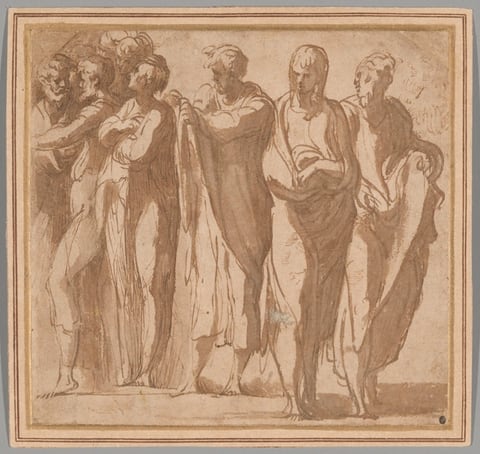
  4. A work made of pen and brown ink and brush and brown wash, on tan laid paper, laid down on tan laid card.
    Group of Nine Standing FiguresParmigianino, 1524/27Courtesy of the Art Institute of Chicago

Section 2, south wall
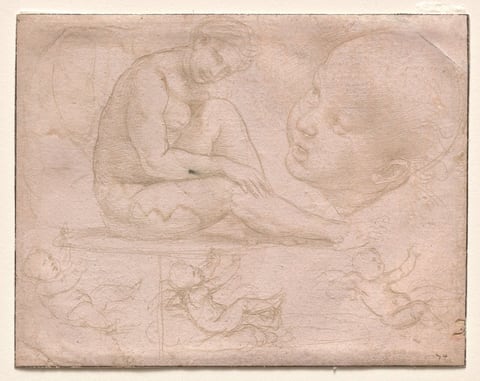
  1. Studies of a Seated Female, Child's Head, and Three Studies of a Baby, by Raphael, c. 1507–8
    Studies of a Seated Female, Child's Head, and Three Studies of a BabyRaphael, c. 1507–8Courtesy of the Cleveland Museum of Art
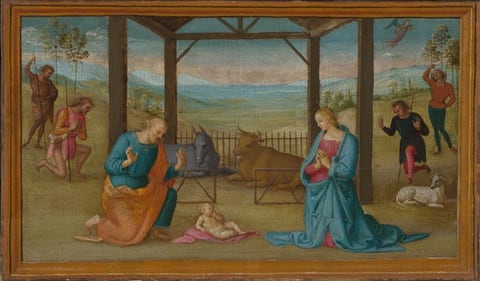
  2. A work made of tempera on panel, transferred to canvas.
    The NativityPerugino, 1500–05Courtesy of the Art Institute of Chicago
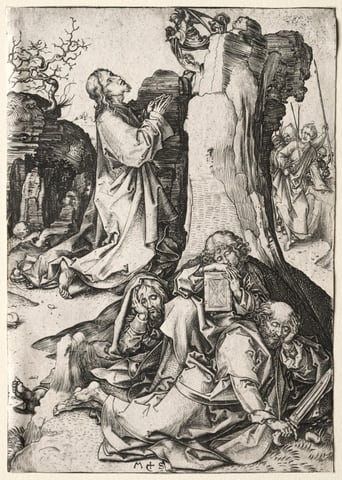
  3. The Passion: The Agony in the Garden, by Martin Schongauer, c. 1480
    The Passion: The Agony in the GardenMartin Schongauer, c. 1480Courtesy of the Cleveland Museum of Art

Section 2, north wall
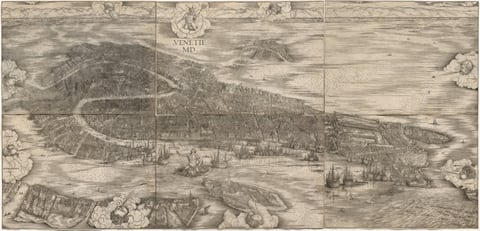
  1. View of Venice, by Jacopo de' Barbari, 1500
    View of VeniceJacopo de' Barbari, 1500Courtesy of the Cleveland Museum of Art
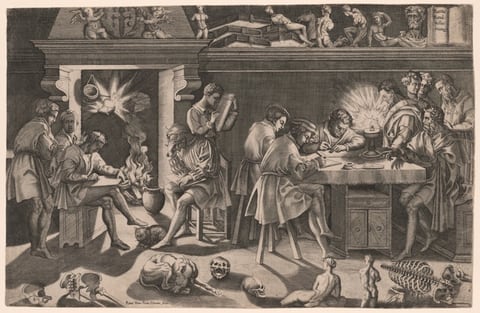
  2. A work made of engraving in black on cream laid paper.
    The Academy of Baccio BandinelliEnea Vico, 1544/50, printed c. 1560sCourtesy of the Art Institute of Chicago

Section 3, north wall
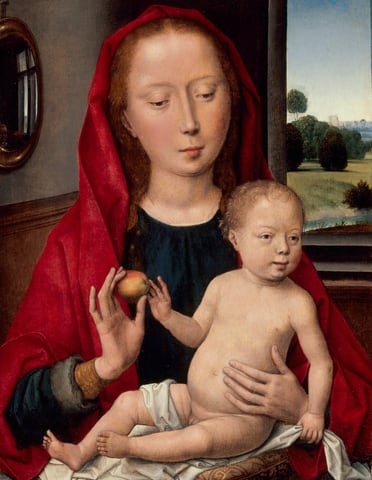
  1. A work made of oil on panel.
    Virgin and ChildHans Memling, c. 1485Courtesy of the Art Institute of Chicago
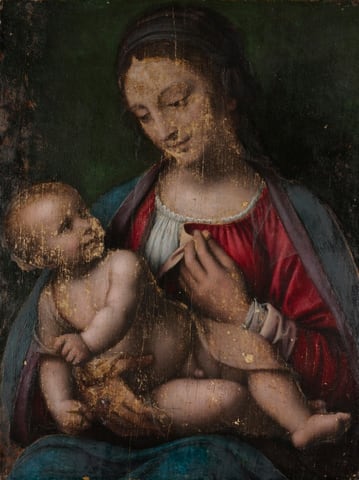
  2. Virgin and Child, by Bernardino Luini, 1500s
    Virgin and ChildBernardino Luini, 1500sCourtesy of the Cleveland Museum of Art
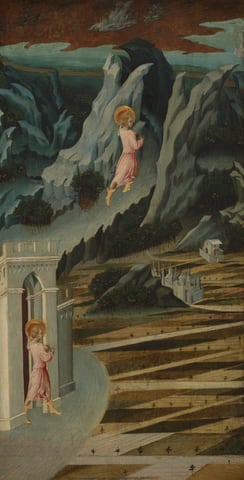
  3. A work made of tempera on panel.
    Saint John the Baptist Entering the WildernessGiovanni di Paolo, 1455–60Courtesy of the Art Institute of Chicago