Floor plan

West wing: Old MastersRenaissance

Renaissance

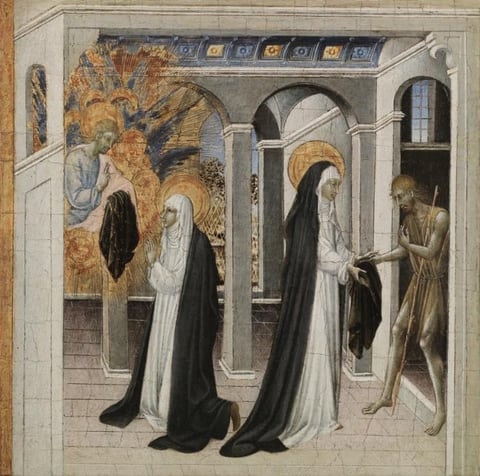
St. Catherine of Siena and the Beggar, by Giovanni di Paolo, 1460s
A work made of tempera on panel.
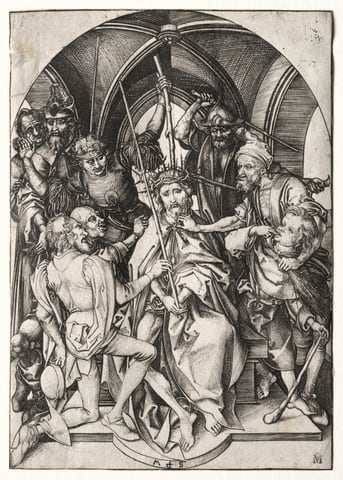
Christ Crowned with Thorns, by Martin Schongauer, 1470–82
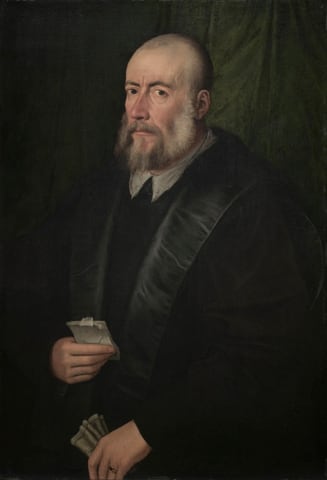
Portrait of an Old Man, by Giulio Campi, mid-1500s
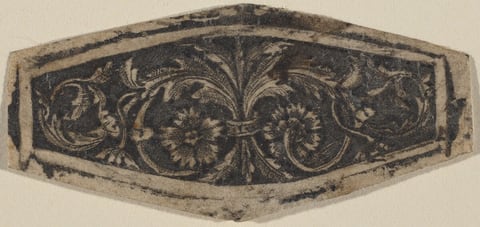
This is a drawing of an ornamental floral design. The image shows a central floral motif resembling a flower with radiating petals, surrounded by swirling leaf patterns. The background is dark, contrasting with the lighter line work of the floral design. The drawing's borders are uneven and have an antique appearance.
A work made of pen and brown ink on dark cream laid paper, laid down on laid paper, with pen and ink and gold ruled lines.
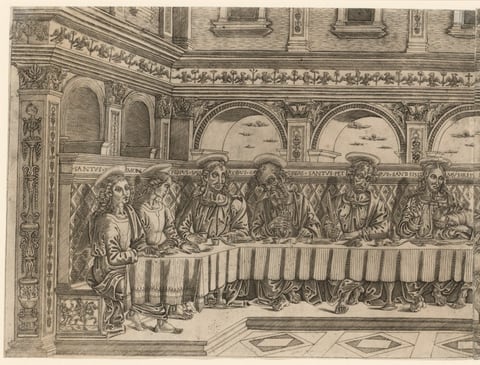
The Last Supper, by Lucantonio degli Uberti, c. 1500
A work made of engraving in black on cream laid paper.

The works in this room are listed below.

Works in this room

European art from about 1400 to 1600, when painters rediscovered perspective and the classical past.

Section 1, north wall

  1. St. Catherine of Siena and the Beggar, by Giovanni di Paolo, 1460s
    St. Catherine of Siena and the BeggarGiovanni di Paolo, 1460sCourtesy of the Cleveland Museum of Art
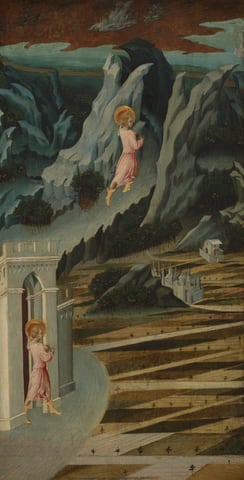
  2. A work made of tempera on panel.
    Saint John the Baptist Entering the WildernessGiovanni di Paolo, 1455–60Courtesy of the Art Institute of Chicago
  3. Christ Crowned with Thorns, by Martin Schongauer, 1470–82
    Christ Crowned with ThornsMartin Schongauer, 1470–82Courtesy of the Cleveland Museum of Art
  4. Portrait of an Old Man, by Giulio Campi, mid-1500s
    Portrait of an Old ManGiulio Campi, mid-1500sCourtesy of the Cleveland Museum of Art

Section 1, south wall

  1. This is a drawing of an ornamental floral design. The image shows a central floral motif resembling a flower with radiating petals, surrounded by swirling leaf patterns. The background is dark, contrasting with the lighter line work of the floral design. The drawing's borders are uneven and have an antique appearance.
    Ornament in Hexagonal ShapeUnrecorded Italian maker, c. 1480/1510Courtesy National Gallery of Art, Washington
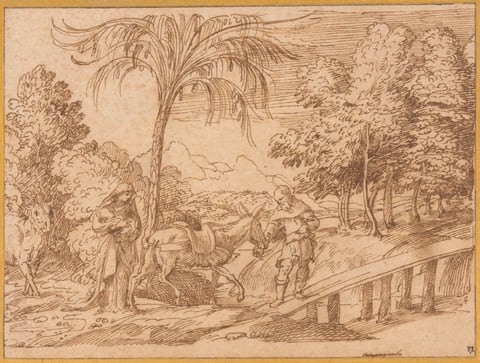
  2. A work made of pen and brown ink on dark cream laid paper, laid down on laid paper, with pen and ink and gold ruled lines.
    The Flight into EgyptDomenico Campagnola, c. 1540Courtesy of the Art Institute of Chicago
  3. The Last Supper, by Lucantonio degli Uberti, c. 1500
    The Last SupperLucantonio degli Uberti, c. 1500Courtesy of the Cleveland Museum of Art
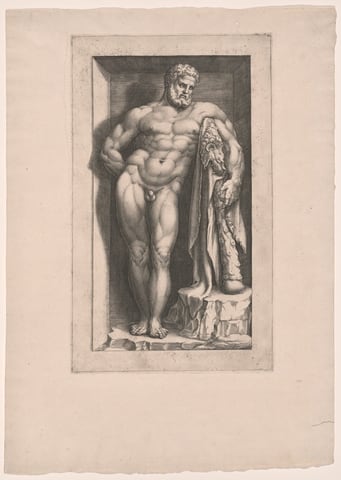
  4. A work made of engraving in black on cream laid paper.
    The Farnese HerculesGiorgio Ghisi, c. 1577Courtesy of the Art Institute of Chicago

Section 2, south wall
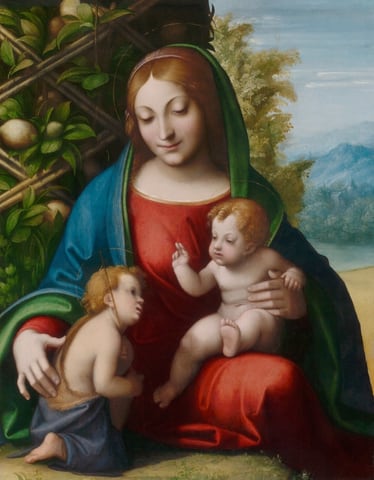
  1. Vividly colored painting of Virgin Mary with baby Jesus and baby John the Baptist.
    Virgin and Child with the Young Saint John the BaptistAntonio da Correggio, c. 1515Courtesy of the Art Institute of Chicago
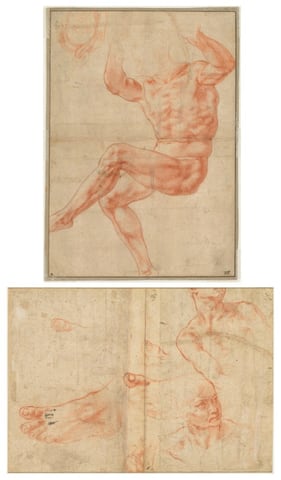
  2. Study for the Nude Youth over the Prophet Daniel (recto); Figure Studies for the Sistine Ceiling (verso), by Michelangelo Buonarroti, 1510–11
    Study for the Nude Youth over the Prophet Daniel (recto); Figure Studies for the Sistine Ceiling (verso)Michelangelo Buonarroti, 1510–11Courtesy of the Cleveland Museum of Art
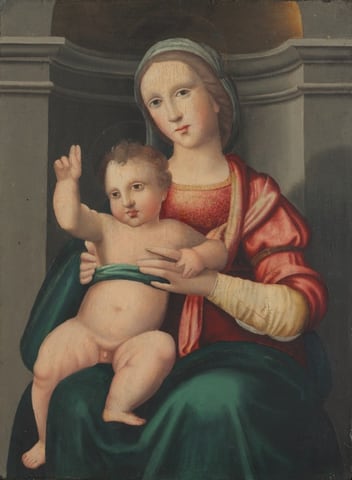
  3. Madonna and Child in a Niche, by Antonio del Ceraiolo, c. 1520s
    Madonna and Child in a NicheAntonio del Ceraiolo, c. 1520sCourtesy of the Cleveland Museum of Art
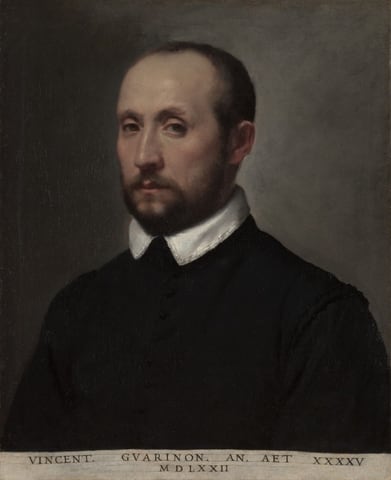
  4. Portrait of Vincenzo Guarignoni, by Giovanni Battista Moroni, c. 1572
    Portrait of Vincenzo GuarignoniGiovanni Battista Moroni, c. 1572Courtesy of the Cleveland Museum of Art

Section 2, north wall
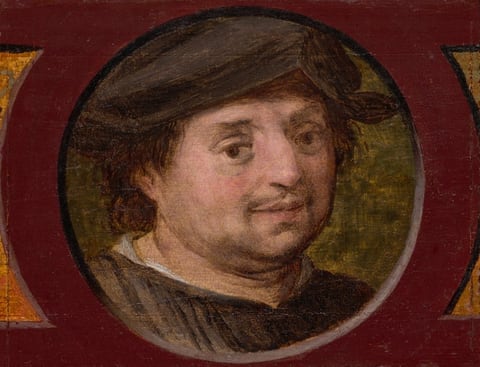
  1. A work made of oil on panel.
    Domenico da GambassiAndrea del Sarto, 1525–28Courtesy of the Art Institute of Chicago
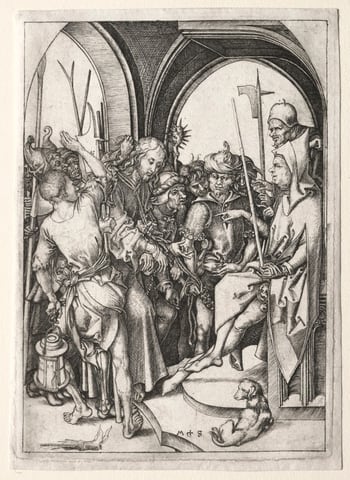
  2. The Passion: Christ Before Annas, by Martin Schongauer, c. 1480
    The Passion: Christ Before AnnasMartin Schongauer, c. 1480Courtesy of the Cleveland Museum of Art
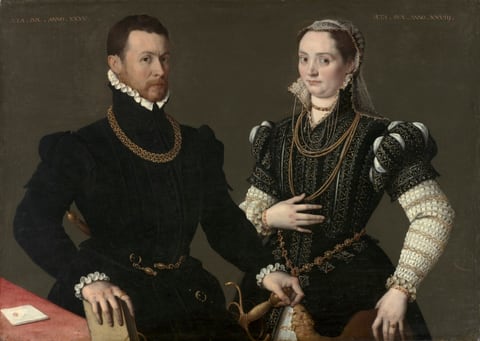
  3. Portrait of a Couple, c. 1580–88
    Portrait of a CoupleUnrecorded Italian maker, c. 1580–88Courtesy of the Cleveland Museum of Art
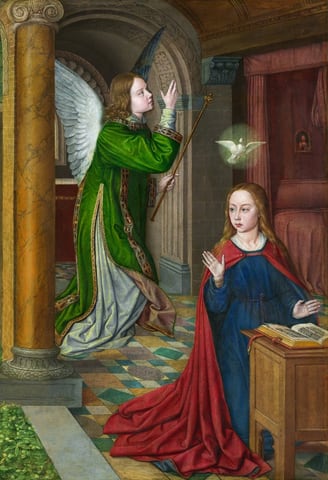
  4. Painting of the Annunciation, dove flying above Mary with angel.
    The AnnunciationJean Hey (called Master of Moulins), 1490–95Courtesy of the Art Institute of Chicago