Renaissance
European art from about 1400 to 1600, when painters rediscovered perspective and the classical past.
Section 1, north wall
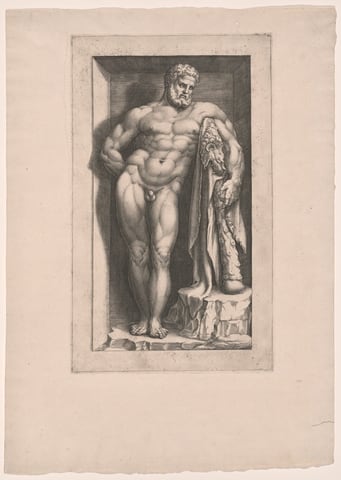
The Farnese HerculesGiorgio Ghisi, c. 1577Courtesy of the Art Institute of Chicago 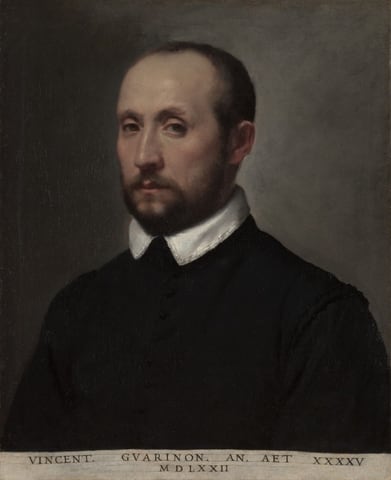
Portrait of Vincenzo GuarignoniGiovanni Battista Moroni, c. 1572Courtesy of the Cleveland Museum of Art 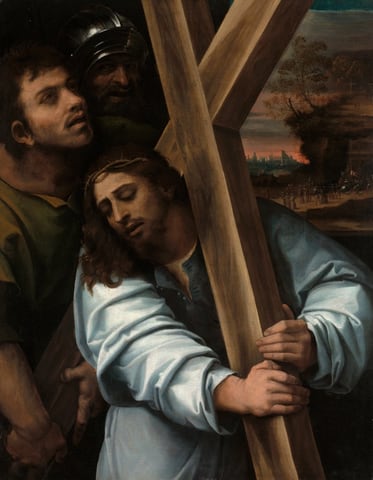
Christ Carrying the CrossSebastiano del Piombo, c. 1515–17Courtesy of the Art Institute of Chicago 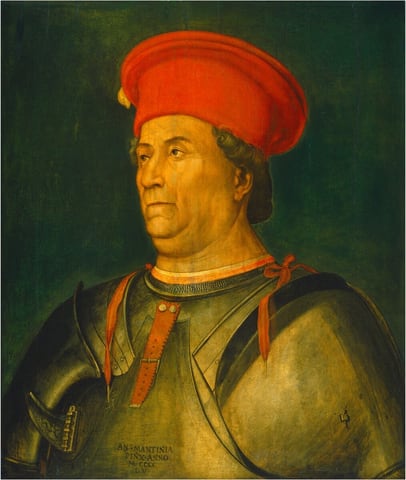
Francesco SforzaUnrecorded Italian maker, probably c. 1480/1500Courtesy National Gallery of Art, Washington
Section 1, south wall
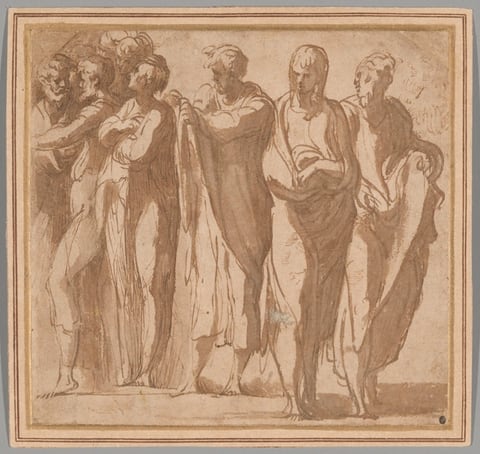
Group of Nine Standing FiguresParmigianino, 1524/27Courtesy of the Art Institute of Chicago 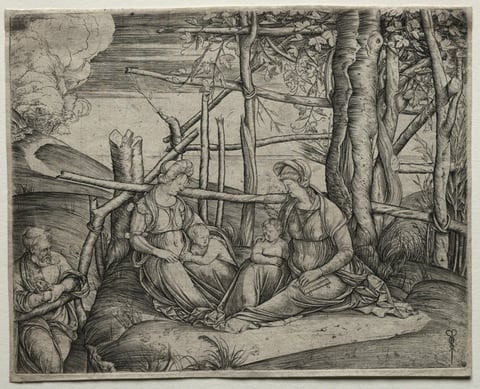
The Holy Family with Saint ElizabethJacopo de' Barbari, c. 1503Courtesy of the Cleveland Museum of Art 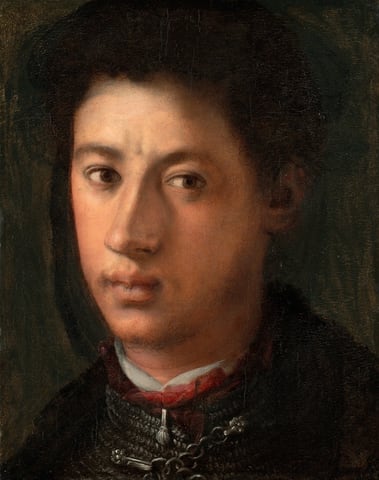
Alessandro de' MediciPontormo, (Jacopo Carrucci), 1534–35Courtesy of the Art Institute of Chicago 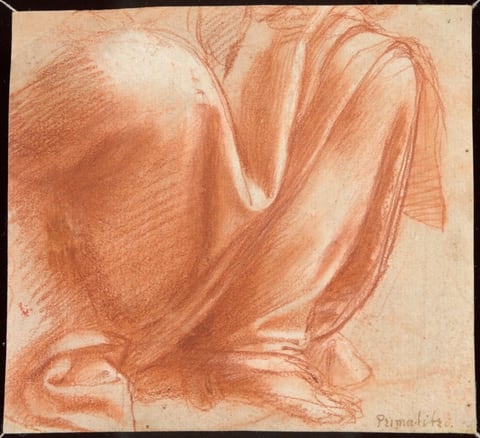
A Drapery Study for the Knees of a Seated Allegorical Figure of Charity (recto); Bust of a Naked Allegorical Figure of Charity with Two Putti (verso)Giovanni Antonio di Francesco Sogliani, 1520/30Courtesy of the Art Institute of Chicago
Section 2, south wall
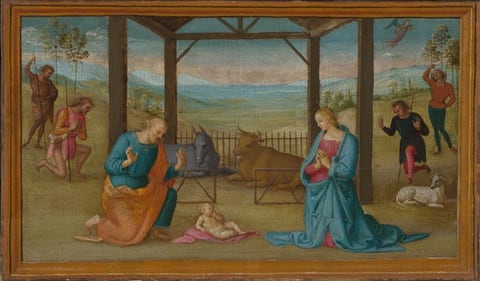
The NativityPerugino, 1500–05Courtesy of the Art Institute of Chicago 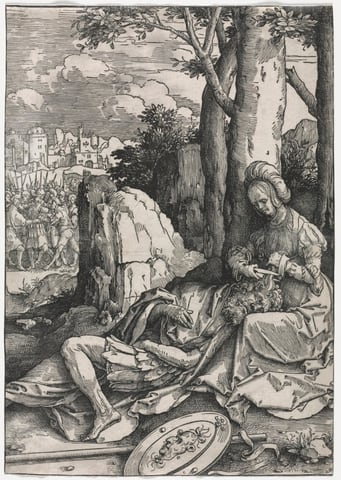
The Power of Women: Samson and DelilahLucas van Leyden, c. 1512Courtesy of the Cleveland Museum of Art 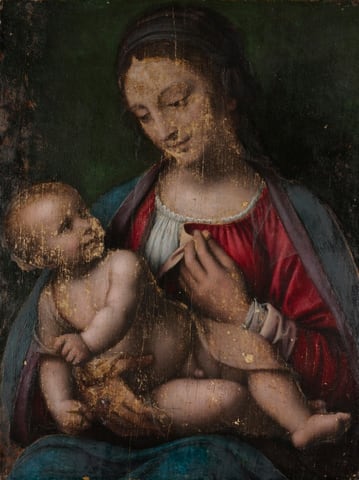
Virgin and ChildBernardino Luini, 1500sCourtesy of the Cleveland Museum of Art 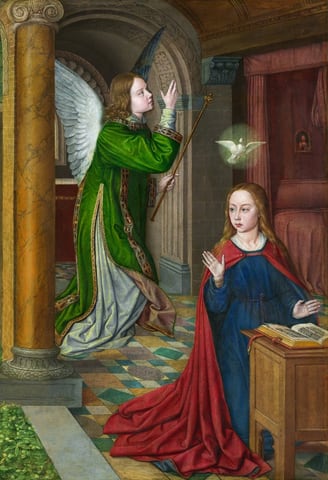
The AnnunciationJean Hey (called Master of Moulins), 1490–95Courtesy of the Art Institute of Chicago
Section 2, north wall
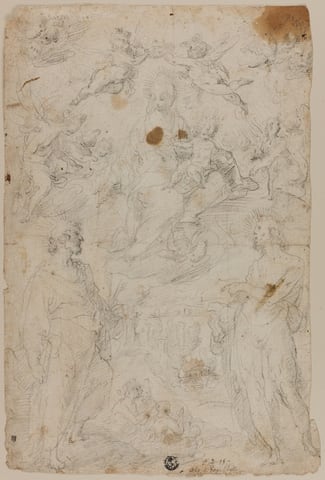
Virgin and Child with Saints Peter and John the Baptist (recto); Saint John the Baptist (verso)Pietro d' Asaro, n.d.Courtesy of the Art Institute of Chicago 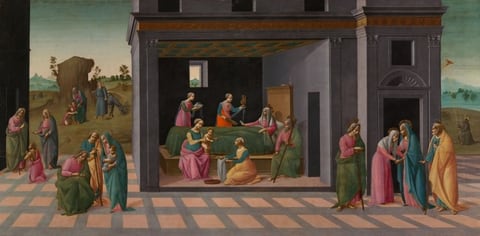
Scenes from the Life of Saint John the BaptistBartolomeo di Giovanni, 1490/95Courtesy of the Art Institute of Chicago 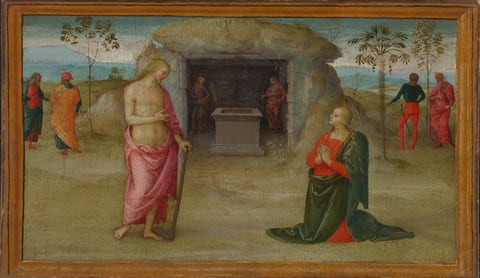
Noli Me TangerePerugino, 1500–05Courtesy of the Art Institute of Chicago 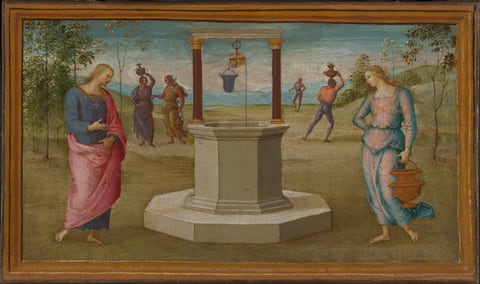
Christ and the Woman of SamariaPerugino, 1500–05Courtesy of the Art Institute of Chicago