Floor plan

West wing: Old MastersRenaissance

Renaissance

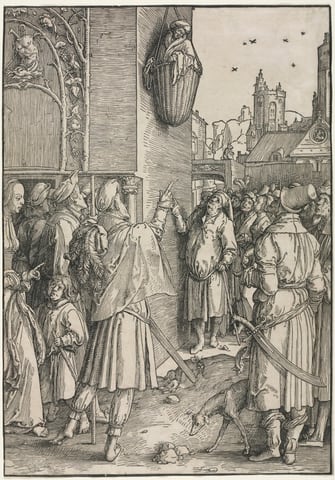
The Power of Women: The Poet Virgil Suspended in a Basket, by Lucas van Leyden, c. 1512
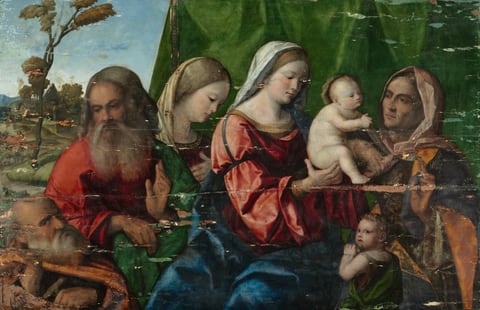
Virgin and Child with Saints, c. 1510
A work made of oil on panel.
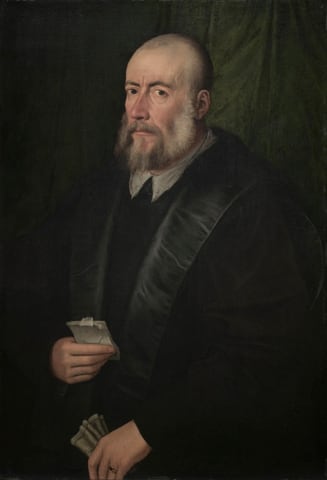
Portrait of an Old Man, by Giulio Campi, mid-1500s
A work made of tempera on panel.
A work made of pen and brown ink and brush and brown wash, on tan laid paper, laid down on tan laid card.
A work made of oil on panel.
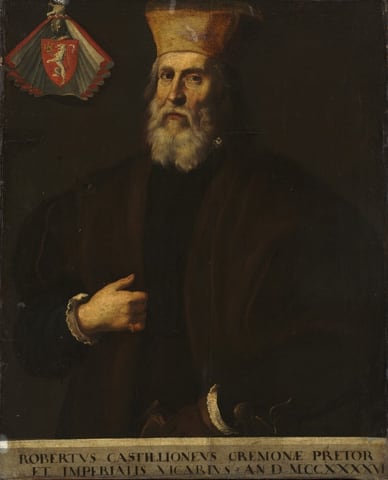
Portrait of Roberto Castiglione, early 1600s

The works in this room are listed below.

Works in this room

European art from about 1400 to 1600, when painters rediscovered perspective and the classical past.

Section 1, north wall

  1. The Power of Women: The Poet Virgil Suspended in a Basket, by Lucas van Leyden, c. 1512
    The Power of Women: The Poet Virgil Suspended in a BasketLucas van Leyden, c. 1512Courtesy of the Cleveland Museum of Art
  2. Virgin and Child with Saints, c. 1510
    Virgin and Child with SaintsUnrecorded Italian maker, c. 1510Courtesy of the Cleveland Museum of Art
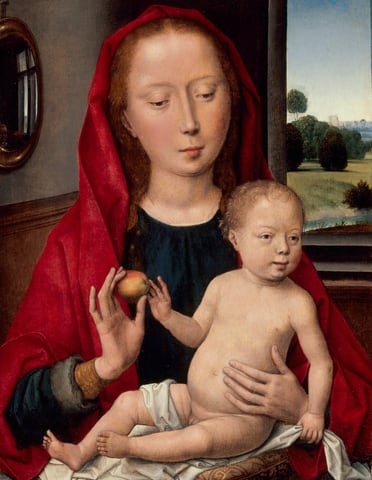
  3. A work made of oil on panel.
    Virgin and ChildHans Memling, c. 1485Courtesy of the Art Institute of Chicago
  4. Portrait of an Old Man, by Giulio Campi, mid-1500s
    Portrait of an Old ManGiulio Campi, mid-1500sCourtesy of the Cleveland Museum of Art

Section 1, south wall

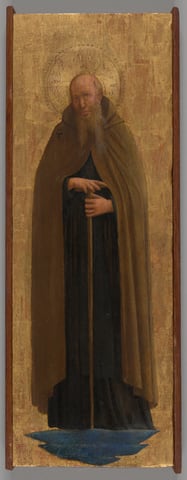
  1. A work made of tempera on panel.
    Saint Anthony AbbotFra Angelico, 1440–41Courtesy of the Art Institute of Chicago
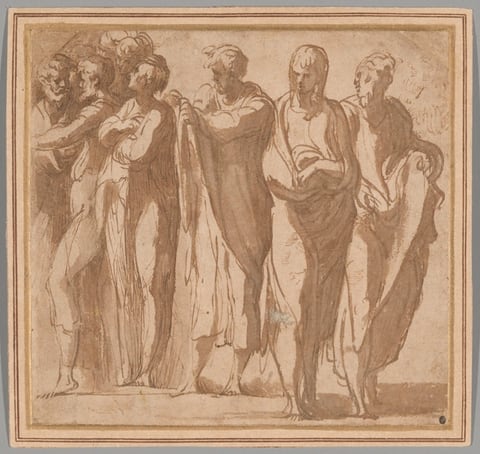
  2. A work made of pen and brown ink and brush and brown wash, on tan laid paper, laid down on tan laid card.
    Group of Nine Standing FiguresParmigianino, 1524/27Courtesy of the Art Institute of Chicago
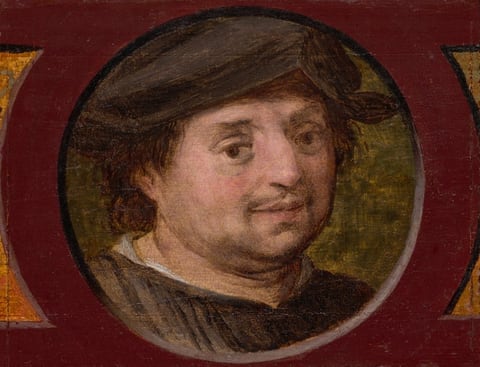
  3. A work made of oil on panel.
    Domenico da GambassiAndrea del Sarto, 1525–28Courtesy of the Art Institute of Chicago
  4. Portrait of Roberto Castiglione, early 1600s
    Portrait of Roberto CastiglioneUnrecorded Italian maker, early 1600sCourtesy of the Cleveland Museum of Art

Section 2, south wall
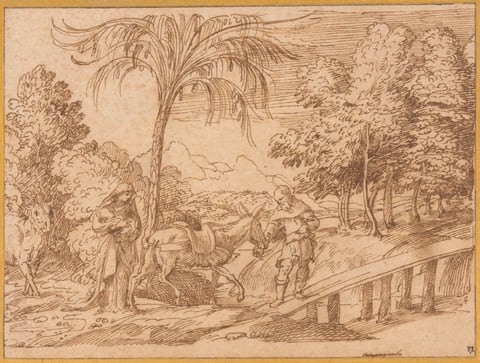
  1. A work made of pen and brown ink on dark cream laid paper, laid down on laid paper, with pen and ink and gold ruled lines.
    The Flight into EgyptDomenico Campagnola, c. 1540Courtesy of the Art Institute of Chicago
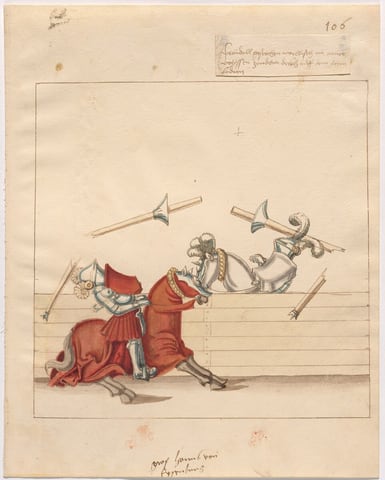
  2. This is a drawing of two armored figures on horseback engaged in a joust. Both knights are clad in ornate armor and mounted on horses as they participate in the match. The scene captures the moment of impact, with splintered lances flying in the air. One knight in silver armor with blue accents is being unseated from his horse, while the other knight in red and silver armor remains mounted. Both horses are draped in colors matching their riders' armors. The focus is on the dynamic action and energy of the joust, with fine details showing the armor's shine and the movement of the horses. The drawing is bordered, and there is some script at the top and bottom.
    Italian Joust of PeaceUnrecorded German maker, c.1512-1515Courtesy National Gallery of Art, Washington
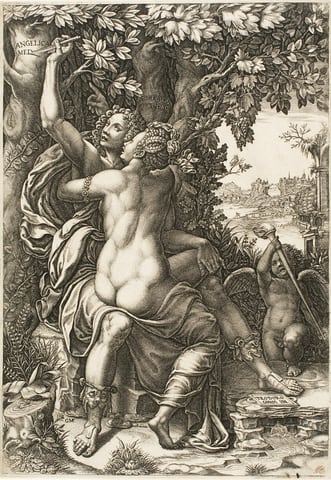
  3. A work made of engraving in black on ivory laid paper.
    Angelica and MedoroGiorgio Ghisi, c. 1570Courtesy of the Art Institute of Chicago
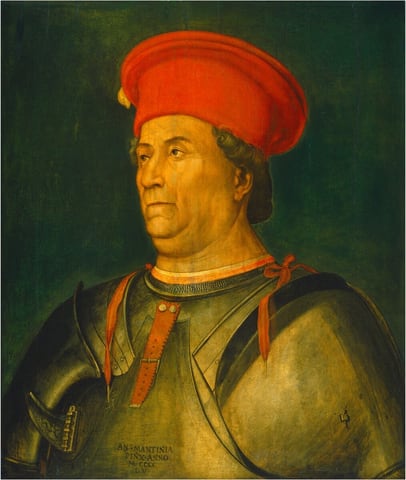
  4. This painting shows an upper-body portrait of a man in a three-quarter view, turned to the left. He has a prominent double chin, a slightly furrowed brow, thin lips, and a serious expression. He has pale yellow skin and short, dark hair, and he wears a large, red hat. He is clad in silver armor with red straps on his shoulder and chest. The background is a simple, dark green color.
    Francesco SforzaUnrecorded Italian maker, probably c. 1480/1500Courtesy National Gallery of Art, Washington

Section 2, north wall
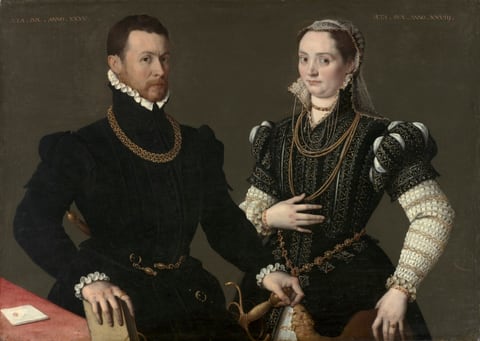
  1. Portrait of a Couple, c. 1580–88
    Portrait of a CoupleUnrecorded Italian maker, c. 1580–88Courtesy of the Cleveland Museum of Art
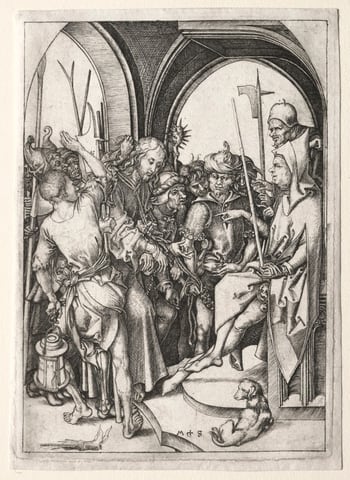
  2. The Passion: Christ Before Annas, by Martin Schongauer, c. 1480
    The Passion: Christ Before AnnasMartin Schongauer, c. 1480Courtesy of the Cleveland Museum of Art
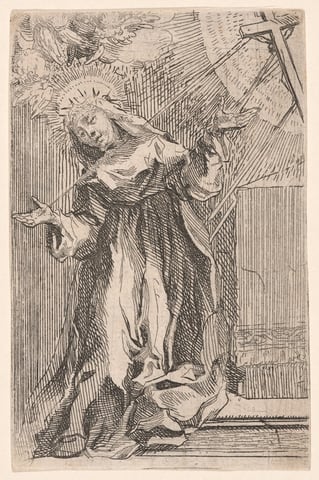
  3. A work made of etching in black on cream laid paper.
    Saint Catherine of Siena Receiving the StigmataFrancesco Vanni, c. 1595Courtesy of the Art Institute of Chicago
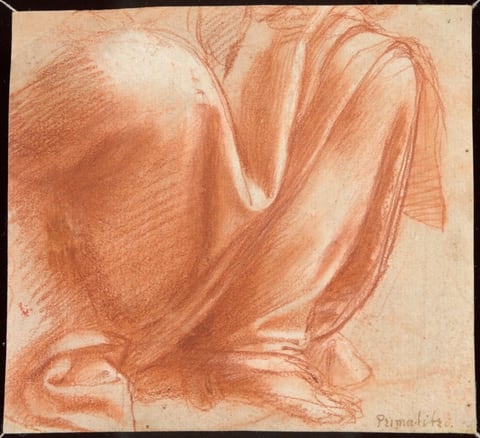
  4. A work made of red chalk and brush and red chalk wash (recto) and black chalk, with black chalk grid lines, (verso) on cream laid paper.
    A Drapery Study for the Knees of a Seated Allegorical Figure of Charity (recto); Bust of a Naked Allegorical Figure of Charity with Two Putti (verso)Giovanni Antonio di Francesco Sogliani, 1520/30Courtesy of the Art Institute of Chicago