Floor plan

West wing: Old MastersRenaissance

Renaissance

A work made of tempera on panel, transferred to canvas.
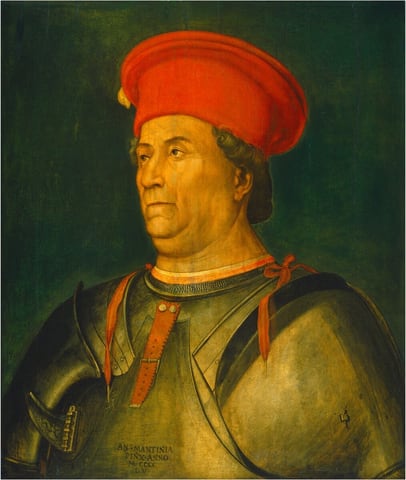
This painting shows an upper-body portrait of a man in a three-quarter view, turned to the left. He has a prominent double chin, a slightly furrowed brow, thin lips, and a serious expression. He has pale yellow skin and short, dark hair, and he wears a large, red hat. He is clad in silver armor with red straps on his shoulder and chest. The background is a simple, dark green color.
Holy Family with a Shepherd, by Battista Dossi, early 1520s
Portrait of Roberto Castiglione, early 1600s
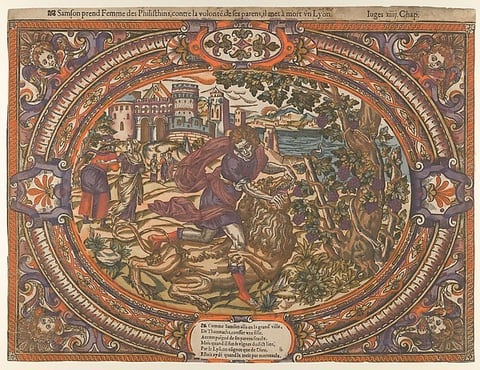
Samson and the Lion, from "The Story of Samson", ca. 1560–80
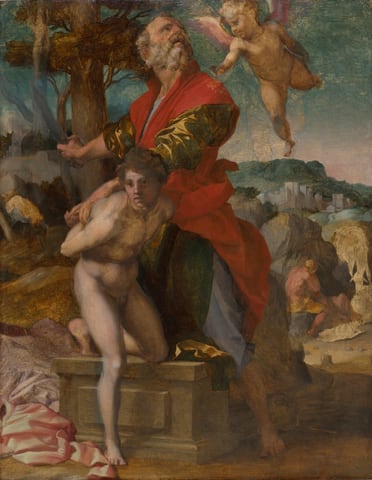
The Sacrifice of Isaac, by Andrea del Sarto, c. 1527
A work made of oil on canvas.

The works in this room are listed below.

Works in this room

European art from about 1400 to 1600, when painters rediscovered perspective and the classical past.

Section 1, north wall

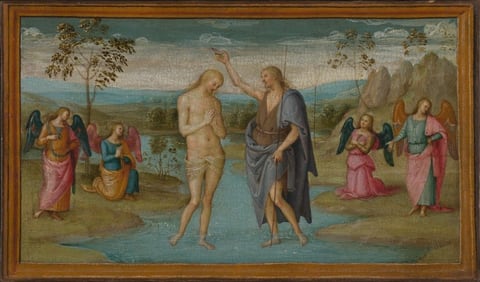
  1. A work made of tempera on panel, transferred to canvas.
    The Baptism of ChristPerugino, 1500–05Courtesy of the Art Institute of Chicago
  2. This painting shows an upper-body portrait of a man in a three-quarter view, turned to the left. He has a prominent double chin, a slightly furrowed brow, thin lips, and a serious expression. He has pale yellow skin and short, dark hair, and he wears a large, red hat. He is clad in silver armor with red straps on his shoulder and chest. The background is a simple, dark green color.
    Francesco SforzaUnrecorded Italian maker, probably c. 1480/1500Courtesy National Gallery of Art, Washington
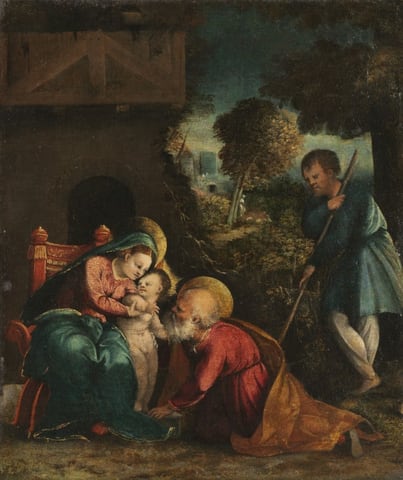
  3. Holy Family with a Shepherd, by Battista Dossi, early 1520s
    Holy Family with a ShepherdBattista Dossi, early 1520sCourtesy of the Cleveland Museum of Art
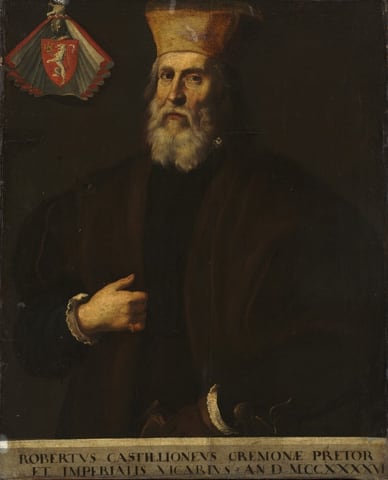
  4. Portrait of Roberto Castiglione, early 1600s
    Portrait of Roberto CastiglioneUnrecorded Italian maker, early 1600sCourtesy of the Cleveland Museum of Art

Section 1, south wall

  1. Samson and the Lion, from "The Story of Samson", ca. 1560–80
    Samson and the Lion, from "The Story of Samson"Unrecorded French maker, ca. 1560–80Courtesy of The Metropolitan Museum of Art
  2. The Sacrifice of Isaac, by Andrea del Sarto, c. 1527
    The Sacrifice of IsaacAndrea del Sarto, c. 1527Courtesy of the Cleveland Museum of Art
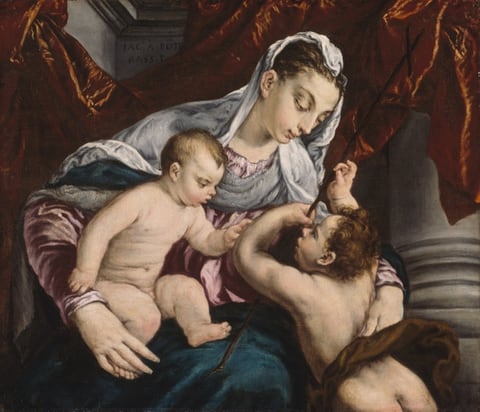
  3. A work made of oil on canvas.
    Virgin and Child with the Young Saint John the BaptistJacopo Bassano, 1560–65Courtesy of the Art Institute of Chicago

Section 2, south wall
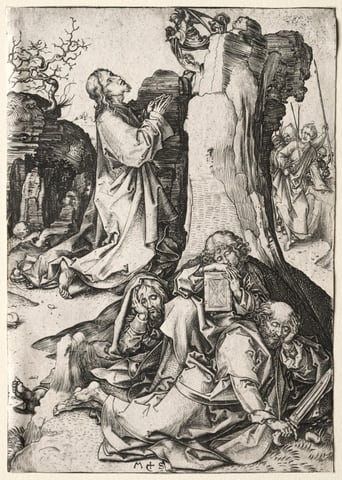
  1. The Passion: The Agony in the Garden, by Martin Schongauer, c. 1480
    The Passion: The Agony in the GardenMartin Schongauer, c. 1480Courtesy of the Cleveland Museum of Art
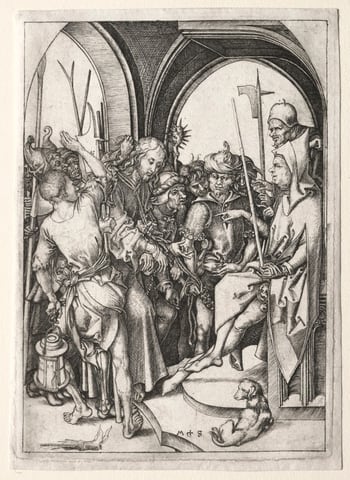
  2. The Passion: Christ Before Annas, by Martin Schongauer, c. 1480
    The Passion: Christ Before AnnasMartin Schongauer, c. 1480Courtesy of the Cleveland Museum of Art
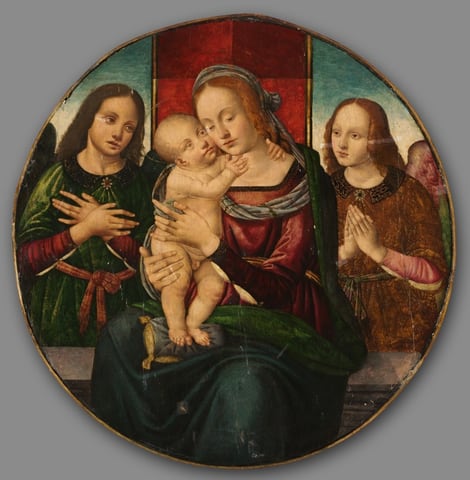
  3. Virgin and Child with Angels, by Master of the Holden Tondo, early 1500s
    Virgin and Child with AngelsMaster of the Holden Tondo, early 1500sCourtesy of the Cleveland Museum of Art
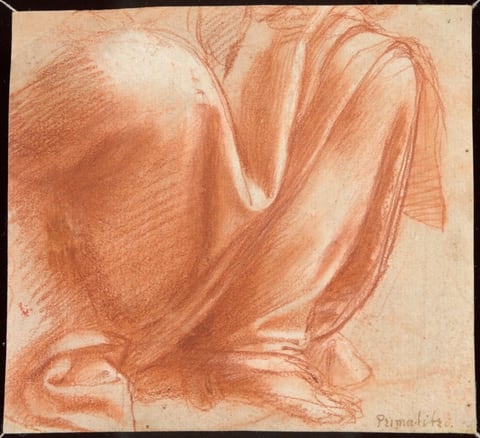
  4. A work made of red chalk and brush and red chalk wash (recto) and black chalk, with black chalk grid lines, (verso) on cream laid paper.
    A Drapery Study for the Knees of a Seated Allegorical Figure of Charity (recto); Bust of a Naked Allegorical Figure of Charity with Two Putti (verso)Giovanni Antonio di Francesco Sogliani, 1520/30Courtesy of the Art Institute of Chicago

Section 2, north wall
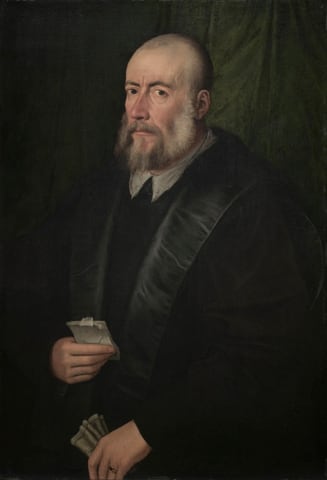
  1. Portrait of an Old Man, by Giulio Campi, mid-1500s
    Portrait of an Old ManGiulio Campi, mid-1500sCourtesy of the Cleveland Museum of Art
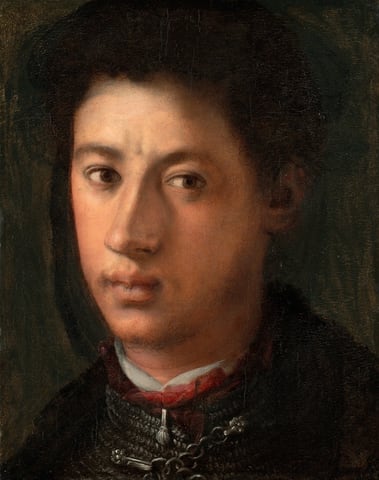
  2. A work made of oil on panel.
    Alessandro de' MediciPontormo, (Jacopo Carrucci), 1534–35Courtesy of the Art Institute of Chicago
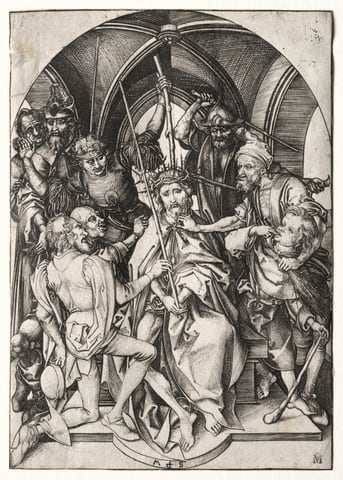
  3. Christ Crowned with Thorns, by Martin Schongauer, 1470–82
    Christ Crowned with ThornsMartin Schongauer, 1470–82Courtesy of the Cleveland Museum of Art

Section 3, north wall
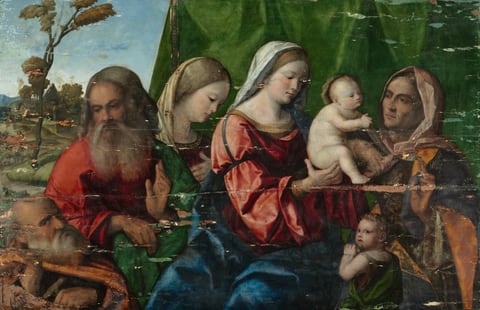
  1. Virgin and Child with Saints, c. 1510
    Virgin and Child with SaintsUnrecorded Italian maker, c. 1510Courtesy of the Cleveland Museum of Art
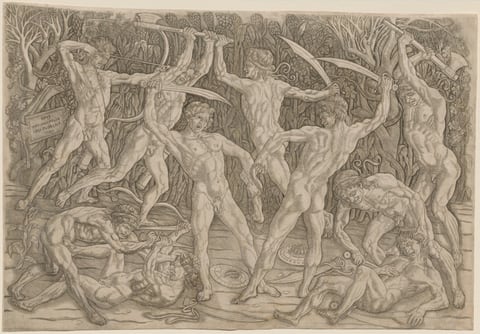
  2. Battle of the Nudes, by Antonio Pollaiuolo, 1470s–80s
    Battle of the NudesAntonio Pollaiuolo, 1470s–80sCourtesy of the Cleveland Museum of Art