Floor plan

West wing: Old MastersRenaissance

Renaissance

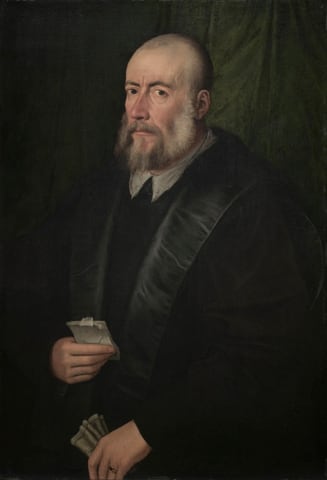
Portrait of an Old Man, by Giulio Campi, mid-1500s
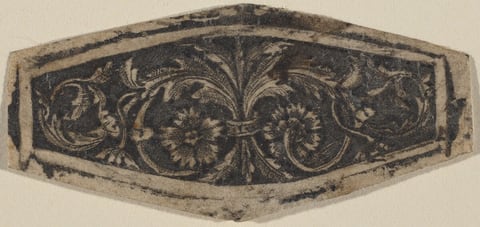
This is a drawing of an ornamental floral design. The image shows a central floral motif resembling a flower with radiating petals, surrounded by swirling leaf patterns. The background is dark, contrasting with the lighter line work of the floral design. The drawing's borders are uneven and have an antique appearance.
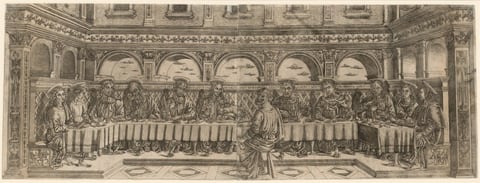
The Last Supper (pair), by Lucantonio degli Uberti, c. 1500
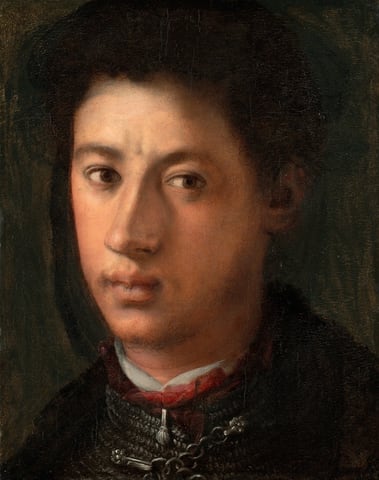
A work made of oil on panel.
A work made of oil on canvas.
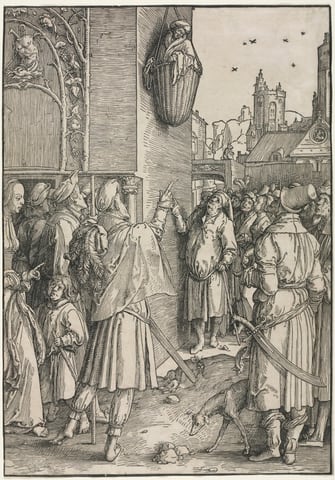
The Power of Women: The Poet Virgil Suspended in a Basket, by Lucas van Leyden, c. 1512
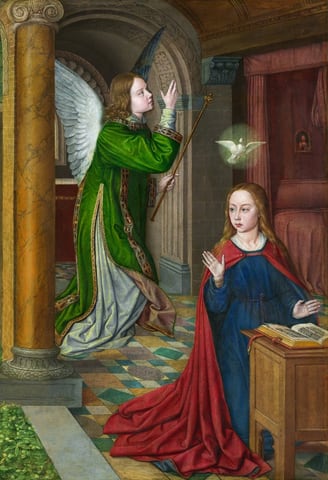
Painting of the Annunciation, dove flying above Mary with angel.
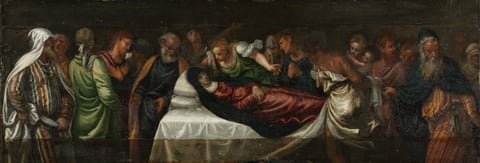
Death of the Virgin, mid-1500s

The works in this room are listed below.

Works in this room

European art from about 1400 to 1600, when painters rediscovered perspective and the classical past.

Section 1, north wall

  1. Portrait of an Old Man, by Giulio Campi, mid-1500s
    Portrait of an Old ManGiulio Campi, mid-1500sCourtesy of the Cleveland Museum of Art
  2. This is a drawing of an ornamental floral design. The image shows a central floral motif resembling a flower with radiating petals, surrounded by swirling leaf patterns. The background is dark, contrasting with the lighter line work of the floral design. The drawing's borders are uneven and have an antique appearance.
    Ornament in Hexagonal ShapeUnrecorded Italian maker, c. 1480/1510Courtesy National Gallery of Art, Washington
  3. The Last Supper (pair), by Lucantonio degli Uberti, c. 1500
    The Last Supper (pair)Lucantonio degli Uberti, c. 1500Courtesy of the Cleveland Museum of Art
  4. A work made of oil on panel.
    Alessandro de' MediciPontormo, (Jacopo Carrucci), 1534–35Courtesy of the Art Institute of Chicago

Section 1, south wall

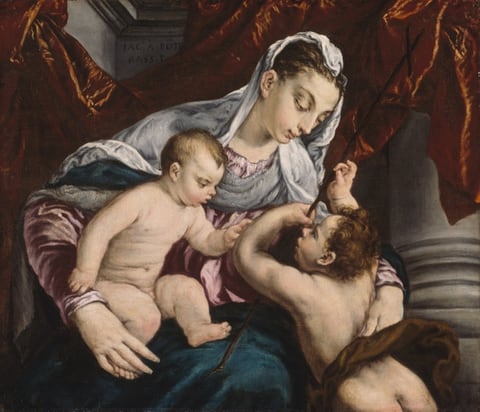
  1. A work made of oil on canvas.
    Virgin and Child with the Young Saint John the BaptistJacopo Bassano, 1560–65Courtesy of the Art Institute of Chicago
  2. The Power of Women: The Poet Virgil Suspended in a Basket, by Lucas van Leyden, c. 1512
    The Power of Women: The Poet Virgil Suspended in a BasketLucas van Leyden, c. 1512Courtesy of the Cleveland Museum of Art
  3. Painting of the Annunciation, dove flying above Mary with angel.
    The AnnunciationJean Hey (called Master of Moulins), 1490–95Courtesy of the Art Institute of Chicago
  4. Death of the Virgin, mid-1500s
    Death of the VirginUnrecorded Italian maker, mid-1500sCourtesy of the Cleveland Museum of Art

Section 2, south wall
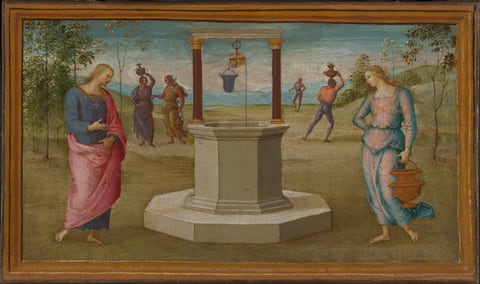
  1. A work made of tempera on panel, transferred to canvas.
    Christ and the Woman of SamariaPerugino, 1500–05Courtesy of the Art Institute of Chicago
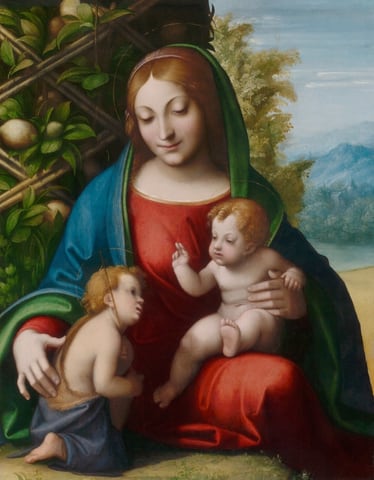
  2. Vividly colored painting of Virgin Mary with baby Jesus and baby John the Baptist.
    Virgin and Child with the Young Saint John the BaptistAntonio da Correggio, c. 1515Courtesy of the Art Institute of Chicago
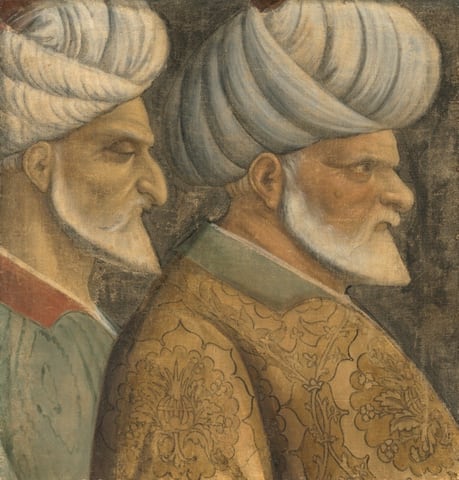
  3. A work made of tempera on canvas.
    Sinan Reis and Hayreddin BarbarossaItalian, c. 1535Courtesy of the Art Institute of Chicago
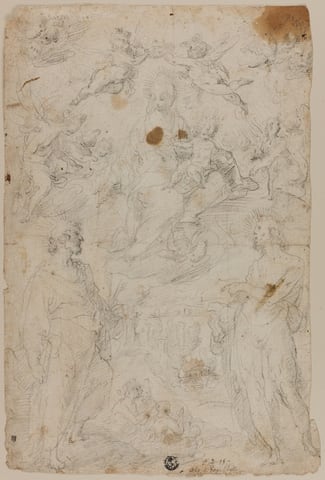
  4. A work made of black chalk (recto), and black chalk and pen and black ink (verso), on ivory laid paper.
    Virgin and Child with Saints Peter and John the Baptist (recto); Saint John the Baptist (verso)Pietro d' Asaro, n.d.Courtesy of the Art Institute of Chicago

Section 2, north wall
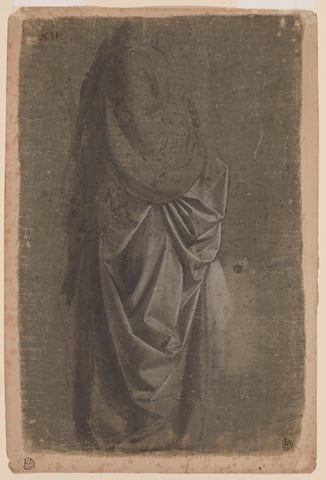
  1. A work made of brush and opaque watercolor, on linen prepared with a gray ground, mounted to cream laid paper.
    Drapery Study of a Standing Figure Facing Right, in ProfileAndrea del Verrocchio, late 1460s–early 1470sCourtesy of the Art Institute of Chicago
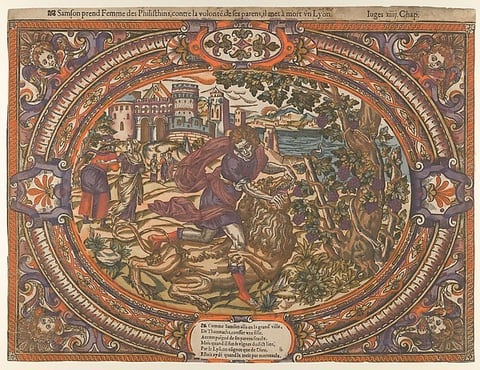
  2. Samson and the Lion, from "The Story of Samson", ca. 1560–80
    Samson and the Lion, from "The Story of Samson"Unrecorded French maker, ca. 1560–80Courtesy of The Metropolitan Museum of Art
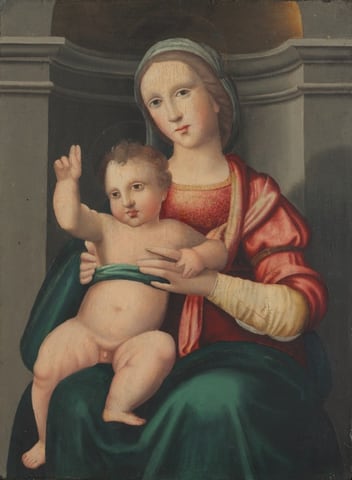
  3. Madonna and Child in a Niche, by Antonio del Ceraiolo, c. 1520s
    Madonna and Child in a NicheAntonio del Ceraiolo, c. 1520sCourtesy of the Cleveland Museum of Art
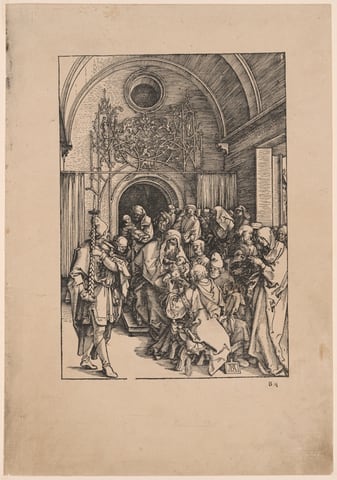
  4. A work made of woodcut in black on tan laid paper.
    The Circumcision of Christ, from The Life of the VirginAlbrecht Dürer, c. 1505, published 1511Courtesy of the Art Institute of Chicago