Renaissance
European art from about 1400 to 1600, when painters rediscovered perspective and the classical past.
Section 1, north wall
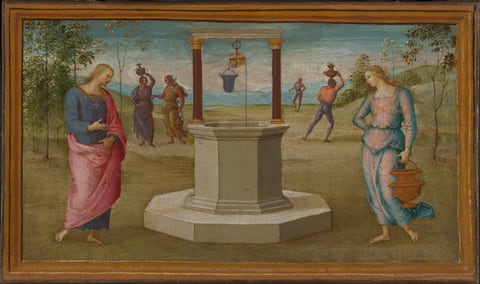
Christ and the Woman of SamariaPerugino, 1500–05Courtesy of the Art Institute of Chicago 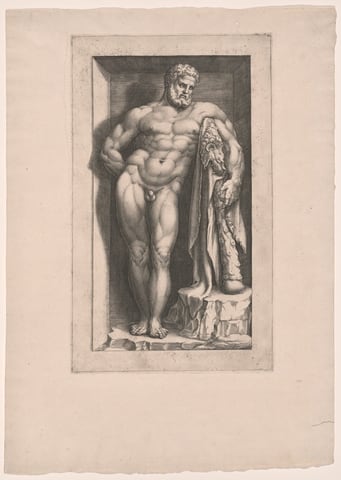
The Farnese HerculesGiorgio Ghisi, c. 1577Courtesy of the Art Institute of Chicago 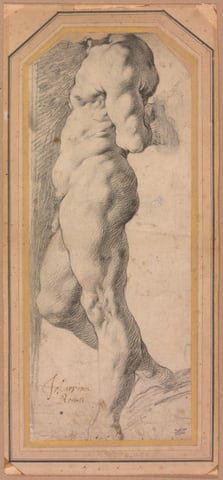
Study of a Standing Male NudeGiuseppe Cesari, called Cavaliere d'Arpino, 1595/96Courtesy of the Art Institute of Chicago 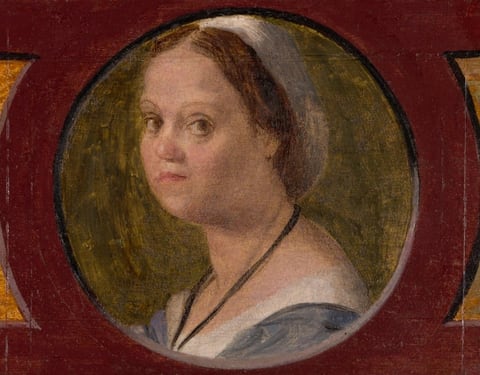
Lucrezia di Lippo di Iacopo GuidiAndrea del Sarto, 1525–28Courtesy of the Art Institute of Chicago
Section 1, south wall
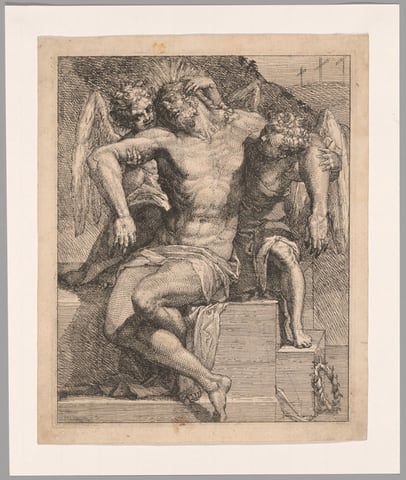
Dead Christ Held by AngelsOrazio Samacchini, 1580/1620Courtesy of the Art Institute of Chicago 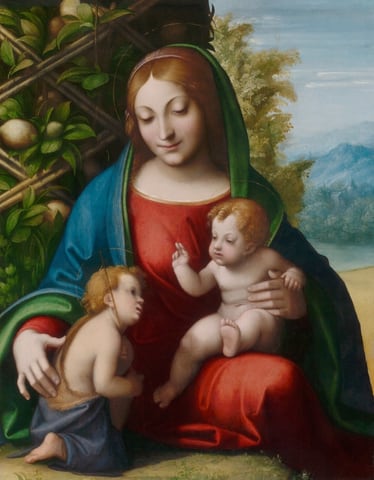
Virgin and Child with the Young Saint John the BaptistAntonio da Correggio, c. 1515Courtesy of the Art Institute of Chicago 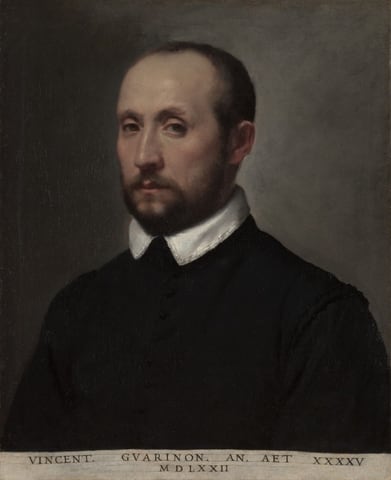
Portrait of Vincenzo GuarignoniGiovanni Battista Moroni, c. 1572Courtesy of the Cleveland Museum of Art 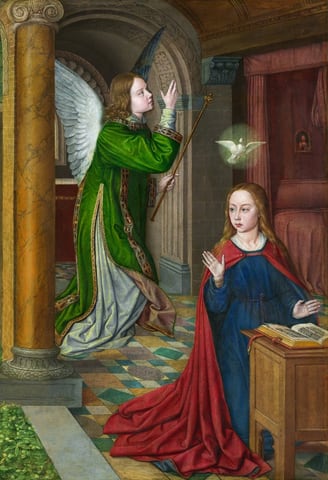
The AnnunciationJean Hey (called Master of Moulins), 1490–95Courtesy of the Art Institute of Chicago
Section 2, south wall
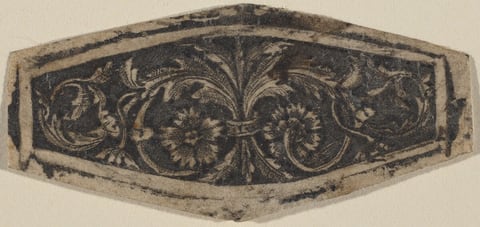
Ornament in Hexagonal ShapeUnrecorded Italian maker, c. 1480/1510Courtesy National Gallery of Art, Washington 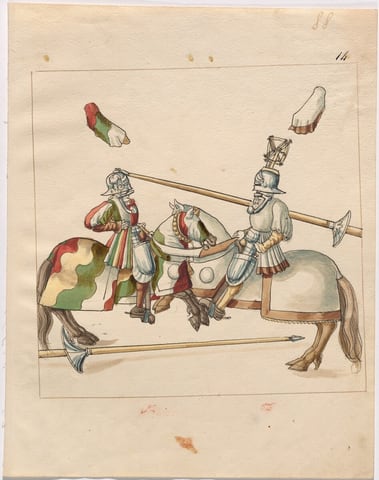
Mock Joust of War with Flying Shields and Without BevorsUnrecorded German maker, c.1512-1515Courtesy National Gallery of Art, Washington 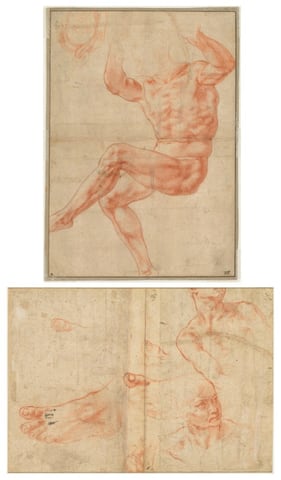
Study for the Nude Youth over the Prophet Daniel (recto); Figure Studies for the Sistine Ceiling (verso)Michelangelo Buonarroti, 1510–11Courtesy of the Cleveland Museum of Art 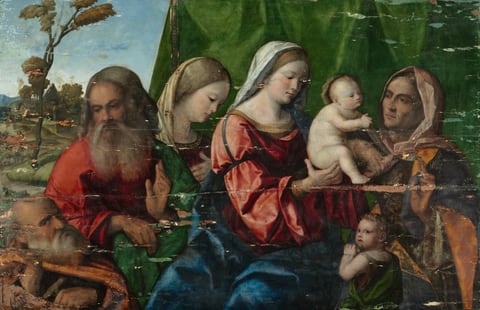
Virgin and Child with SaintsUnrecorded Italian maker, c. 1510Courtesy of the Cleveland Museum of Art
Section 2, north wall
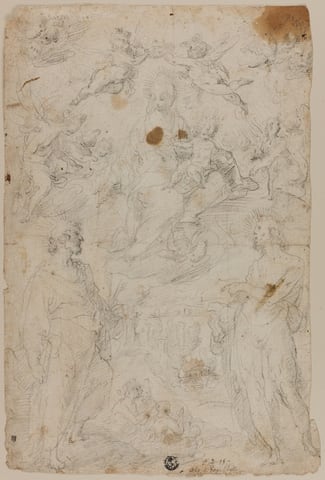
Virgin and Child with Saints Peter and John the Baptist (recto); Saint John the Baptist (verso)Pietro d' Asaro, n.d.Courtesy of the Art Institute of Chicago 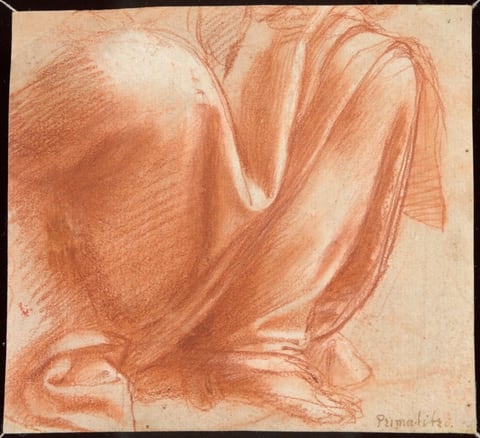
A Drapery Study for the Knees of a Seated Allegorical Figure of Charity (recto); Bust of a Naked Allegorical Figure of Charity with Two Putti (verso)Giovanni Antonio di Francesco Sogliani, 1520/30Courtesy of the Art Institute of Chicago 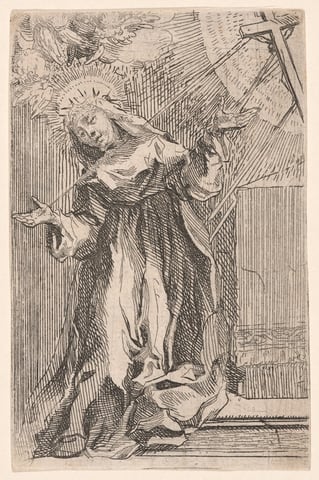
Saint Catherine of Siena Receiving the StigmataFrancesco Vanni, c. 1595Courtesy of the Art Institute of Chicago 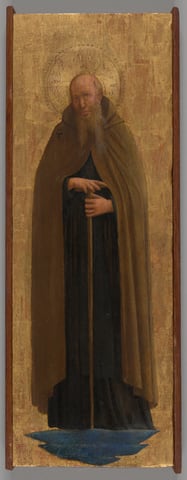
Saint Anthony AbbotFra Angelico, 1440–41Courtesy of the Art Institute of Chicago