Renaissance
European art from about 1400 to 1600, when painters rediscovered perspective and the classical past.
Section 1, north wall
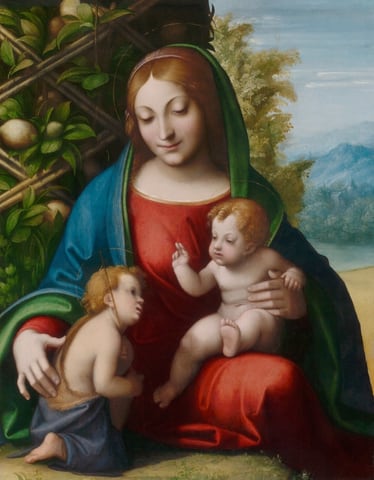
Virgin and Child with the Young Saint John the BaptistAntonio da Correggio, c. 1515Courtesy of the Art Institute of Chicago 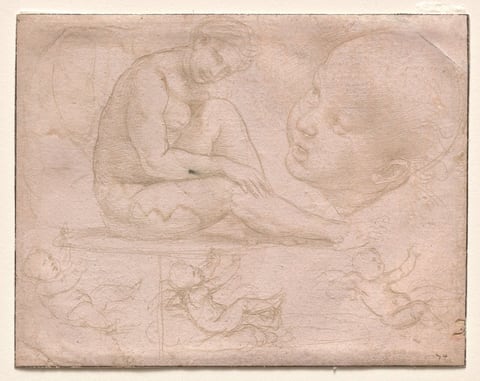
Studies of a Seated Female, Child's Head, and Three Studies of a BabyRaphael, c. 1507–8Courtesy of the Cleveland Museum of Art 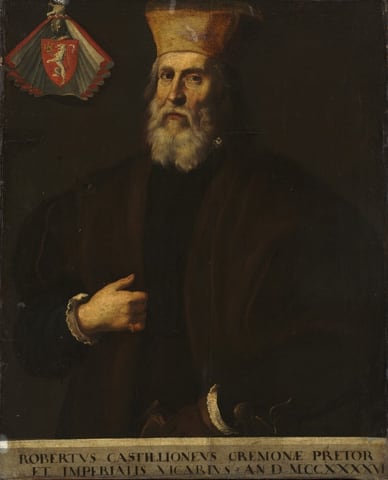
Portrait of Roberto CastiglioneUnrecorded Italian maker, early 1600sCourtesy of the Cleveland Museum of Art 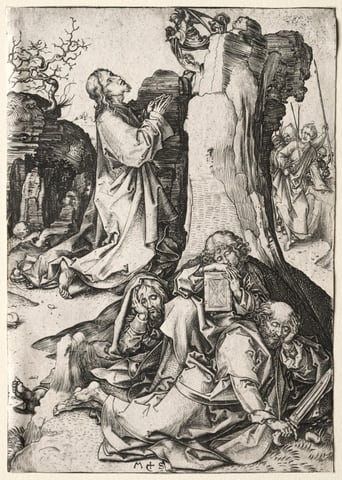
The Passion: The Agony in the GardenMartin Schongauer, c. 1480Courtesy of the Cleveland Museum of Art
Section 1, south wall
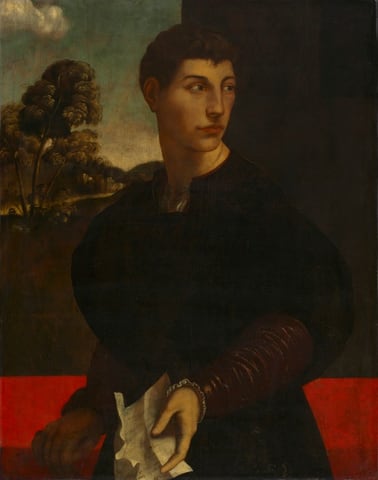
Portrait of a Young ManDosso Dossi, c. 1530Courtesy of the Cleveland Museum of Art 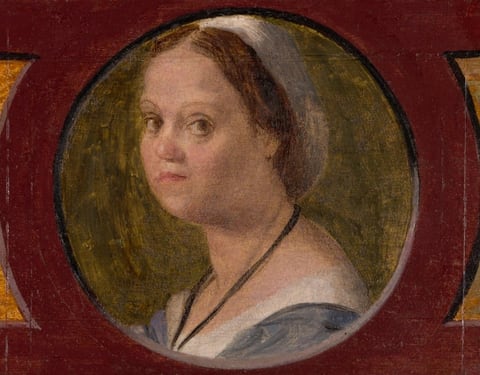
Lucrezia di Lippo di Iacopo GuidiAndrea del Sarto, 1525–28Courtesy of the Art Institute of Chicago 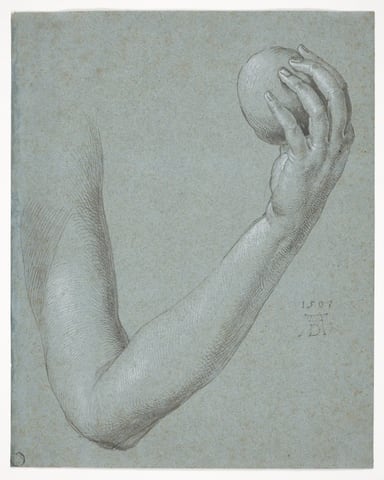
Arm of EveAlbrecht Dürer, 1507Courtesy of the Cleveland Museum of Art 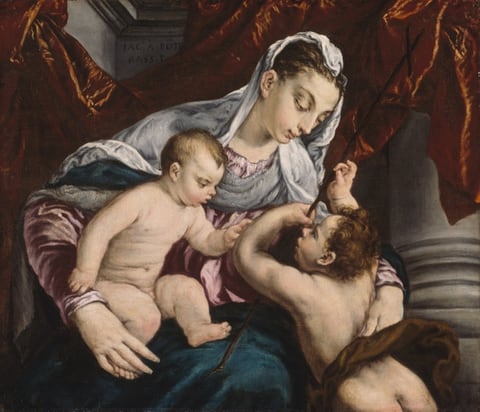
Virgin and Child with the Young Saint John the BaptistJacopo Bassano, 1560–65Courtesy of the Art Institute of Chicago
Section 2, south wall
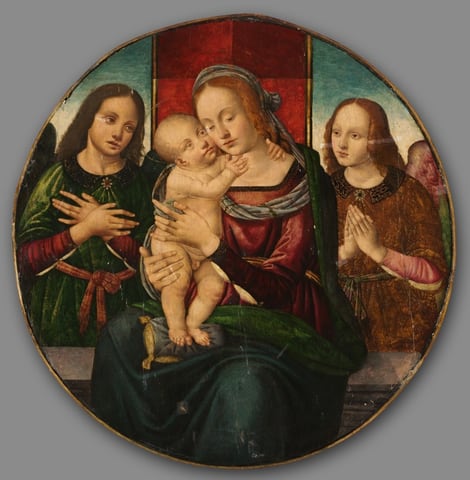
Virgin and Child with AngelsMaster of the Holden Tondo, early 1500sCourtesy of the Cleveland Museum of Art 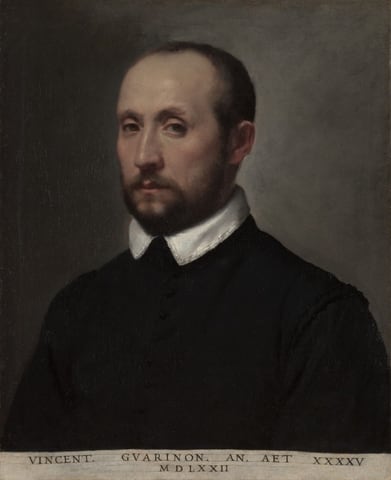
Portrait of Vincenzo GuarignoniGiovanni Battista Moroni, c. 1572Courtesy of the Cleveland Museum of Art 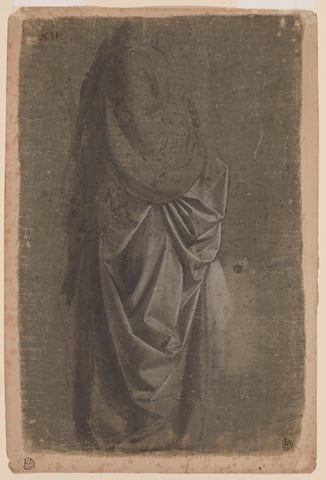
Drapery Study of a Standing Figure Facing Right, in ProfileAndrea del Verrocchio, late 1460s–early 1470sCourtesy of the Art Institute of Chicago 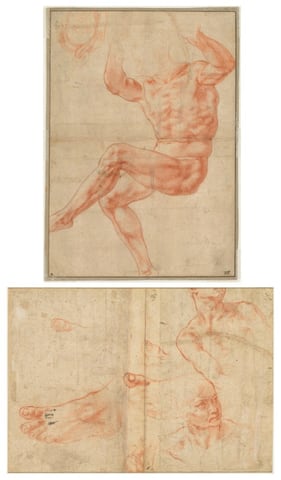
Study for the Nude Youth over the Prophet Daniel (recto); Figure Studies for the Sistine Ceiling (verso)Michelangelo Buonarroti, 1510–11Courtesy of the Cleveland Museum of Art
Section 2, north wall
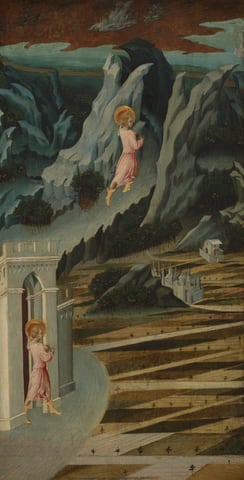
Saint John the Baptist Entering the WildernessGiovanni di Paolo, 1455–60Courtesy of the Art Institute of Chicago 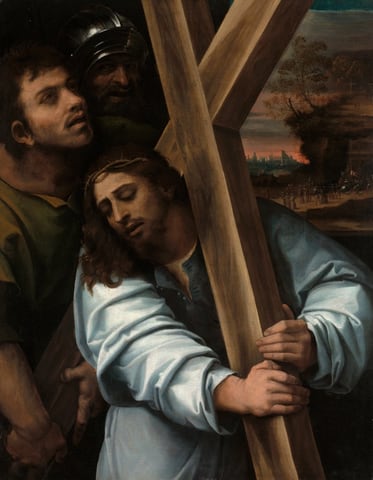
Christ Carrying the CrossSebastiano del Piombo, c. 1515–17Courtesy of the Art Institute of Chicago 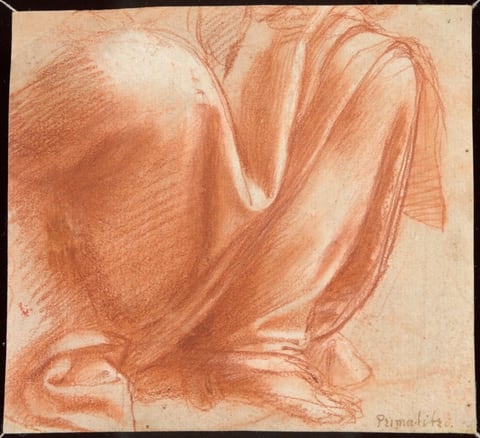
A Drapery Study for the Knees of a Seated Allegorical Figure of Charity (recto); Bust of a Naked Allegorical Figure of Charity with Two Putti (verso)Giovanni Antonio di Francesco Sogliani, 1520/30Courtesy of the Art Institute of Chicago 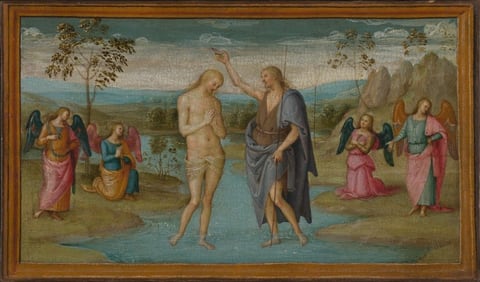
The Baptism of ChristPerugino, 1500–05Courtesy of the Art Institute of Chicago