Floor plan

West wing: Old MastersRenaissance

Renaissance

A work made of tempera on panel.
Adoration of the Shepherds, c. 1500
The Submersion of Pharaoh's Army in the Red Sea, by Titian, 1514–15, printed 1549
A work made of engraving in black on cream laid paper.
A work made of brush and opaque watercolor, on linen prepared with a gray ground, mounted to cream laid paper.
A work made of black chalk on laid paper, laid down on tan laid pulp board.
The Last Supper, by Lucantonio degli Uberti, c. 1500
A work made of tempera on panel, transferred to canvas.

The works in this room are listed below.

Works in this room

European art from about 1400 to 1600, when painters rediscovered perspective and the classical past.

Section 1, north wall

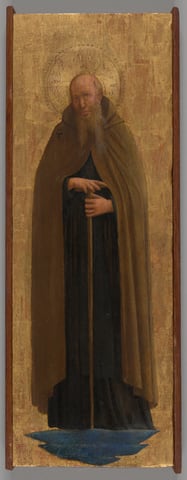
  1. A work made of tempera on panel.
    Saint Anthony AbbotFra Angelico, 1440–41Courtesy of the Art Institute of Chicago
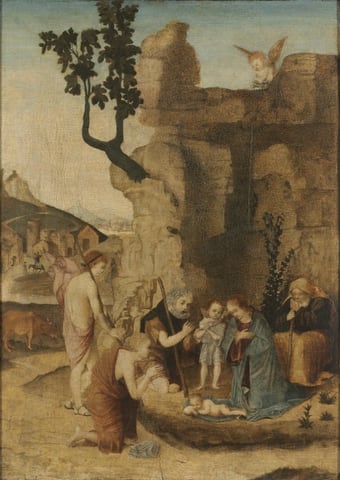
  2. Adoration of the Shepherds, c. 1500
    Adoration of the ShepherdsUnrecorded Italian maker, c. 1500Courtesy of the Cleveland Museum of Art
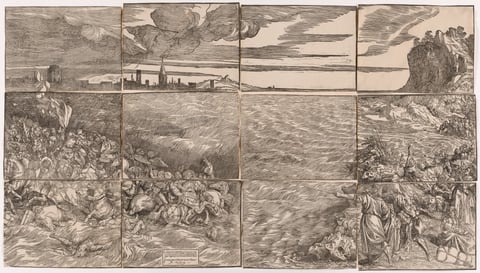
  3. The Submersion of Pharaoh's Army in the Red Sea, by Titian, 1514–15, printed 1549
    The Submersion of Pharaoh's Army in the Red SeaTitian, 1514–15, printed 1549Courtesy of the Cleveland Museum of Art
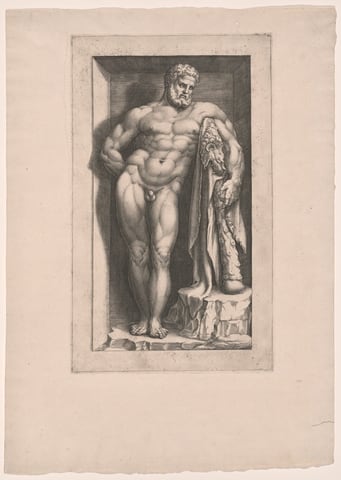
  4. A work made of engraving in black on cream laid paper.
    The Farnese HerculesGiorgio Ghisi, c. 1577Courtesy of the Art Institute of Chicago

Section 1, south wall

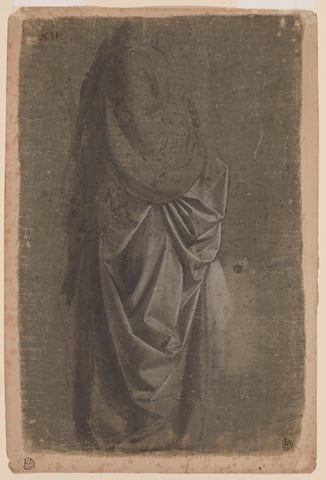
  1. A work made of brush and opaque watercolor, on linen prepared with a gray ground, mounted to cream laid paper.
    Drapery Study of a Standing Figure Facing Right, in ProfileAndrea del Verrocchio, late 1460s–early 1470sCourtesy of the Art Institute of Chicago
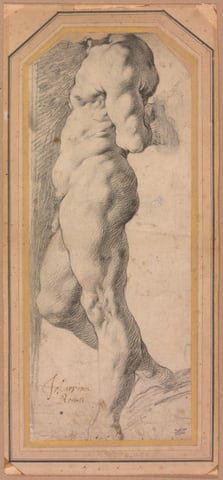
  2. A work made of black chalk on laid paper, laid down on tan laid pulp board.
    Study of a Standing Male NudeGiuseppe Cesari, called Cavaliere d'Arpino, 1595/96Courtesy of the Art Institute of Chicago
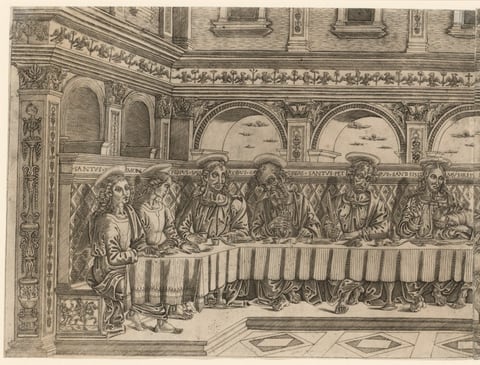
  3. The Last Supper, by Lucantonio degli Uberti, c. 1500
    The Last SupperLucantonio degli Uberti, c. 1500Courtesy of the Cleveland Museum of Art
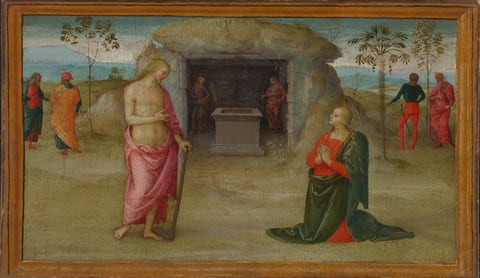
  4. A work made of tempera on panel, transferred to canvas.
    Noli Me TangerePerugino, 1500–05Courtesy of the Art Institute of Chicago

Section 2, south wall
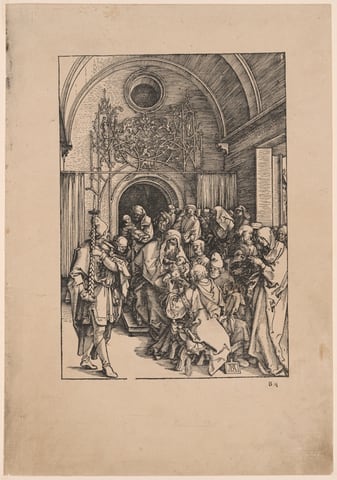
  1. A work made of woodcut in black on tan laid paper.
    The Circumcision of Christ, from The Life of the VirginAlbrecht Dürer, c. 1505, published 1511Courtesy of the Art Institute of Chicago
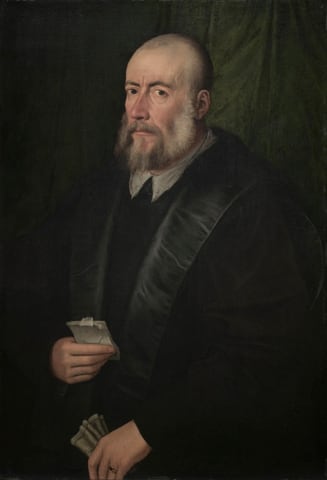
  2. Portrait of an Old Man, by Giulio Campi, mid-1500s
    Portrait of an Old ManGiulio Campi, mid-1500sCourtesy of the Cleveland Museum of Art
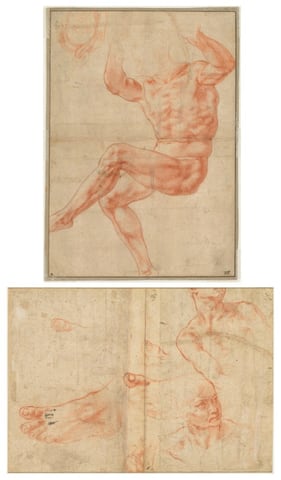
  3. Study for the Nude Youth over the Prophet Daniel (recto); Figure Studies for the Sistine Ceiling (verso), by Michelangelo Buonarroti, 1510–11
    Study for the Nude Youth over the Prophet Daniel (recto); Figure Studies for the Sistine Ceiling (verso)Michelangelo Buonarroti, 1510–11Courtesy of the Cleveland Museum of Art
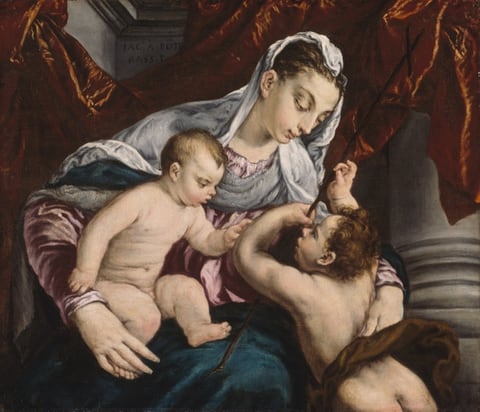
  4. A work made of oil on canvas.
    Virgin and Child with the Young Saint John the BaptistJacopo Bassano, 1560–65Courtesy of the Art Institute of Chicago

Section 2, north wall
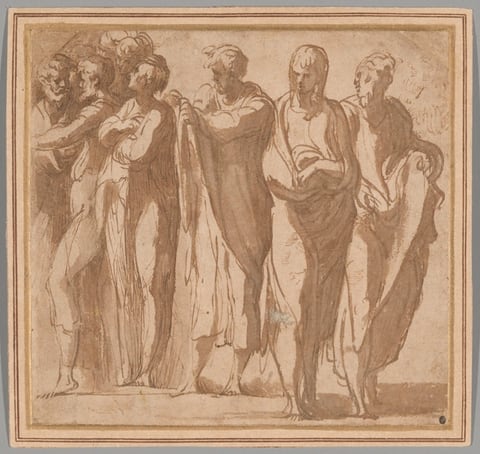
  1. A work made of pen and brown ink and brush and brown wash, on tan laid paper, laid down on tan laid card.
    Group of Nine Standing FiguresParmigianino, 1524/27Courtesy of the Art Institute of Chicago
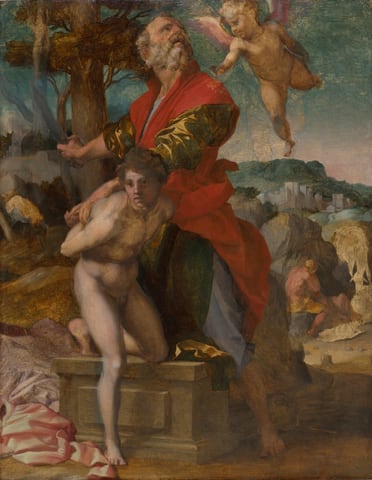
  2. The Sacrifice of Isaac, by Andrea del Sarto, c. 1527
    The Sacrifice of IsaacAndrea del Sarto, c. 1527Courtesy of the Cleveland Museum of Art
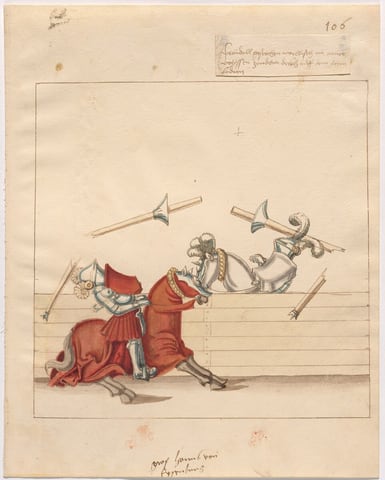
  3. This is a drawing of two armored figures on horseback engaged in a joust. Both knights are clad in ornate armor and mounted on horses as they participate in the match. The scene captures the moment of impact, with splintered lances flying in the air. One knight in silver armor with blue accents is being unseated from his horse, while the other knight in red and silver armor remains mounted. Both horses are draped in colors matching their riders' armors. The focus is on the dynamic action and energy of the joust, with fine details showing the armor's shine and the movement of the horses. The drawing is bordered, and there is some script at the top and bottom.
    Italian Joust of PeaceUnrecorded German maker, c.1512-1515Courtesy National Gallery of Art, Washington
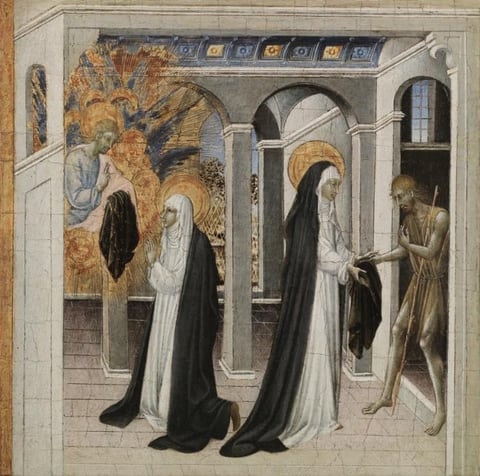
  4. St. Catherine of Siena and the Beggar, by Giovanni di Paolo, 1460s
    St. Catherine of Siena and the BeggarGiovanni di Paolo, 1460sCourtesy of the Cleveland Museum of Art