Floor plan

West wing: Old MastersRenaissance

Renaissance

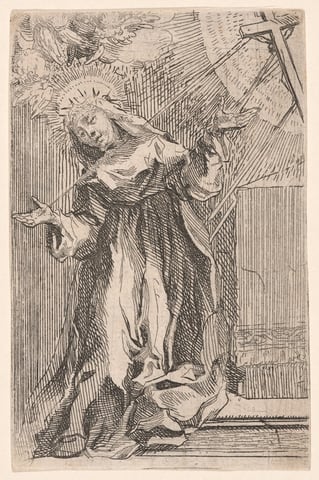
A work made of etching in black on cream laid paper.
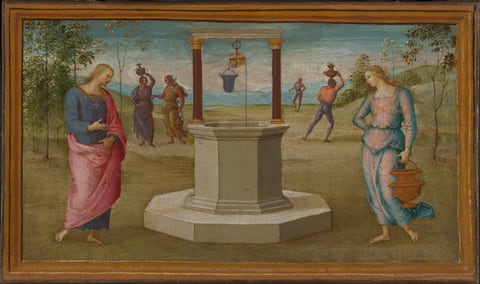
A work made of tempera on panel, transferred to canvas.
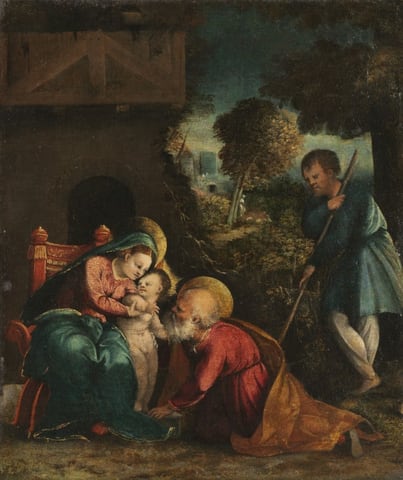
Holy Family with a Shepherd, by Battista Dossi, early 1520s
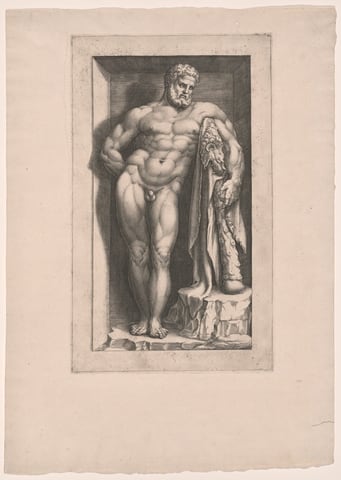
A work made of engraving in black on cream laid paper.
A work made of red chalk and brush and red chalk wash (recto) and black chalk, with black chalk grid lines, (verso) on cream laid paper.
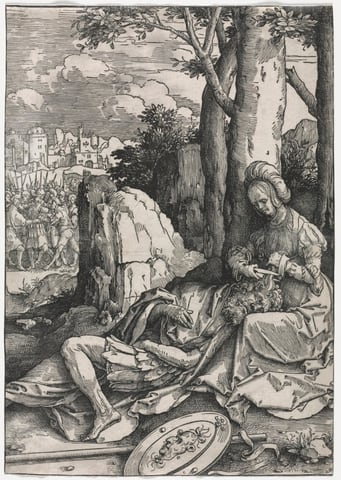
The Power of Women: Samson and Delilah, by Lucas van Leyden, c. 1512
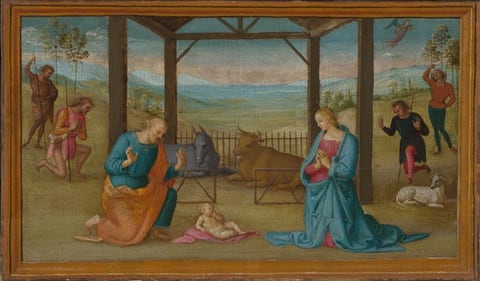
A work made of tempera on panel, transferred to canvas.
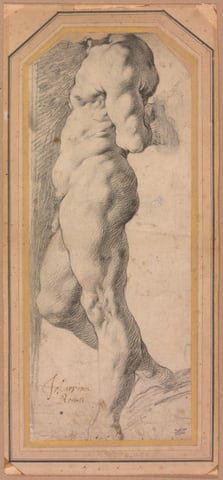
A work made of black chalk on laid paper, laid down on tan laid pulp board.

The works in this room are listed below.

Works in this room

European art from about 1400 to 1600, when painters rediscovered perspective and the classical past.

Section 1, north wall

  1. A work made of etching in black on cream laid paper.
    Saint Catherine of Siena Receiving the StigmataFrancesco Vanni, c. 1595Courtesy of the Art Institute of Chicago
  2. A work made of tempera on panel, transferred to canvas.
    Christ and the Woman of SamariaPerugino, 1500–05Courtesy of the Art Institute of Chicago
  3. Holy Family with a Shepherd, by Battista Dossi, early 1520s
    Holy Family with a ShepherdBattista Dossi, early 1520sCourtesy of the Cleveland Museum of Art
  4. A work made of engraving in black on cream laid paper.
    The Farnese HerculesGiorgio Ghisi, c. 1577Courtesy of the Art Institute of Chicago

Section 1, south wall

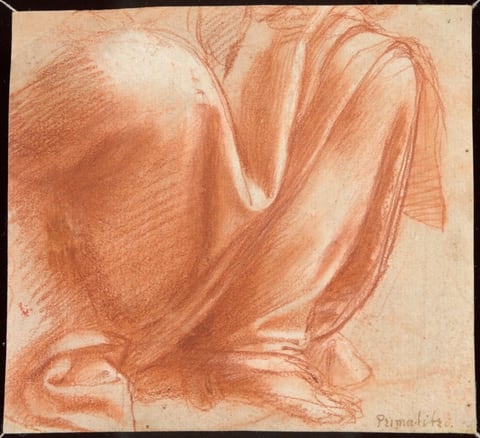
  1. A work made of red chalk and brush and red chalk wash (recto) and black chalk, with black chalk grid lines, (verso) on cream laid paper.
    A Drapery Study for the Knees of a Seated Allegorical Figure of Charity (recto); Bust of a Naked Allegorical Figure of Charity with Two Putti (verso)Giovanni Antonio di Francesco Sogliani, 1520/30Courtesy of the Art Institute of Chicago
  2. The Power of Women: Samson and Delilah, by Lucas van Leyden, c. 1512
    The Power of Women: Samson and DelilahLucas van Leyden, c. 1512Courtesy of the Cleveland Museum of Art
  3. A work made of tempera on panel, transferred to canvas.
    The NativityPerugino, 1500–05Courtesy of the Art Institute of Chicago
  4. A work made of black chalk on laid paper, laid down on tan laid pulp board.
    Study of a Standing Male NudeGiuseppe Cesari, called Cavaliere d'Arpino, 1595/96Courtesy of the Art Institute of Chicago

Section 2, south wall
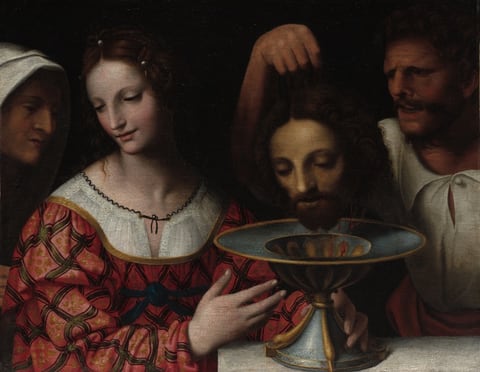
  1. Salome with the Head of Saint John the Baptist, by Bernardino Luini, 1500s or later
    Salome with the Head of Saint John the BaptistBernardino Luini, 1500s or laterCourtesy of the Cleveland Museum of Art
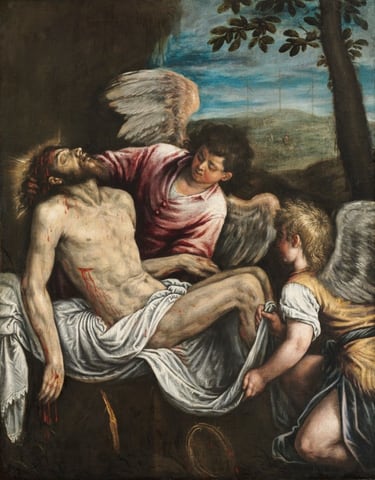
  2. The Dead Christ with Angels, by Leandro Bassano, c. 1580
    The Dead Christ with AngelsLeandro Bassano, c. 1580Courtesy of the Cleveland Museum of Art
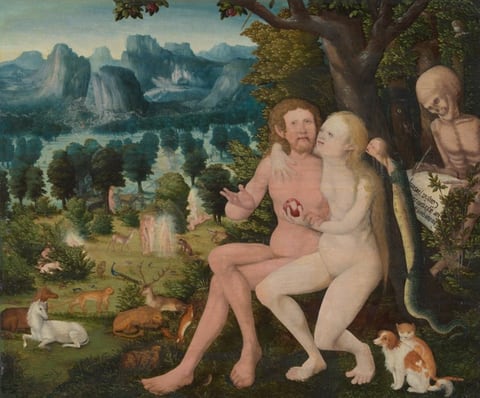
  3. A work made of oil on panel.
    The Fall of Man with Scenes of the CreationAugustus Cordus, 1544Courtesy of the Art Institute of Chicago
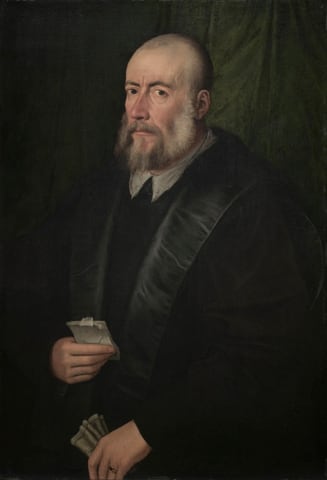
  4. Portrait of an Old Man, by Giulio Campi, mid-1500s
    Portrait of an Old ManGiulio Campi, mid-1500sCourtesy of the Cleveland Museum of Art

Section 2, north wall
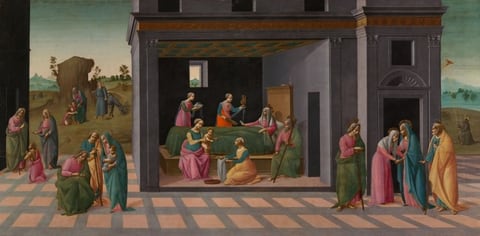
  1. Outdoors, distinct groupings of adult men and women, some with halos, gather near a building. The front-facing wall of the building is not depicted, allowing for a view inside, where a woman sits in bed with two women nearby and two other women dress a baby. A bearded man sits near the bed.
    Scenes from the Life of Saint John the BaptistBartolomeo di Giovanni, 1490/95Courtesy of the Art Institute of Chicago
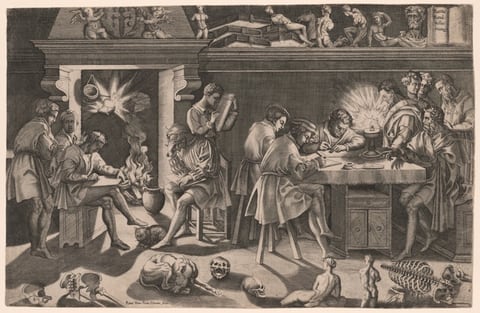
  2. A work made of engraving in black on cream laid paper.
    The Academy of Baccio BandinelliEnea Vico, 1544/50, printed c. 1560sCourtesy of the Art Institute of Chicago

Section 3, north wall
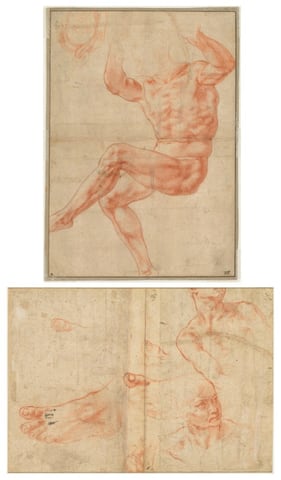
  1. Study for the Nude Youth over the Prophet Daniel (recto); Figure Studies for the Sistine Ceiling (verso), by Michelangelo Buonarroti, 1510–11
    Study for the Nude Youth over the Prophet Daniel (recto); Figure Studies for the Sistine Ceiling (verso)Michelangelo Buonarroti, 1510–11Courtesy of the Cleveland Museum of Art
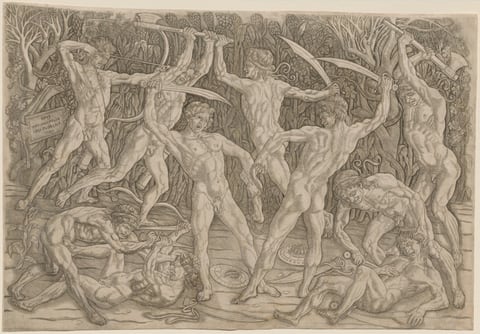
  2. Battle of the Nudes, by Antonio Pollaiuolo, 1470s–80s
    Battle of the NudesAntonio Pollaiuolo, 1470s–80sCourtesy of the Cleveland Museum of Art