Renaissance
Works in this room
European art from about 1400 to 1600, when painters rediscovered perspective and the classical past.
Section 1, north wall
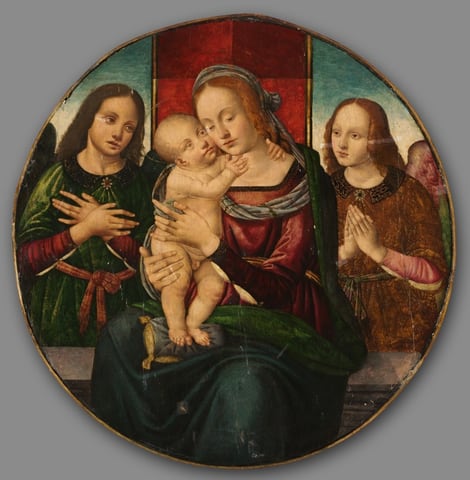
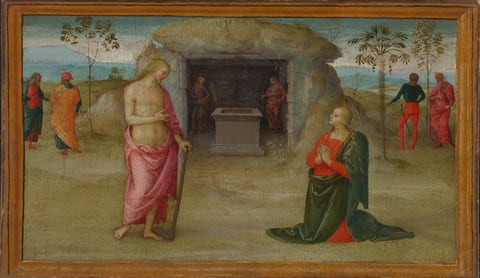
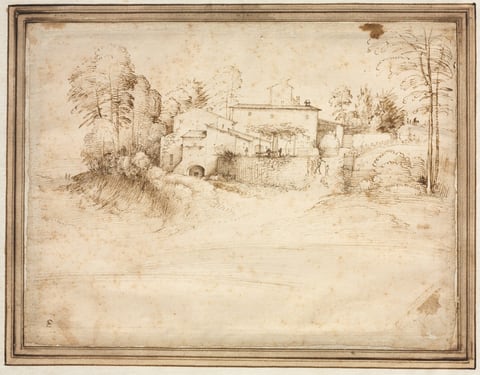
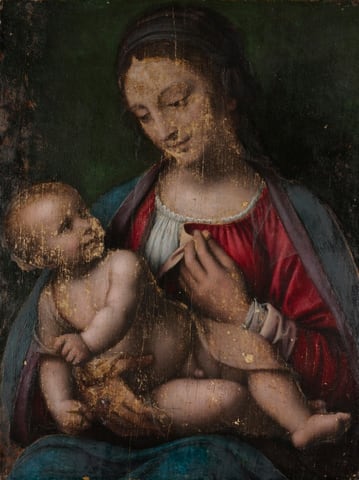
Virgin and Child with AngelsMaster of the Holden Tondo, early 1500sCourtesy of the Cleveland Museum of Art Noli Me TangerePerugino, 1500–05Courtesy of the Art Institute of Chicago Farmhouse on the Slope of a HillFra Bartolommeo, c. 1508Courtesy of the Cleveland Museum of Art Virgin and ChildBernardino Luini, 1500sCourtesy of the Cleveland Museum of Art
Section 1, south wall
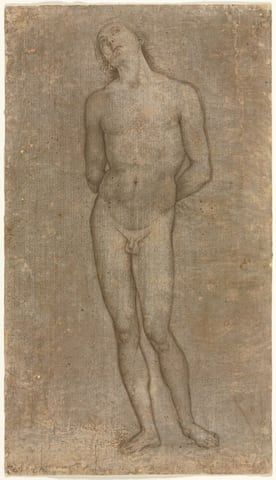
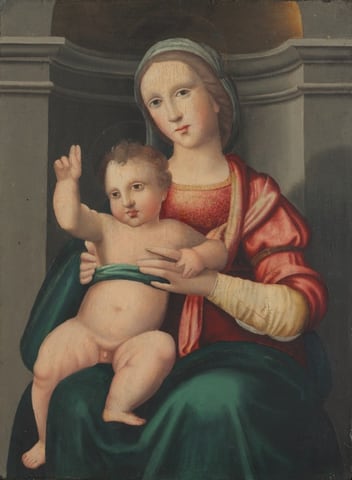
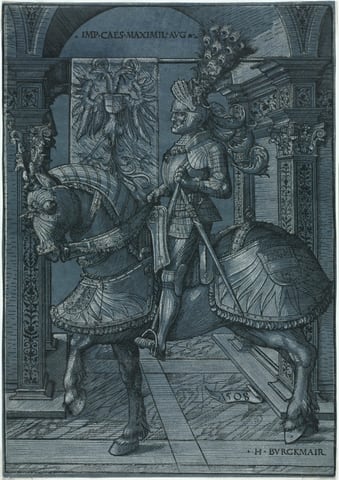
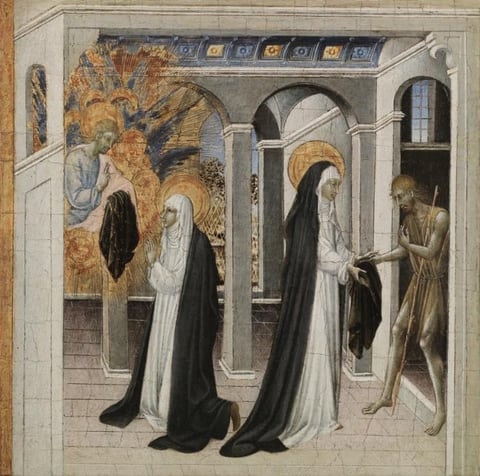
Saint SebastianPerugino, c. 1493Courtesy of the Cleveland Museum of Art Madonna and Child in a NicheAntonio del Ceraiolo, c. 1520sCourtesy of the Cleveland Museum of Art Equestrian Portrait of the Emperor MaximilianHans Burgkmair, 1508Courtesy of the Cleveland Museum of Art St. Catherine of Siena and the BeggarGiovanni di Paolo, 1460sCourtesy of the Cleveland Museum of Art
Section 2, south wall
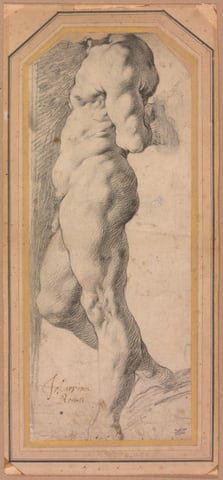
Study of a Standing Male NudeGiuseppe Cesari, called Cavaliere d'Arpino, 1595/96Courtesy of the Art Institute of Chicago 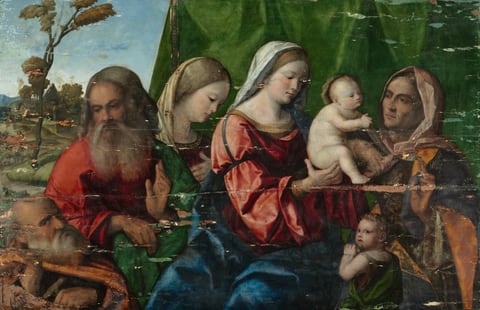
Virgin and Child with SaintsUnrecorded Italian maker, c. 1510Courtesy of the Cleveland Museum of Art 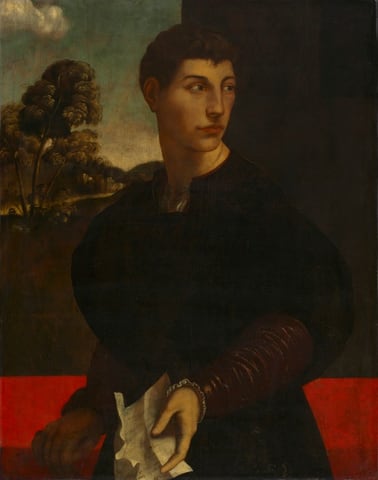
Portrait of a Young ManDosso Dossi, c. 1530Courtesy of the Cleveland Museum of Art 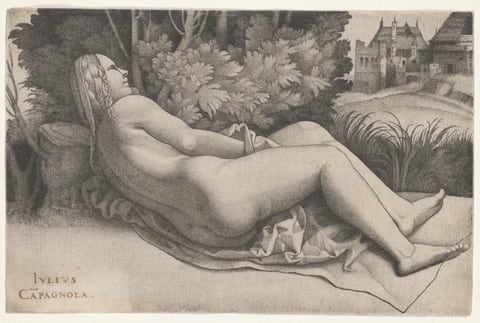
Venus Reclining in a LandscapeGiulio Campagnola, c. 1508–9Courtesy of the Cleveland Museum of Art
Section 2, north wall
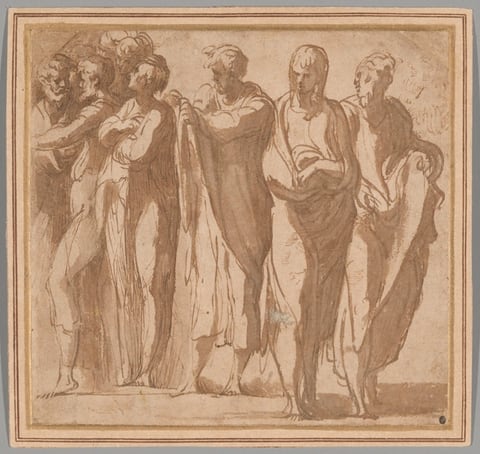
Group of Nine Standing FiguresParmigianino, 1524/27Courtesy of the Art Institute of Chicago 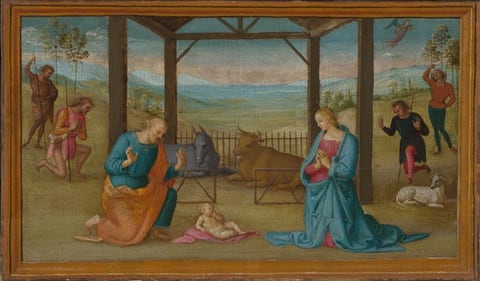
The NativityPerugino, 1500–05Courtesy of the Art Institute of Chicago 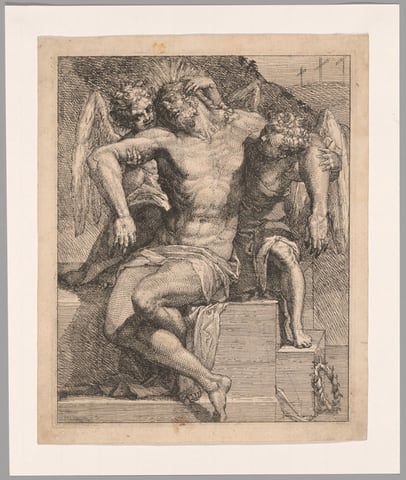
Dead Christ Held by AngelsOrazio Samacchini, 1580/1620Courtesy of the Art Institute of Chicago 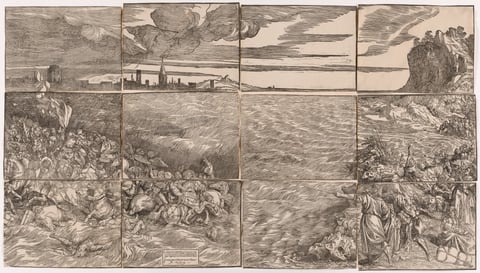
The Submersion of Pharaoh's Army in the Red SeaTitian, 1514–15, printed 1549Courtesy of the Cleveland Museum of Art