Floor plan

Style galleriesAmerican folk and design
American folk and design
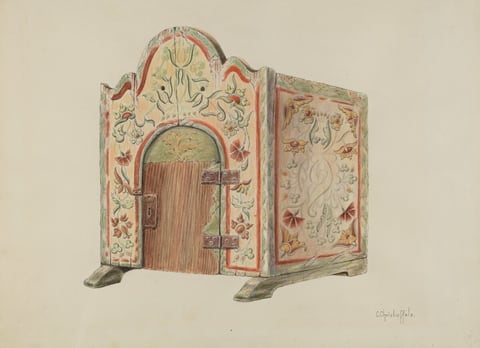
The image shows a small intricately decorated wooden structure with an arched top and a central door flanked by two metal hinges. The structure is painted with a floral and vine motif in colors such as red, green, and yellow on a light background. The wooden door has a textured appearance. The object is positioned centrally with the door facing forward, placed on a slightly elevated base with two footings extending forward. The overall look is ornate and symmetrical, showcasing detailed design work.
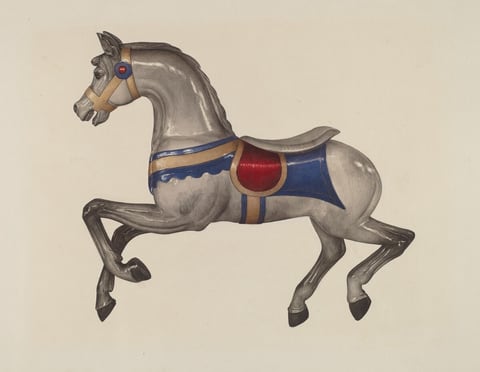
This is a painting of a carousel horse. The image shows a gray carousel horse with glossy highlights and shading. The horse has a blue and red saddle with gold bands, and a blue harness with red accents. The horse is mid-gallop, with animated legs. The background is plain to focus on the horse's design. The style is detailed and realistic, reminiscent of carousel art from the late 19th to early 20th century.
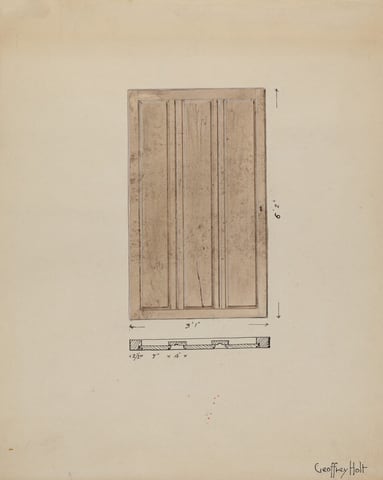
This is a drawing of a wooden door panel. It features a detailed rendering of a rectangular wooden door panel with vertical lines. Below the door panel, there is an elevation view showing the construction detail of the door in cross-section, with measurements indicating dimensions and proportions. The color palette is in shades of brown and beige. A signature in the lower right corner attributes the drawing to an artist named Geoffrey Holt.
The image displays a detailed drawing of a vintage wall-mounted lamp. The color palette consists of primarily browns and earthy tones, with hints of a metallic sheen. The lamp is centered in the image, with its base attached to the right side and extending to the left. A subtle shadow and highlights give the lamp a three-dimensional appearance against a plain, light beige background.
The image shows a large wooden chest with a rectangular design and a keyhole on its front panel. The chest has a weathered look in muted browns and grays. It is positioned in the center with its top, front, and side panels visible. The background is plain and light in color.
This is a painting of an intricate and colorful illuminated manuscript page. The full-description includes a richly decorated page featuring elaborate calligraphy and floral motifs. The left side showcases swirling ornamental patterns with vibrant colors - blues, reds, and golds - interwoven with blooming flowers and a small figure with wings. In the lower portion, there is a depiction of small buildings. The right side contains text in different styles, with the top section written in large decorative letters and the lower section in a more detailed script. The overall design is bordered with floral elements and intertwining vines. This is in the style of illuminated manuscripts found in historical European documents and books.

The works in this room are listed below.

Works in this room

The everyday art of early America, recorded in watercolour by the Index of American Design.

Section 1, north wall

  1. The image shows a small intricately decorated wooden structure with an arched top and a central door flanked by two metal hinges. The structure is painted with a floral and vine motif in colors such as red, green, and yellow on a light background. The wooden door has a textured appearance. The object is positioned centrally with the door facing forward, placed on a slightly elevated base with two footings extending forward. The overall look is ornate and symmetrical, showcasing detailed design work.
    Tabernacle (Ecclesiastical Furniture)Cornelius Christoffels, c. 1938Courtesy National Gallery of Art, Washington
  2. This is a painting of a carousel horse. The image shows a gray carousel horse with glossy highlights and shading. The horse has a blue and red saddle with gold bands, and a blue harness with red accents. The horse is mid-gallop, with animated legs. The background is plain to focus on the horse's design. The style is detailed and realistic, reminiscent of carousel art from the late 19th to early 20th century.
    Carousel HorseDorothy Handy, c. 1939Courtesy National Gallery of Art, Washington
  3. This is a drawing of a wooden door panel. It features a detailed rendering of a rectangular wooden door panel with vertical lines. Below the door panel, there is an elevation view showing the construction detail of the door in cross-section, with measurements indicating dimensions and proportions. The color palette is in shades of brown and beige. A signature in the lower right corner attributes the drawing to an artist named Geoffrey Holt.
    One of Original Inside Doors to SacristyGeoffrey Holt, c. 1936Courtesy National Gallery of Art, Washington

Section 1, south wall

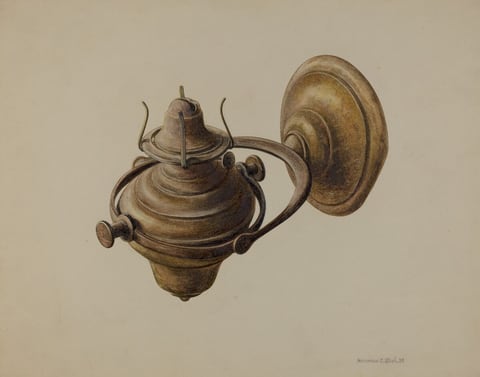
  1. The image displays a detailed drawing of a vintage wall-mounted lamp. The color palette consists of primarily browns and earthy tones, with hints of a metallic sheen. The lamp is centered in the image, with its base attached to the right side and extending to the left. A subtle shadow and highlights give the lamp a three-dimensional appearance against a plain, light beige background.
    Binnacle LampHerman O. Stroh, 1938Courtesy National Gallery of Art, Washington
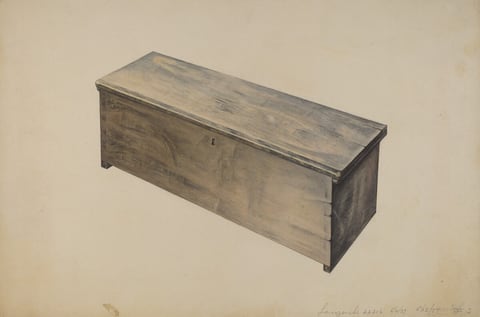
  2. The image shows a large wooden chest with a rectangular design and a keyhole on its front panel. The chest has a weathered look in muted browns and grays. It is positioned in the center with its top, front, and side panels visible. The background is plain and light in color.
    Utility ChestHenry Tomaszewski, 1937Courtesy National Gallery of Art, Washington
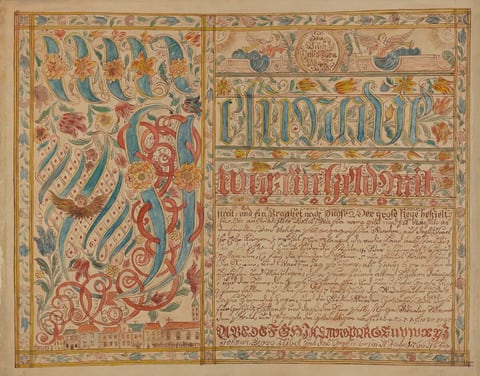
  3. This is a painting of an intricate and colorful illuminated manuscript page. The full-description includes a richly decorated page featuring elaborate calligraphy and floral motifs. The left side showcases swirling ornamental patterns with vibrant colors - blues, reds, and golds - interwoven with blooming flowers and a small figure with wings. In the lower portion, there is a depiction of small buildings. The right side contains text in different styles, with the top section written in large decorative letters and the lower section in a more detailed script. The overall design is bordered with floral elements and intertwining vines. This is in the style of illuminated manuscripts found in historical European documents and books.
    FrakturAlbert Levone, 1935/1942Courtesy National Gallery of Art, Washington

Section 2, south wall
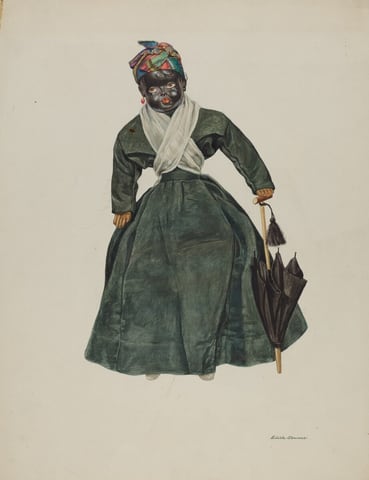
  1. The image depicts a person standing upright. They are wearing a dark green dress with long sleeves and a floor-length skirt. Over the dress, there is a white fabric wrapped around their shoulders. The person is holding a closed umbrella in their right hand. Their face is dark with distinguishable eyes and a nose, but specific facial features are not detailed. The person's hair is covered by a colorful headscarf with shades of blue, pink, and yellow. They are wearing large earrings, possibly pink or red. The background is plain and light with no additional objects present.
    Doll--"Hannah Hitch"Edith Towner, c. 1940Courtesy National Gallery of Art, Washington
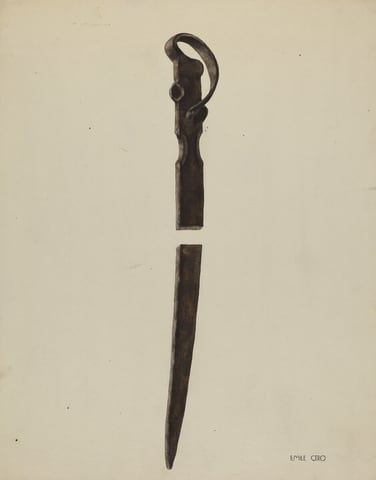
  2. The image shows a dark metal object with two parts: a handle and a blade. The color palette consists of shades of dark brown on a light beige background. The handle is located at the top center, and the blade portion is positioned below it, both aligned vertically in the center of the frame.
    SpitEmile Cero, c. 1938Courtesy National Gallery of Art, Washington
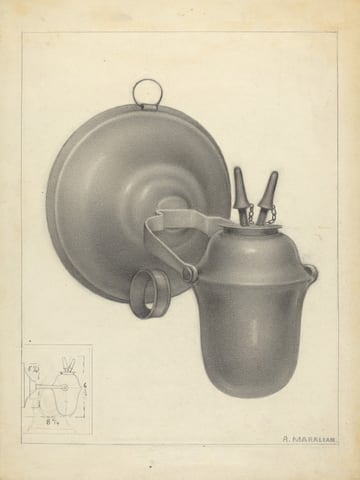
  3. The image depicts a detailed drawing of a wall-mounted vessel. It consists of a large, spherical body attached to a flat disc, with two smaller protrusions resembling handles or clips. The color palette is monochromatic with shades of gray, giving it a metallic or ceramic appearance. The objects are centrally positioned, with a small inset illustration in the bottom left corner showing annotations. The artist's signature, "A. Marshall," is located near the lower right corner of the image.
    LampArsen Maralian, c. 1936Courtesy National Gallery of Art, Washington

Section 2, north wall
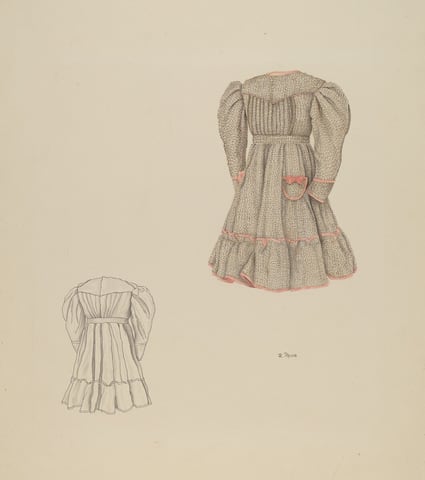
  1. The image depicts a detailed illustration of a dress with exaggerated puff sleeves and ruffles towards the bottom. It is created using a dotted pattern with red accents around the edges and seams. The color palette consists of mostly muted tones with touches of red. The dress is positioned in the upper right quadrant of the image, while a smaller, less detailed sketch of the same dress without colors is located in the lower left quadrant.
    Child's DressRay Price, c. 1937Courtesy National Gallery of Art, Washington
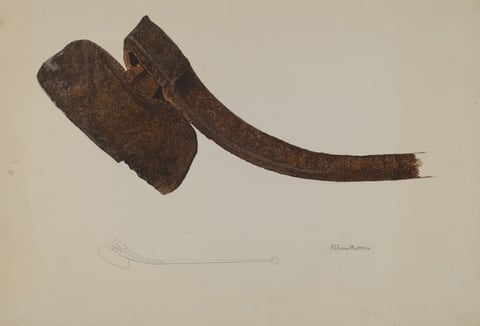
  2. The image shows a large, rusted ax with a curved brown handle placed diagonally across the canvas. The color palette consists of muted browns and beiges, highlighting the aged appearance of the ax. Beneath the ax, there is a faint outline sketch of a similar object, and the artist's signature is located to the right of the sketch. The ax is in the upper half of the image, while the sketch and signature are in the center-bottom section.
    Dumb IronAlfonso Moreno, c. 1938Courtesy National Gallery of Art, Washington
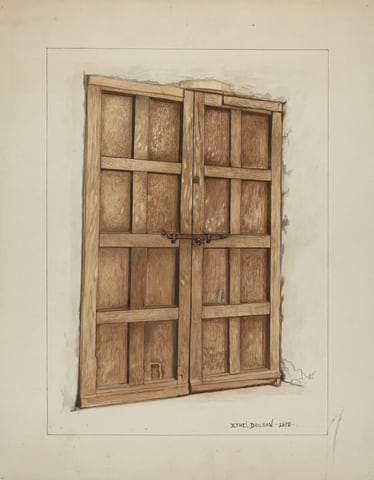
  3. This is a drawing of a wooden window shutter in a light-colored wall. The detailed study shows the craftsmanship of the shutter, with a focus on texture, form, wood grain, and panels. The aged and weathered texture suggests exposure to the elements. The shutter is secured with a metal latch in the center. The wall is subtly shaded to imply depth and setting, with slight distress marks adding to the aged ambiance of the scene.
    Sacristy Door at Mission San Juan BautistaEthel Dougan, 1938Courtesy National Gallery of Art, Washington

Section 3, north wall
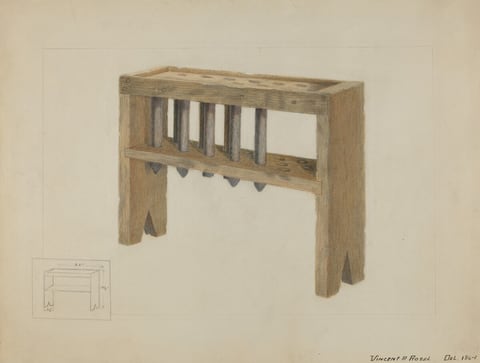
  1. The image shows a wooden frame with six vertical cylindrical pegs evenly spaced. The color palette consists of light and medium brown tones. The structure is angled to the right with four visible legs. In the bottom left corner, there is a smaller sketched diagram with measurements.
    Candle MoldVincent P. Rosel, c. 1936Courtesy National Gallery of Art, Washington
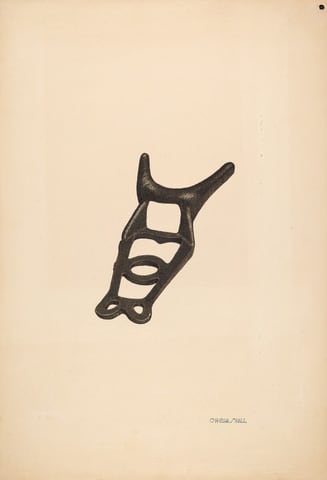
  2. This is a drawing of an abstract shape or artifact. The image features a central black object positioned against a plain, light-colored background. The object has a slightly irregular, elongated triangular form with rounded edges and contours. It includes a series of geometric holes and protrusions. The subtle shadowing suggests a three-dimensional form, yet the drawing maintains a simplicity that emphasizes the object's unique contours and cutouts.
    BootjackClaude Marshall, c. 1940Courtesy National Gallery of Art, Washington

Section 3, south wall
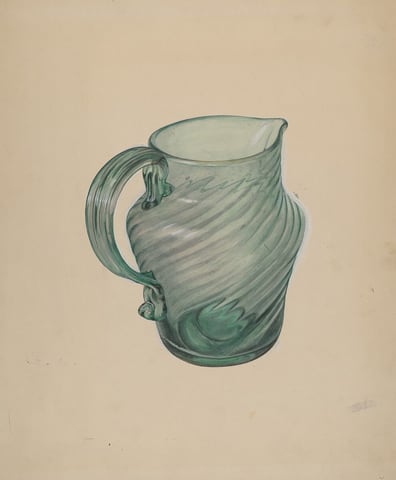
  1. The image shows a translucent pitcher in soft, pale green with swirling, striped patterns and a curved handle. It is placed in the center of the frame, with a neutral off-white background. The spout faces slightly to the left and the handle curves from the right side.
    Glass PitcherBeverly Chichester, c. 1937Courtesy National Gallery of Art, Washington
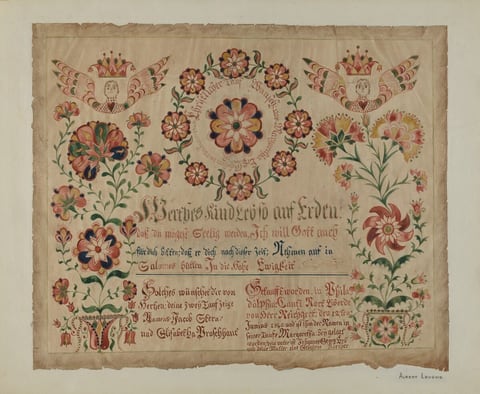
  2. This is a painting of a colorful floral design with text. The artwork features stylized flowers in shades of red, green, and yellow scattered across the page. In the center, there is calligraphic text in varying boldness and fonts, likely in German. Two symmetrical bird-like figures with human faces and crowns are above the text. The piece combines imagery with artistic lettering in a style reminiscent of traditional Pennsylvania German fraktur. The artwork is bordered by a thin line, suggesting it's part of a larger artifact or document.
    Pa. German Birth CertificateAlbert Levone, c. 1940Courtesy National Gallery of Art, Washington