Drawings of the 18th century
Works in this room
Drawings made in the 18th century, from every museum.
Section 1, north wall
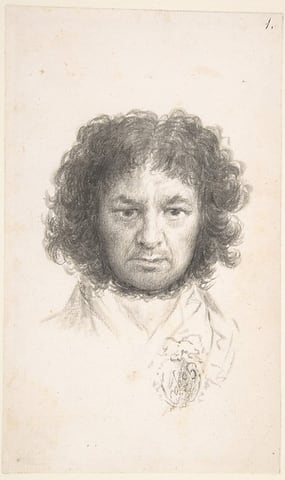
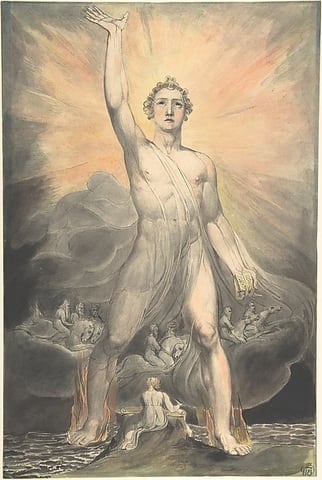
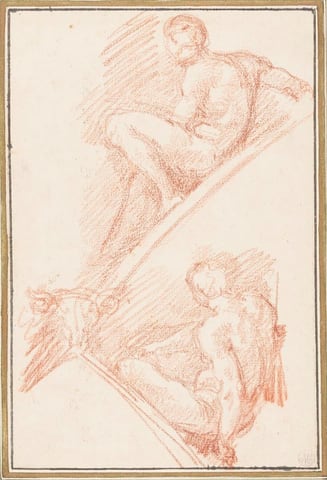
Self-PortraitFrancisco Goya, ca. 1796Courtesy of The Metropolitan Museum of Art Angel of the Revelation (Book of Revelation, chapter 10)William Blake, ca. 1803–5Courtesy of The Metropolitan Museum of Art Figures from Sistine Chapel ceilingJean-Robert Ango, ca. 1759–70Courtesy of Cooper Hewitt, Smithsonian Design Museum
Section 1, south wall
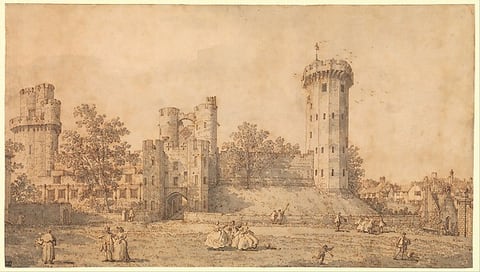
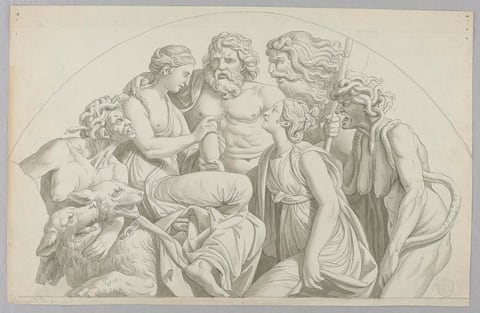
Warwick Castle: The East FrontCanaletto, 1752Courtesy of The Metropolitan Museum of Art Psyche Asks Proserpine to Put a Little of her Beauty in an Urn for VenusJohann August Nahl The Younger, ca. 1781Courtesy of Cooper Hewitt, Smithsonian Design Museum
Section 2, south wall
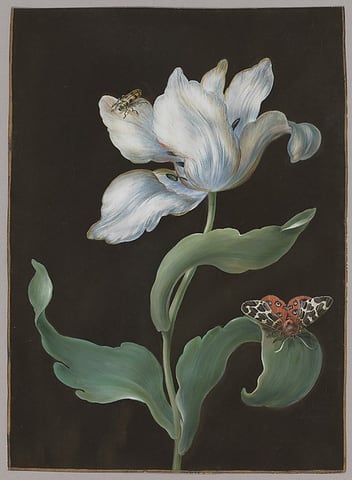
A tulip, a butterfly of the species Arctia caja (garden tiger moth), and a beetle (possibly a longhorn)Barbara Regina Dietzsch, ca. 1750-60Courtesy of The Metropolitan Museum of Art 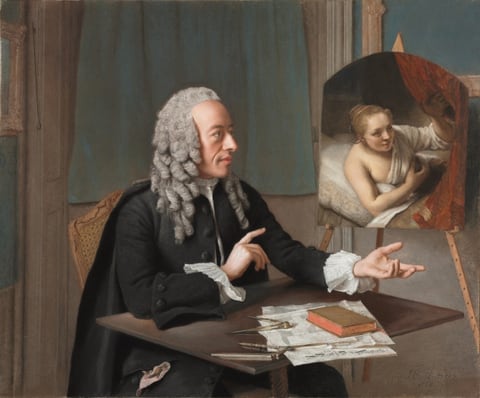
François TronchinJean Etienne Liotard, 1757Courtesy of the Cleveland Museum of Art
Section 2, north wall
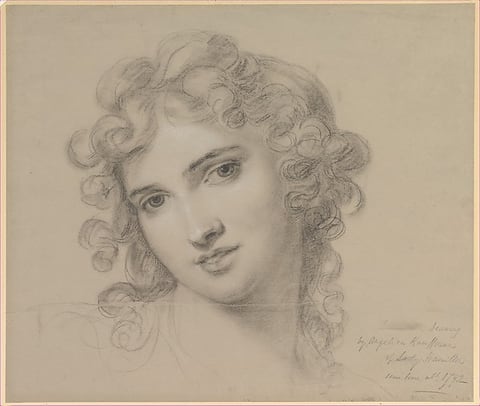
Portrait of Emma HamiltonAngelica Kauffmann, 1791Courtesy of The Metropolitan Museum of Art 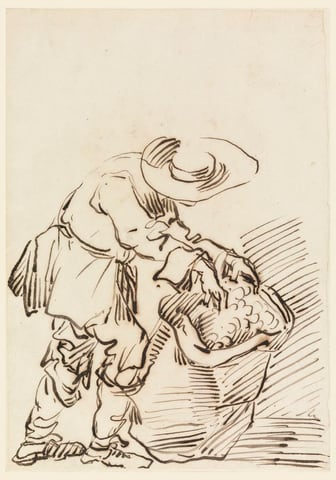
Working PeasantCarlo Marchionni, 1728–78Courtesy of Cooper Hewitt, Smithsonian Design Museum 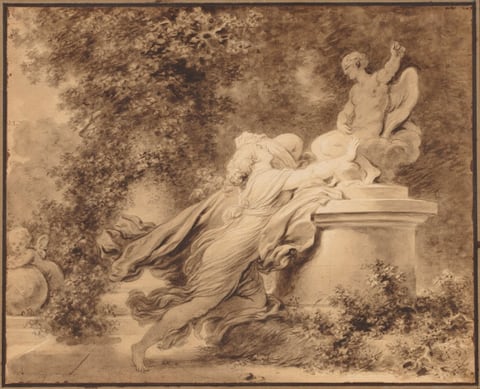
Invocation to LoveJean Honoré Fragonard, c. 1781Courtesy of the Cleveland Museum of Art
Section 3, north wall
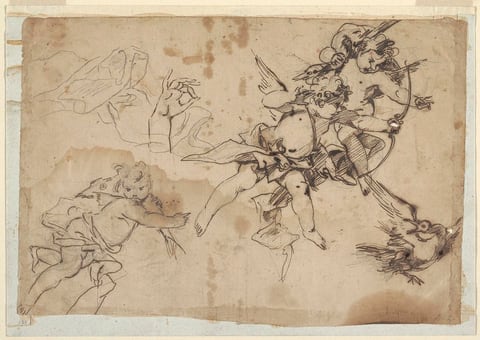
Study for a Painting on Theme of CallistoFilippo Falciatore, ca. 1750Courtesy of Cooper Hewitt, Smithsonian Design Museum 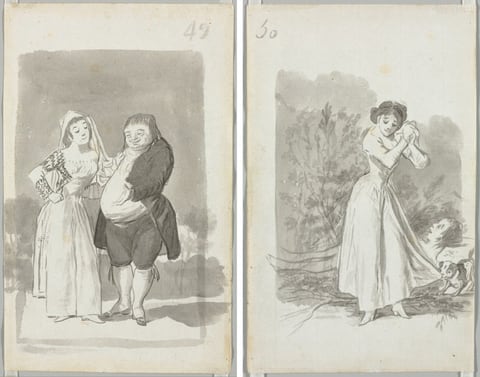
Young Woman (possibly a Sex Worker) with a Man (recto); Young Woman Wringing Her Hands over a Man's Naked Body (verso)Francisco Goya, 1796–97Courtesy of the Cleveland Museum of Art 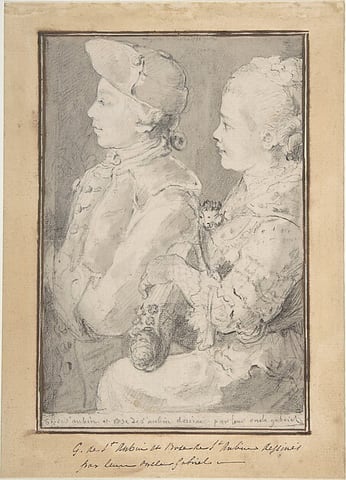
Germain-Augustin and Rose de Saint-Aubin, Drawn by Their UncleGabriel de Saint-Aubin, 1766Courtesy of The Metropolitan Museum of Art
Section 3, south wall
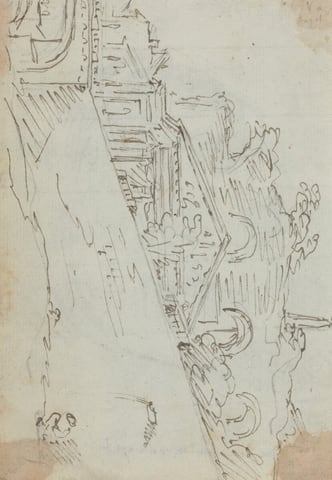
Ancient Ruins on the Bank of the TiberAugustin Pajou, 1752/1756Courtesy National Gallery of Art, Washington 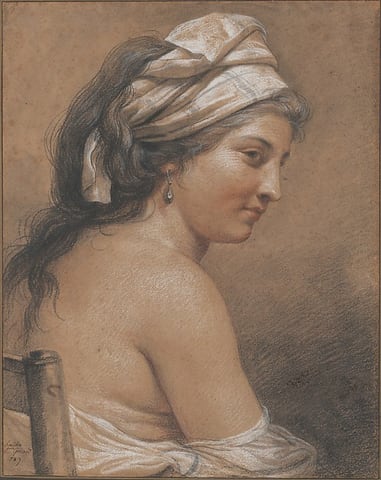
Study of a Seated Woman Seen from Behind (Marie-Gabrielle Capet)Adélaïde Labille-Guiard, 1789Courtesy of The Metropolitan Museum of Art 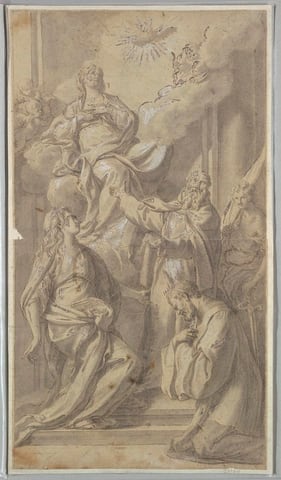
Madonna and SaintsSebastiano Conca, ca. 1730Courtesy of Cooper Hewitt, Smithsonian Design Museum