Floor plan

Style galleriesFrench classicism

French classicism

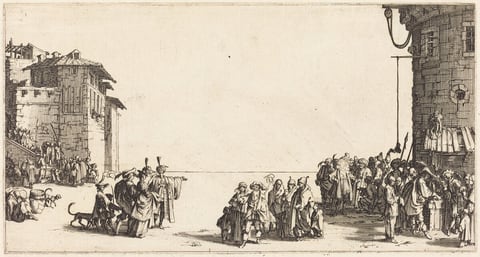
This is a drawing of a busy street scene with architectural structures and various figures. It depicts a large open area bordered by a grand building to the left and a rounded tower or structure to the right. The left side of the scene is lined with stairs leading up to an elevated walkway or platform, where people are gathered. In the middle and to the right, a crowd has formed, encompassing the space in front of the tower. Various individuals, some wearing distinctive headgear, are seen mingling and gesturing. The architectural details in the background, such as the windows and brickwork of the tower, frame the scene below. A hand-operated apparatus extends from the tower, possibly for lifting goods or supplies. The drawing captures a dynamic urban moment.
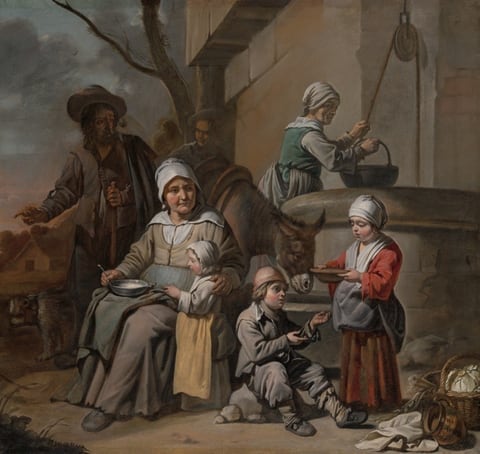
A work made of oil on canvas.
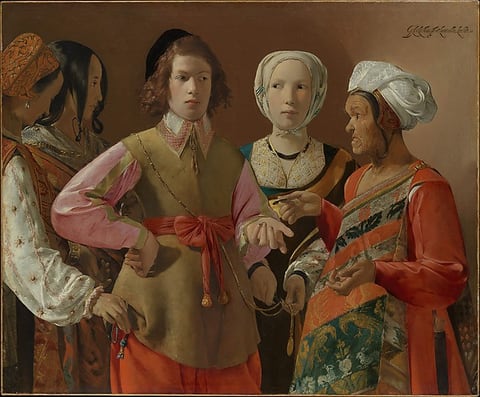
The Fortune-Teller, by Georges de La Tour, probably 1630s
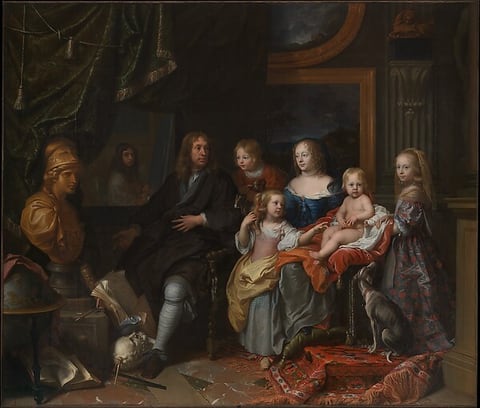
The Jabach Family, by Charles Le Brun, ca. 1660
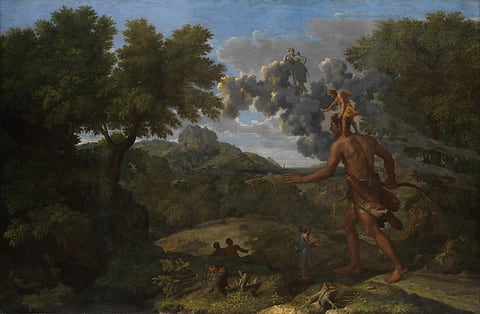
Blind Orion Searching for the Rising Sun, by Nicolas Poussin, 1658

The works in this room are listed below.

Works in this room

Order, clarity and the ideal landscape in seventeenth-century France.

First room, north wall

  1. This is a drawing of a busy street scene with architectural structures and various figures. It depicts a large open area bordered by a grand building to the left and a rounded tower or structure to the right. The left side of the scene is lined with stairs leading up to an elevated walkway or platform, where people are gathered. In the middle and to the right, a crowd has formed, encompassing the space in front of the tower. Various individuals, some wearing distinctive headgear, are seen mingling and gesturing. The architectural details in the background, such as the windows and brickwork of the tower, frame the scene below. A hand-operated apparatus extends from the tower, possibly for lifting goods or supplies. The drawing captures a dynamic urban moment.
    The Slave MarketJacques Callot, 1620Courtesy National Gallery of Art, Washington
  2. A work made of oil on canvas.
    Peasant Family at a WellThe Master of the Children's Caps, 1650/60Courtesy of the Art Institute of Chicago
  3. The Fortune-Teller, by Georges de La Tour, probably 1630s
    The Fortune-TellerGeorges de La Tour, probably 1630sCourtesy of The Metropolitan Museum of Art

First room, south wall

  1. The Jabach Family, by Charles Le Brun, ca. 1660
    The Jabach FamilyCharles Le Brun, ca. 1660Courtesy of The Metropolitan Museum of Art
  2. Blind Orion Searching for the Rising Sun, by Nicolas Poussin, 1658
    Blind Orion Searching for the Rising SunNicolas Poussin, 1658Courtesy of The Metropolitan Museum of Art

Second room, south wall
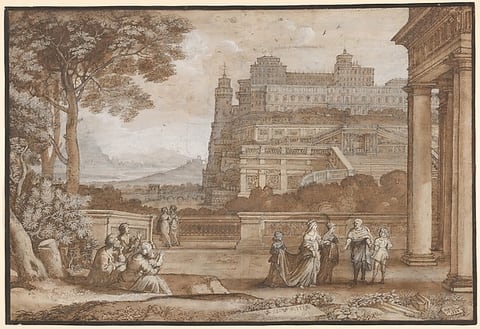
  1. Queen Esther Approaching the Palace of Ahasuerus, by Claude Lorrain (Claude Gellée), 1658
    Queen Esther Approaching the Palace of AhasuerusClaude Lorrain (Claude Gellée), 1658Courtesy of The Metropolitan Museum of Art
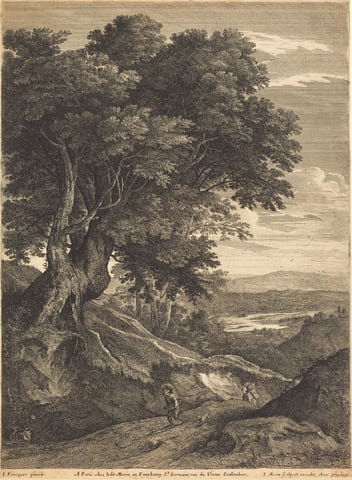
  2. The image depicts a landscape viewed from a slightly elevated angle. On the left side, there is a large tree with a twisted trunk and dense foliage. A winding path can be seen with a figure walking with a dog. In the distance, a river winds through the land, and there are rolling hills and trees in the background. The color scheme is sepia-toned.
    Hilly Landscape with Travelers on FootJean MorinCourtesy National Gallery of Art, Washington
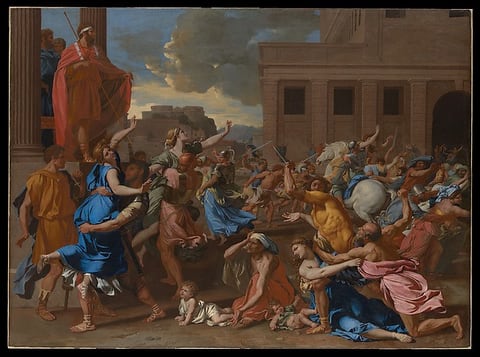
  3. The Abduction of the Sabine Women, by Nicolas Poussin, probably 1633–34
    The Abduction of the Sabine WomenNicolas Poussin, probably 1633–34Courtesy of The Metropolitan Museum of Art

Second room, north wall
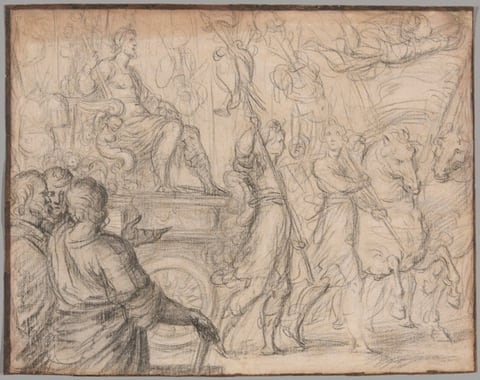
  1. A work made of black chalk, with touches of white chalk, on cream laid paper.
    A ProcessionAmbroise Dubois, c. 1610Courtesy of the Art Institute of Chicago
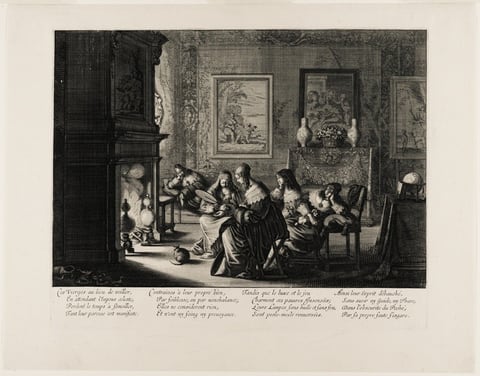
  2. A work made of engraving and etching on ivory laid paper.
    The Wise and Foolish Virgins, plate fiveAbraham Bosse, 1635Courtesy of the Art Institute of Chicago
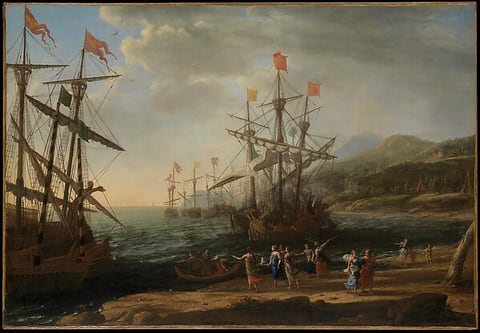
  3. The Trojan Women Setting Fire to Their Fleet, by Claude Lorrain (Claude Gellée), ca. 1643
    The Trojan Women Setting Fire to Their FleetClaude Lorrain (Claude Gellée), ca. 1643Courtesy of The Metropolitan Museum of Art

Third room, north wall
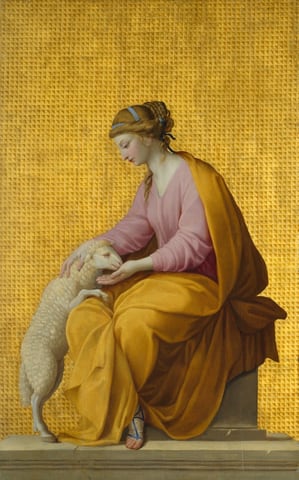
  1. A work made of oil on panel.
    MeeknessEustache Le Sueur, 1650Courtesy of the Art Institute of Chicago
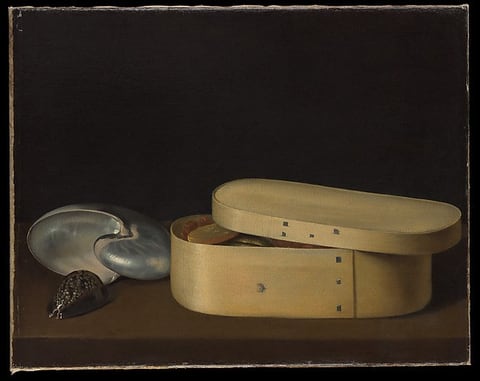
  2. Still Life with Shells and a Chip-Wood Box, by Sebastian Stoskopff, late 1620s
    Still Life with Shells and a Chip-Wood BoxSebastian Stoskopff, late 1620sCourtesy of The Metropolitan Museum of Art
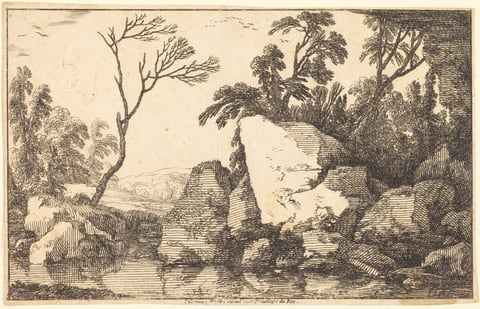
  3. The image is a landscape view with a natural scene depicted in fine etching. The horizon is situated towards the middle of the composition, where the land gently rises, and a subtle outline of distant hills is visible. Large rocks and foliage are depicted close to us, with a lone, barren tree extending upwards on the left side. The etching features intricate and well-defined brushstrokes, including thin lines and cross-hatching to create texture and depth. The color palette is monochromatic, with dark tones against a lighter background. In the distance, additional clusters of trees can be seen, rendered with similar linework to convey movement and detail.
    A Rocky PondLaurent de La Hyre, 1640Courtesy National Gallery of Art, Washington

Third room, south wall
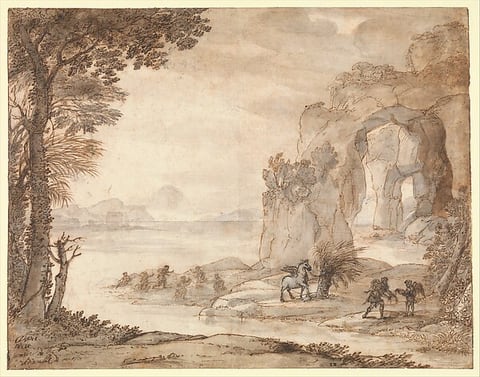
  1. Perseus and the Origin of Coral, by Claude Lorrain (Claude Gellée), ca. 1671
    Perseus and the Origin of CoralClaude Lorrain (Claude Gellée), ca. 1671Courtesy of The Metropolitan Museum of Art
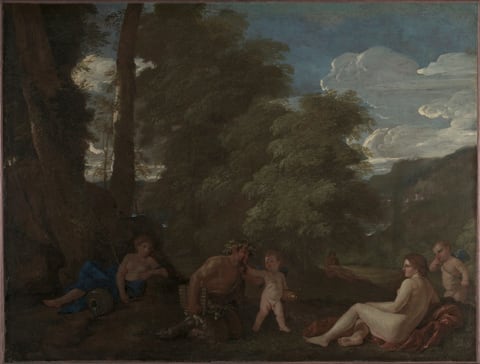
  2. Nymphs and a Satyr (Amor Vincit Omnia), by Nicolas Poussin, c. 1625–27
    Nymphs and a Satyr (Amor Vincit Omnia)Nicolas Poussin, c. 1625–27Courtesy of the Cleveland Museum of Art