Floor plan

Style galleriesFrench classicism

French classicism

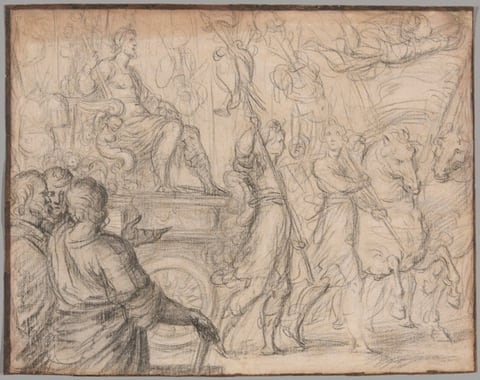
A work made of black chalk, with touches of white chalk, on cream laid paper.
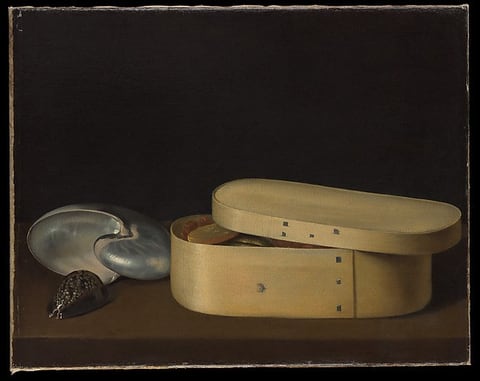
Still Life with Shells and a Chip-Wood Box, by Sebastian Stoskopff, late 1620s
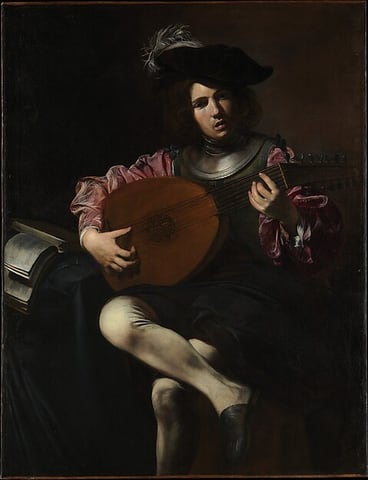
Lute Player, by Valentin de Boulogne, ca. 1625–26
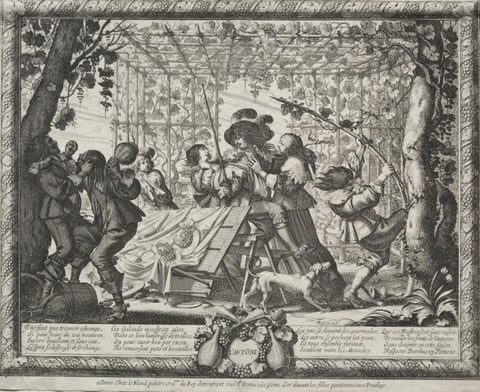
The Four Seasons: Autumn, by Abraham Bosse, 1635
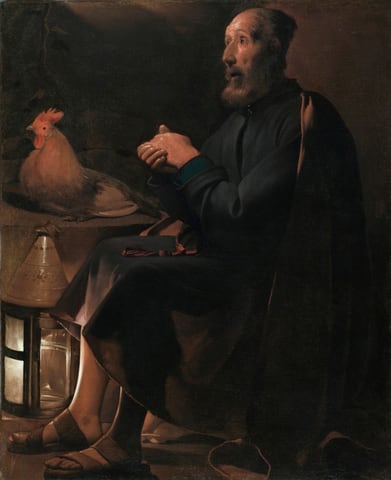
Saint Peter Repentant, by Georges de La Tour, 1645
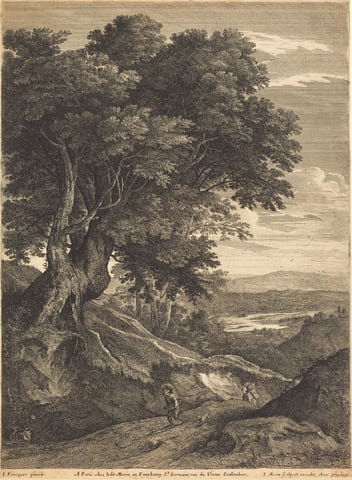
The image depicts a landscape viewed from a slightly elevated angle. On the left side, there is a large tree with a twisted trunk and dense foliage. A winding path can be seen with a figure walking with a dog. In the distance, a river winds through the land, and there are rolling hills and trees in the background. The color scheme is sepia-toned.
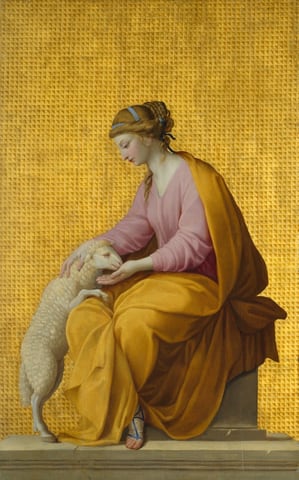
A work made of oil on panel.

The works in this room are listed below.

Works in this room

Order, clarity and the ideal landscape in seventeenth-century France.

First room, north wall

  1. A work made of black chalk, with touches of white chalk, on cream laid paper.
    A ProcessionAmbroise Dubois, c. 1610Courtesy of the Art Institute of Chicago
  2. Still Life with Shells and a Chip-Wood Box, by Sebastian Stoskopff, late 1620s
    Still Life with Shells and a Chip-Wood BoxSebastian Stoskopff, late 1620sCourtesy of The Metropolitan Museum of Art
  3. Lute Player, by Valentin de Boulogne, ca. 1625–26
    Lute PlayerValentin de Boulogne, ca. 1625–26Courtesy of The Metropolitan Museum of Art
  4. The Four Seasons: Autumn, by Abraham Bosse, 1635
    The Four Seasons: AutumnAbraham Bosse, 1635Courtesy of the Cleveland Museum of Art

First room, south wall

  1. Saint Peter Repentant, by Georges de La Tour, 1645
    Saint Peter RepentantGeorges de La Tour, 1645Courtesy of the Cleveland Museum of Art
  2. The image depicts a landscape viewed from a slightly elevated angle. On the left side, there is a large tree with a twisted trunk and dense foliage. A winding path can be seen with a figure walking with a dog. In the distance, a river winds through the land, and there are rolling hills and trees in the background. The color scheme is sepia-toned.
    Hilly Landscape with Travelers on FootJean MorinCourtesy National Gallery of Art, Washington
  3. A work made of oil on panel.
    MeeknessEustache Le Sueur, 1650Courtesy of the Art Institute of Chicago

Second room, south wall
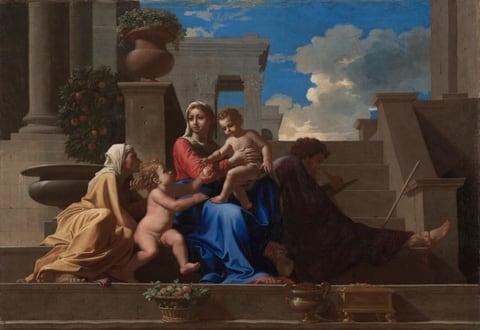
  1. The Holy Family on the Steps, by Nicolas Poussin, 1648
    The Holy Family on the StepsNicolas Poussin, 1648Courtesy of the Cleveland Museum of Art
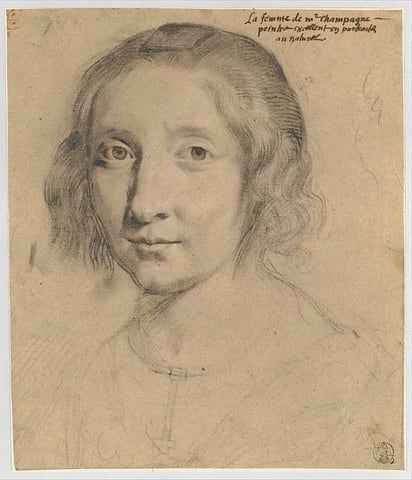
  2. Portrait of Charlotte Duchesne, by Philippe de Champaigne, ca. 1628
    Portrait of Charlotte DuchesnePhilippe de Champaigne, ca. 1628Courtesy of The Metropolitan Museum of Art
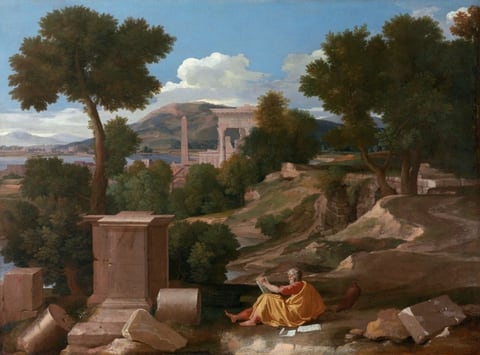
  3. Painting of Greek landscape, classical architecture, yellow, red robed man reading.
    Landscape with Saint John on PatmosNicolas Poussin, 1640Courtesy of the Art Institute of Chicago

Second room, north wall
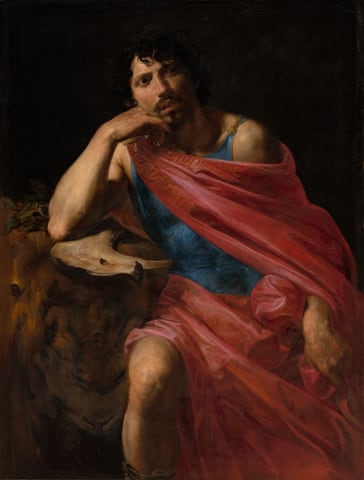
  1. Samson, by Valentin de Boulogne, 1630–31
    SamsonValentin de Boulogne, 1630–31Courtesy of the Cleveland Museum of Art
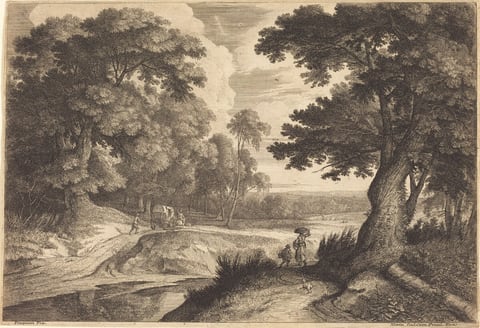
  2. The image shows an etching of a rural landscape with trees obscuring the horizon. In the distance, there is a cart on a winding path with a person walking beside it. Closer to the viewer, there is a person with a child under a tree, accompanied by a small dog. The artwork features fine and detailed brushwork with cross-hatching for texture and shadows. The color scheme is monochromatic in muted browns, emphasizing details and creating a peaceful scene under soft light filtered through the trees. The trees form a canopy framing the serene setting.
    Edge of a Wood with Peasants Going to MarketJean MorinCourtesy National Gallery of Art, Washington
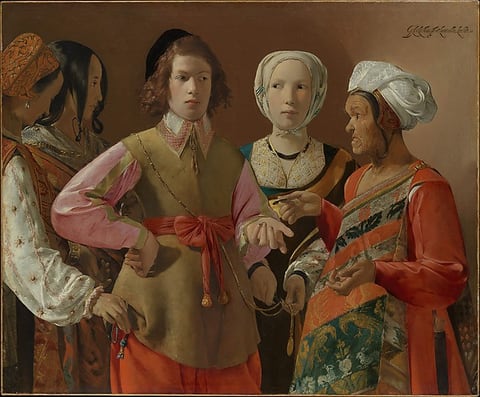
  3. The Fortune-Teller, by Georges de La Tour, probably 1630s
    The Fortune-TellerGeorges de La Tour, probably 1630sCourtesy of The Metropolitan Museum of Art

Third room, north wall
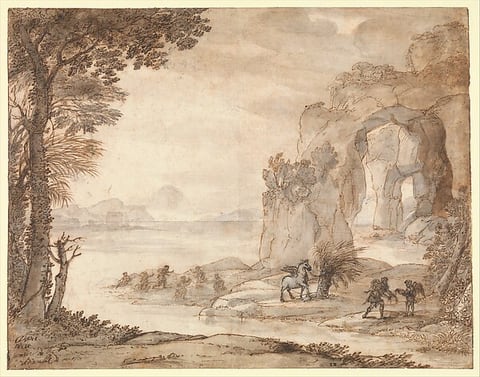
  1. Perseus and the Origin of Coral, by Claude Lorrain (Claude Gellée), ca. 1671
    Perseus and the Origin of CoralClaude Lorrain (Claude Gellée), ca. 1671Courtesy of The Metropolitan Museum of Art
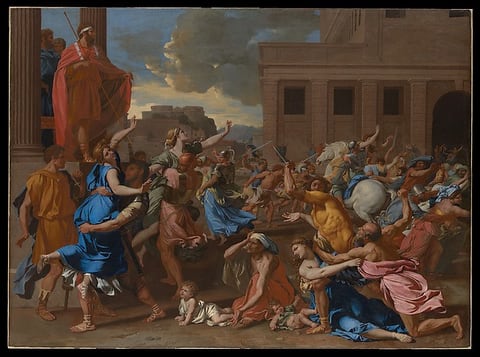
  2. The Abduction of the Sabine Women, by Nicolas Poussin, probably 1633–34
    The Abduction of the Sabine WomenNicolas Poussin, probably 1633–34Courtesy of The Metropolitan Museum of Art
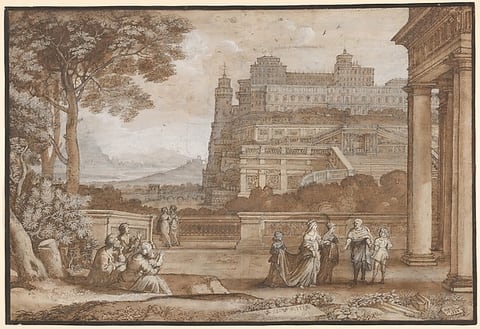
  3. Queen Esther Approaching the Palace of Ahasuerus, by Claude Lorrain (Claude Gellée), 1658
    Queen Esther Approaching the Palace of AhasuerusClaude Lorrain (Claude Gellée), 1658Courtesy of The Metropolitan Museum of Art