Neoclassicism
Europe turns back to Greece and Rome: clear line, calm figures and civic virtue.
First room, north wall
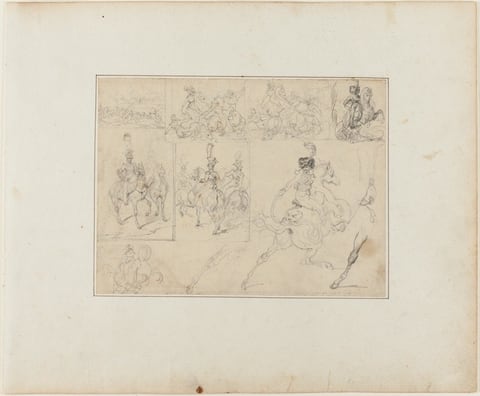
Sheet of Sketches: Cavalry Battles and Mounted SoldiersJean Louis André Théodore Géricault, 1813/14Courtesy of the Art Institute of Chicago 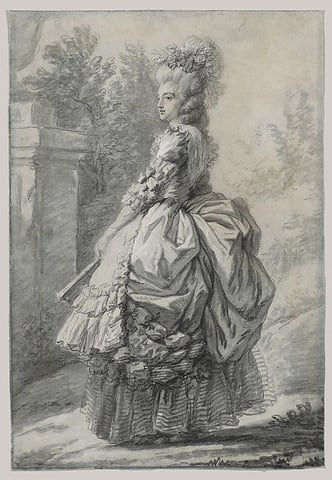
Marie Antoinette in a ParkElisabeth Louise Vigée Le Brun, ca. 1780–81Courtesy of The Metropolitan Museum of Art 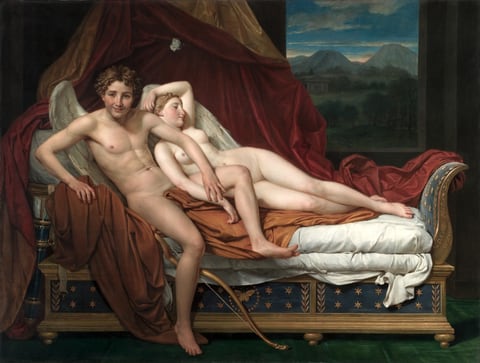
Cupid and PsycheJacques-Louis David, 1817Courtesy of the Cleveland Museum of Art
First room, south wall
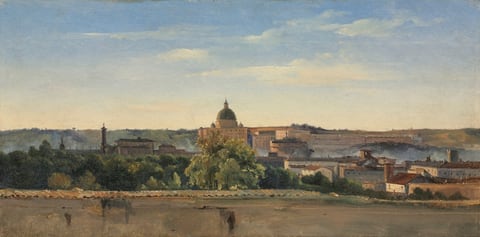
View of RomePierre Henri de Valenciennes, c. 1782–84Courtesy of the Cleveland Museum of Art 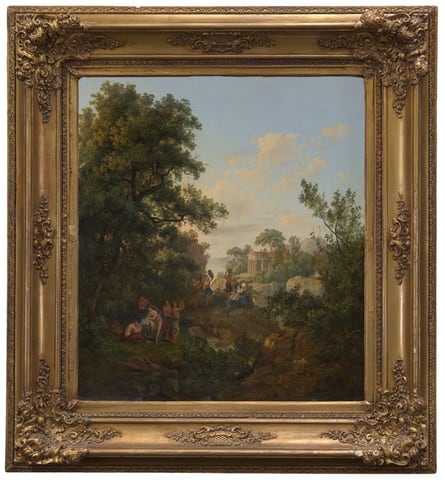
Birth of BacchusKároly Markó, Sr., 1826 (?)Courtesy of the Art Institute of Chicago 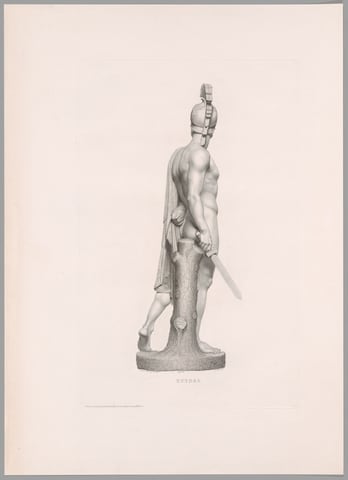
Ettore, Side View, from Oeuvre de CanovaAntonio Canova, 1817Courtesy of the Art Institute of Chicago 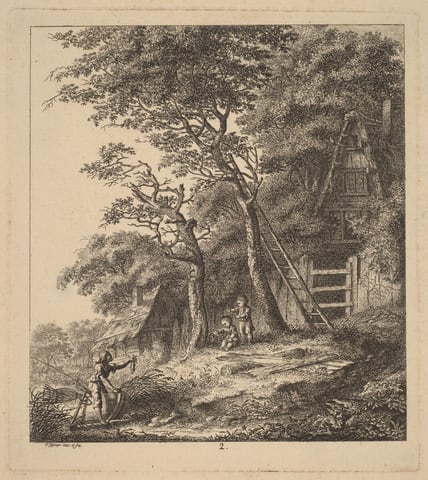
A Fisherman and Two Children in a Landscape with Thatched CottagesSalomon Gessner, 1764Courtesy National Gallery of Art, Washington
Second room, south wall
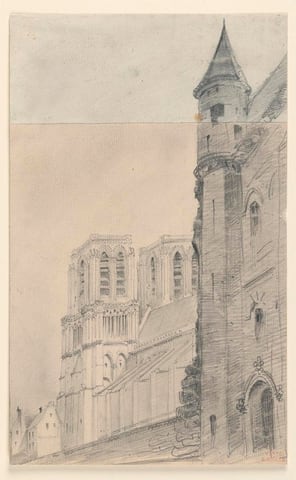
Cathedral of Notre Dame in ParisCharles Nicolas Ransonnette, 1825–1840Courtesy of Cooper Hewitt, Smithsonian Design Museum 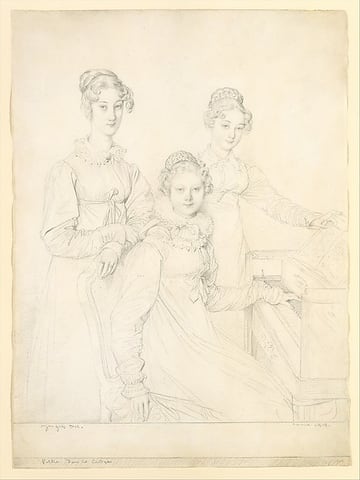
The Kaunitz Sisters (Leopoldine, Caroline, and Ferdinandine)Jean Auguste Dominique Ingres, 1818Courtesy of The Metropolitan Museum of Art 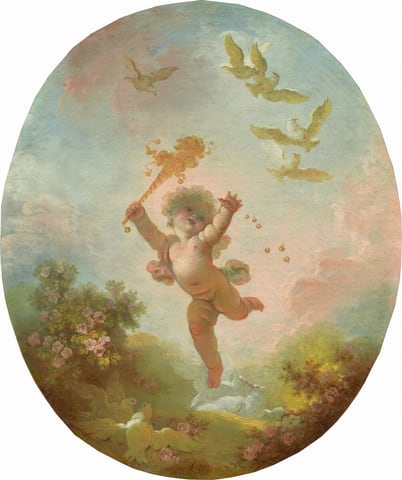
Love as FollyJean Honoré Fragonard, c. 1773/1776Courtesy National Gallery of Art, Washington 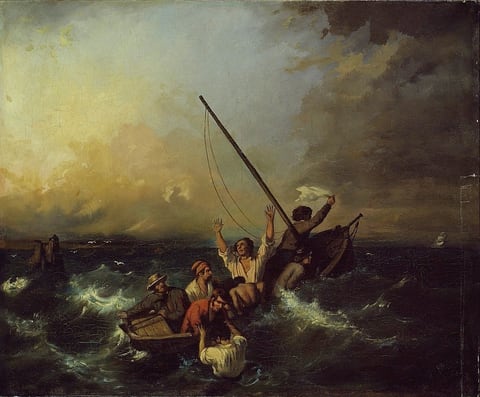
ShipwreckAfter Eugène Isabey, 19th centuryCourtesy of the Art Institute of Chicago
Second room, north wall
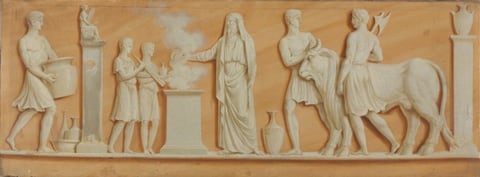
Overdoor PaintingPierre Rousseau, 1790sCourtesy of the Cleveland Museum of Art 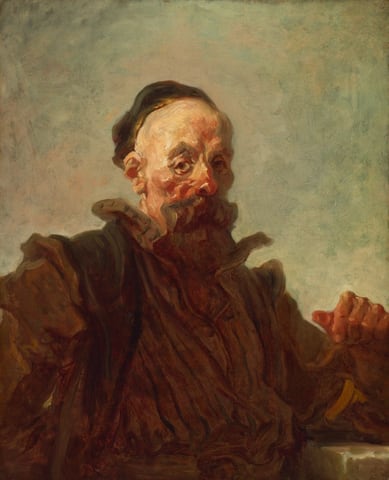
Portrait of a Man in CostumeJean Honoré Fragonard, c. 1767–68Courtesy of the Art Institute of Chicago 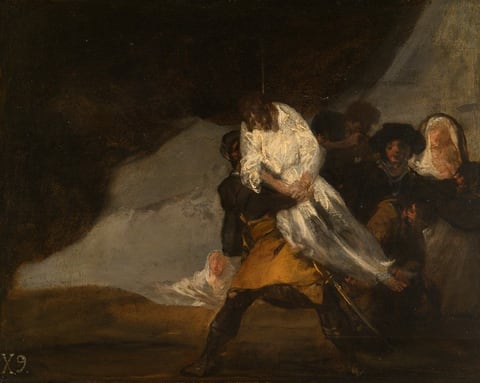
The Hanged MonkFrancisco Goya, c. 1810Courtesy of the Art Institute of Chicago
Third room, north wall
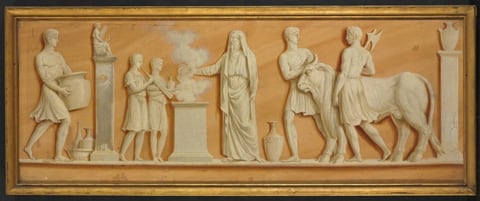
Overdoor Painting and Double-Leaf DoorsPierre Rousseau, 1790sCourtesy of the Cleveland Museum of Art 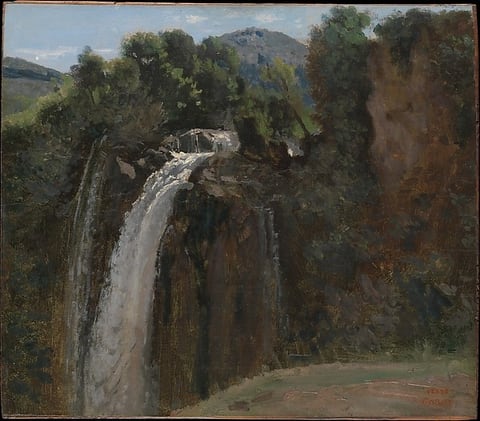
Waterfall at TerniJean Baptiste Camille Corot, 1826Courtesy of The Metropolitan Museum of Art