Skip to content
Ochre Editions
ArtArtistsCollectionsGalleriesDrops
SearchSign inCart (0)
The galleries · Style galleries

Neoclassicism

Europe turns back to Greece and Rome: clear line, calm figures and civic virtue.

109 works · hang 3189 ·

Share Neoclassicism, in the galleries

The rooms are imagined; every work on their walls is real.

Walk this roomRehang this room

First room, north wall

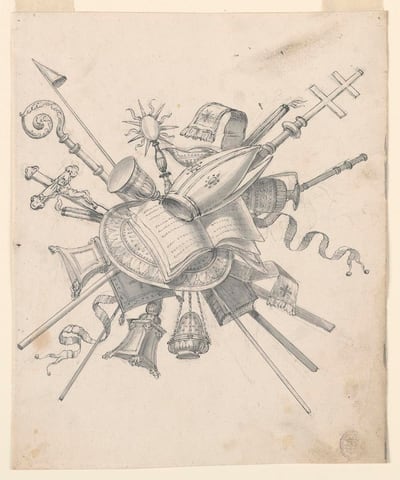
  1. TROPHY WITH ECCLESIASTICAL OBJECTS
    Trophy with Ecclesiastical ObjectsRomolo Achille Liverani, 1830–1850Courtesy of Cooper Hewitt, Smithsonian Design Museum
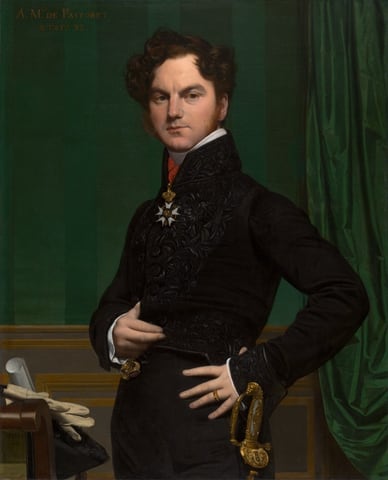
  2. Portrait of white man dressed in all black with medallion and sword.
    Amédée-David, the Comte de PastoretJean Auguste Dominique Ingres, 1823–26Courtesy of the Art Institute of Chicago

  3. The image shows an illustration of a rocky terrain with towering stone formations and dense foliage. The sky is textured and the scene is created using an etching technique with intricate linework. There are two figures in the scene, one appearing to climb or position near a rock, while the other observes. The color palette is monochromatic, using black on a white background to depict depth and dimension in the artwork.
    Landscape with a Fallen Tree (Paysage à l'arbre cassé)Hubert Robert, 1764Courtesy National Gallery of Art, Washington
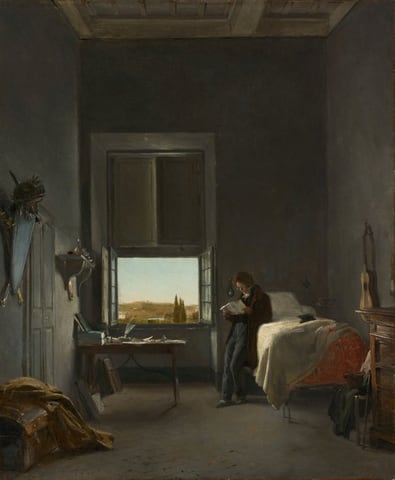
  4. The Artist in His Room at the Villa Medici, Rome, by Léon Cogniet, 1817
    The Artist in His Room at the Villa Medici, RomeLéon Cogniet, 1817Courtesy of the Cleveland Museum of Art

First room, south wall
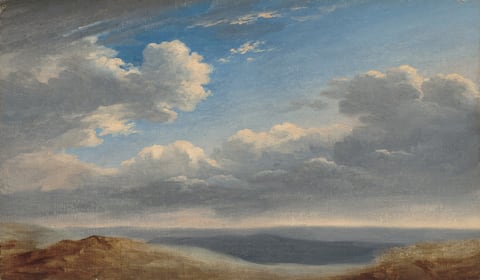
  1. A sliver of land across the bottom of this composition gives way to a procession of puffy gray and white clouds sweeping up across a vivid blue, panoramic sky in this horizontal landscape painting. An area of darker gray beyond the brown land could be a valley, mountain, or shadows from the billowing clouds. About one-fifth of the way up the composition, the horizon glows the faintest peach. The clouds trundle from our left up and to our right. The view is loosely painted, especially in the land.
    Study of Clouds over the Roman CampagnaPierre Henri de Valenciennes, c. 1782/1785Courtesy National Gallery of Art, Washington
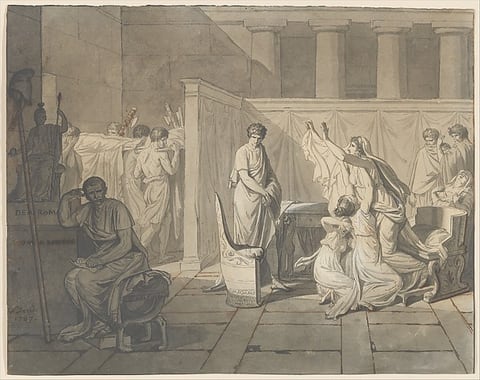
  2. The Lictors Bringing Brutus the Bodies of his Sons, by Jacques-Louis David, 1787
    The Lictors Bringing Brutus the Bodies of his SonsJacques-Louis David, 1787Courtesy of The Metropolitan Museum of Art
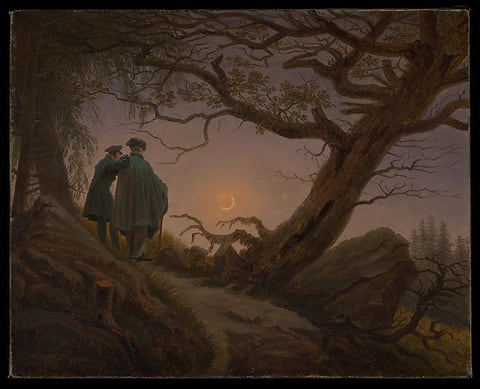
  3. Two Men Contemplating the Moon, by Caspar David Friedrich, ca. 1825–30
    Two Men Contemplating the MoonCaspar David Friedrich, ca. 1825–30Courtesy of The Metropolitan Museum of Art
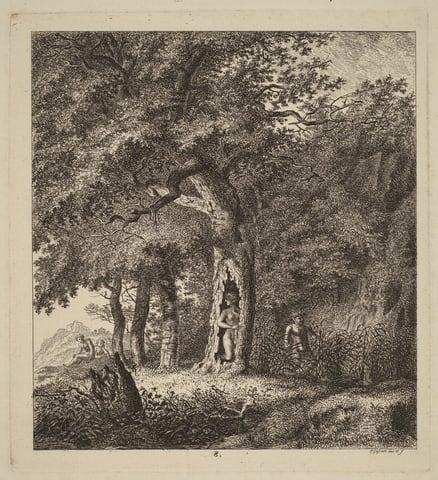
  4. The image shows an etching of a forest scene with towering trees dominating the upper half. The horizon is not clearly visible due to dense foliage, but a line of trees and rocky outcrops in the distance provide a boundary. The fine lines and cross-hatching technique create detailed textures in the tree bark and foliage. The color palette is monochromatic, in shades of black and white emphasizing light and shadow. A large tree with a partially hollow trunk and figures scattered throughout the scene give a sense of scale and activity within the forest setting.
    Wooded Landscape with a Nymph and a SatyrSalomon Gessner, 1764Courtesy National Gallery of Art, Washington

Second room, south wall
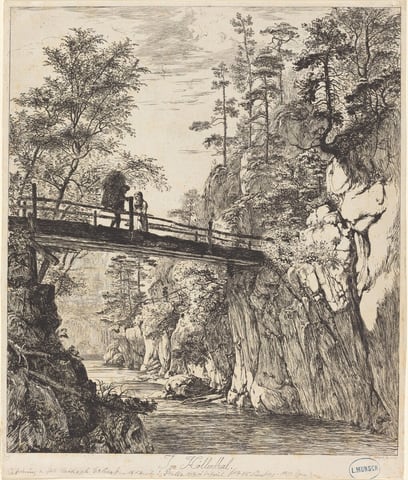
  1. The image shows a landscape with a wooden bridge crossing over a river in a valley. The scenery includes cliffs, trees, and flowing water below. The artwork features fine, detailed brushstrokes depicting the texture of the cliffs, foliage, and water. The color scheme is monochromatic with various shades of gray and sepia tones. Two figures are seen on the bridge, contributing to the sense of scale and activity in the serene setting.
    Im Höllenthal (In the Höllen Valley)Johann Christoph Erhard, 1818Courtesy National Gallery of Art, Washington
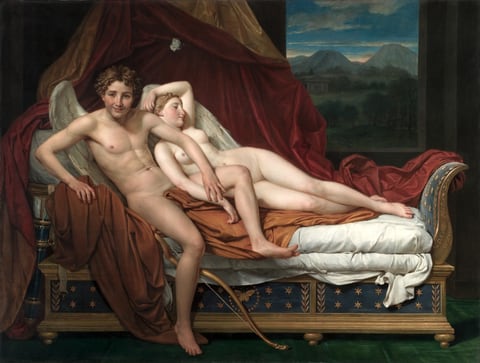
  2. Cupid and Psyche, by Jacques-Louis David, 1817
    Cupid and PsycheJacques-Louis David, 1817Courtesy of the Cleveland Museum of Art
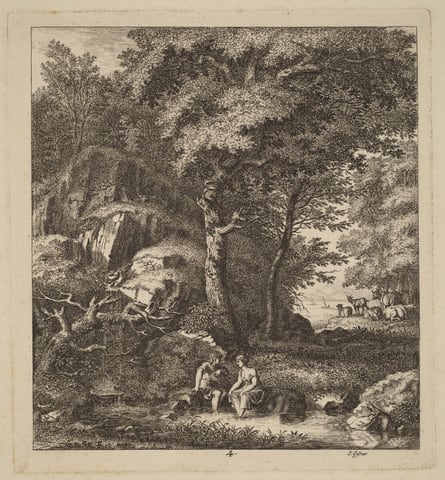
  3. The image depicts a forest scene with large trees dominating the right side, two figures seated by a stream, rocky formations on the left, grazing animals in the distance, and a monochrome color palette of brown and espresso tones.
    A Shepherd and a Young Woman With Their Feet in a BrookSalomon Gessner, 1764Courtesy National Gallery of Art, Washington

Second room, north wall
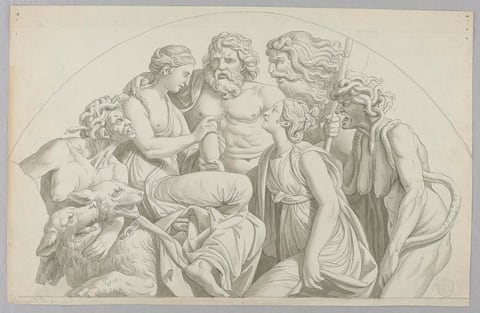
  1. PSYCHE ASKS PROSERPINE TO PUT A LITTLE OF HER BEAUTY IN AN URN FOR VENUS
    Psyche Asks Proserpine to Put a Little of her Beauty in an Urn for VenusJohann August Nahl The Younger, ca. 1781Courtesy of Cooper Hewitt, Smithsonian Design Museum
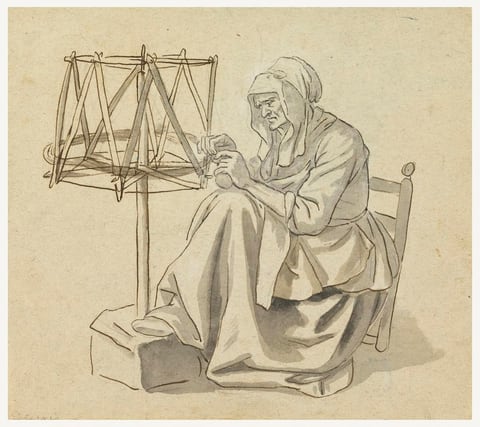
  2. AN OLD WOMAN SPINNING
    An Old Woman SpinningClaude-Louis Desrais, 1810–30Courtesy of Cooper Hewitt, Smithsonian Design Museum
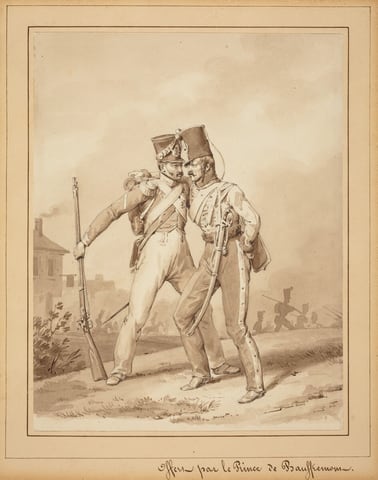
  3. The image features two men in military uniform engaging closely with each other. Both are shown from head to toe. The man on the left stands with his left leg forward, holding a rifle, and has his right arm around the shoulder of the other man. The man on the right has his right leg slightly bent, supporting his weight, and is holding a sword in his left hand. Each man has distinctive facial features. Both wear tall, elaborate military hats and detailed uniforms. The man on the left displays a strap over his shoulder, while the man on the right has intricate decorations on his jacket and trousers. In the background, there are a few more soldiers and part of a building to the left. The setting is monochromatic.
    Two GrenadiersVictor AdamCourtesy National Gallery of Art, Washington

Third room, north wall
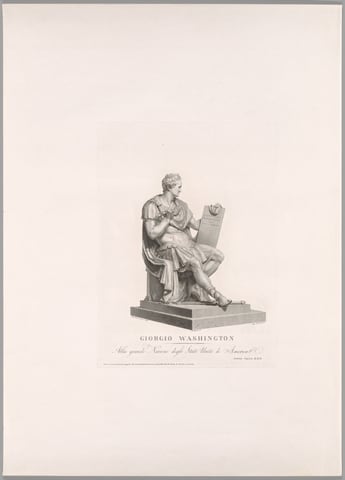
  1. A work made of engraving in black on ivory wove paper.
    George Washington, Front View, from Oeuvre de CanovaAntonio Canova, 1817Courtesy of the Art Institute of Chicago
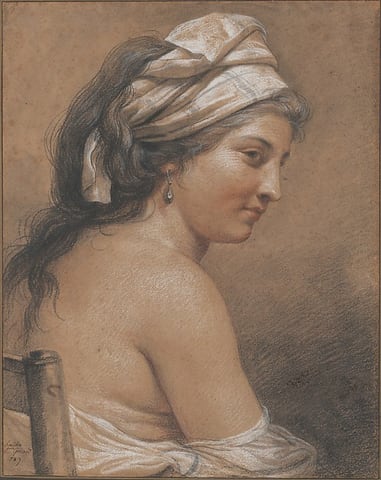
  2. Study of a Seated Woman Seen from Behind (Marie-Gabrielle Capet), by Adélaïde Labille-Guiard, 1789
    Study of a Seated Woman Seen from Behind (Marie-Gabrielle Capet)Adélaïde Labille-Guiard, 1789Courtesy of The Metropolitan Museum of Art

Walk on

  • Neoclassicism, room 2
  • Adélaïde Labille-Guiard's contemporaries 8 works
  • 18th-century France 75 works
Ochre Editions

The world's museums, on your wall. Every work here is a reproduction of a public-domain original, credited to the museum that holds it.

Shop

All artCollectionsLimited dropsPrints and framing

Help

Find an orderShippingReturnsVerify a certificate

About

About Ochre EditionsMuseum creditsFor agentsDevelopers

Legal

Terms of UseTerms of SaleLimited Editions and CertificatesPrivacy PolicyCookie PolicyAcceptable Use PolicyAgent & API TermsCopyright and DMCA PolicyPrinting Your Own PhotoVulnerability Disclosure PolicyAccessibility StatementOpen-Access Credits
© 2026 Ochre EditionsPrices in US dollars. Prints ship within the United States.