Skip to content
Ochre Editions
ArtArtistsCollectionsGalleriesDrops
SearchSign inCart (0)
The galleries · Style galleries

Neoclassicism

Europe turns back to Greece and Rome: clear line, calm figures and civic virtue.

109 works · hang 3955 ·

Share Neoclassicism, in the galleries

The rooms are imagined; every work on their walls is real.

Walk this roomRehang this room

First room, north wall

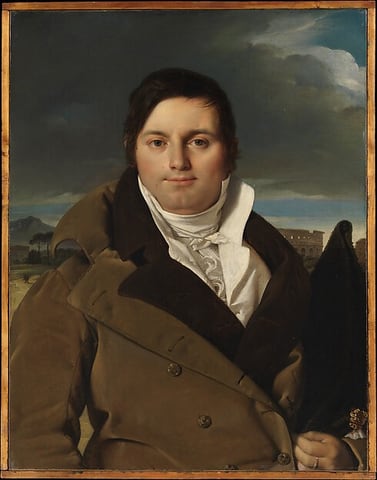
  1. Joseph-Antoine Moltedo (born 1775), by Jean Auguste Dominique Ingres, ca. 1810
    Joseph-Antoine Moltedo (born 1775)Jean Auguste Dominique Ingres, ca. 1810Courtesy of The Metropolitan Museum of Art
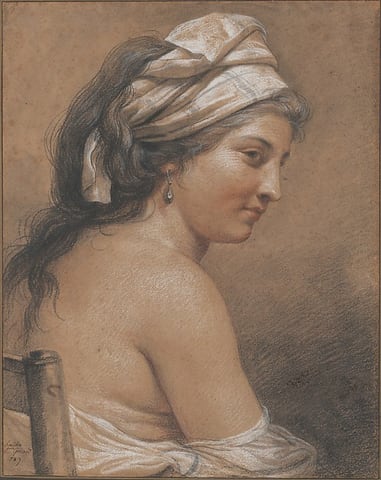
  2. Study of a Seated Woman Seen from Behind (Marie-Gabrielle Capet), by Adélaïde Labille-Guiard, 1789
    Study of a Seated Woman Seen from Behind (Marie-Gabrielle Capet)Adélaïde Labille-Guiard, 1789Courtesy of The Metropolitan Museum of Art
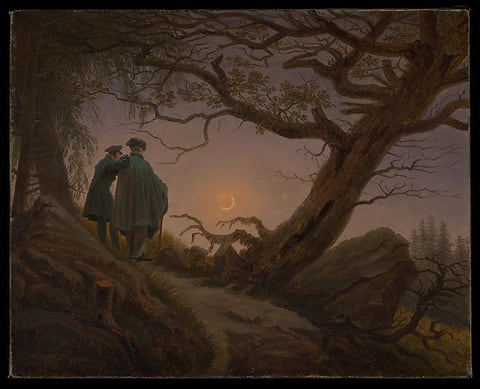
  3. Two Men Contemplating the Moon, by Caspar David Friedrich, ca. 1825–30
    Two Men Contemplating the MoonCaspar David Friedrich, ca. 1825–30Courtesy of The Metropolitan Museum of Art
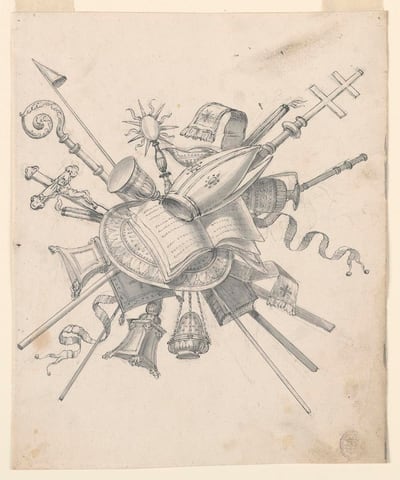
  4. TROPHY WITH ECCLESIASTICAL OBJECTS
    Trophy with Ecclesiastical ObjectsRomolo Achille Liverani, 1830–1850Courtesy of Cooper Hewitt, Smithsonian Design Museum

First room, south wall
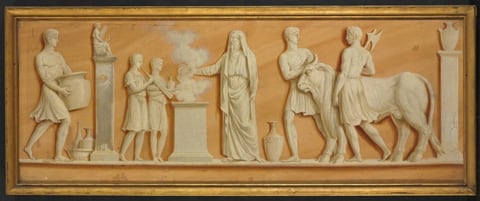
  1. Overdoor Painting and Double-Leaf Doors, by Pierre Rousseau, 1790s
    Overdoor Painting and Double-Leaf DoorsPierre Rousseau, 1790sCourtesy of the Cleveland Museum of Art
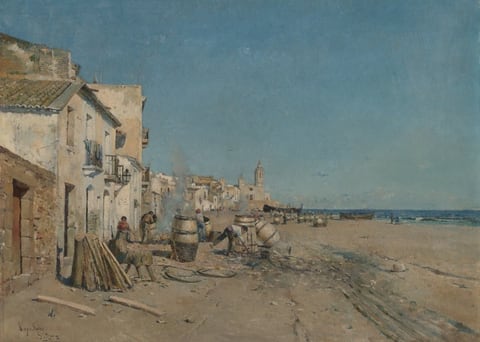
  2. A work made of oil on masonite.
    SitgesJuan Roig y Soler, 19th centuryCourtesy of the Art Institute of Chicago

  3. DESIGNS FOR ORNAMENTAL ARABESQUE MOTIFS
    Designs for Ornamental Arabesque MotifsEtienne de Lavallée-Poussin, 1770Courtesy of Cooper Hewitt, Smithsonian Design Museum

Second room, south wall
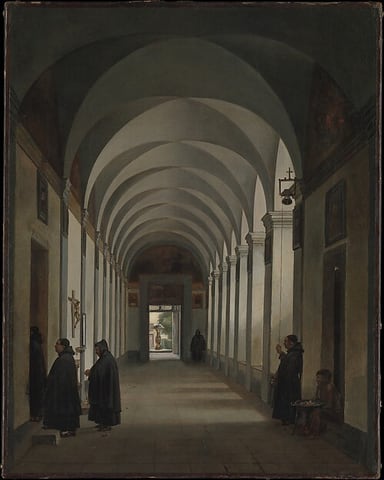
  1. Monks in the Cloister of the Church of Gesù e Maria, Rome, by François Marius Granet, 1808
    Monks in the Cloister of the Church of Gesù e Maria, RomeFrançois Marius Granet, 1808Courtesy of The Metropolitan Museum of Art
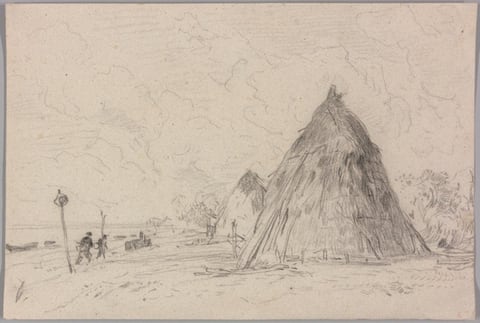
  2. A work made of conté crayon on gray-blue wove paper.
    Landscape with HaystacksConstant Troyon, n.d.Courtesy of the Art Institute of Chicago
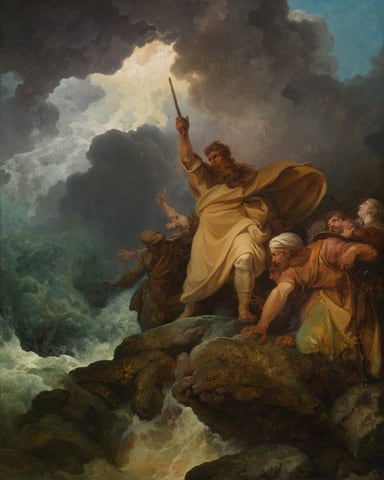
  3. A work made of oil on canvas.
    The Destruction of Pharaoh's ArmyPhilippe Jacques de Loutherbourg, II, 1792Courtesy of the Art Institute of Chicago

Second room, north wall
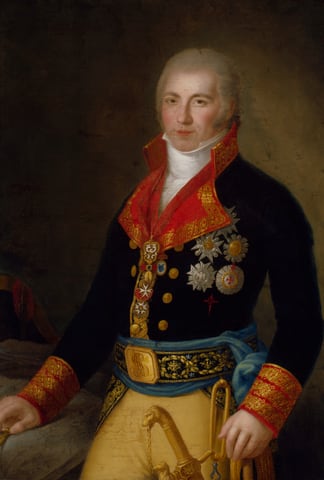
  1. A work made of oil on canvas.
    Manuel GodoyAgustin Esteve y Marqués, 1800–8Courtesy of the Art Institute of Chicago
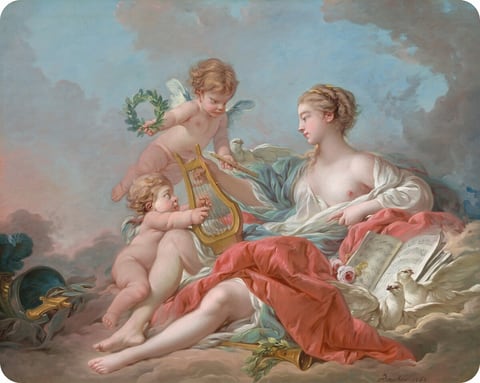
  2. A woman wearing flowing, pastel-colored robes and two, winged, child-like putti gather on a bank of clouds among musical instruments and sheet music in this horizontal painting. The people all have pale, pink-tinged skin. The woman sits to our right of center, facing our left in profile. She has straight nose, a rounded chin, and her small, pink lips are closed. Her ash-blond hair is pulled back under a yellow band. A voluminous white robe falls away over her left shoulder, to our right, to reveal a firm breast and small pink nipple. Sky-blue drapery wraps over her far arm, and deep rose-pink cloth falls across her lap and onto the clouds around her. Her legs extend to our left, her toes pointed. She leans back on her left elbow, closer to us, and points with that index finger to a lyre she props against her knee with her other hand. One chubby, nude putto reaches forward to strum the strings. The other putto hovers above, holding a ring of laurel leaves up in one hand and a flute in the other. Both putti have chubby limbs and torsos, blond curls lifted as if in a breeze, and short, ice-blue wings. Both look at the woman. In the lower left corner, a helmet with a topaz-blue feather and the gold hilt of a sword sit near the woman’s feet. Beneath the woman’s lower leg, at the bottom center of the painting, is a gold horn encircled by another wreath of laurel leaves. Two white doves with wings spread support an open book of sheet music and two pink roses tucked under the woman’s bent elbow. Fog-gray clouds billow up both sides of the scene against a pale blue sky. The clouds on which the trio gathers are parchment brown shaded with mauve pink. The outer corners of the image are white, indicating that the corners of the canvas were rounded. The artist signed and dated the painting in the lower right corner, “F Boucher 1764.”
    Allegory of MusicFrançois Boucher, 1764Courtesy National Gallery of Art, Washington
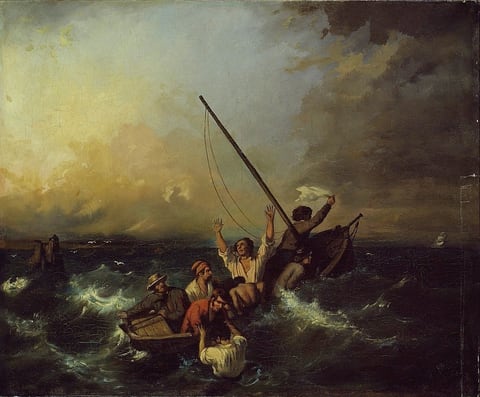
  3. A work made of oil on canvas.
    ShipwreckAfter Eugène Isabey, 19th centuryCourtesy of the Art Institute of Chicago

Third room, north wall
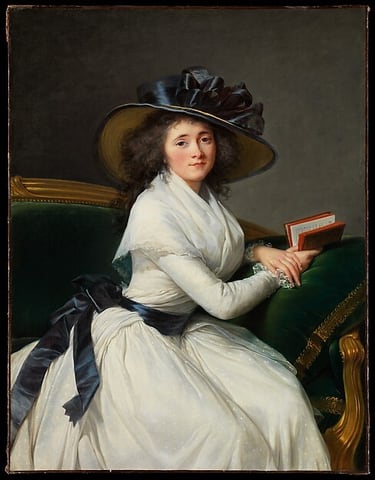
  1. Comtesse de la Châtre (Marie Charlotte Louise Perrette Aglaé Bontemps, 1762–1848), by Elisabeth Louise Vigée Le Brun, 1789
    Comtesse de la Châtre (Marie Charlotte Louise Perrette Aglaé Bontemps, 1762–1848)Elisabeth Louise Vigée Le Brun, 1789Courtesy of The Metropolitan Museum of Art
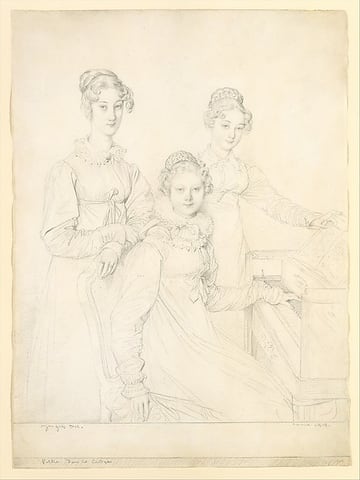
  2. The Kaunitz Sisters (Leopoldine, Caroline, and Ferdinandine), by Jean Auguste Dominique Ingres, 1818
    The Kaunitz Sisters (Leopoldine, Caroline, and Ferdinandine)Jean Auguste Dominique Ingres, 1818Courtesy of The Metropolitan Museum of Art
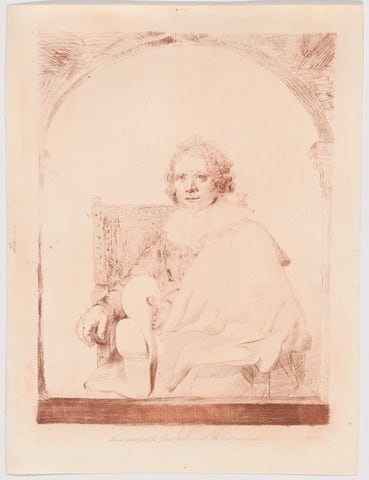
  3. A work made of soft ground etching, with roulette, printed in red on white wove paper.
    Portrait of a Man in an Armchair, from Collection d'imitations de Dessins d'après les Principaux Maîtres Hollandais et FlamandsChristian Josi, 1826Courtesy of the Art Institute of Chicago

Walk on

  • Neoclassicism, room 2
  • More by Christian Josi 3 works
  • 19th-century Netherlands 21 works
Ochre Editions

The world's museums, on your wall. Every work here is a reproduction of a public-domain original, credited to the museum that holds it.

Shop

All artCollectionsLimited dropsPrints and framing

Help

Find an orderShippingReturnsVerify a certificate

About

About Ochre EditionsMuseum creditsFor agentsDevelopers

Legal

Terms of UseTerms of SaleLimited Editions and CertificatesPrivacy PolicyCookie PolicyAcceptable Use PolicyAgent & API TermsCopyright and DMCA PolicyPrinting Your Own PhotoVulnerability Disclosure PolicyAccessibility StatementOpen-Access Credits
© 2026 Ochre EditionsPrices in US dollars. Prints ship within the United States.