Neoclassicism
Europe turns back to Greece and Rome: clear line, calm figures and civic virtue.
First room, north wall
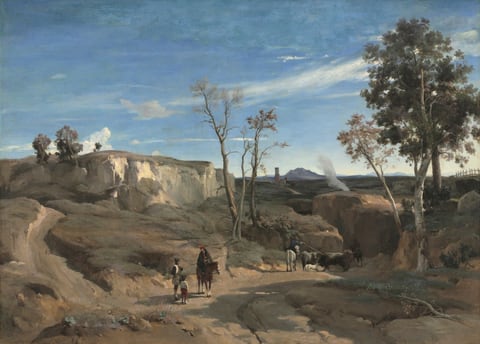
La Cervara, the Roman CampagnaJean Baptiste Camille Corot, c. 1830–31Courtesy of the Cleveland Museum of Art 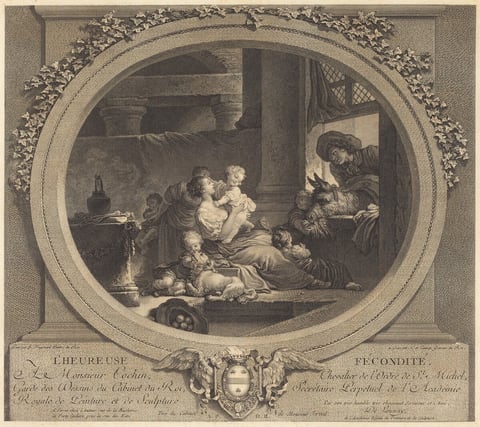
L'heureuse féconditéNicolas Delaunay, 1777Courtesy National Gallery of Art, Washington 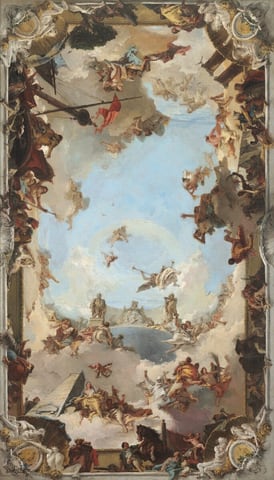
Wealth and Benefits of the Spanish Monarchy under Charles IIIGiovanni Battista Tiepolo, 1762Courtesy National Gallery of Art, Washington
First room, south wall
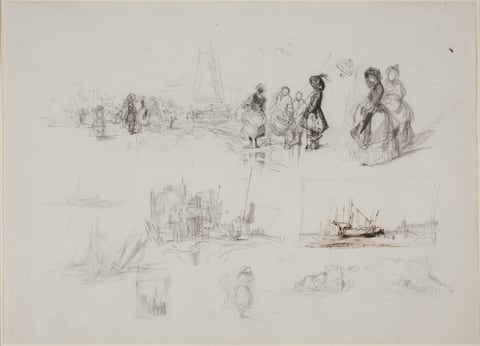
Seaside StudiesEugène Isabey, 1830sCourtesy National Gallery of Art, Washington 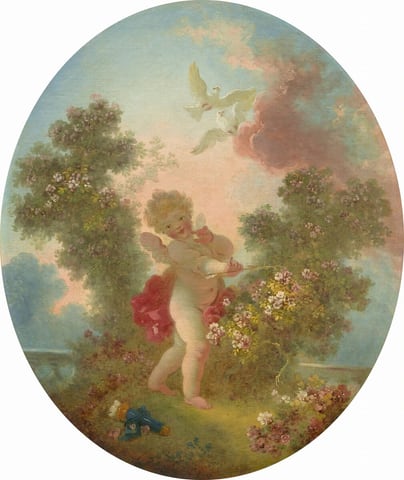
Love the SentinelJean Honoré Fragonard, c. 1773/1776Courtesy National Gallery of Art, Washington 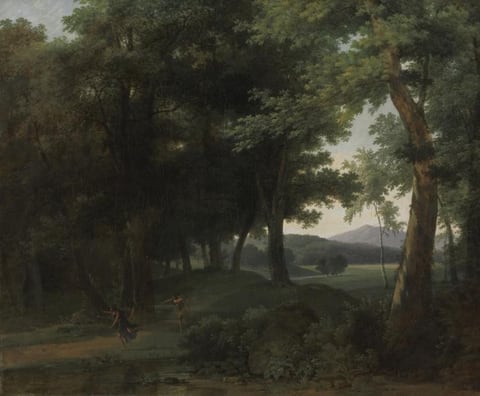
A Forest with Apollo and DaphneJean-Victor Bertin, 1810Courtesy of the Cleveland Museum of Art 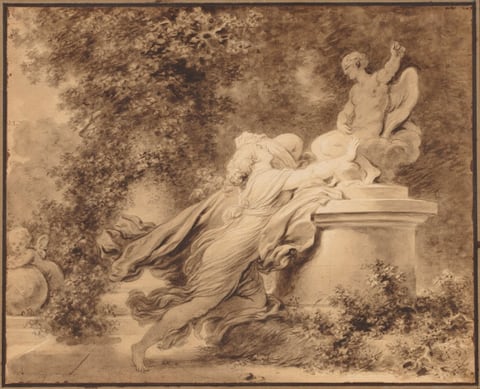
Invocation to LoveJean Honoré Fragonard, c. 1781Courtesy of the Cleveland Museum of Art
Second room, south wall
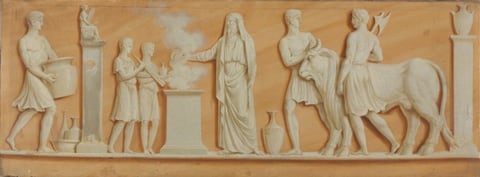
Overdoor PaintingPierre Rousseau, 1790sCourtesy of the Cleveland Museum of Art 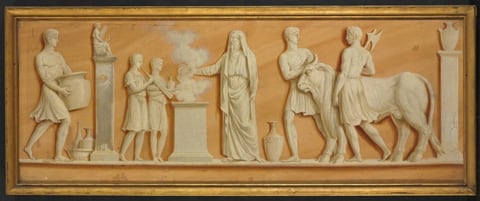
Overdoor Painting and Double-Leaf DoorsPierre Rousseau, 1790sCourtesy of the Cleveland Museum of Art
Second room, north wall
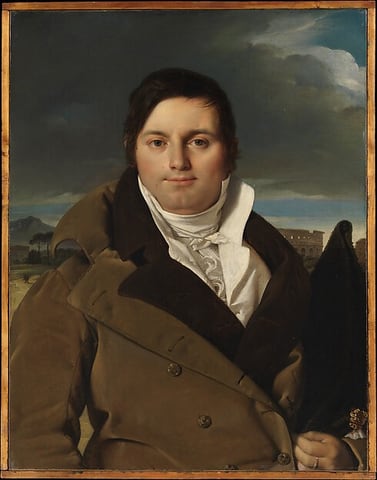
Joseph-Antoine Moltedo (born 1775)Jean Auguste Dominique Ingres, ca. 1810Courtesy of The Metropolitan Museum of Art 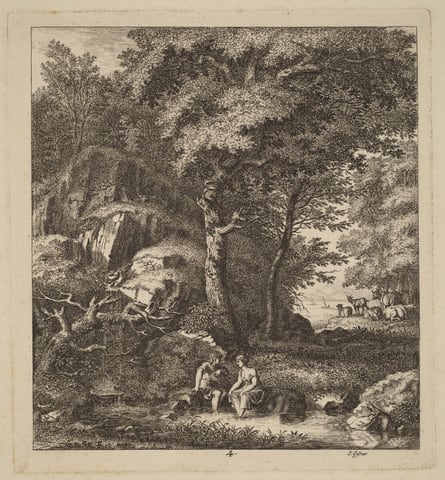
A Shepherd and a Young Woman With Their Feet in a BrookSalomon Gessner, 1764Courtesy National Gallery of Art, Washington 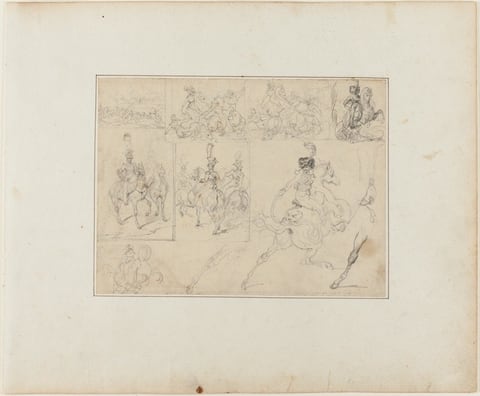
Sheet of Sketches: Cavalry Battles and Mounted SoldiersJean Louis André Théodore Géricault, 1813/14Courtesy of the Art Institute of Chicago 
The Fortunate RescueDaniel Nikolaus Chodowiecki, 1791Courtesy National Gallery of Art, Washington
Third room, north wall
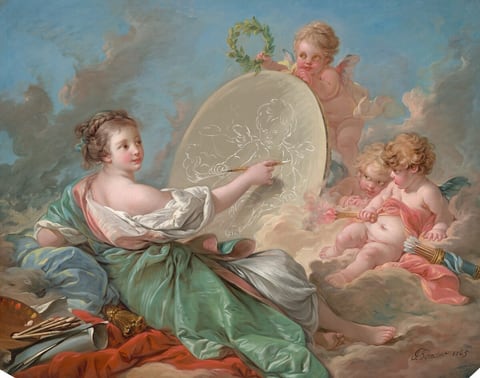
Allegory of PaintingFrançois Boucher, 1765Courtesy National Gallery of Art, Washington 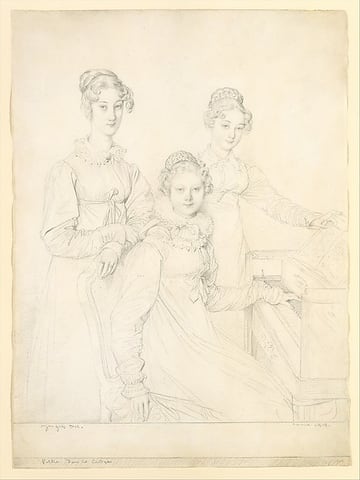
The Kaunitz Sisters (Leopoldine, Caroline, and Ferdinandine)Jean Auguste Dominique Ingres, 1818Courtesy of The Metropolitan Museum of Art 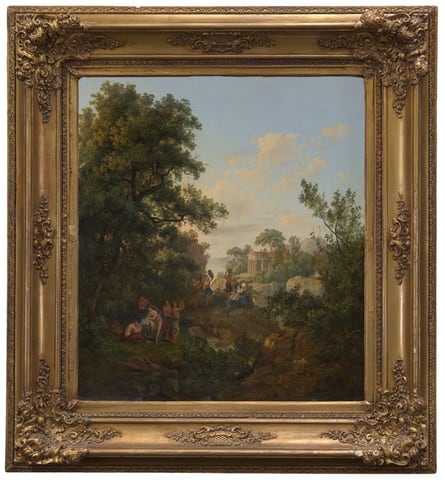
Birth of BacchusKároly Markó, Sr., 1826 (?)Courtesy of the Art Institute of Chicago