Neoclassicism
Europe turns back to Greece and Rome: clear line, calm figures and civic virtue.
First room, north wall
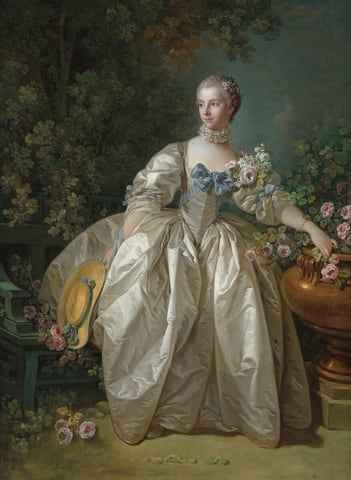
Madame BergeretFrançois Boucher, possibly 1766Courtesy National Gallery of Art, Washington 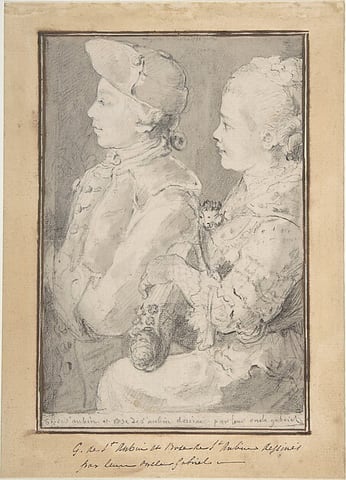
Germain-Augustin and Rose de Saint-Aubin, Drawn by Their UncleGabriel de Saint-Aubin, 1766Courtesy of The Metropolitan Museum of Art 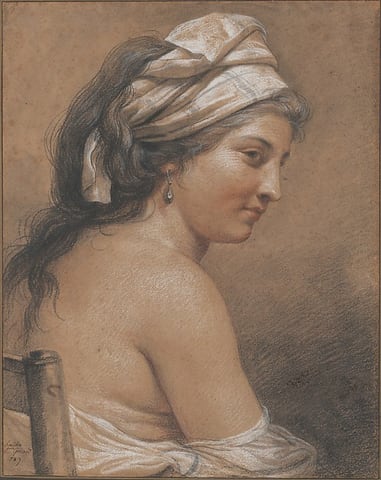
Study of a Seated Woman Seen from Behind (Marie-Gabrielle Capet)Adélaïde Labille-Guiard, 1789Courtesy of The Metropolitan Museum of Art 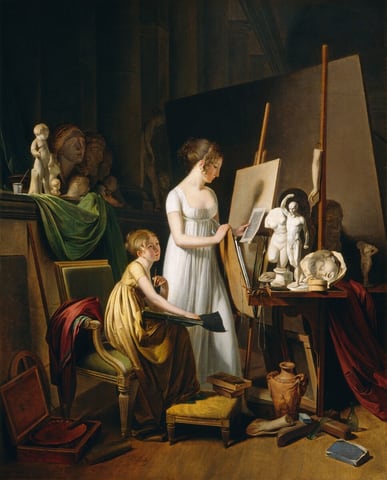
A Painter's StudioLouis-Léopold Boilly, c. 1800Courtesy National Gallery of Art, Washington
First room, south wall
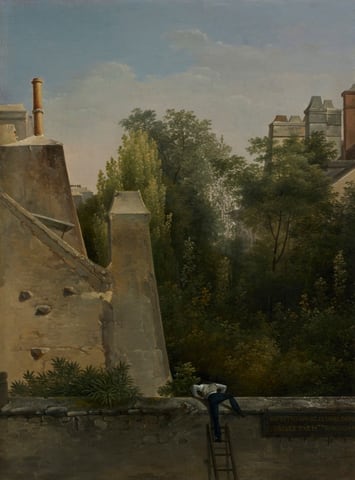
The Curious OneAntoine Pierre Mongin, 1823Courtesy of the Cleveland Museum of Art 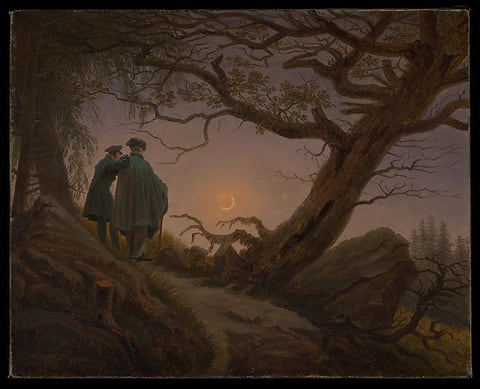
Two Men Contemplating the MoonCaspar David Friedrich, ca. 1825–30Courtesy of The Metropolitan Museum of Art 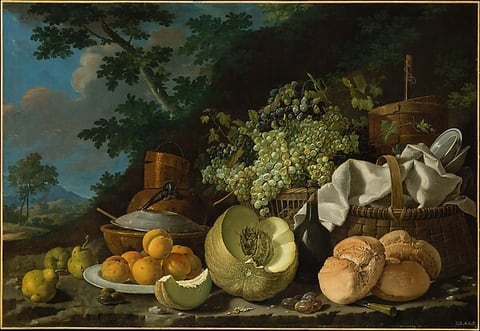
The Afternoon Meal (La Merienda)Luis Meléndez, ca. 1772Courtesy of The Metropolitan Museum of Art
Second room, south wall
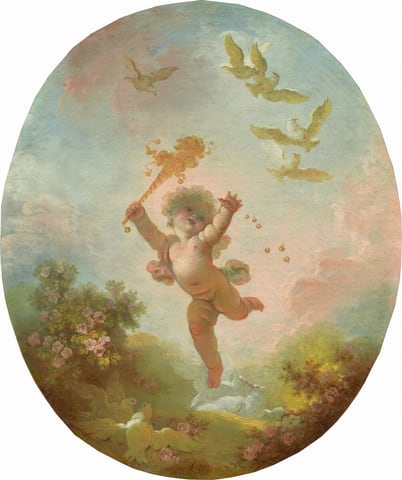
Love as FollyJean Honoré Fragonard, c. 1773/1776Courtesy National Gallery of Art, Washington 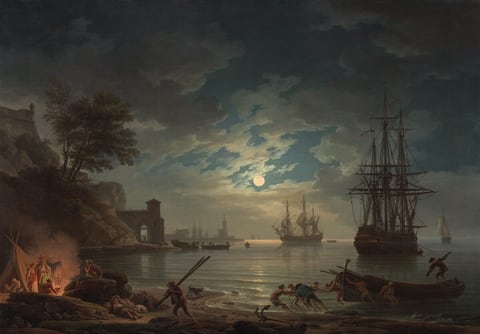
MoonlightClaude-Joseph Vernet, 1772Courtesy National Gallery of Art, Washington 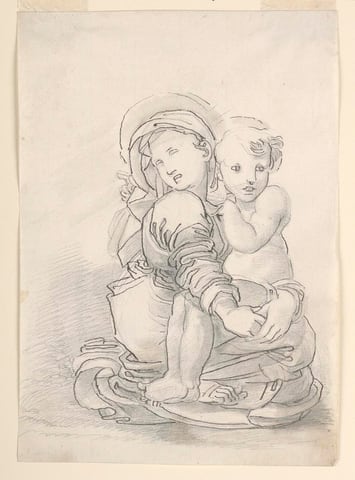
The Virgin with the ChildFortunato Duranti, 1820–1850Courtesy of Cooper Hewitt, Smithsonian Design Museum
Second room, north wall
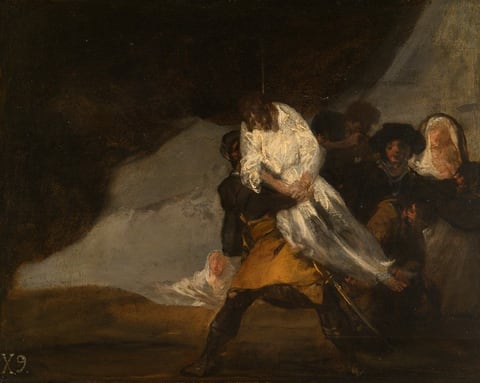
The Hanged MonkFrancisco Goya, c. 1810Courtesy of the Art Institute of Chicago 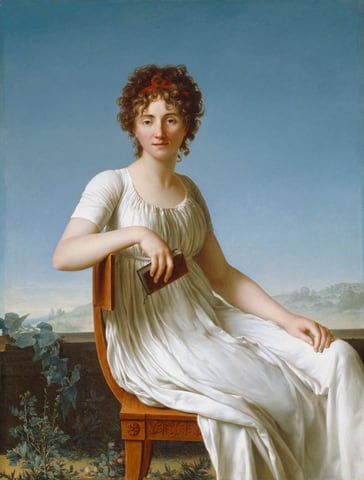
Portrait of Constance PipeletJean Baptiste François Désoria, 1797Courtesy of the Art Institute of Chicago 
A Forest with Apollo and DaphneJean-Victor Bertin, 1810Courtesy of the Cleveland Museum of Art 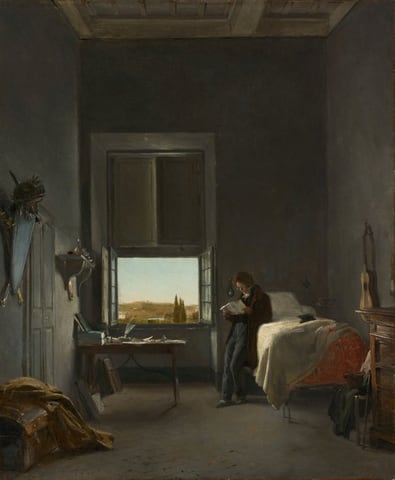
The Artist in His Room at the Villa Medici, RomeLéon Cogniet, 1817Courtesy of the Cleveland Museum of Art
Third room, north wall
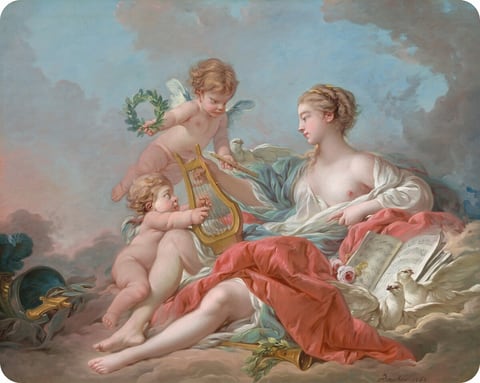
Allegory of MusicFrançois Boucher, 1764Courtesy National Gallery of Art, Washington 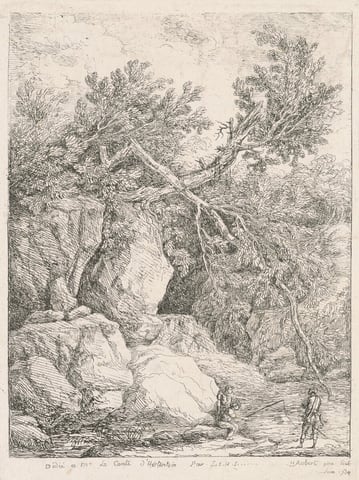
Landscape with a Fallen Tree (Paysage à l'arbre cassé)Hubert Robert, 1764Courtesy National Gallery of Art, Washington