Neoclassicism
Europe turns back to Greece and Rome: clear line, calm figures and civic virtue.
First room, north wall
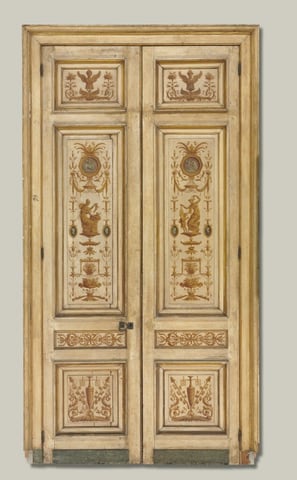
Overdoor PaintingPierre Rousseau, 1790sCourtesy of the Cleveland Museum of Art 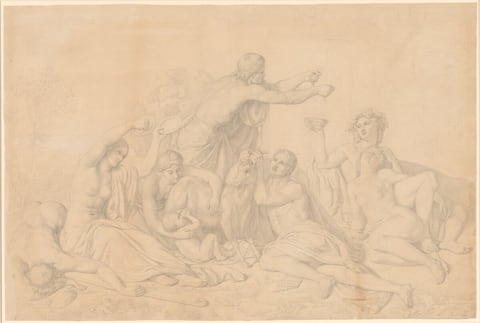
The Nursing of JupiterThéodore ChassériauCourtesy National Gallery of Art, Washington 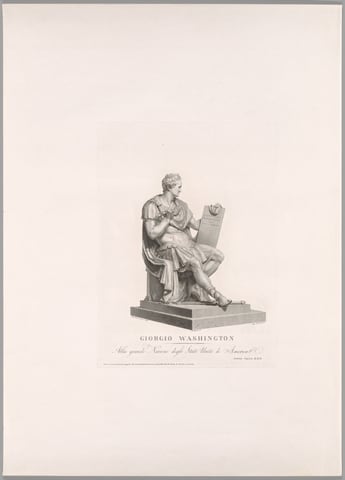
George Washington, Front View, from Oeuvre de CanovaAntonio Canova, 1817Courtesy of the Art Institute of Chicago 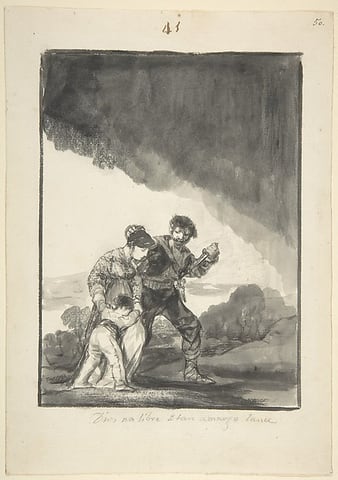
God save us from such a bitter fate; a bandit threatening a woman and a child with a knife, page 41 from the "Black Border Album" (E)Francisco Goya, ca. 1816–20Courtesy of The Metropolitan Museum of Art
First room, south wall

L'heureuse féconditéNicolas Delaunay, 1777Courtesy National Gallery of Art, Washington 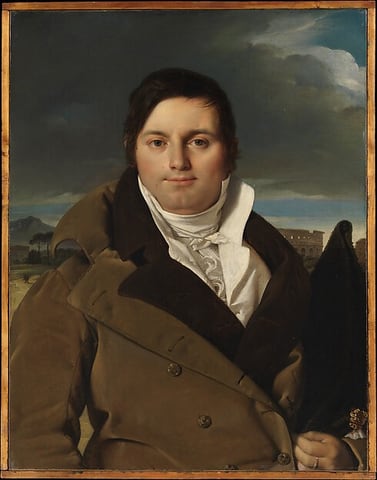
Joseph-Antoine Moltedo (born 1775)Jean Auguste Dominique Ingres, ca. 1810Courtesy of The Metropolitan Museum of Art 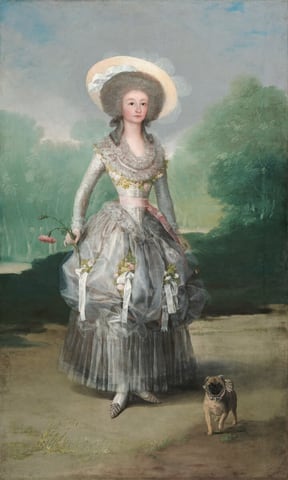
The Marquesa de PontejosFrancisco Goya, c. 1786Courtesy National Gallery of Art, Washington
Second room, south wall
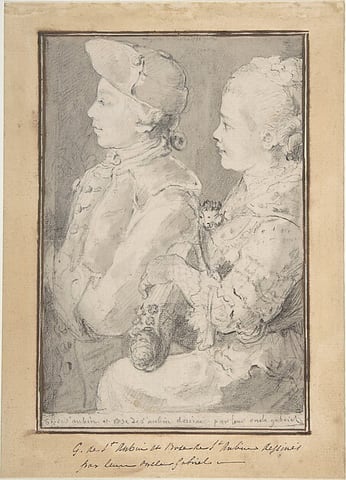
Germain-Augustin and Rose de Saint-Aubin, Drawn by Their UncleGabriel de Saint-Aubin, 1766Courtesy of The Metropolitan Museum of Art 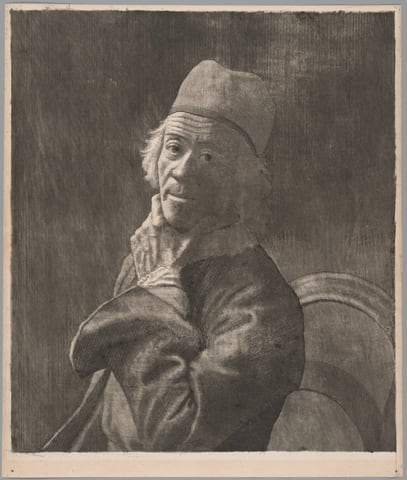
The Large Self-PortraitJean Etienne Liotard, 1778/81Courtesy of the Art Institute of Chicago 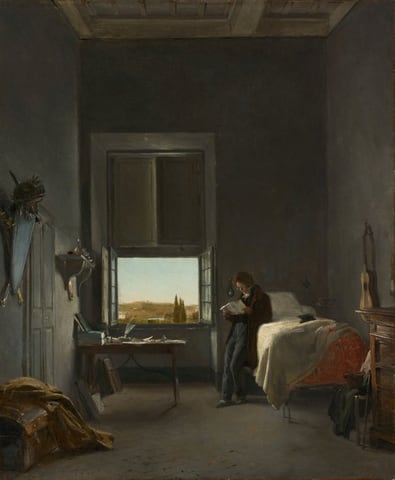
The Artist in His Room at the Villa Medici, RomeLéon Cogniet, 1817Courtesy of the Cleveland Museum of Art 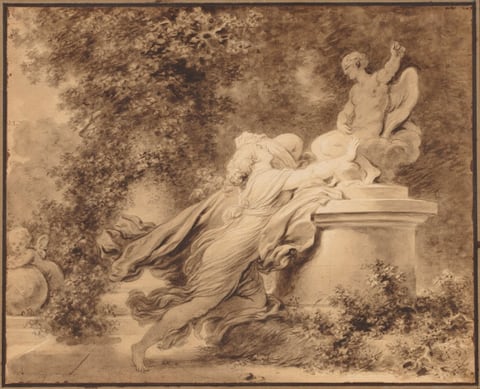
Invocation to LoveJean Honoré Fragonard, c. 1781Courtesy of the Cleveland Museum of Art
Second room, north wall
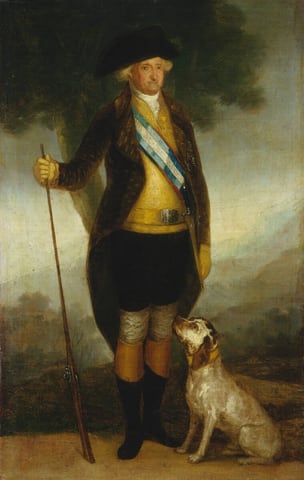
Charles IV of Spain as HuntsmanUnrecorded Spanish maker, c. 1799/1800Courtesy National Gallery of Art, Washington 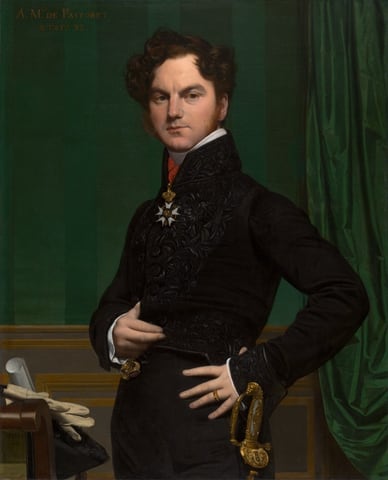
Amédée-David, the Comte de PastoretJean Auguste Dominique Ingres, 1823–26Courtesy of the Art Institute of Chicago 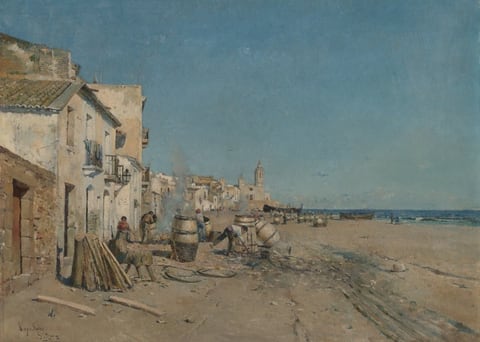
SitgesJuan Roig y Soler, 19th centuryCourtesy of the Art Institute of Chicago
Third room, north wall
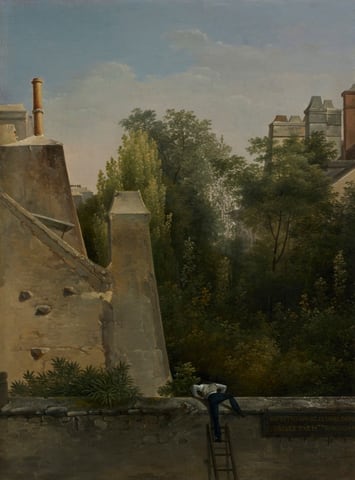
The Curious OneAntoine Pierre Mongin, 1823Courtesy of the Cleveland Museum of Art 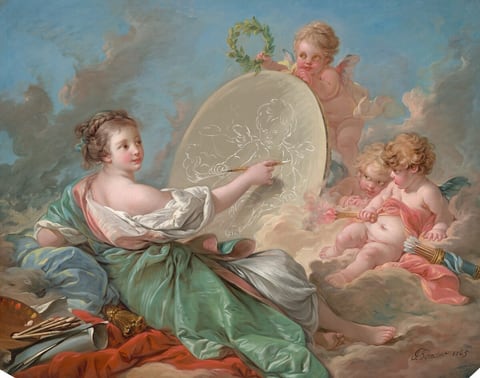
Allegory of PaintingFrançois Boucher, 1765Courtesy National Gallery of Art, Washington