Neoclassicism
Europe turns back to Greece and Rome: clear line, calm figures and civic virtue.
First room, north wall
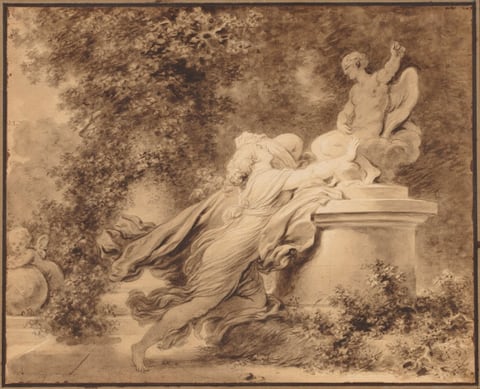
Invocation to LoveJean Honoré Fragonard, c. 1781Courtesy of the Cleveland Museum of Art 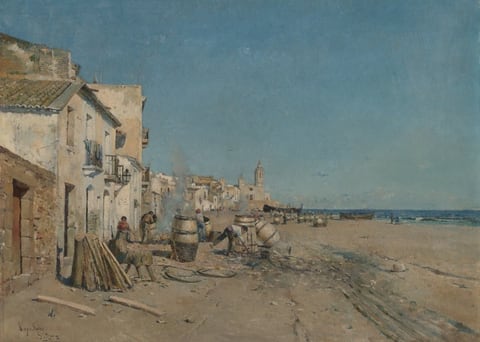
SitgesJuan Roig y Soler, 19th centuryCourtesy of the Art Institute of Chicago 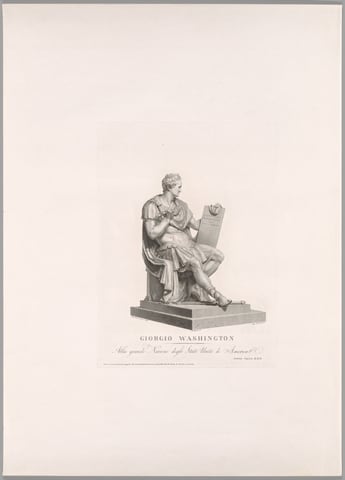
George Washington, Front View, from Oeuvre de CanovaAntonio Canova, 1817Courtesy of the Art Institute of Chicago 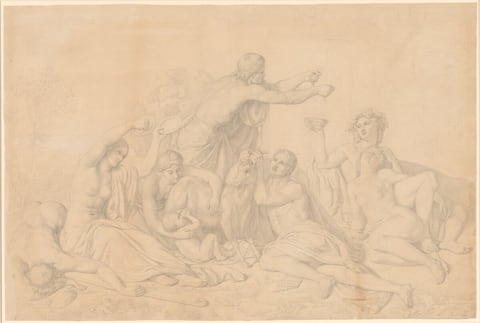
The Nursing of JupiterThéodore ChassériauCourtesy National Gallery of Art, Washington
First room, south wall
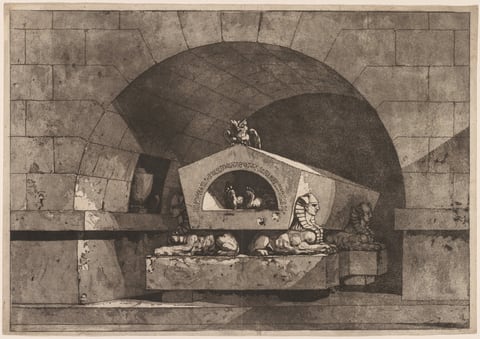
Tomb with Sphinxes and an OwlLouis Jean Desprez, c. 1779–84Courtesy of the Cleveland Museum of Art 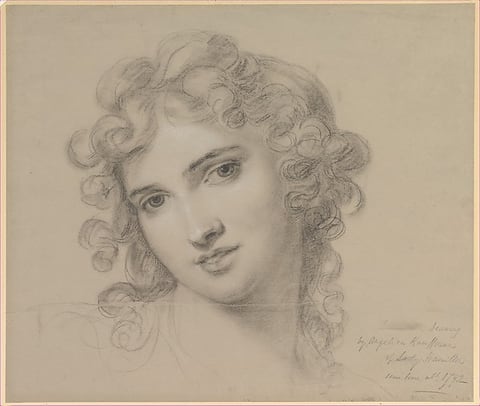
Portrait of Emma HamiltonAngelica Kauffmann, 1791Courtesy of The Metropolitan Museum of Art 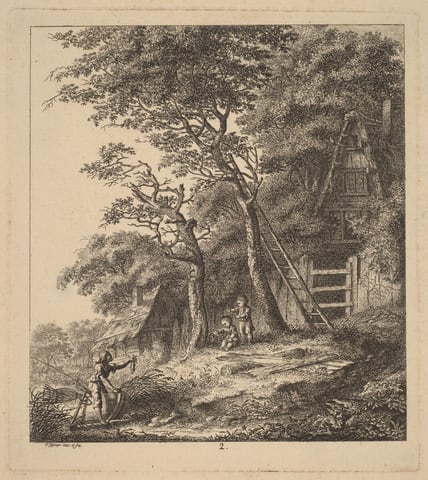
A Fisherman and Two Children in a Landscape with Thatched CottagesSalomon Gessner, 1764Courtesy National Gallery of Art, Washington 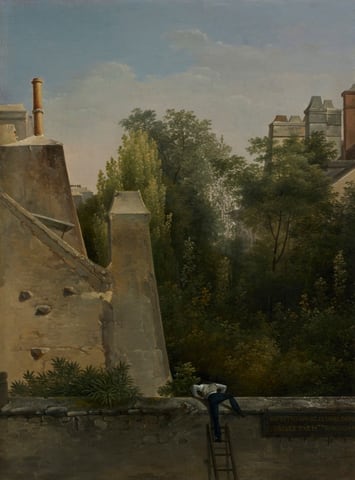
The Curious OneAntoine Pierre Mongin, 1823Courtesy of the Cleveland Museum of Art
Second room, south wall
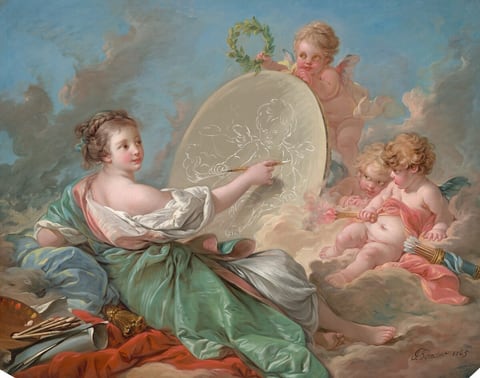
Allegory of PaintingFrançois Boucher, 1765Courtesy National Gallery of Art, Washington 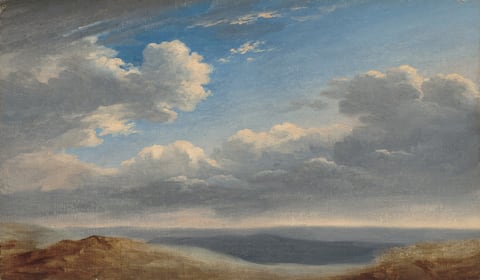
Study of Clouds over the Roman CampagnaPierre Henri de Valenciennes, c. 1782/1785Courtesy National Gallery of Art, Washington 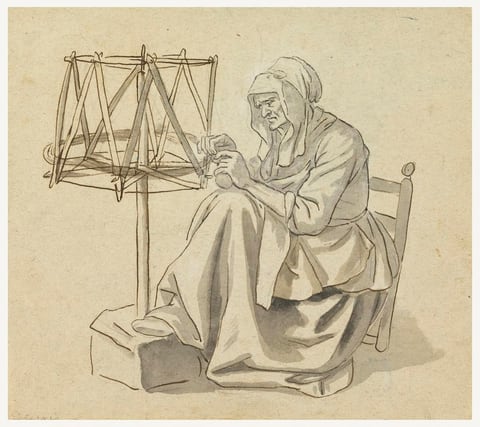
An Old Woman SpinningClaude-Louis Desrais, 1810–30Courtesy of Cooper Hewitt, Smithsonian Design Museum 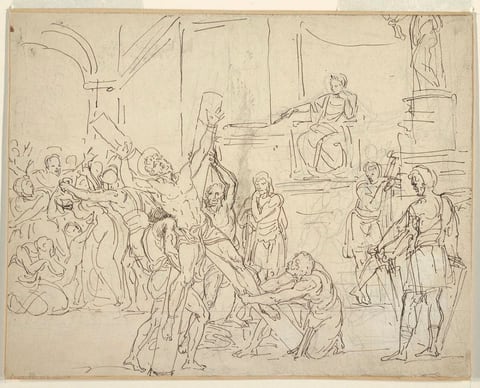
Martyrdom of St. AndrewFrancesco Coghetti, 1825–50Courtesy of Cooper Hewitt, Smithsonian Design Museum
Second room, north wall
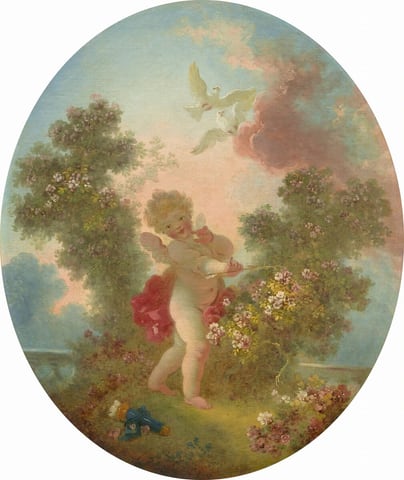
Love the SentinelJean Honoré Fragonard, c. 1773/1776Courtesy National Gallery of Art, Washington 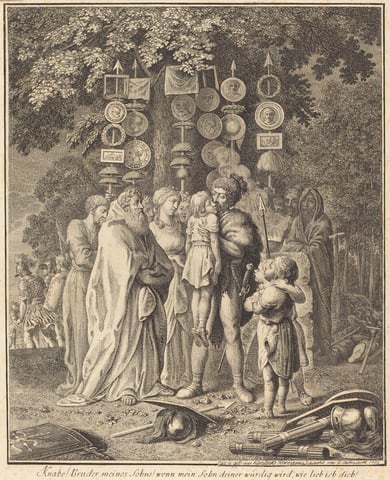
Ancient TeutonsDaniel Nikolaus Chodowiecki, 1782Courtesy National Gallery of Art, Washington 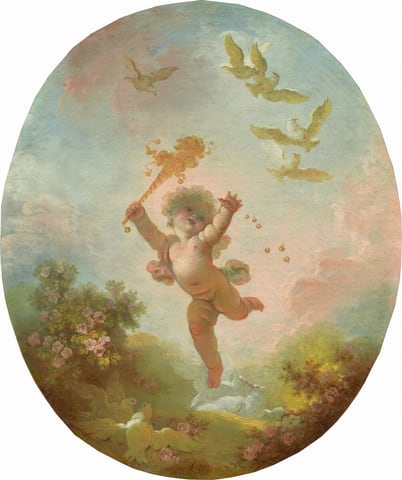
Love as FollyJean Honoré Fragonard, c. 1773/1776Courtesy National Gallery of Art, Washington 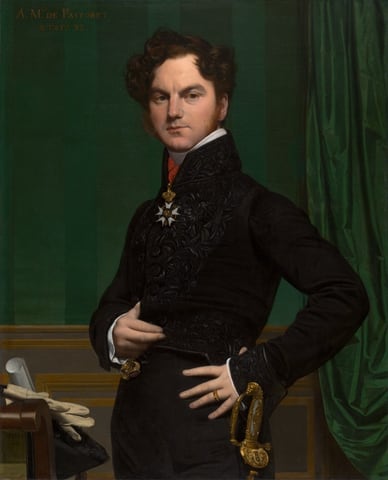
Amédée-David, the Comte de PastoretJean Auguste Dominique Ingres, 1823–26Courtesy of the Art Institute of Chicago